We are a Nearshore talent-based company that tie great workers and exceptional North American institutions for the achievement of new goals. #remotefriendly
Remote work did not teach teams how to collaborate.
Teams that already knew how to communicate learned to do it remotely.
Same skill. Different medium.
The developers who thrive in international remote roles usually share one thing: they wanted the challenge, not just the paycheck.
Finding that motivation is part of the job.
Atlassian found that knowledge workers waste 25% of their time searching for answers.
For a new remote hire, that number is higher.
Underdocumented systems are not a productivity footnote. They are an onboarding crisis that shows up in performance reviews.
Most developer interview processes are designed to evaluate candidates.
Very few are designed to respect them.
We think the process itself is part of the offer. Feedback, transparency, clear communication from the first call.
That is the standard we set before day one.
A lot of LATAM developers want to work with US tech companies but aren't sure what to actually expect.
Here's the honest version, based on what our developers tell us after their first 90 days.
Enterprise companies are building permanent engineering centers in LATAM. 80% of North American companies are exploring nearshore in 2026.
When the big players move into a talent market, the best candidates go fast. Mid-market companies that move now still have the pick.
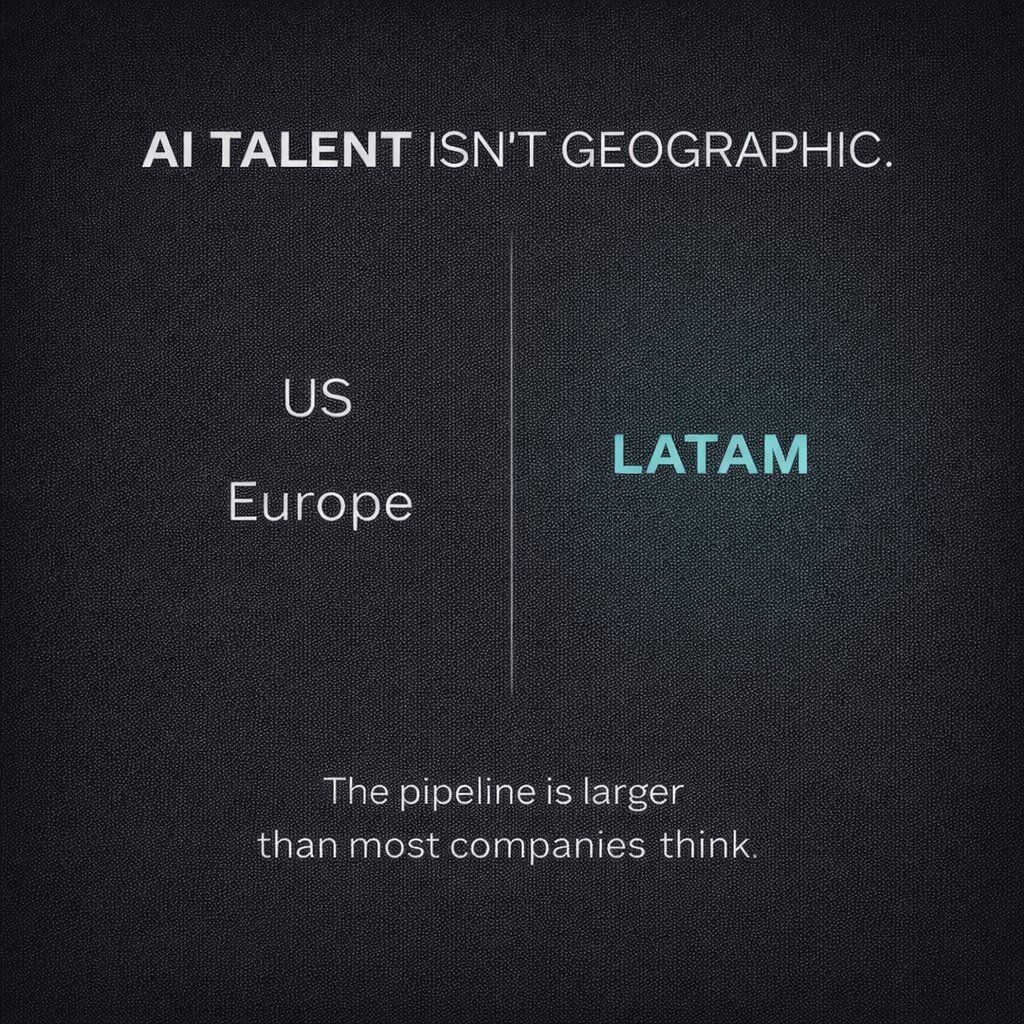
The assumption that AI talent only exists in the US or Europe is costing companies real money.
LATAM has a serious answer to the AI developer shortage. Here's what that actually looks like.
Most nearshore-aware companies run the rate math.
Senior LATAM developers start around $5K/month.
The number nobody puts in the spreadsheet:
The cost of a senior role sitting open for 3–6 months.
That’s the one worth calculating.
#NearshoreHiring#LATAMDevelopers
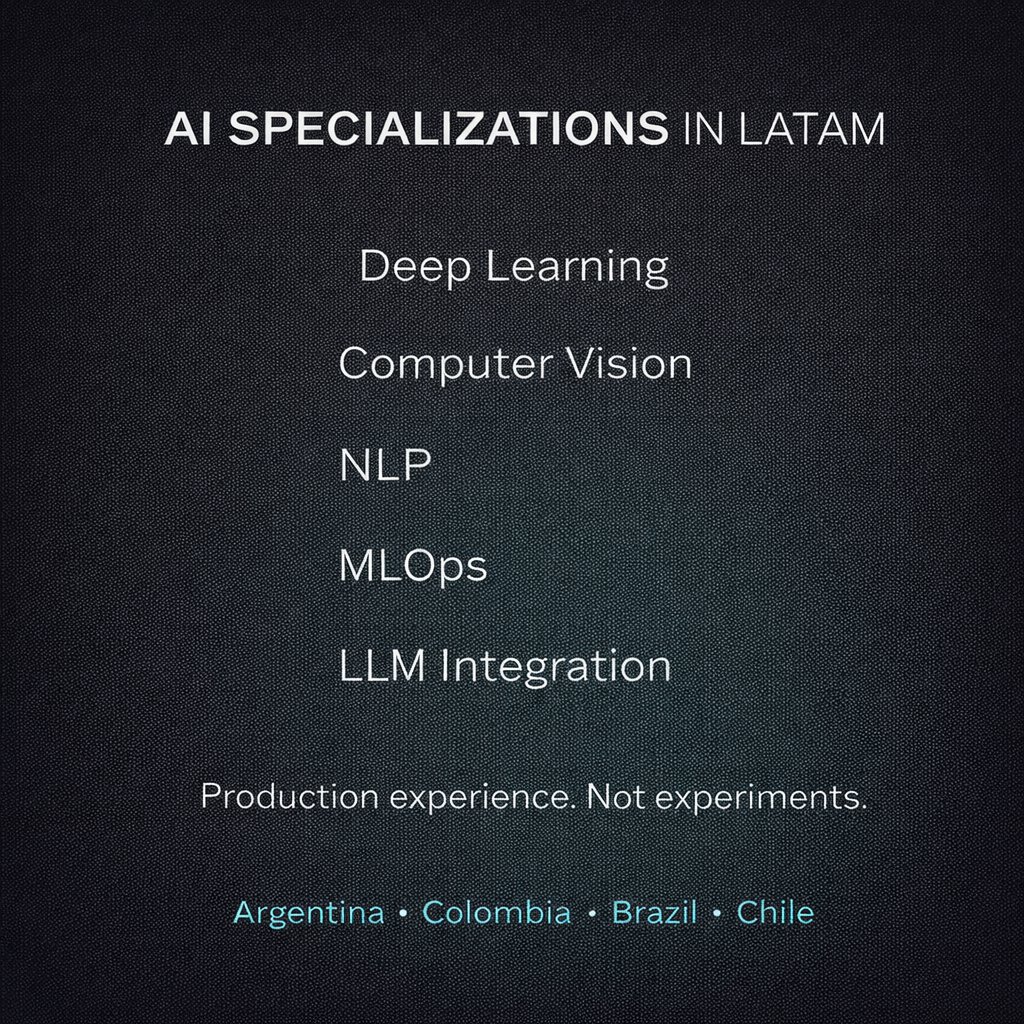
Specializations that exist right now in LATAM: Deep learning. Computer vision. NLP. MLOps. LLM integration.
Not side projects. Production skills on real systems. Argentina, Colombia, Brazil, and Chile are leading the output.
The companies that staff for AI-capable engineers now are the ones shipping in Q3 while their competitors are still interviewing. Nearshore 2.0 isn't coming. It's already here.
Everyone is asking if AI will replace developers. The smarter question: which developers know how to use AI to ship 3x faster?
LATAM has a serious answer to that question.
Meanwhile, the cost equation still holds. AI-ready LATAM senior devs: $60K-$90K/year. US equivalent: $150K-$200K and climbing. Same output. Often faster, because they've built the AI workflows already.
Don’t let the headlines confuse you.
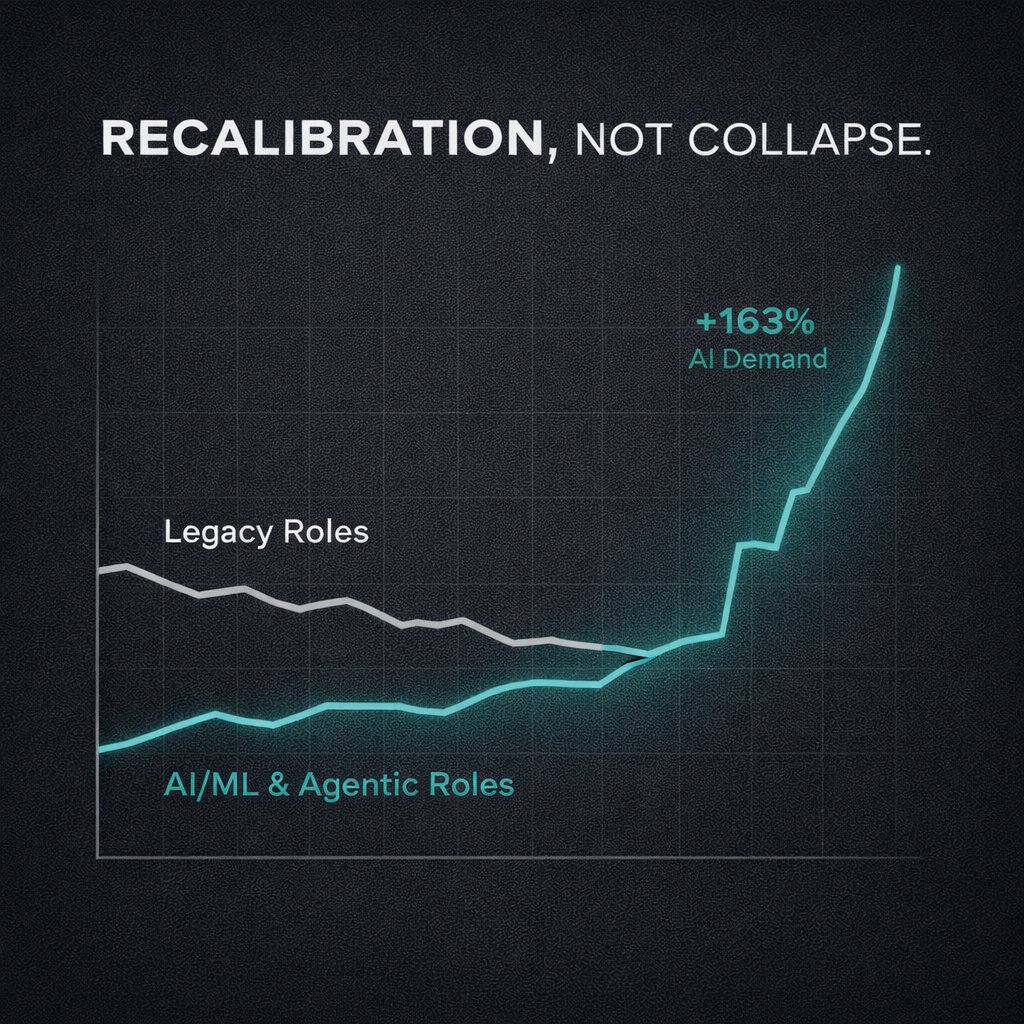
30k+ layoffs in 6 weeks isn't a collapse; it’s a recalibration.
Companies are trimming legacy roles to hire for "Agentic Reality." Demand for AI/ML roles is up 163%. The market isn't shrinking, it’s evolving. 🚀
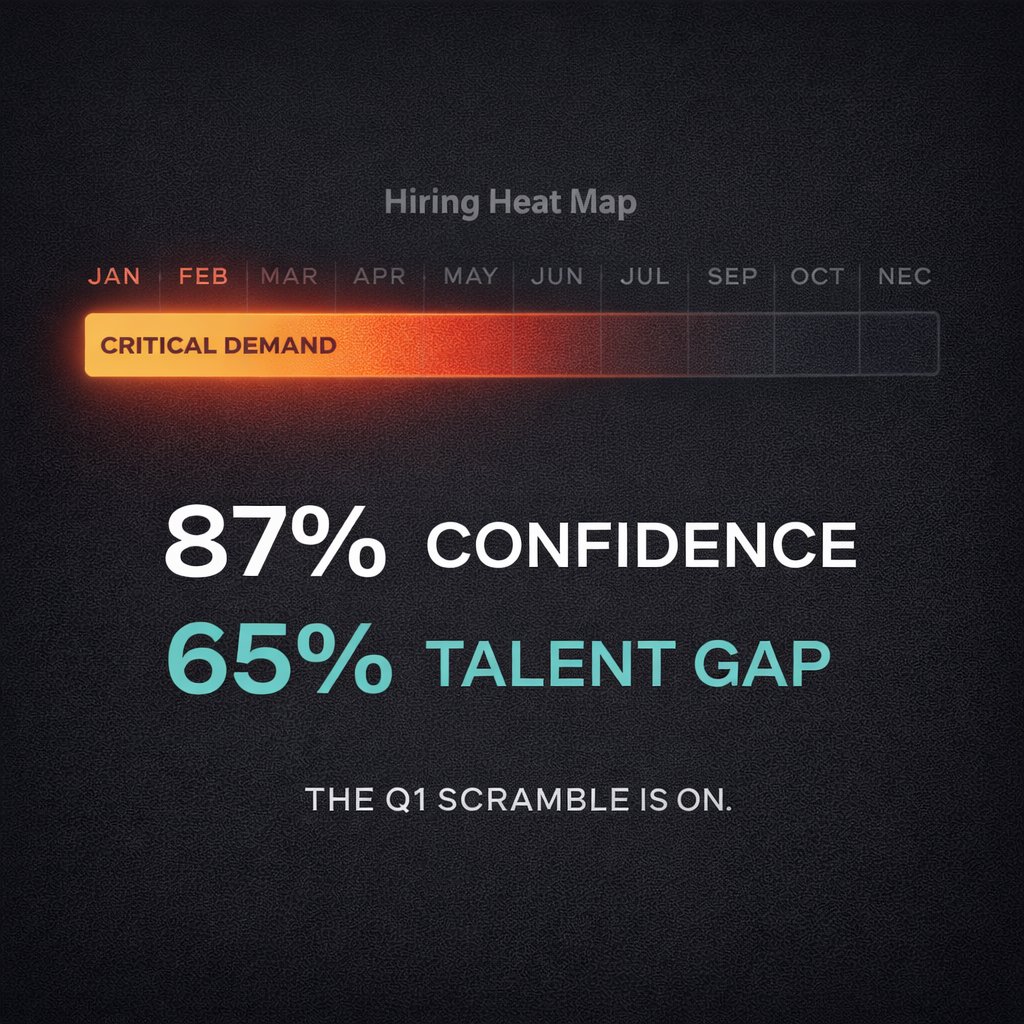
Robert Half 2026: 87% of leaders are confident, yet 65% hit a talent wall. 🧱
Traditional 3-month loops prioritize puzzles over products, leaving your Q1 roadmap stalled. It’s time to move past the logic puzzles.
Hire the architect, not the test-taker
80% of devs fail code challenges. Usually, it’s not the tech—it's the reading. 📉
In 2026, tests are logic filters used for mass screening. Attention to detail is now a high-performance skill.
Pro-tip: Read the constraints 3x. Pass the bot to reach the human. 🔍
In 2026, AI lowered the floor for coding but raised the ceiling for Seniors. 🚀
Value shifted from output to intent. Mastery now means: • Anticipating edge cases
• Architectural integrity
• Product empathy
AI is the engine. You need a driver who knows the map.
Writing code is no longer the bottleneck.
AI can generate syntax in seconds.
The real value now lives in decisions: what to build, how it fits, and why it lasts.
Are you coding — or orchestrating?