Thermal Treatments against Xylella Fastidiosa: BeXyl Project Results 🔬🌿
This video illustrates the key activities and scientific results of the BeXyl project, focusing on Work Package 3 (WP3) dedicated to thermal treatments for the production of Xylella fastidiosa-free nursery materials. Xylella lives inside the wood and spreads through vegetative propagation, representing a major threat to the global plant trade and European nurseries.
Key topics covered within WP3:
🔹 The Research: In vitro and in vivo trials (from -15°C up to 50°C) across different bacterial subspecies, using grapevine as the main model.
🔹 Nursery Application: How host species (olive, almond, stone fruits, ornamentals) tolerate heat, and the use of Hot Water Treatment (HWT) to control other pathogens like Pseudomonas savastanoi.
🔹 Innovative Diagnostics: Testing plant viability using fast methods like the Electrolyte Leakage Test (ELT).
🔹 The Impact: The development of a draft EPPO standard for grapevine, fig, and white mulberry, alongside open-field observations in Puglia.
An important step towards a sustainable and healthy future for plants and nurseries.
https://t.co/ruxsRcE4k0
@IAS_CSIC@REA_research
Today BeXyl held its final meeting with stakeholders in Brussels, presenting the results of four years of intense research into the epidemiology, surveillance and early detection of Xylella fastidiosa, as well as new biological control approaches, plant resilience strategies, policy support tools and socio-economic impact assessments.
This work will provide scientists, stakeholders, and policymakers with the knowledge and tools needed to improve the management of Xylella fastidiosa outbreaks in Europe.
Thanks to all the participants!
@ias_csic@REA_research
📸 Live from Brussels: The BeXyl final stakeholder meeting has officially commenced, with the first sessions now underway.
This event gathers researchers, policymakers, and agricultural sector representatives to present and discuss the primary outcomes of the BeXyl Project, focusing on practical, science-based solutions for the prevention, monitoring, and control of Xylella fastidiosa in Europe.
Over the course of the meeting, participants will engage with a dedicated European network working to translate scientific evidence into tools and strategies with direct value for agriculture, nurseries, landscapes, and public policy.
#BeXylProject #XylellaFastidiosa #PlantHealth
@REA_research@IAS_CSIC
The "5th @EFSA_EU conference on Xylella fastidiosa", which will provide the platform for the presentation and discussion of the BeXyl Project’s results, is approaching.
But before that, BeXyl researchers will meet stakeholders in Brussels.
The date is 20 May, from 9:00 to 15:00, and the location is the Delegation of the Andalucia Region in the EU capital. During the conference, entitled "Science, innovation and action against Xylella fastidiosa in Europe", the BeXyl Project will present its findings and conclusions to stakeholders.
For more information: [email protected]@REA_research@IAS_CSIC
🍽️🚫 What if we could “spoil the appetite” of the insects spreading Xylella?
New research from the BeXyl Project explores a clever way to slow down the spread of the bacterium by targeting the feeding habits of its main carrier: the spittlebug Philaenus spumarius.
The science behind the “disrupted lunch”:
🍄 Eco-friendly Shield: Scientists tested Metarhizium brunneum, a specific fungus that can live inside olive plants as an endophyte without harming them.
⚡ Monitoring the Bite: Using EPG (Electrical Penetration Graph) technology, researchers monitored the exact moment the insect’s rostrum (its needle-like mouthpart) enters the plant.
📉 Appetite Lost: The study found that plants colonised by the fungus significantly disrupted the insect’s feeding behavior—increasing interruptions and reducing the time spent ingesting sap.
The result? A potential “push-pull” strategy. By applying this beneficial fungus to both olive trees and cover crops, we can create a hostile environment for the vector, mitigating the spread of Xylella fastidiosa. 🌳🛡️
🔬 Read the full study on our website:
https://t.co/x3wDRp7hrj
#PlantHealth #Xylella #BeXylProject
@IAS_CSIC@REA_research
A new seminar from the Xylella Seminar Series is now available: “Sustainable Endotherapy against Xylella fastidiosa: The Mechanistic Efficacy of Cellulose Nanocrystals”.
The talk is presented by Muhammad Amir Muawiya, doctoral researcher at the Università degli Studi della Tuscia (UNITUS @unitusviterbo), Italy.
The seminar explores the application of bio-based nanotechnologies and precision endotherapy as sustainable methods to combat vascular bacterial pathogens. The research examines the efficacy of cellulose nanocrystals through molecular diagnostics and hyperspectral phenotyping to evaluate pathogen containment and host recovery in Mediterranean crops.
This session was jointly organised by the EU-funded BeXyl project, European Food Safety Authority (@EFSA_EU ) (European Food Safety Authority), and Auburn University.
The recording is hosted on the "Soluciones a Xylella fastidiosa" channel, in collaboration with PTI Sol-Xyl of @CSIC.
🔗 Watch the full seminar here: https://t.co/eFq291uLA2
@IAS_CSIC@REA_research
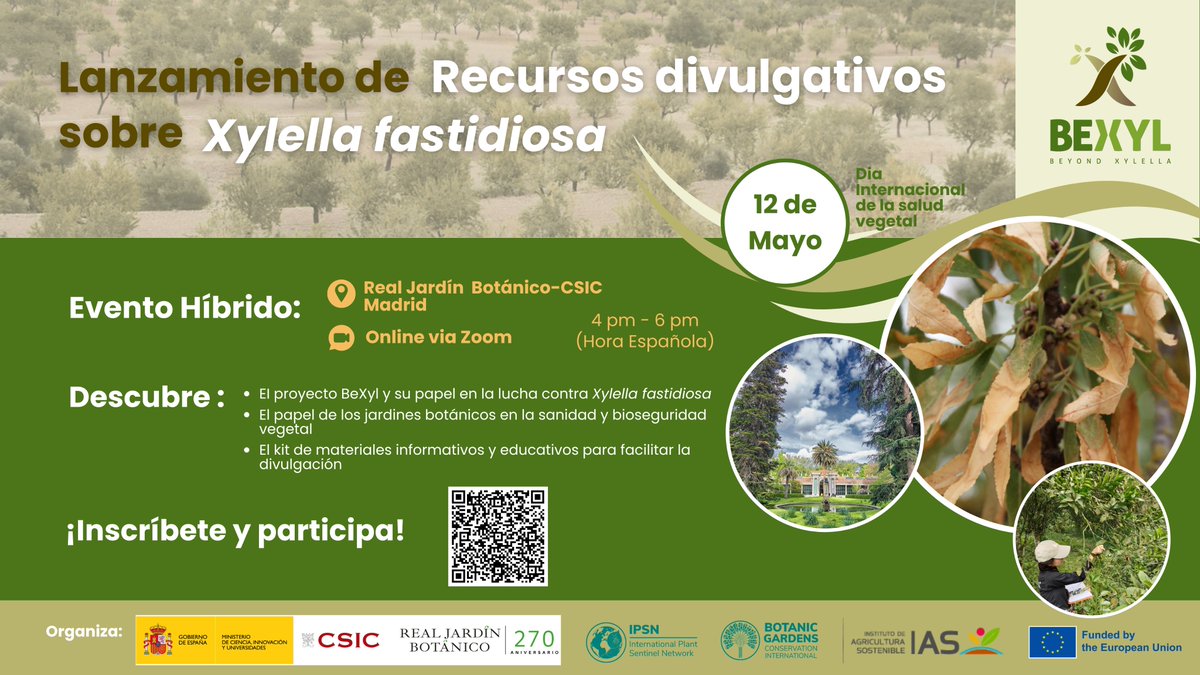
In celebration of the International Day of Plant Health on May 12, the BeXyl Project, together with the Real Jardín Botánico - CSIC and the Institute for Sustainable Agriculture (IAS - CSIC), is hosting a hybrid workshop to present new scientific dissemination resources.
This event marks a significant milestone in our commitment to public engagement and scientific literacy regarding Xylella fastidiosa. The session will highlight how botanical gardens contribute to plant biosecurity and will provide attendees with a comprehensive kit of educational materials designed for researchers, educators, and the general public.
📅 12 May | 🕓 4:00 pm – 6:00 pm (CEST)
📍 Real Jardín Botánico-CSIC (Madrid) & Online via Zoom
Access is free upon registration. Please secure your attendance:
https://t.co/SQDjLRnfnq
#BeXylProject #PlantHealthDay #XylellaFastidiosa #HorizonEurope
@IAS_CSIC@REA_research
🫐🧬 Is ‘junk’ DNA the key to protecting our blueberries?
Pseudogenes were once thought to be useless genetic "leftovers." However, a new study by BeXyl Project researchers (Kaur et al. 2025) reveals they are essential clues to understanding how Xylella fastidiosa specialises in specific crops.
What we learned from the research:
✅ The "Junk" Rule: More pseudogenes equal a narrower host range. This "genetic decay" is a clear sign of high specialization.
✅ Blueberry Vigilance: European strains have the genetic potential to infect blueberries. Early detection remains our best defense.
✅ Targeting the Enemy: Researchers identified specific candidate genes linked to symptoms, offering new targets for control strategies.
By decoding the secrets hidden in Xylella's DNA, we are staying one step ahead of its evolution to protect European agriculture. 🛡️🌿
🔬 Read the full study here: https://t.co/MTIK330tbV
During the week of 2–6 March in Colombia, the BeXyl partner University of Costa Rica ran a training workshop on the diagnosis of Xylella fastidiosa for the Andean Community (Colombia, Ecuador, Peru and Bolivia).
Peru and Colombia declared the presence of Xylella last year. During the event, Carlos Chacón Díaz from the University of Costa Rica spoke about raising awareness of the risks posed by Xylella fastidiosa and the work that BeXyl is doing to find practical solutions to this problem.
The news item from the Colombian Institute of Agriculture and Livestock: https://t.co/JPZCUIAK95
Carlos Diaz
https://t.co/mrHrP6Oqfr
@REA_research@IAS_CSIC
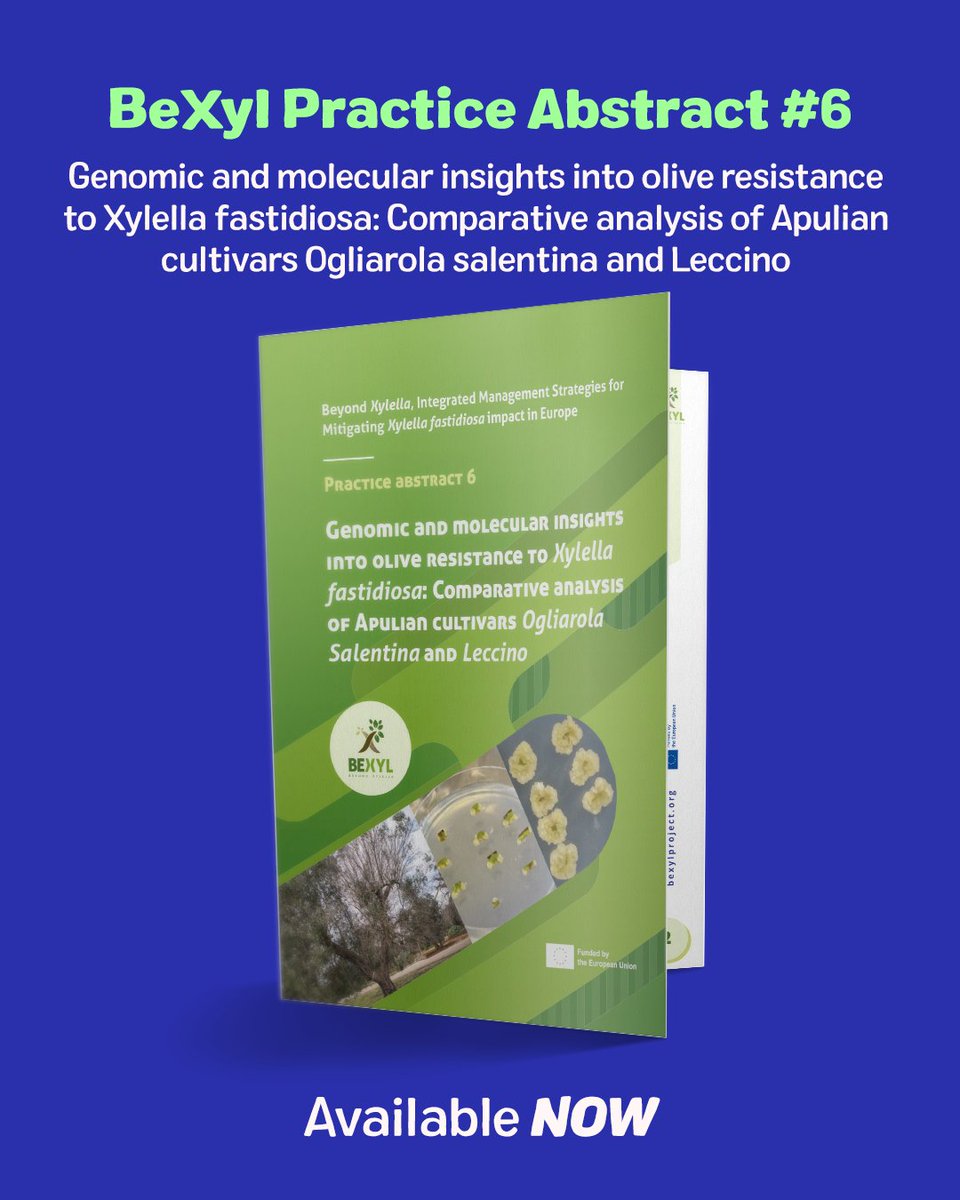
Why is the 'Leccino' olive cultivar more resistant to Xylella fastidiosa than others?
BeXyl Practice Abstract 6 explores the genetic and immune determinants of resistance by comparing the highly susceptible 'Ogliarola salentina' with the resilient 'Leccino'.
Key Insights:
✅ Genomic Mapping: Generation of high-quality, chromosome-scale genome assemblies for both cultivars.
✅ Immune Receptors: Identification of key differences in immune receptor gene families that may trigger defense responses.
✅ Functional Tools: Development of olive stem tissue and cell culture systems to test defense mechanisms in the lab.
Impact:
These resources support the breeding of new resistant cultivars and promote the long-term resilience of Mediterranean agroecosystems.
Understanding the molecular basis of resistance is a fundamental step toward sustainable management of Olive Quick Decline Syndrome (OQDS).
Read the full abstract collection here:
https://t.co/UuCjNrkTCI
@REA_research@IAS_CSIC
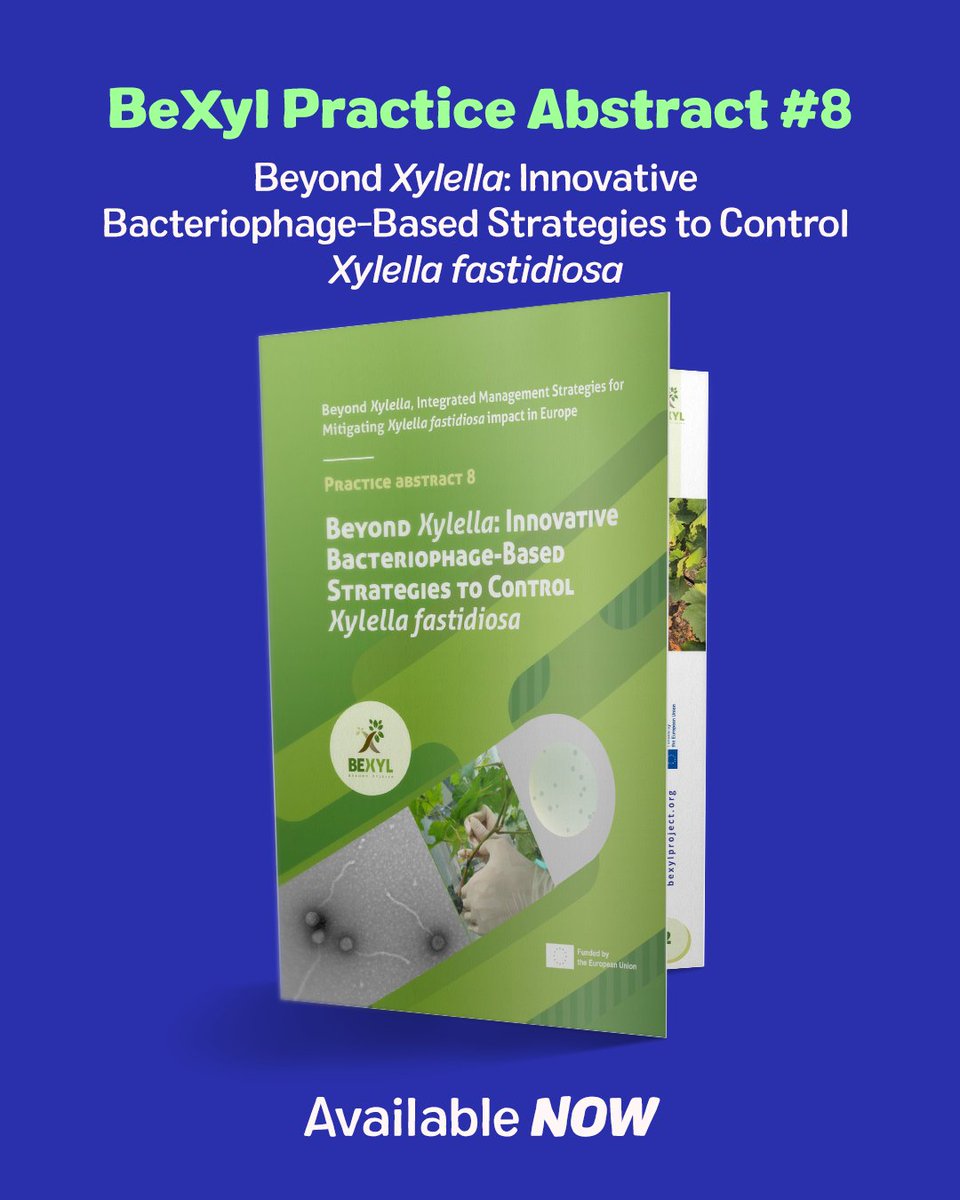
Can naturally occurring viruses protect our crops from Xylella fastidiosa?
BeXyl Practice Abstract 8 explores the use of bacteriophages - viruses that specifically target and kill bacteria - as a sustainable biocontrol solution for European agriculture.
Key Insights:
🟢 Biocontrol: A nature-based, highly specific alternative to broad-spectrum chemical treatments.
🟢 Safety: Genomic analysis confirms a strictly lytic cycle with no risks to beneficial organisms or human health.
🟢 Efficacy: Significant reduction of bacterial populations and disease symptoms in grapevine and other hosts.
🟢 Application: Pilot trials show phages can both prevent infection and slow disease progression in the field.
Bacteriophages represent a safe and environmentally sustainable tool to be integrated into long-term IPM strategies.
Read the full abstract collection here: https://t.co/UuCjNrkTCI
@REA_research@IAS_CSIC
#BeXyl #Xylella #Bacteriophages #Biocontrol #SustainableFarming #PlantHealth
EFSA has launched a public consultation on two draft scientific opinions concerning the tools for Xylella fastidiosa management in the EU.
Our members have actively contributed to these drafts, evaluating vector control strategies and in planta solutions.
EFSA highlighted the urgent need for more large-scale field studies to bridge existing data gaps.
Research plays an essential role to bridge scientific knowledge and decision-making on Xylella fastidiosa.
Read our full commentary
https://t.co/JAYRvvaSgT
#Xylella #PlantHealth #EFSA #BeXylProject
@EFSA_EU@REA_research@IAS_CSIC
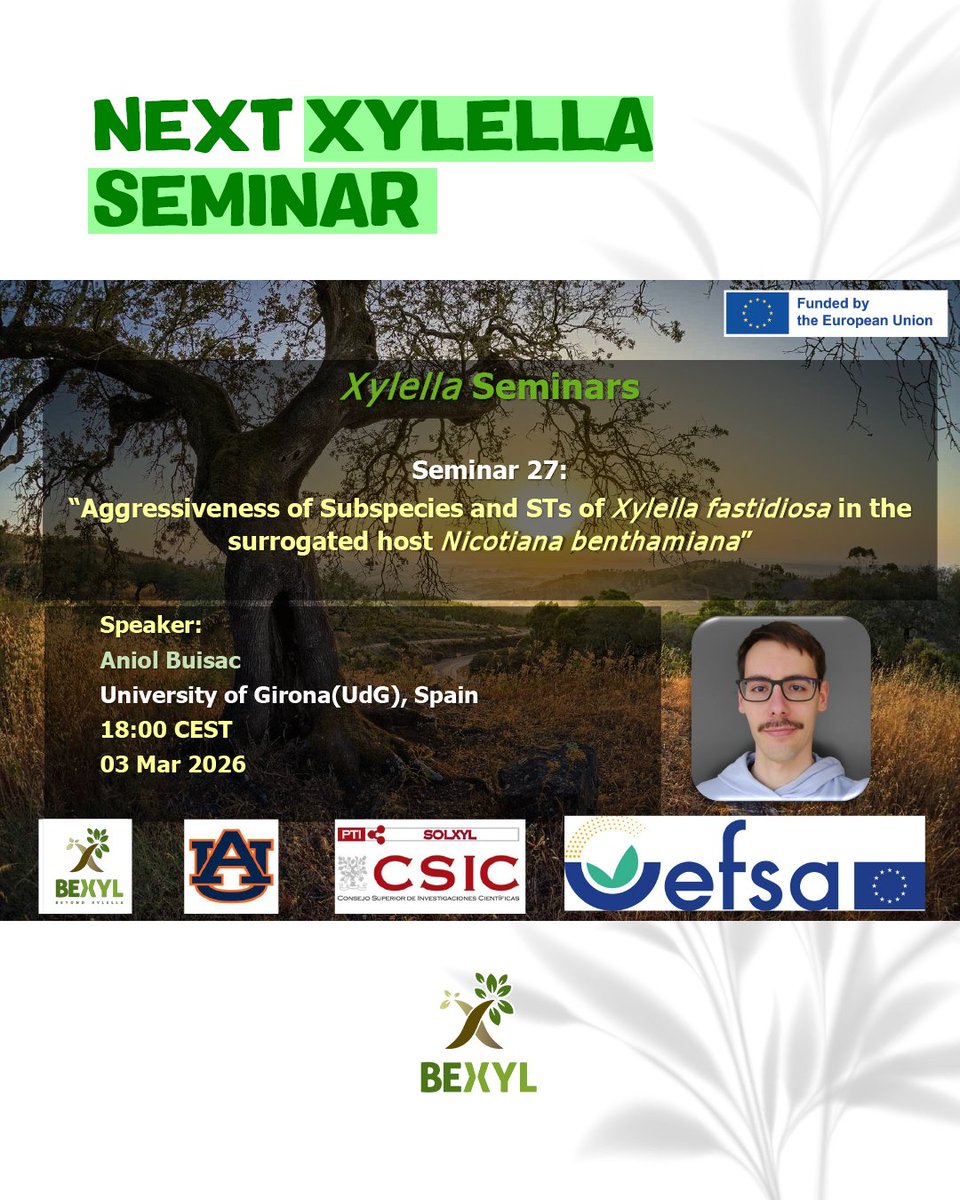
TODAY: The next #Xylella seminar, organized by BeXyl Project, EFSA, and Auburn University.
Aniol Buisac (University of Girona) will present “Aggressiveness of Subspecies and STs of Xylella fastidiosa in the surrogated host Nicotiana benthamiana”. The session focuses on pathogen virulence and comparative studies on different sequence types (STs).
The recording will be available later on the "Soluciones a Xylella fastidiosa" channel (PTI Sol-Xyl, CSIC).
🗓️ Date: Today, March 3rd
⏰ Time: 18:00 (CEST)
📧 Contact: [email protected]@REA_research@IAS_CSIC
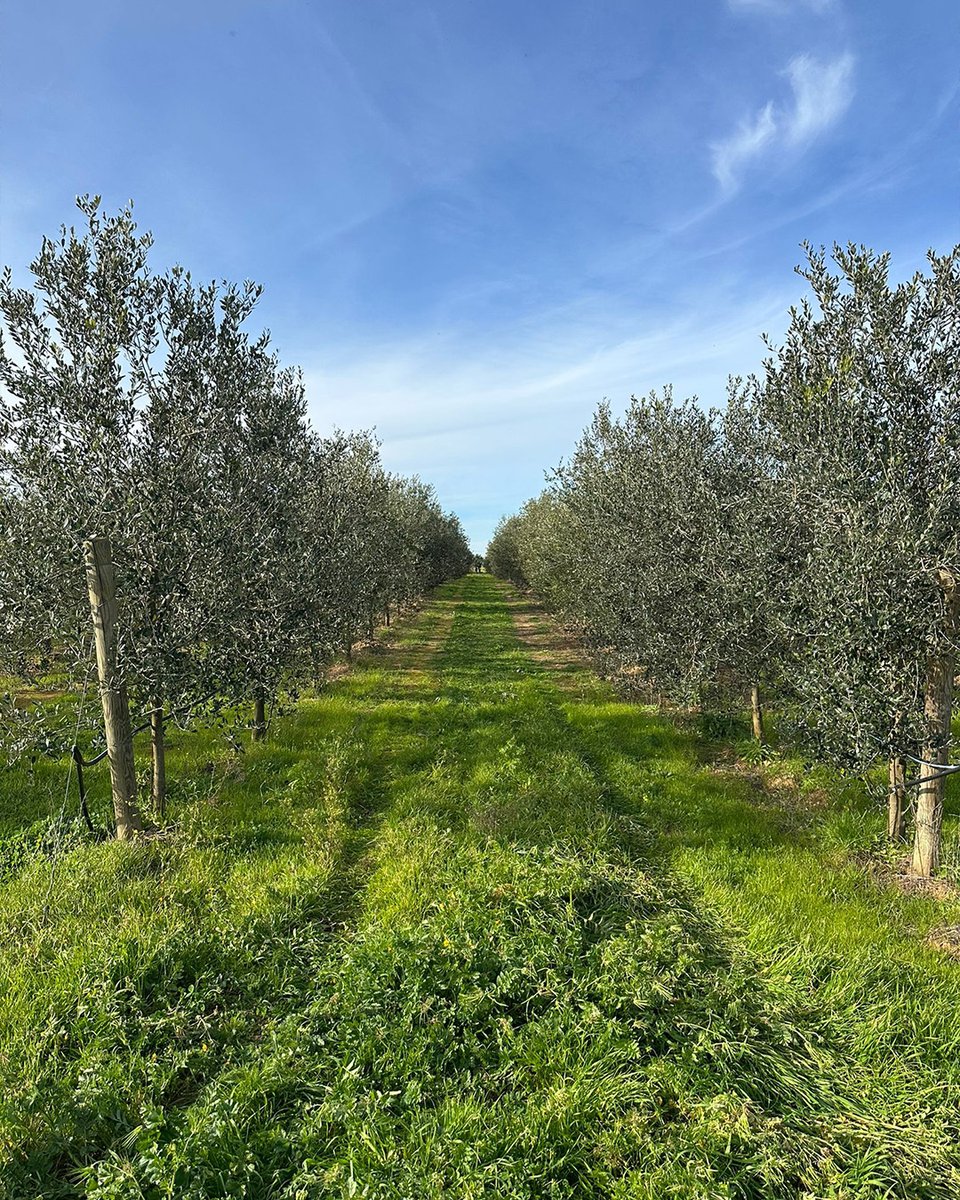
Yesterday, BeXyl partners from CSIC, in collaboration with CNR and CRSFA, conducted field applications of two bacterial consortia as preventive and curative treatments.
Technical Context:
👉 Selection: The bacterial consortia were identified and selected within the framework of Work Package 6
👉 Composition: The treatments are composed of different genera of naturally occurring xylem-inhabiting bacteria.
👉 Trial Conditions: The field plot is planted with the "Favolosa variety and is characterized by high Xylella fastidiosa inoculum pressure.
The BeXyl consortium acknowledges @fertinyect for providing the specialized devices required for the application.
#BeXylProject #XylellaFastidiosa #PlantHealth
@IAS_CSIC@CSIC@CNRsocial_
#CRSFA