In May 1926, Howard Carter recorded a strange encounter in the Egyptian desert.
He saw an unusually tall, completely black jackal that reminded him of Anubis.
An extraordinary observation from the archaeologist who discovered Tutankhamun's tomb.
@ralphyellis The protective symbolism is a fascinating parallel. The blue eye amulets shown here are generally known as Nazar, while the ancient Egyptian Wedjat eye has its own distinct form and history. Both reflect the enduring association between the eye and protection.
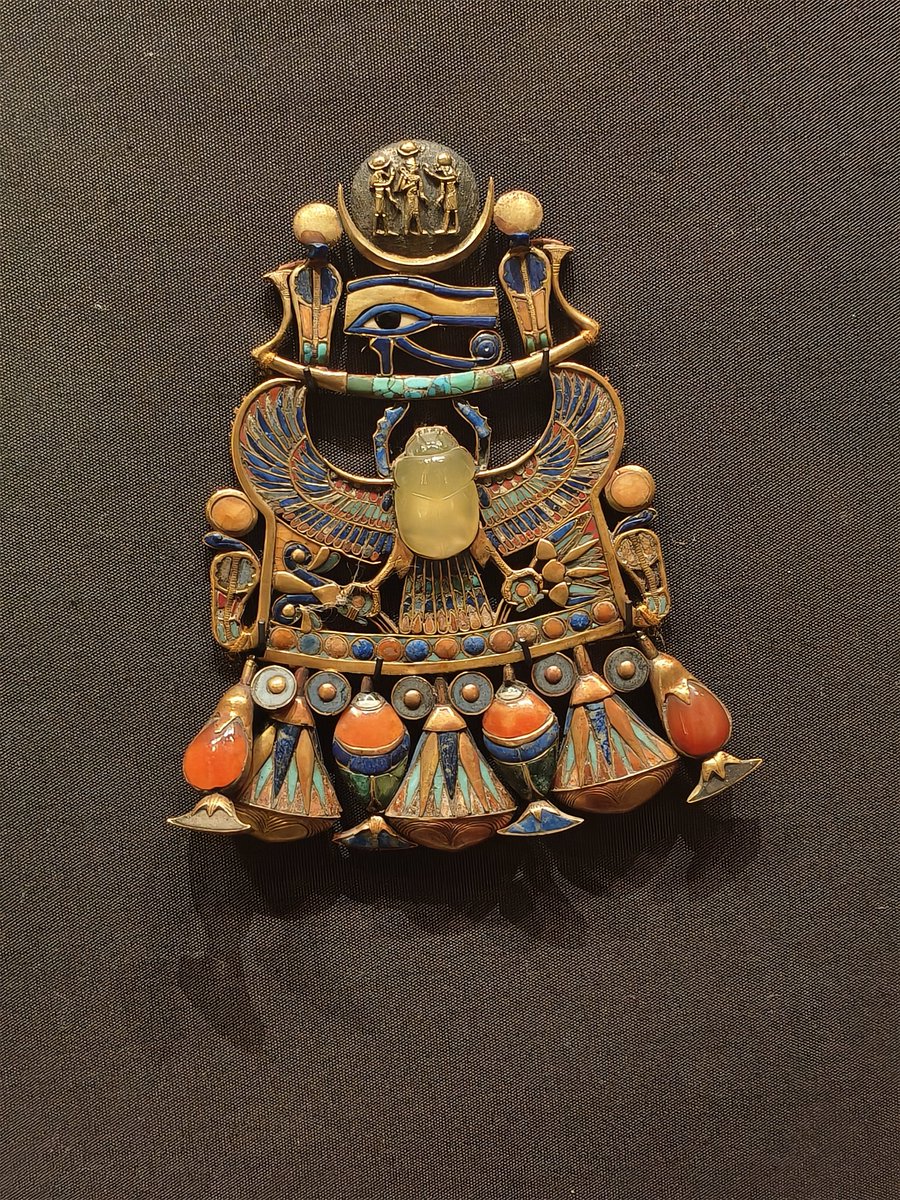
A winged scarab. The Eye of Horus. Two royal cobras.
Three protective symbols brought together in one extraordinary piece of jewelry from Tutankhamun's tomb.
Every detail meant something.
The real sophistication lies in the symbolism. This wasn't simply a collection of beautiful motifs. It was a carefully arranged visual language of protection, renewal, and royal power.
The feather patterns belong to a long tradition of protective imagery in ancient Egyptian funerary art. Their intricate construction is just as remarkable as their symbolism.
The artistry is in the details.
Tutankhamun's middle coffin combines gold, colored glass, and intricate feather patterns through remarkable craftsmanship.
An extraordinary example of ancient Egyptian precision.
Filmed at the Grand Egyptian Museum.
@NANAB_26 That's a fascinating reference! You're absolutely right about Spell 113 and the three figures named in it. Thank you for explaining the visual connection you noticed.
@NANAB_26 Interesting connection! The Souls of Pe and Nekhen were associated with Egypt's royal ancestors and kingship. They're distinct from Anubis, though, whose funerary roles included embalming and overseeing the weighing of the heart.
@forgodssake65 Exactly! Anubis protected the deceased through mummification and oversaw the weighing of the heart. Both roles were central to the journey into the afterlife.
Ancient Egyptians actually grew barley inside the shape of a dead god.
Found in Tutankhamun's tomb, this Osiris Bed was filled with Nile mud and seeds that were watered until they sprouted.
A remarkable ritual that made the idea of rebirth visible.
Why were birds carved on the back of Tutankhamun's golden throne?
In ancient Egyptian art, marsh landscapes could evoke creation, fertility, and renewal.
What looks like decoration may carry a much deeper meaning.
Gold wasn't the only thing that survived inside Tutankhamun's tomb.
These funerary bouquets were found near the entrance to his burial chamber.
Even the flowers left a trace.
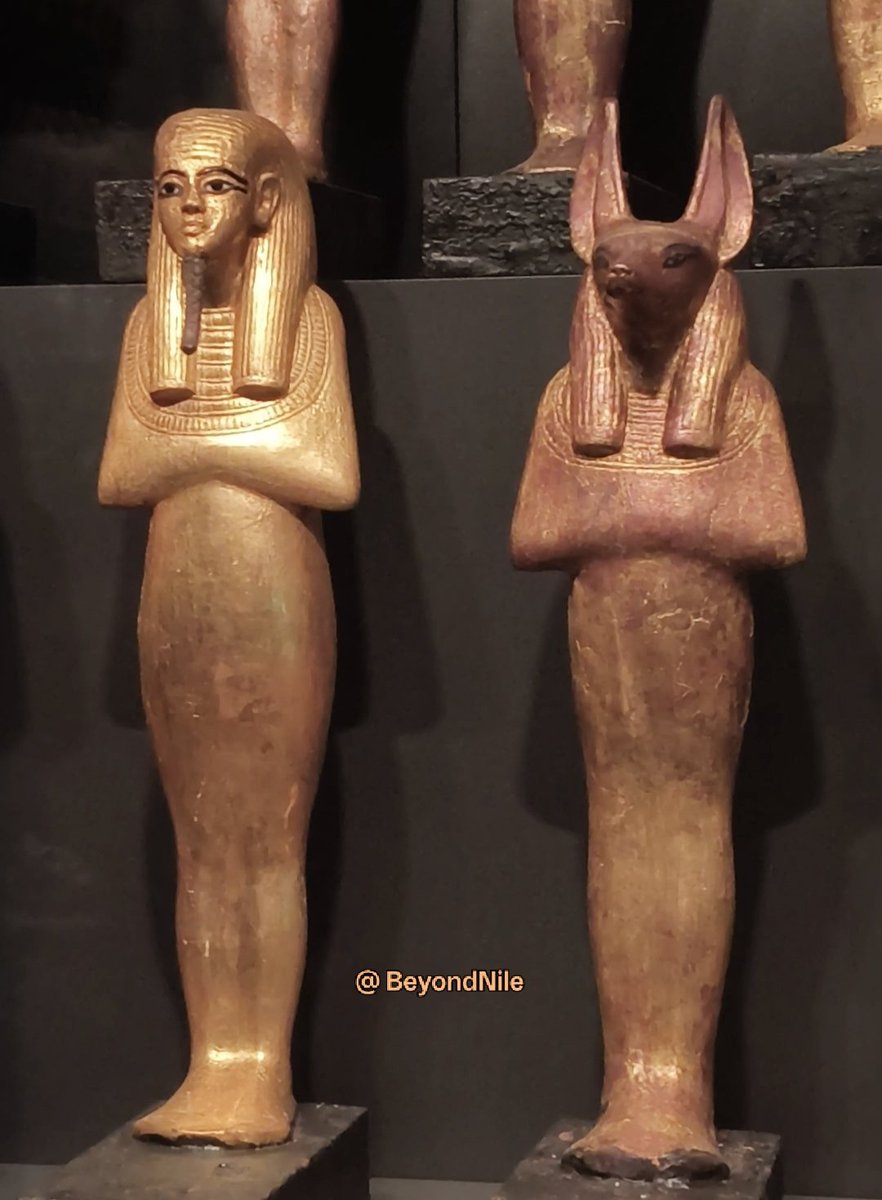
The gold-covered details contrast with the dark surfaces, giving these royal figures a striking appearance. Both were discovered at the entrance to Tutankhamun's burial chamber.
Two statues stood face to face outside Tutankhamun's sealed burial chamber.
One inscription wished the king eternal life, renewed every day like the sun god Re.
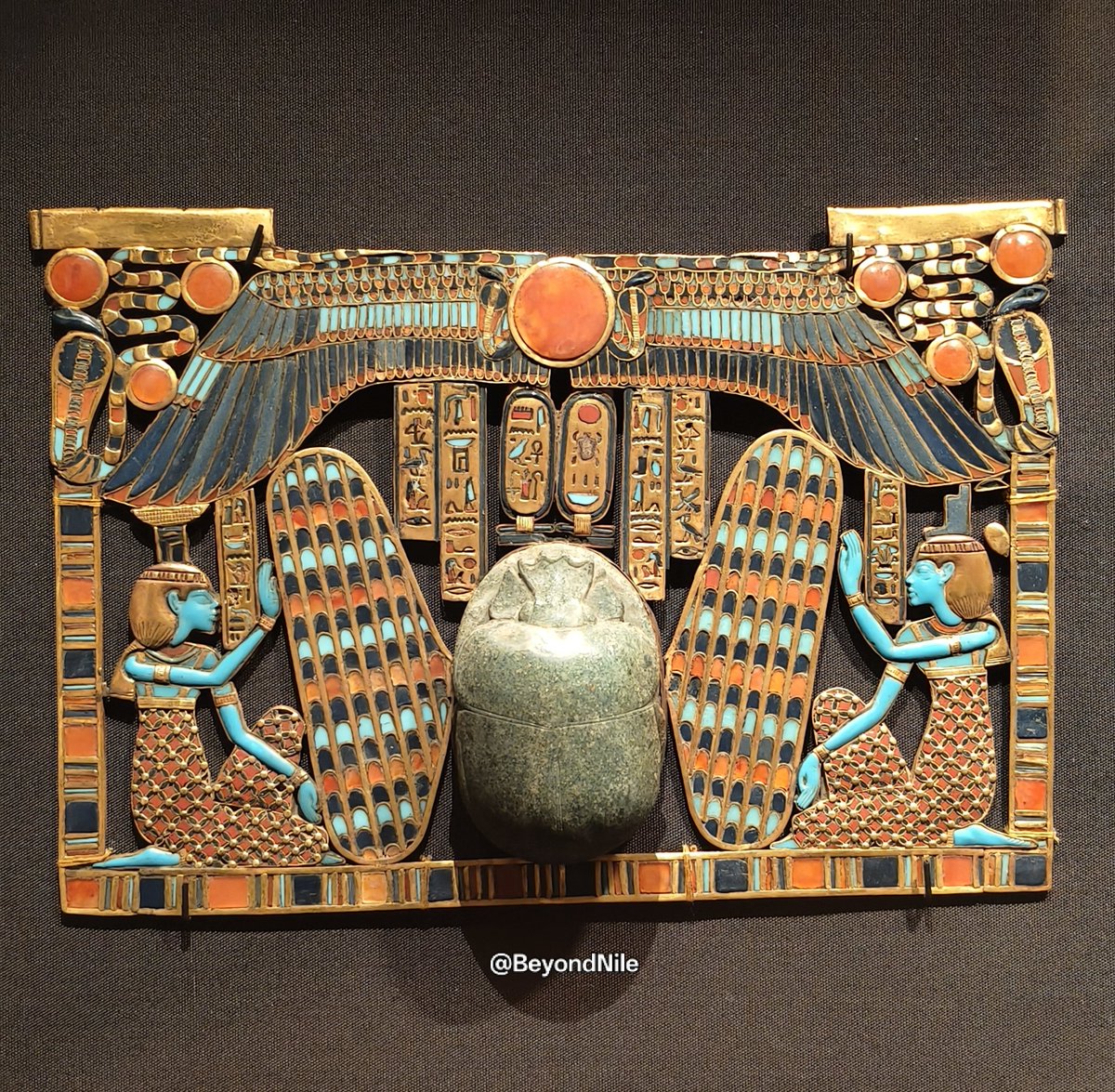
The most powerful detail isn't the gold.
It's the scarab.
At the center of Tutankhamun's pectoral, it symbolizes rebirth, flanked by Isis and Nephthys.
A piece of jewelry carrying the hope of life after death.