The weekends are the hardest
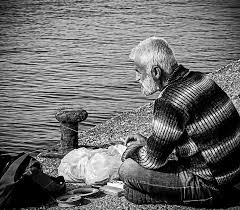
I spoke recently to a retired professional, who lost his wife to kidney disease about five years ago, and was surprised by how put-together yet empty his life was. A strange dichotomy. His weekdays are full. Morning walks. A fixed exercise routine. Groceries. Errands. A few hours of reading. Occasional volunteering. By evening, he’s pleasantly tired.
“Weekdays are easy,” he said. “They pass. It’s the weekends that feel different.”
Saturday mornings arrive without urgency. No reason to get up early, but no reason to sleep in either. He lingers over breakfast, scrolls the news, makes another cup of tea. By noon, he realizes he hasn’t spoken to anyone.
Friends exist. Family exists. But plans don’t land in his inbox the way they used to.
When something does happen socially, it’s usually because he initiates it. Over time, he’s become acutely aware of this pattern: he’s always the one asking. Rarely the one being asked. He said that he realizes that no one is doing it on purpose. People are busy, and have full lives with overcrowded calendars, so it’s understandable that there may not be time to fit him in.
Even though he understands the practical limitations rationally, emotionally, it takes a toll on him to keep having to insert himself in other people’s plans. He says it makes him wonder whether his presence is welcome or merely accommodated.
By Sunday afternoon, he says, the heaviness settles in. “Loneliness doesn’t announce. It just creeps in when the structure I’ve carefully built disappears even for a day or two. When it happens week after week, it’s harder to hide.” So many people who find themselves single later in life struggle with the same ache, of no one really expecting them anymore.
When did companionship start feeling… complicated?
We all remember a time when connection felt simple.
You met someone. You liked them. You followed your heart.
Then, life happened, and somewhere along the way, connections became laden with context, history, and weighed down with questions that didn’t exist before.
Will this disrupt the life I’ve built?
How will my children feel?
Am I ready to explain my past again?
Do I even have the energy to start over?
Something as simple as letting in someone you like and enjoy being with becomes complicated. Fear, baggage, past, all play a role. But it has a lot to do with awareness as well. When you know yourself better, when you know exactly what doesn’t work, or the patterns you don’t want to repeat, the butterflies in the stomach aren’t enough to make you dive in, head first.
Yet, there simmers a desire underneath, if not for a grand romance, then, at least, for having someone to talk to without effort.
Isn’t it strange how something so human can start to feel like a negotiation.
I find myself wondering about this often. If you do, too, tell me, “When did the idea of companionship shift from easy to complicated?”
Who Are You When You’re No Longer Someone’s Spouse?
The reality of being single again after having been married a long time hits different. Almost like an identity crisis. Years of building a shared life with someone fuses your identity with theirs. Being someone’s husband or wife becomes a big part of who you are. And when you lose that role, through loss or separation, the question surfaces: “Who am I now?”
Even if a person doesn’t talk about it in the most obvious ways, it betrays itself as a lament when they talk about routines. “The children are all grown up and settled now.” “I don’t need to check in with anyone anymore.” “Not like I have anyone waiting for me at home.”
It sounds like independence. And in many ways, it is. But there’s also a strange unfamiliarity in it. Almost as if a person is trying to re-meet themselves anew. For years, decisions were made as “we.” Even disagreements had a shared frame. Life had a built-in witness.
When that disappears, what remains is not just freedom but also space, which can feel unsettling when you’re not used to occupying it alone. So many people rush to fill it, be it with work, family, or just noise that drowns down the question that feels too exposed.
Then, there are a few who pause and sit with the discomfort of this question. That’s when something unique unfolds. They begin to recognise their own preferences again, about things big and small. What feels like pure joy when no one else’s likes or dislikes need to be factored in. What feels nourishing, and what drains them. What feels comfortable and what makes their skin crawl. Only those get a chance to meet themselves again without the label that defined them for so long.
This shift also changes what connections mean to a person in this stage of life. They begin to own the fact that identity doesn’t end with a marriage. It shifts and can make room for something new, someone new. Not necessarily to build a life from scratch with, but to seek a connection where two people can bring their whole-led lives together, complete with histories, baggage, habits, and hard-won clarity. That’s when the most beautiful stories of a fresh start unfold.
Dating Apps Don’t Work for People Who are Done Proving Themselves
The world of dating apps works on a predictable rhythm. It starts with swiping, then self-editing your profile, then re-editing it again, then waiting, then refreshing notifications. And, if you’re lucky, maybe a message.
Now, this model has worked well to keep a generation of youngsters hooked to the allure of the next swipe because it feeds the thrill of the chase, peppered with a generous dose of novelty. But for people who have lived rich, demanding, responsibility-filled lives no longer want to spend their energy performing for attention. Because for them, something shifts on an internal level. They aren’t drawn to the exhibitionism built on trying to be impressive. They’re trying to be understood. That’s why, to them, this model often feels futile.
Data supports this. According to Pew Research Center, only about 20% of adults aged 50–64 have ever used a dating app, and usage drops sharply after that. Among those who do try them, nearly one in three report negative experiences, describing interactions as superficial, rude, or emotionally unrewarding.
In other words, the people most interested in depth don’t want to spend their time navigating systems designed for velocity. Yet the architecture of most apps still rewards speed, surface cues, and self-promotion. Profiles become compressed versions of a life story. Conversations are filtered through photos and punchlines. And connection is treated like a numbers game.
Esther Perel, one of the most widely respected voices in modern relationship psychology, once observed, “Where there is choice, there is anxiety. Where there is abundance, there is loss of value.” This rings true in the context of digital dating. Endless options can quietly devalue attention. When another profile is always one swipe away, presence becomes fragile, listening becomes optional, and staying invested in one person long enough to build a real connection becomes harder.
For people who are done proving themselves, this can feel strangely alienating because what they’re really looking for is a slower exchange. A setting where conversation isn’t rushed, where context matters, and where interest is shown through consistent effort.
The problem, then, isn’t that these people don’t want connection but that the tools for finding one were never designed with them in mind. Which is why I began asking a different question altogether: What would connections built on presence and authenticity, not performance, look like? Out of that question, Beyond Small Talk was born.
Beyond Small Talk is about slowing things down.
About real conversations, in real rooms, with real people. We do curated, small meet-ups across cities in India, along with virtual gatherings, open to singles, widowed, or divorced individuals in the age group of 59–72. Every participant is vetted by me personally, because safety, intent, and emotional maturity are the topmost priority.
I believe nobody should eat dinner alone.
If this resonates, comment ‘interested’ and I’ll share details personally.
Since starting the Beyond Small Talk initiative, I’ve interacted with many people who seem to be living a full life, on paper, but feel hollow on the inside. One such story is of a man who, by most conventional measures, had done everything right.
Highly educated. A long career with the central government. A marriage that began in the mid-80s. A daughter born in the early 90s. He translated books, worked with NGOs, even had his name associated with a major publishing house.
On the surface, his life looked complete, even without a partner. But when he spoke, it wasn’t with a sense of achievement, but a heaviness of absence. His wife had died young, after a long illness. Their daughter was barely four. He raised her alone, moving cities, turning down transfers, reshaping his entire life around being a present father. She grew up, built her own life, got married, moved away. And with that, his days emptied out.
There were a couple of attempts at starting over. Relationships that asked him to uproot his life again, leave the city he had anchored himself to. He couldn’t. Not after everything. So those ended too. The last time he was in a relationship was in 2005.
After that, he stopped trying. Not out of bitterness, but a sense of resignation. Life became smaller. A modest home. Work that came and went. Long stretches of silence. Years passed.
On why he wanted to give Beyond Small Talk a try, he said, “At this age, I don’t want excitement. I want a like-minded companion.” Not grand gestures or sweep-you-off-your-feet romance. Just someone to talk to. To sit with. To share meals, opinions, and ordinary days with.
There are so many people like him. Men and women who did everything “right,” who carried responsibilities without complaint, and now find themselves alone in a world that assumes companionship has an expiry date.
Beyond Small Talk exists because I refuse to believe that’s true. When you bring real people together, facilitate real conversations, the courage to want connection again finds a way to embolden itself.
The epidemic of loneliness and seeking connections Beyond Small Talk
A few months ago, a friend, who lost her husband to cancer nearly a decade ago and has been living alone since her daughter got married, told me something that stayed with me long after the conversation ended. Recently, she was stuck at an airport for hours because of flight delays. And in all that time, no one checked in on her. No “Have you reached?”, no “Are you okay?”, no familiar voice breaking the silence.
When she shared this with me, it made me realise how quietly loneliness shows up in and engulfs so many lives. It may not always be a loud crisis asking for help, but the unending stretches of being unseen, of having no one to share a mundaneness of life with, can chip away at a person, bit by bit.
As her words lingered in my mind, the idea of helping people like her find authentic, real connections, and not go through life feeling like companionship is something meant only for the young or the newly in love, began to take hold.
I didn’t want to build another swipe-led dating experience. I’ve worked in the space of romantic relationships long enough to know how transactional and exhausting that world can feel, especially if you’re older, widowed, or divorced. That’s how Beyond Small Talk was born.
Beyond Small Talk is about slowing things down. About real conversations, in real rooms, with real people. We do curated, small meet-ups across cities in India, along with virtual gatherings, open to singles, widowed, or divorced individuals in the age groups of 36–59 and 59–72. Every participant is vetted by me personally, because safety, intent, and emotional maturity are the topmost priority.
After all, sometimes, all we’re really looking for is someone to check in.
Want a dating profile that buzzes with matches? These witty, flirty, and swipe-worthy username ideas will set you up for success
https://t.co/3G4xUpVeX8