1,400+ documents of Venezuelan postal history. Catalogues, transcribed and free. Alberto Nava, author of Ink and Fire — Chronicles of the Post, Vol. I.
Forty-two years of a Venezuelan printer, told through the stamps he made and the ones he had to expose as forgeries.
Ink and Fire, Volume I. 1858-1902. Free EPUB and PDF, no registration, no email. ES · EN · FR. #philately
https://t.co/CyCb9gUMeD
In 1874 a Paris stamp magazine received a small yellow slip that read «Bejuma» and «Debe». Nobody could say what it was: the stamp of a mail service the government had not made.
Episode 3 of «The Early Philatelic Press», with English audio and subtitles: https://t.co/mhbJHUMuwJ
Audio and subtitles in English, Spanish, French and German: choose them in the player's ⚙ settings.
Audio y subtítulos en español, inglés, francés y alemán: se eligen en el ⚙ del reproductor.
https://t.co/8id5LhIceB
1864–1910: the forgeries of Venezuelan stamps, as the philatelic press of Liverpool, Brussels, London and New York told them.
Las falsificaciones de las estampillas de Venezuela, 1864-1910.
Episode 1 · Episodio 1 · «Prensa Filatélica Antigua»
https://t.co/dpHmf1y1cY
In 1894 Caracas had a philatelic society, a collectors' league and five stamp magazines. Eighty years later, almost nobody knew.
Episode 2 of «The Early Philatelic Press», our documentary, with English audio and subtitles: https://t.co/3k1uR8Ai9i
Venezuela's first postage stamps went on sale on January 1, 1859.
Our new graphic novel imagines how they were made, through the eyes of a 14-year-old apprentice in Caracas.
Ink and Fire, volume 1: 52 full-color pages, free PDF.
https://t.co/SrYpl3siuV
#GraphicNovel#Philately
Ya está aquí: el volumen 1 de «Tinta y Fuego» en novela gráfica. 52 páginas a color, gratis en PDF.
La Guaira, 1858. Un muchacho de catorce años ve llegar las primeras estampillas de Venezuela… y en Caracas aprende a hacerlas.
https://t.co/KLJdG3Elm6
#NovelaGráfica#Filatelia
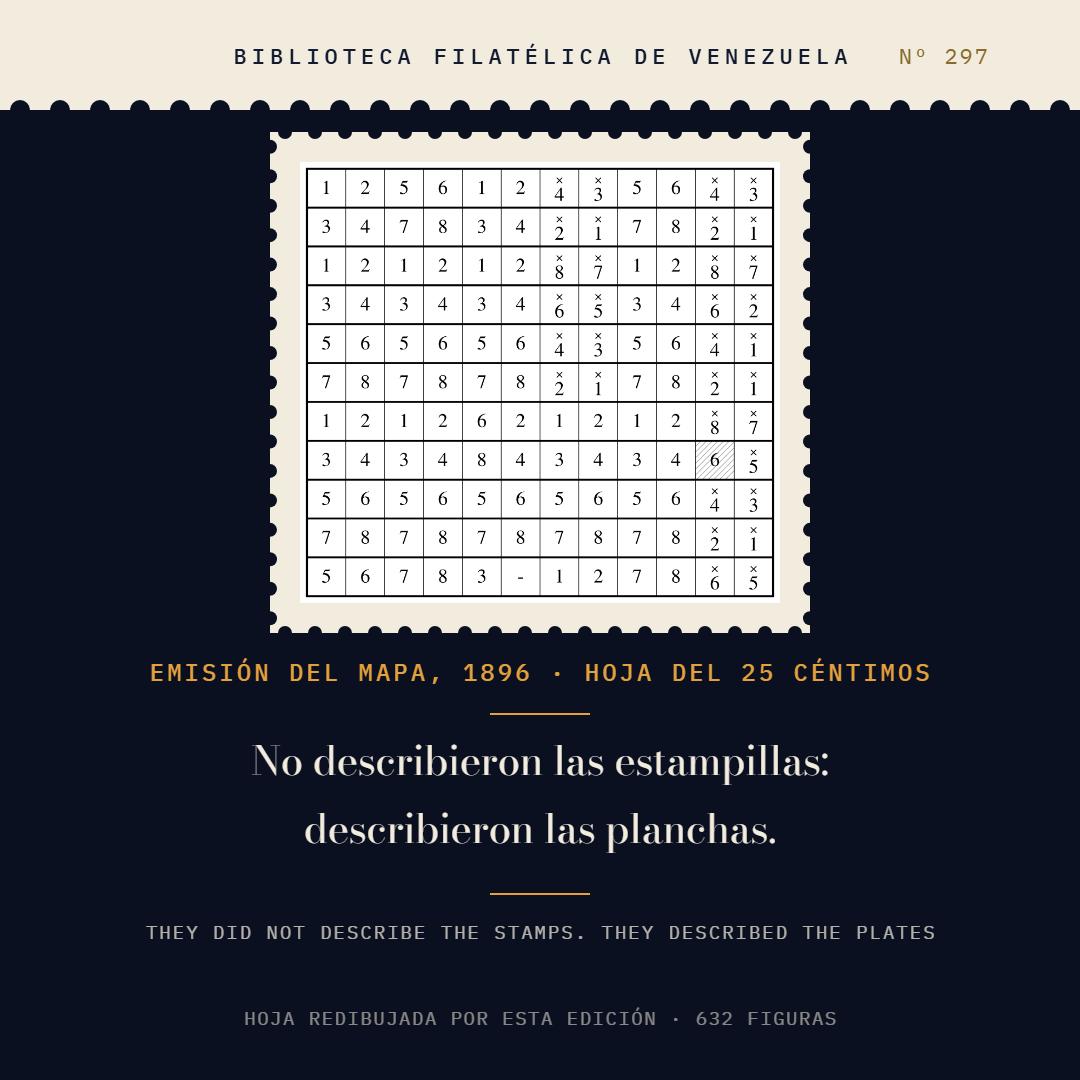
London, 1924: Thomas W. Hall and L. W. Fulcher publish the most serious study ever made of Venezuelan stamps. They did not describe the stamps. They described the plates.
A hundred years on, the centenary edition: 316 pages, 632 figures, free.
https://t.co/3xLy3vnFsq
1858: the decree that created Venezuela's postage stamp, "so that they may not be forged": half a real, one real and two reales, each in a different color.
📜 The decree: https://t.co/tlqeMuUxAW
📖 The novel "Ink and Fire", free: https://t.co/esDUFR0bhp
#Philately#Venezuela
Ten volumes. One story, of ink and of fire.
The 10 covers of Ink and Fire, the graphic novel by Alberto Nava. La Guaira, 1858: Venezuela's first postage stamps come ashore.
Read the novel for free: https://t.co/PHRMUDfCBI
#GraphicNovel#Philately#Venezuela
La Guaira, 1858: a boy of fourteen watches the brig Joseph sail in, and with her Venezuela's first postage stamps. A year later, in Caracas, he learns how they are made, and someone teaches him to make them false.
Ink and Fire, the graphic novel.
https://t.co/e1jbhH8IFd
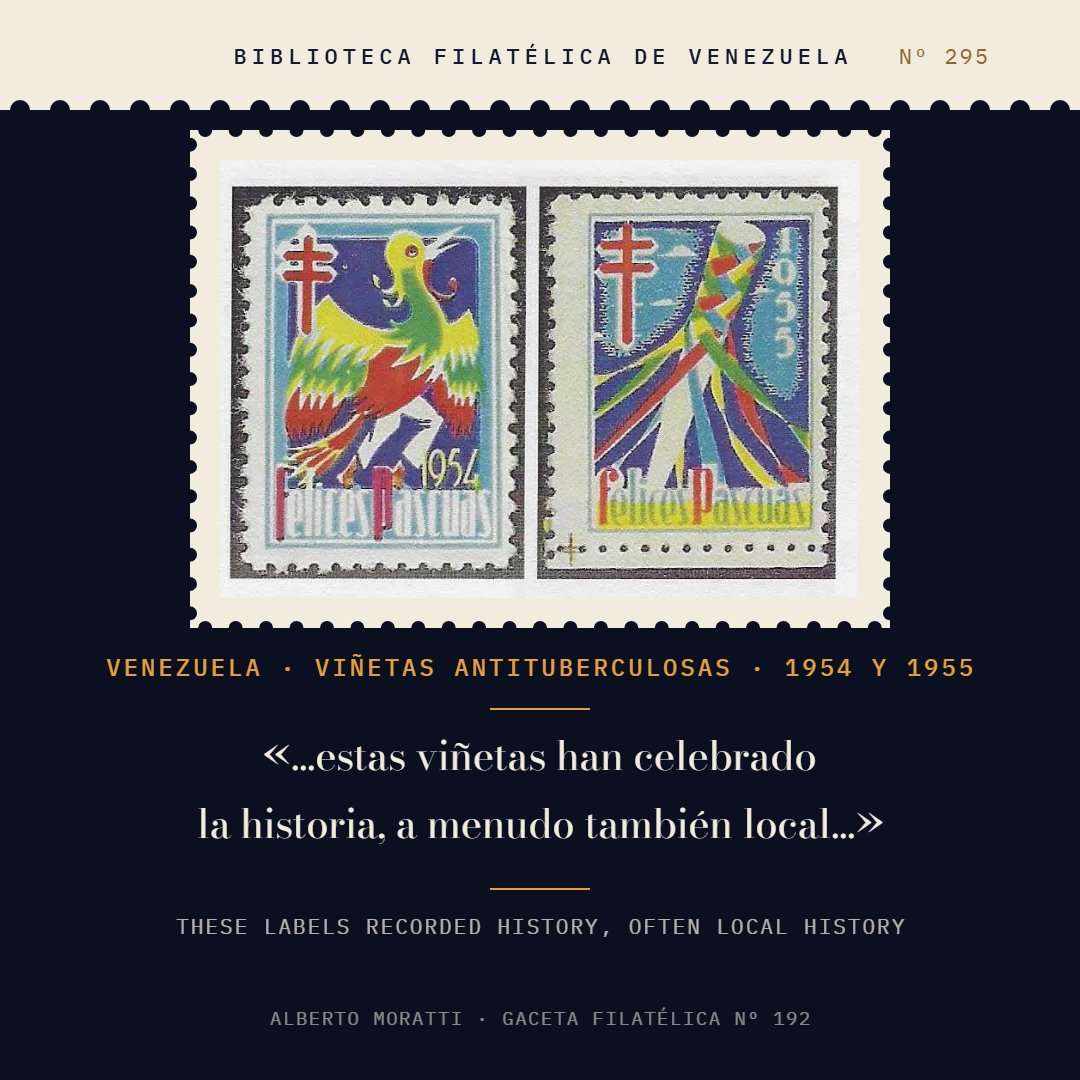
December 1943: the anti-tuberculosis league of Zulia sells labels at 5 céntimos. They look like stamps, but they pay no postage. From 1945 they turn into Christmas labels.
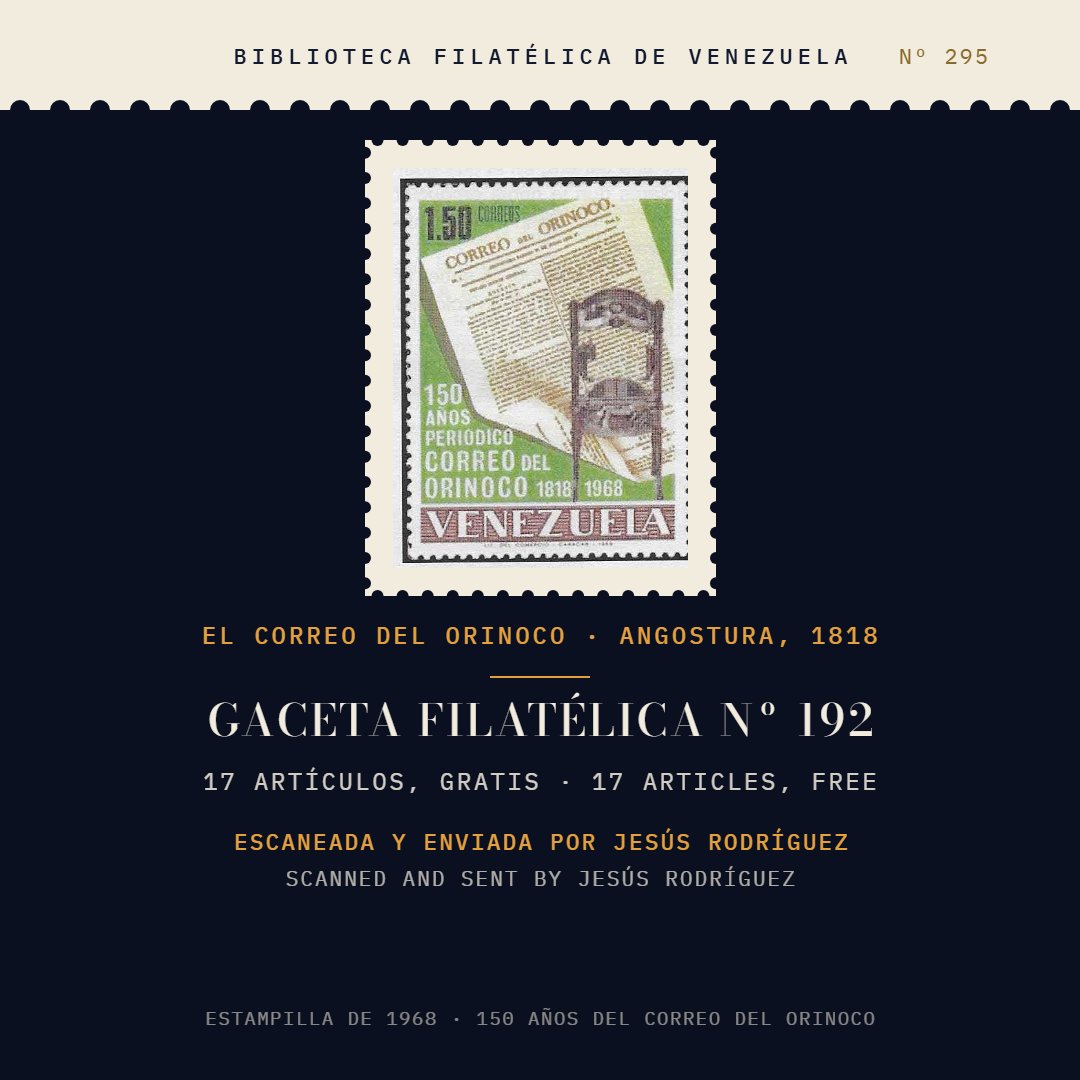
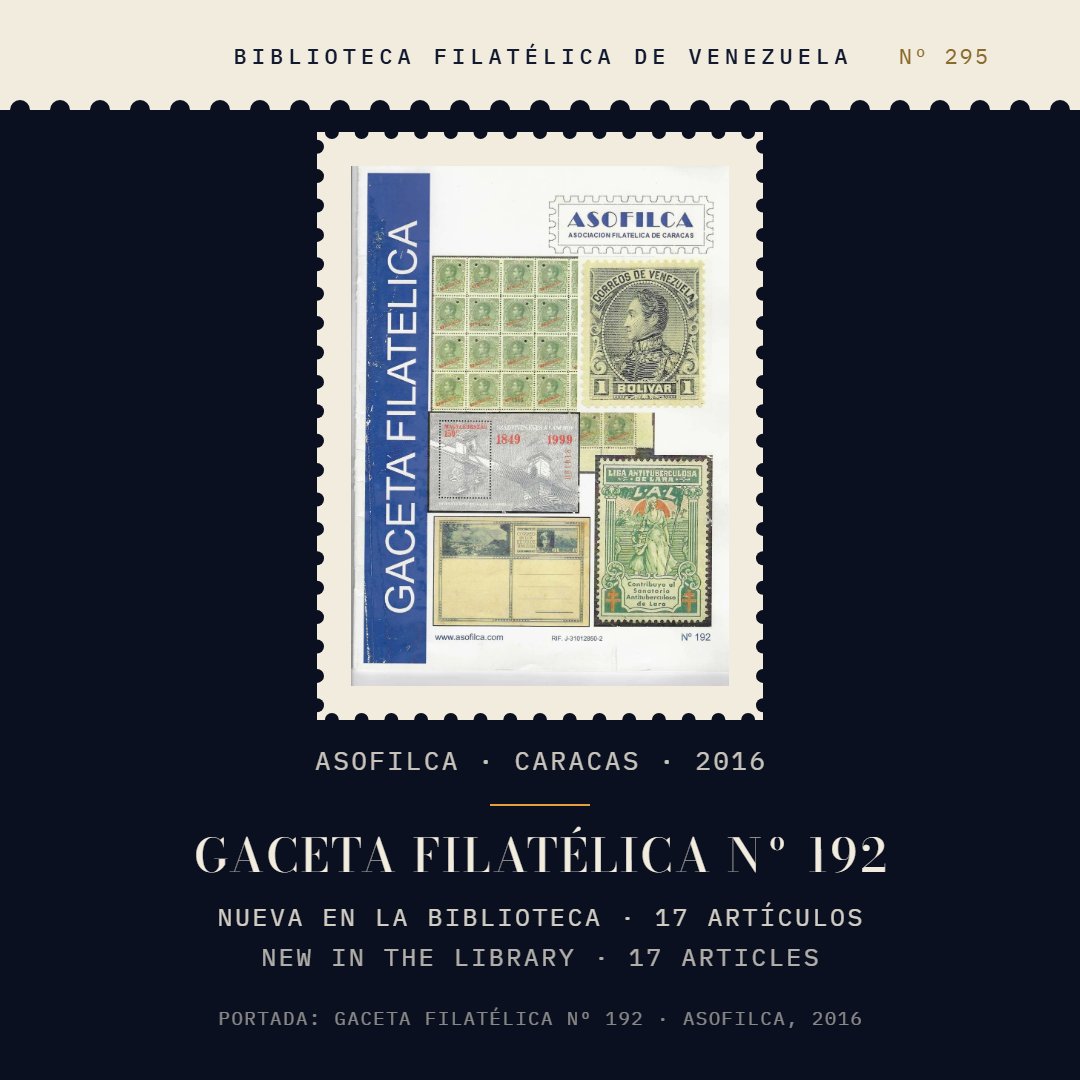
Erinophilia: one of 17 articles in Gaceta Filatélica 192, new in the library.
https://t.co/axrhvSpoyT
Venezuela, 1900: the 1 bolívar stamp was to carry a black "1900" overprint. A sheet of 100 escaped it: the Black Bolívar. No used copy is known.
Ink and Fire, chapter 40, tells of one sheet. A 2016 study measured 32 copies: it wasn't just one.
https://t.co/Mv6NqSo8tz
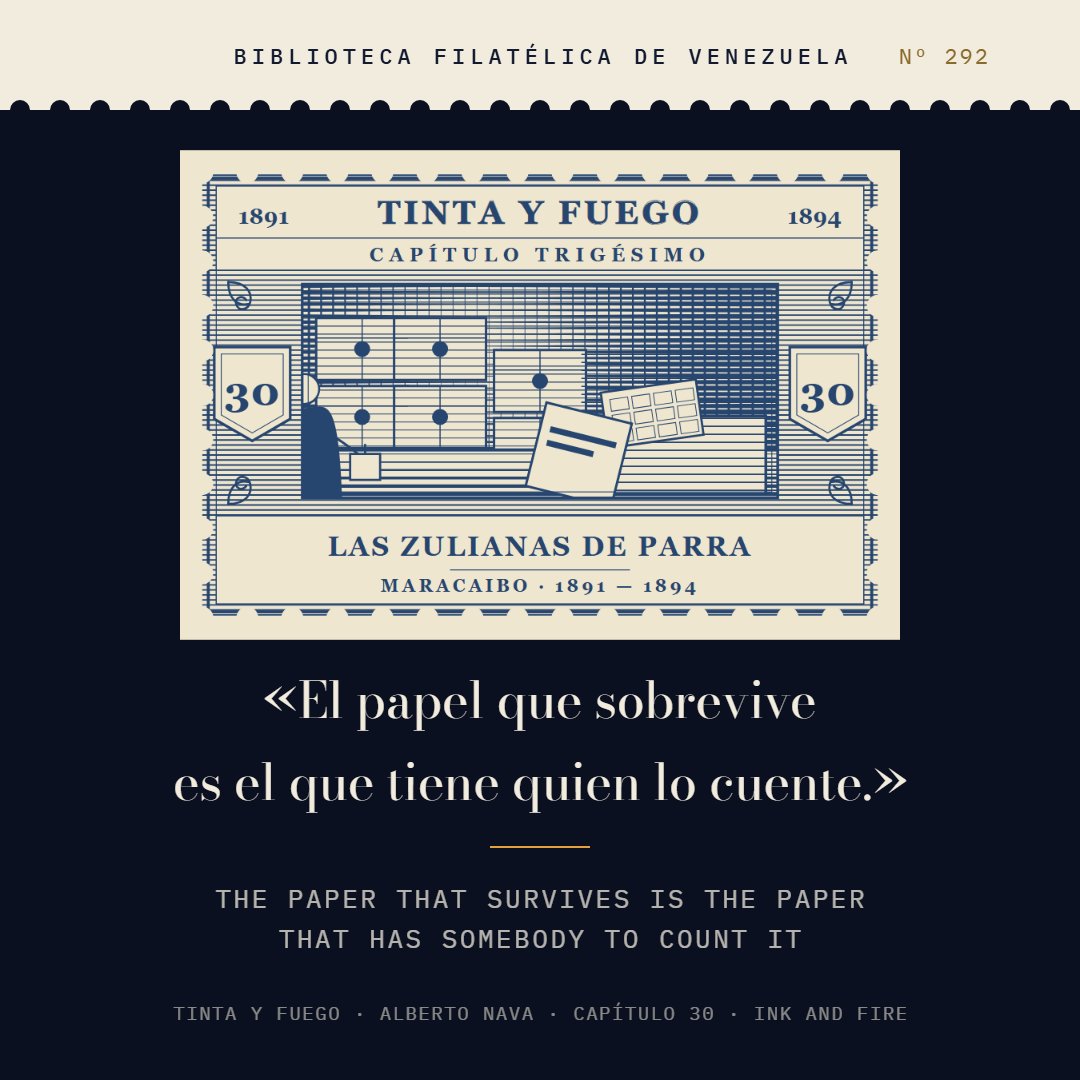
1891: Zulia orders its own stamps from New York. The colours come out swapped, the plates leave no trace, and two months after the lot is found in Maracaibo, Paris announces an "astonishing discovery."
Chapter 30 of Ink and Fire imagines what happened.
https://t.co/fyaXY3G9cS