Summer brings abundant opportunities to get outside, but can spending time in nature actually improve your focus?
On Big Brains, UChicago psychologist Marc Berman explains his findings that time in nature can significantly boost attention and cognitive performance—in some cases more effectively than medications. https://t.co/kVk6FoXH16
What if the biggest risk of AI isn't what it learns from us, but what we don't learn from each other?
UChicago Prof. @DrDanaSuskind warns that relying on technology to help raise children could create what she calls "artificial attachment," replacing the interactions between kids and parents that are crucial to development. https://t.co/yL3nlD86FT
Child development has long centered on learning hard things. What happens when AI can do that for us? UChicago Prof. @DrDanaSuskind explains the role that AI should take in families' lives—and why a low-tech childhood might be the best way to prepare. https://t.co/Y9lK02MkBI
What if garbage is actually a modern concept?
On Big Brains, @UChicago anthropologist Sarah Newman explores how societies once valued, reused and repurposed objects—and what that history can teach us about today's disposable society. https://t.co/kSVrlDxdgS
Tag: @UChicagoSSD
Most online shoppers don’t realize how often they’re being manipulated.
@UChicago Prof. Marshini Chetty's (@ineffablicious) team analyzed 11,000 top shopping sites and found that at least 11% used deceptive “dark patterns” during checkout.
Learn more: https://t.co/FYNk7GNWAm
Why is it easy to sign up for an online subscription but difficult to cancel?
On @BigBrainsUC, @UChicagoCS computer scientist Marshini Chetty explains her research on "dark patterns" on the web—the hidden tricks that companies use to deceive users.
https://t.co/8stPry5fx8
Why is it easy to sign up for an online subscription but difficult to cancel?
On Big Brains, @UChicagoCS computer scientist @ineffablicious explains her research on "dark patterns" on the web—the hidden tricks that companies use to deceive users—and what they reveal about privacy, data collection and more.
Watch: https://t.co/F7hhPWGRKM
Technology born from quantum research is poised to become part of our everyday lives — perhaps in ways we can’t yet fully comprehend. Big Brains, in partnership with @1440_Daily, invited a panel of leading UChicago scientists from @UChicagoPME and @UChicagoPSD to explore how their work could transform the future. https://t.co/HIoSwBTk9V
Quantum technology is poised to transform our world, and UChicago is helping shape our future. @BigBrainsUC hosted a panel discussion with @1440_Daily in which scientists shared how quantum could impact fields ranging from medicine to cybersecurity: https://t.co/RNvZo1neH6
Who do we avoid talking to strangers on the train or resort to making small talk with family or people at work?
UChicago @ChicagoBooth behavioral scientist Nicholas Epley explains his research on these questions, which to him are even more puzzling, given the positive effects such conversations can have on our health and happiness.
Big news for Big Brains: @UChicago's flagship podcast won a 2026 #CommunicatorAward of Excellence—top honors from our industry peers. The honor reflects our work bringing groundbreaking research and ideas to global audiences through thoughtful conversations on science, society, politics, economics and more.
Subscribe and listen to the latest episodes: https://t.co/rTuRrjqV2w
Research has shown that meaningful connection is one of the strongest predictors of a fulfilling life. On @BigBrainsUC, Prof. Nicholas Epley of @ChicagoBooth explains why we crave deeper connection more than we realize — and why talking to strangers can leave us feeling better.
“Every day, we’re uncovering something new.” UChicago scientists demystified quantum technology at a live Big Brains podcast recording with 1440, exploring how this research could transform fields from medicine to computing. Full episode coming soon.
Have we forgotten the lessons of past financial crises—and what will happen when faced with the next one? On Big Brains, Nobel laureate and @ChicagoBooth economist Doug Diamond explores the future of the Federal Reserve.
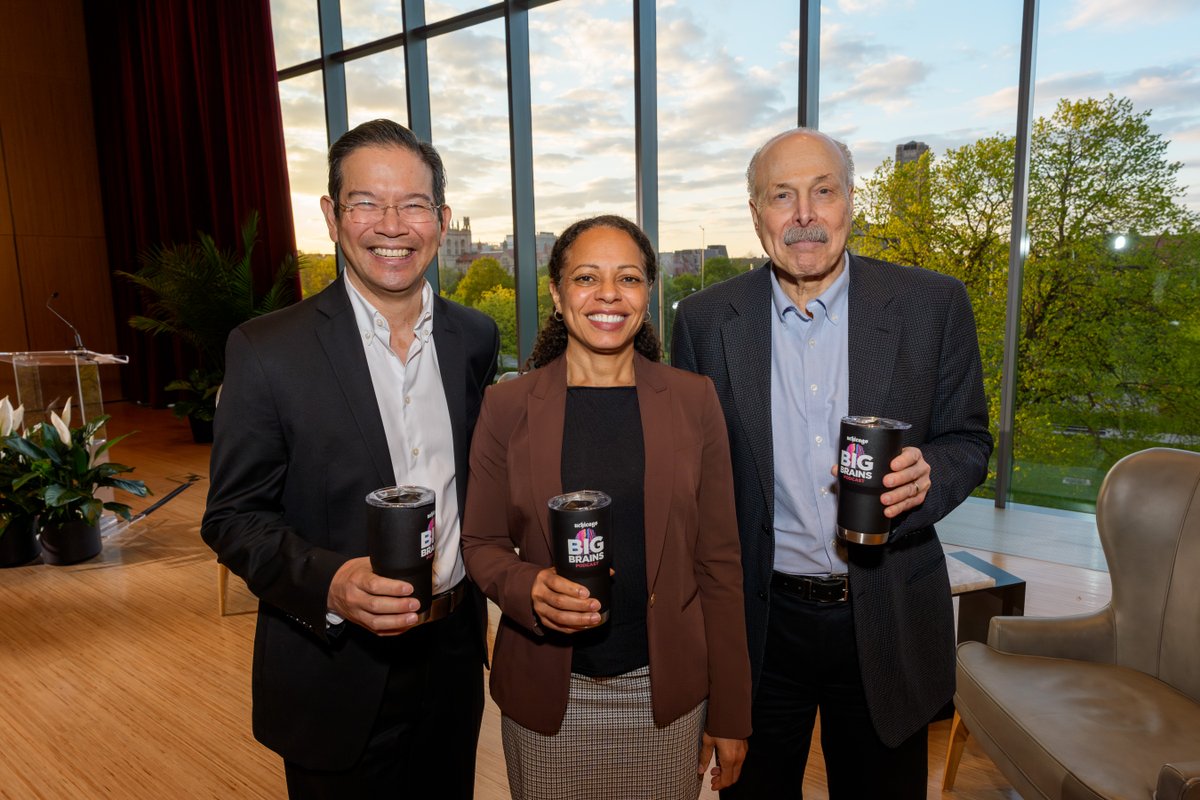
Thank you to everyone who visited us during @UChicagoAlumni Weekend. It was great to meet you, hear your stories and share how the podcast brings groundbreaking research and big ideas from @UChicago scholars to audiences everywhere.
A special shoutout to alumn Keith Johnson, Class of 1958, our first fan of the day, and to our intern Adah-Lael for helping bring the Big Brains experience to life.
Whether you’re new to the podcast or have been listening for years, we’re grateful for the chance to connect with the UChicago community. Subscribe on YouTube or wherever you get your podcasts to keep exploring the ideas, discoveries and questions shaping our world. https://t.co/atVBZ7tfIc #UChiAW
If you're on campus for @UChicago Alumni Weekend, come visit the Big Brains table on May 2 at Ida Noyes Hall.
Meet members of our team, grab some swag and learn more about UChicago's flagship podcast. https://t.co/xhUaKqJUng
What’s next for the Federal Reserve? Nobel laureate and @ChicagoBooth Prof. Doug Diamond joins @BigBrainsUC to discuss the Fed's important role and its independence, as what we can learn from past financial crises as we look to the future. https://t.co/l1DAKryf5E