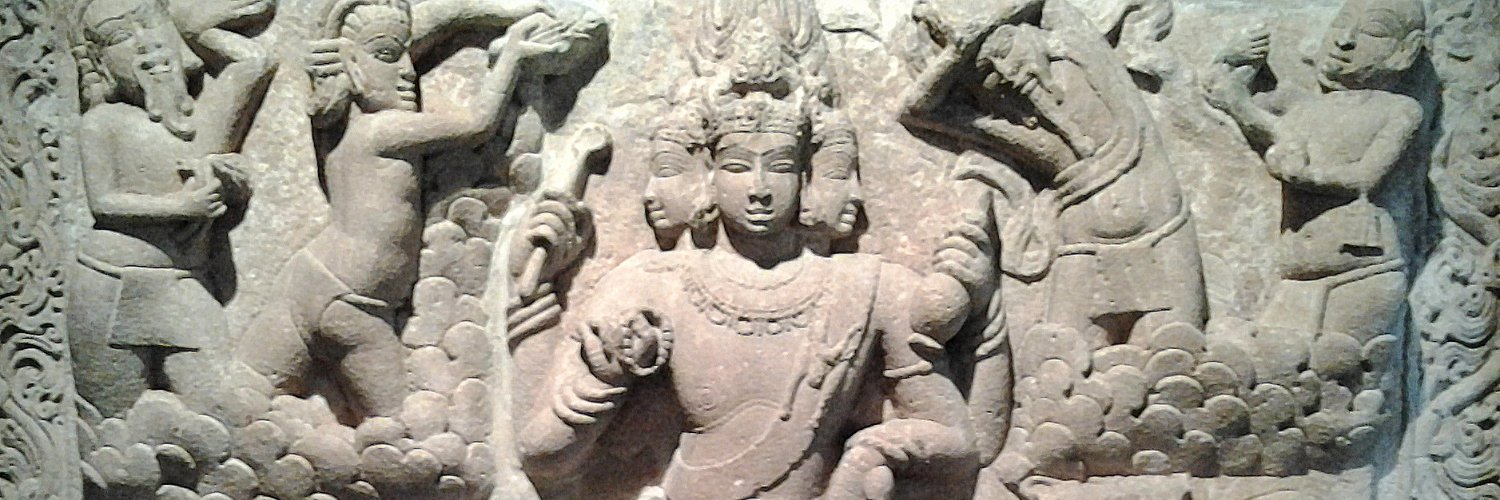
Ashwamedha Type Gold Dinar of Emperor Samudragupta
King Sri Gupta circa 240–280 CE, founded the Gupta dynasty which lasted for next ~200 years and marked a golden chapter of Indian history. Two major events took place in the third century - fall of Kushan empire in North and disappearance of Satavahana in Deccan. Guptas capitalized on these events and built one of the strongest empires of India. Sri Gupta was followed by Ghatotkacha (c. 280–319 CE). These early rulers used the title Maharaja and laid the groundwork for expansion.
Chandragupta I (c. 319–335 CE) marked the empire's true beginning. He assumed the grander title Maharajadhiraja = great king of kings and expanded power through conquest and a strategic marriage alliance with the Licchavi clan via princess Kumaradevi. His reign started the Gupta Era (GE) calendar (c. 320 CE).
For more... https://t.co/TnYtMZrRPL
#coin #money #numismatics #ashwamedha #Samudragupta #guptaempire #dinara #dinara #CultureUnitesAll #12YearsofVikasBhiVirasatBhi
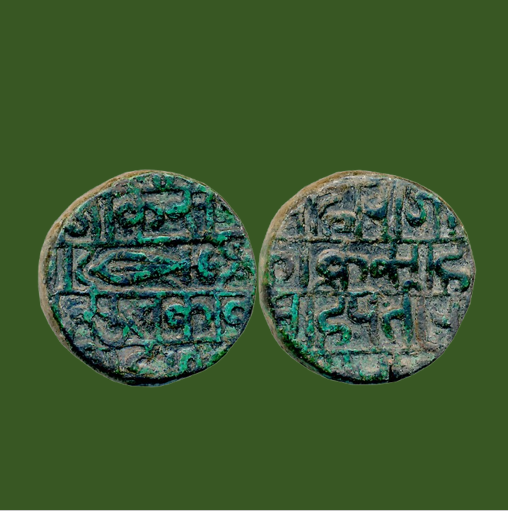
Exceptionally Rare Copper Dam of Gond King Gorakh Shah
The Gonds are a major indigenous community of central India who built powerful kingdoms known as the Gondwana kingdoms. These were among the last major indigenous-ruled states in central India before the rise of Mughal and Maratha dominance. Today, they continue to preserve a vibrant cultural heritage through art, festivals, and oral traditions.
The Gond kingdoms flourished between the 14th and 18th centuries. They maintained autonomy while sometimes paying tribute to other rulers at times. They faced increasing pressure from the Mughals, Marathas, and later the British. Internal conflicts and external invasions led to their decline. By the late 18th–19th century, most Gond territories came under Maratha or British control. The Gond rulers lost political power, but their cultural identity and traditions persist strongly today...
click for more on the above:
https://t.co/qPeE6oHJmV
#money #coin #gond #gonswana #Gorakh #KokShah #Maratha #Shivaji #king #India #CultureUnitesAll #12YearsofVikasBhiVirasatBhi
Copper Coin of Chogyal Thutob Namgyal, Sikkim
Step into the story of the Namgyal dynasty, the royal line that ruled Sikkim as Chogyals which means spiritual kings from 1642 until the monarchy ended in 1975. For over 330 years, this Tibetan Buddhist dynasty shaped the culture and identity of the Eastern Himalayas.
But where did it all begin?
For more... https://t.co/EGbOjQ2apw
#coin #money #numismatics #tibet #buddhism #northeast #sikkim #namgyal #thutobnamgyal #CultureUnitesAll #12yearsofvikasbhivirasatbhi
Mananka Coin Series of Lichhavi, King Manadeva I
The Lichhavi clan traces its origins to the ancient republican Licchavis of Vaishali which is in present-day Bihar. They are known from the time of the Buddha. A branch of this clan is believed to have migrated northward, possibly due to political pressures and established its authority in the Kathmandu Valley. They introduced a more structured monarchy, adopted Sanskrit as the court language, and strengthened cultural and religious connections with India, while also maintaining ties with Tibet.
The Lichhavi Kingdom flourished roughly between 450 and 750 CE and is often regarded as Nepal’s Golden Age. This period witnessed significant progress in art, architecture, administration, trade, and cultural development.
For more... https://t.co/OdEILdtcx7
#coin #numismatics #money #licchavis #nepal #laxmicoin #mananka #CultureUnitesAll #12yearsofvikasbhivirasatbhi
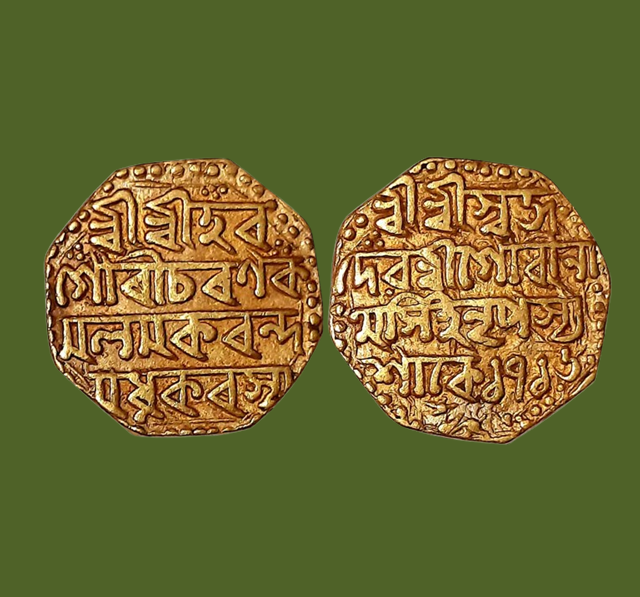
Gold Mohur of Ahom King Gaurinatha Simha
In our previous article, we explored the Gold Mohur of Ahom king Swargadeo Rajeshwar Singha. In this edition, we turn our attention to the gold mohur issued by Gaurinatha Simha.
Gaurinatha Simha was the 35th king of the Ahom Kingdom in Assam, reigning from 1780 to 1795. He ascended the throne at a young age of 15 following the death of his predecessor, Lakshmi Singha. During his reign, he shifted his capital from Rangpur (near present-day Sivasagar) to Jorhat in 1794. The capital was shifted to ensure better administrative control owing to ongoing political instability, particularly the Moamoria Rebellion.
For more... https://t.co/U7TIDe3ONQ
#coin #money #numismatics #ahom #Assam #mohur #gaurinathasimha #CultureUnitesAll #12yearsofvikasbhivirasatbhi
Set of 6 Silver Coins of Ahom King Gaurinatha Simha
In our previous article, we explored the Gold Mohur of Ahom king Swargadeo Rajeshwar Singha. In this edition, we turn our attention to the gold mohur issued by Gaurinatha Simha.
Gaurinatha Simha was the 35th king of the Ahom Kingdom in Assam, reigning from 1780 to 1795. He ascended the throne at a young age of 15 following the death of his predecessor, Lakshmi Singha. During his reign, he shifted his capital from Rangpur (near present-day Sivasagar) to Jorhat in 1794. The capital was shifted to ensure better administrative control owing to ongoing political instability, particularly the Moamoria Rebellion.
For more... https://t.co/GxyFzWIB70
#coin #numismatics #money #ahom #mohur #assam #CultureUnitesAll #12YearsOfVikasBhiVirasatBhi #octagonal
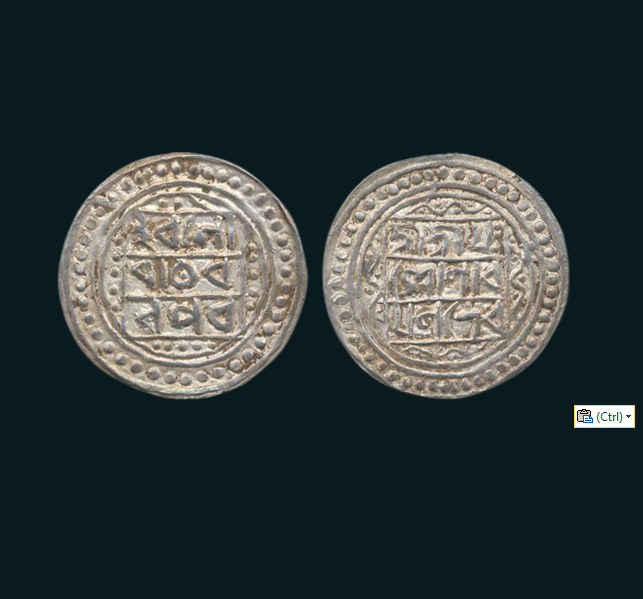
Extremely Rare Silver Quarter Tanka of Kachar Monarch Yasho Narayan, Owing Allegiance to Ghatotkacha Lineage
Hidden within the misty valleys and forested hills of Northeast India lies the story of the Kachar, or Dimasa Kingdom, a powerful yet often overlooked realm shaped by the Bodo-Kachari people. Stretching across the southern banks of the Brahmaputra River, from the Dhansiri Valley to the North Cachar Hills and beyond, this kingdom quietly expanded its influence over present-day Assam, Nagaland, and the fertile Cachar plains, leaving behind a legacy engraved more on coins than in written records.
With few written records to narrate its past, the true voice of the Kachar Kingdom survives through its coinage. Their legendry origins are linked with the Ghatotkacha who was the son of Bhima and Hidimba from the Mahabharata. They claimed descent from the Hachengsa (or Hatsungtsa) clan. These silver tankas, minted between the early 16th and 19th centuries, are more than currency as they are storytellers in their own right. They reveal fragments of political power, clan legitimacy, and dynamic interactions with neighboring kingdoms like Bengal, Tripura, Koch, and the Ahoms.
For more... https://t.co/hiXqHcAfff
#coin #numismatics #money #assam #nagaland #dimsa #kachar #northeast #CultureUnitesAll #12YearsofVikasBhiVirasatBhi #incredibleindia
Exceptional Gold Mohur of Ahom King Swargdeo Rajeshwar Singha
The Ahoms were ethnic group originating from the Tai people and founder of Assamese royal dynasty. They established a powerful state in the Brahmaputra Valley of Assam. They ruled the region for almost 600 years from 1228 to 1826. They are the harbinger of modern Assamese identity, and they are known for their unique governance structures, and their military resilience. There were total 41 Kings during they 600 years of dynasty's reign.
Ahom coinage are unique and known for its octagonal shape. It was believed that the shape of Ahom kingdom was Octagonal. Hence, most of the silver and gold coins are found in octagonal shape with legend in Ahom, Devanagari and occasionally in Persian. Few coins are found in rectangular shape. They always used Shaka dates on their coinage.
For more, https://t.co/gGTwB6XNOV
#coin #numismatics #money #ahom #mohur #assam #CultureUnitesAll #12YearsOfVikasBhiVirasatBhi #octagonal
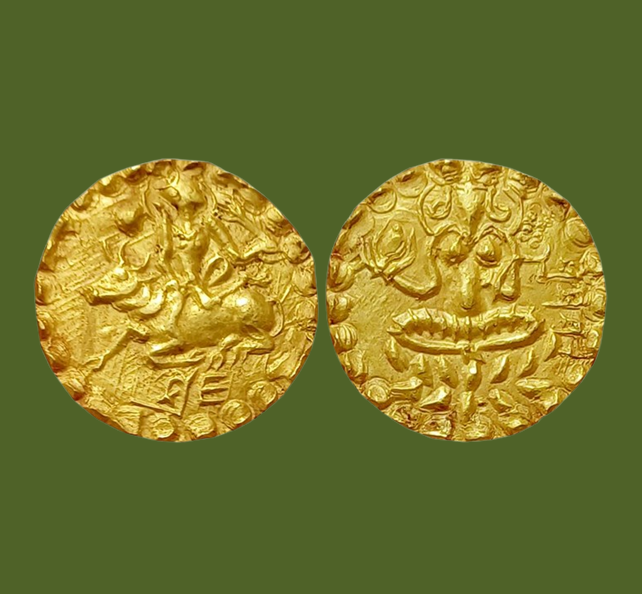
Rare and Beautiful Gold Dinar of Gauda Ruler Shashanka
The Gauda dynasty was an ancient kingdom in the Gauda region of Bengal. It emerged as an independent power in the late 6th to early 7th century CE, following the decline of the Gupta Empire. Its capital was Karnasuvarna, located near present-day Murshidabad in West Bengal. The Gauda dynasty is referenced in ancient texts such as the Arthashastra, the Puranas, and in the works of Panini and Varahamihira.
The coinage of the Gauda Dynasty is one of the significant sources of information about this early independent kingdom of Bengal. These coins were issued after the fall of the Gupta Empire and display strong Shaivite influences. Many coins depict Lord Shiva in various postures, often accompanied by symbolic elements. The inscriptions are in Brahmi script. The dynasty issued primarily gold dinars, along with a limited number of silver coins. Although their gold dinars are of relatively lower purity, they exhibit excellent artistic quality and typically weigh between 5.5 and 9.5 grams.
For more... https://t.co/GU46wWE5fE
#coins #numismatics #money #WestBengalDay #PaschimbangaDibas #BongVibes #CityOfJoy #CultureUnitesAll #12YearsofVikasBhiVirasatBhi #gauda #bengal #BengalDivas #JoyBangla #SonarBangla #IncredibleIndia
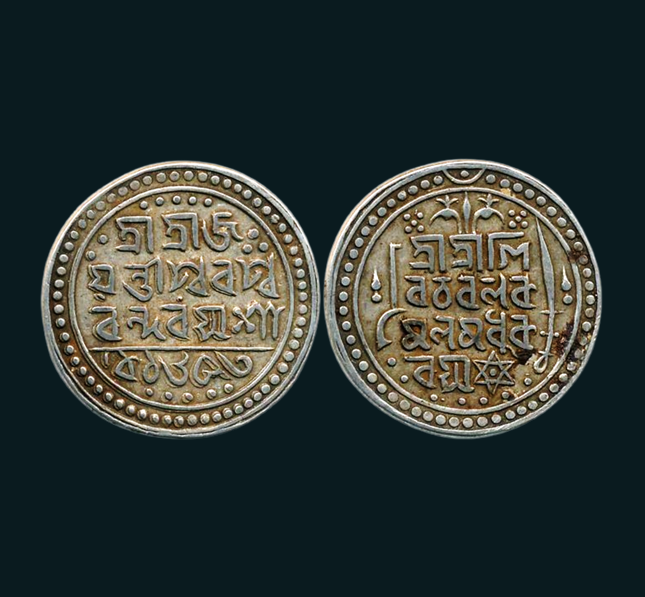
Gun and Sword on Silver Katra Taka of Independent Kingdom of Jaintiapur King Bar Gossain II
The Jaintia was a prominent medieval Independent Kingdom in Northeast India, ruled by the Pnar people. It encompassed the present-day West and East Jaintia Hills districts of Meghalaya, India, and extended into the plains of the Surma/Barak Valley in modern-day Bangladesh. Its origins can be traced to the Austroasiatic linguistic group, and its society traditionally followed a matrilineal system.
The kingdom had two capitals, Nartiang and Jaintiapur, which served as the summer and winter capitals, respectively. Nartiang, located in the Meghalaya hills, is known for its megalithic monoliths and the Durga Temple. Jaintiapur, now in Bangladesh, functioned as an administrative and trade hub.
For more... https://t.co/9z3QAEwulo
#coin #money #numismatics #jaintiapur #assam #ahom #incredibleindia #CultureUnitesAll #12YearsofVikasBhiVirasatBhi #NorthEastIndia
Chamundi Pavli of Mysore King Krishna Raj Wodeyar
The Mysore (Mahisuru) Kingdom was a major and important South Indian kingdom that was ruled by various Hindu dynasties till 1761. For a brief period the region was under Hyder/Tipu. Thereafter, Wadiyars(Wodeyar) became the rulers of Mysore and played a significant role in the history of Karnataka and southern India.
Krishnaraja Wodeyar III was the 22nd Maharaja of Mysore. Born on 14th July 1794 in Srirangapatna, he ascended the throne at age 5 in 1799 after the British defeated Tipu Sultan in the Fourth Anglo-Mysore War. His rule lasted nearly 69 years, the longest among Wadiyar rulers. From 1810 onwards, he attained the "age of discretion" and took direct and full control of the kingdom.
For more...https://t.co/ZokNljxEWG
#coin #money #numismatics #karnataka #wodeyar #mysore #chamundi #CultureUnitesAll #12YearsOfVikasBhiVirasatBhi
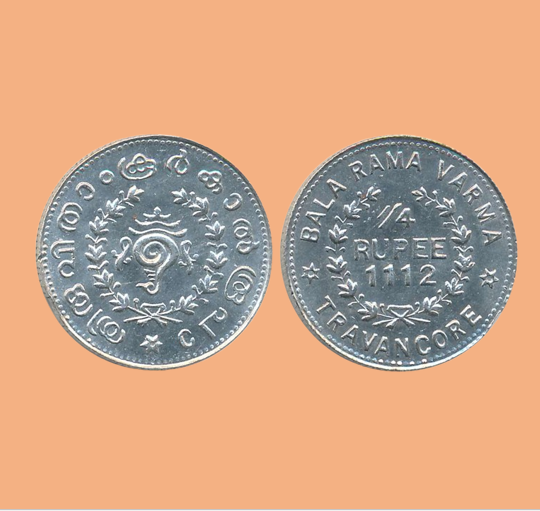
Silver Quarter Rupee Coin of Travancore Maharaja Bala Ram Varma II
Varma Kings of Kerala primarily refer to the royal families of Travancore and to some extent Cochin, who used "Varma" as their title. This is a Kshatriya surname common among Keralam’s royal lineages, especially in the southern kingdoms.
Travancore Royal Family is the most prominent Varma kings belonged to the Kulasekhara dynasty of Travancore. They ruled from the early 18th century onward and transformed a small principality into a powerful, modern princely state.
For more...https://t.co/QXyDthAHbx
#coin #money #numismatics #keralam #varma #padamanabha #travancore #cochin #CulturUnitesAll #12YearsOfVikasBhiVirasatBhi
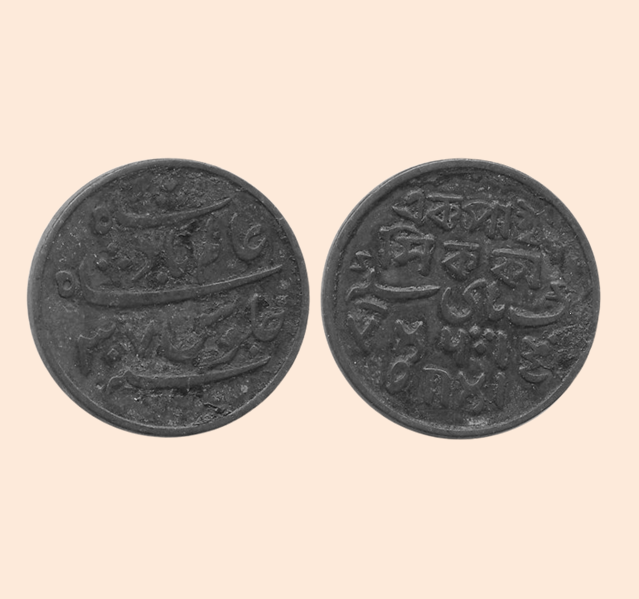
Multi-script, Multi-lingual Coin issued by Bengal Presidency
The East India Company (EIC) established trading posts in the Mughal Bengal Subah in the early 1600s. In 1690, Job Charnock founded a factory in the villages of Sutanuti, Gobindapur, and Kalikata on the banks of the Hooghly River. These settlements eventually grew into the city of Calcutta.
Fort William was constructed around 1696–1700 and became the administrative seat of the Bengal Presidency around 1700. It was one of the three major presidencies of British India. Bengal quickly emerged as the most lucrative due to its rich agriculture, thriving textile industry, and strategic trade networks.
For more... https://t.co/ChcIFlr31W
#coins #money #numismatics #bengal #onepice #CultureUnitesAll #12YearsOfVikasBhiVirasatBhi #Presidency
Multi-script, Multi-lingual 40 Cash issued by Madras Presidency
The Madras Presidency was one of the three major administrative subdivisions of British India. It covered much of southern India, Tamil Nadu, Andhra Pradesh, parts of Kerala, Karnataka, Odisha, and Telangana. It served as an important base for British trade and military operations in the region.
The coinage of the Madras Presidency under the East India Company (EIC) was among the earliest British-issued coins in India, beginning in the 1670s. It reflected a rich blend of local South Indian traditions, especially gold pagodas, Mughal-style silver rupees, and later European-influenced machine-struck coins. The principal mints were located at Madras or Fort St. George, Arcot, and Machilipatnam.
For more... https://t.co/5axz5zQAYu
#coins #money #numismatics #madras #tamilnadu #multilingual #40cash #Presidency #CultureUnitesAll #12YearsOfVikasBhiVirasatBhi
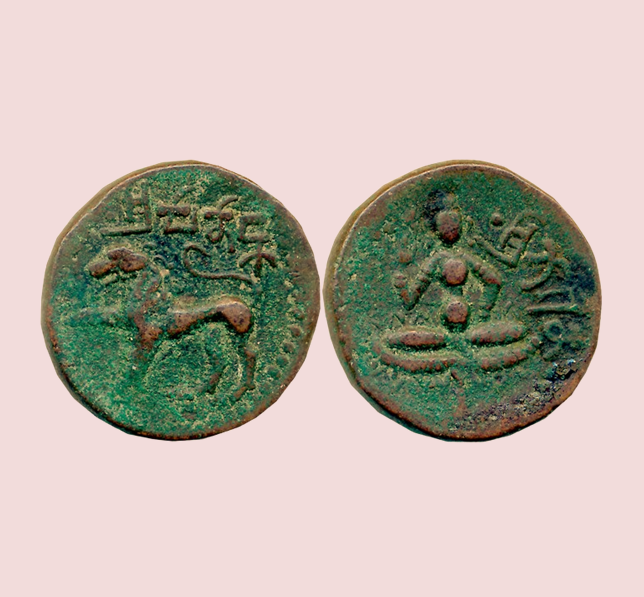
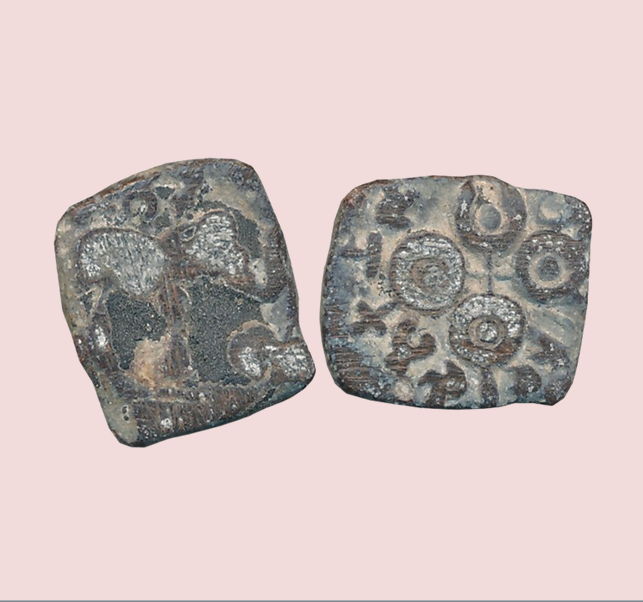
Lead Coin of Satavahana, Ruler Siri Satakarni
The Satavahanas were a major ancient Indian dynasty that ruled large parts of the Deccan i.e. southern, central and western India that comprises of modern Maharashtra, Andhra Pradesh, Telangana, Karnataka, and parts of Madhya Pradesh and Gujarat. They ruled approx. from the late 2nd century BCE to the early 3rd century CE. Sri Mukha, the founder of the dynasty overthrew the remnants of the Kanva dynasty and local powers and established his rule in the upper Godavari valley.
Satavahana coinage is one of the most important sources for understanding the dynasty. Their regional economies, trade, and cultural influences can be traced through its coinage. They issued coins in Lead, Potin, Copper, Bronze, Silver and Gold. Their important mints were located at Paithan, Nashik, Vidarbha. The legends on their coinage are found in Brahmi, Tamil/Telugu scripts.
For more... https://t.co/awNBMtyH1R
#coin #numismatics #money #satavahana #brahmi #satkarni #CultureUnitesAll #12YearsOfVikasBhiVirasatBhi #lead
Heavy Lead Coin of Hiranyakas, King Khadakama
The Hiranyakas were a local dynasty that rose in the mid-3rd century CE, in Rayalaseema region that includes south-western Andhra Pradesh and adjoining south-central Karnataka after the decline of the Satavahana Empire. They are known almost exclusively from their lead coins and a few inscriptions or references in the context of neighboring powers like the Ikshvakus. They ruled 250–350/400 CE, contemporary to late Ikshvakus and early Pallavas.
The Hiranyakas coins were made up of heavy Lead and Potin. It ranges from 8–17 grams. They were crude, thick, often irregular round or slightly square or rectangular. Most specimens of coins are found from hoards in Anantapur, Kurnool, and surrounding Rayalaseema areas.
For more... https://t.co/LSYpfH6XMm
#coin #numismatics #money #hiranyakas #brahmi #khadakama #CultureUnitesAll #12YearsOfVikasBhiVirasatBhi #lead
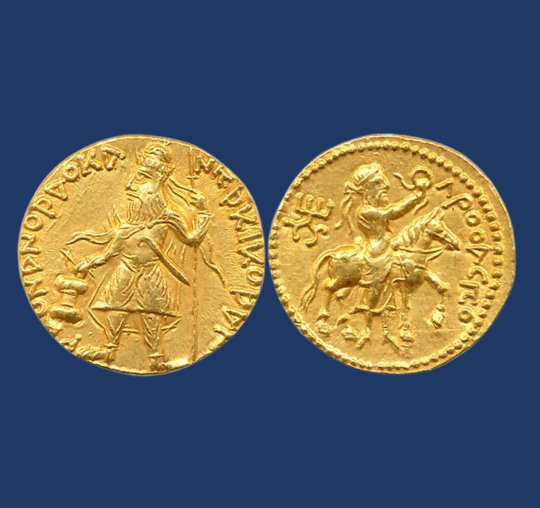
Rare LROOASP Type Gold Dinara of Kanishka
The great Khushana, Emperor Kanishka ruled for almost 23 years and is the most important ruler of the reign. He introduced unique forms of important deities on his gold and copper coins. A very important aspect of his coinage is mentioning the names of the deities by the image either on the left or right side of the figure.
Buddha, Oado, Nana, Mao (Moon), Miiro (Mihir sun), and Oesho are some of the famous deities depicted on his gold and copper coinage.
For more... https://t.co/8XHkO81NiW
#coins #money #numismatics #CultureUnitesAll #ancient #India #Kushana #Kanishka
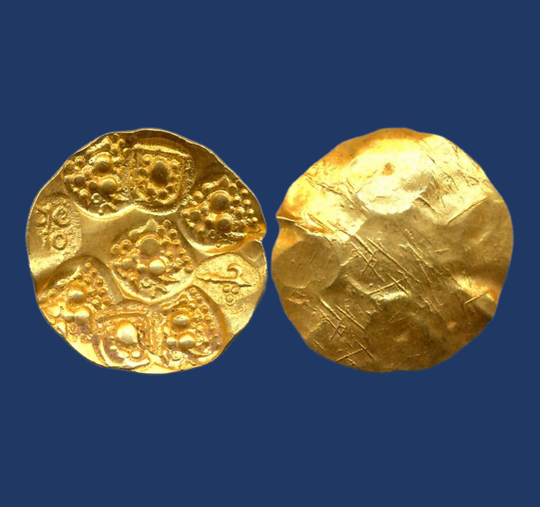
Gold Nandi Gadyana of Nolambas
Nolambas served as important feudatories and local rulers in the Deccan region i.e. Andhara, Karnataka and Tamil Nadu rulers. They ruled parts of southeastern Karnataka, western Andhra Pradesh, and northern Tamil Nadu from c. ~735–1052/1055.
The kingdom known as Nolambavadi, covered areas of modern Tumkuru, Chitradurga, Kolar, parts of rural Bangaluru, Anantapur, Chittoor, and extended into Dharmapuri (Salem) in Tamil Nadu. Initially Chitradurga, later Hemavati (Henjeru) in present-day Anantapur district, Andhra Pradesh was their most prominent capital and a site with many inscriptions and temples.
For more... https://t.co/96riXFVEOp
#coins #money #numismatics #CultureUnitesAll #ancientindia #nolamba #karnataka #tamilnadu #nandi
Debased Gold Dinara of Karakotaka King Vigraha
The Karakotakas/Karkota dynasty were a powerful Hindu dynasty that reigned over Kashmir for 230 long year - from approximately 625 to 855 CE. They presided over the Golden Age of Kashmir. The illustrious kings of the dynasty expanded their kingdom by military conquest and brought renewed prosperity to their kingdom. Their rule was marked by rich cultural flourishing, and building of grand temple renowned for impressive architecture.
The Karakotaka dynasty was founded by Durlabhavardhana who was also known as Prajnaditya, c.. ~625–661 CE. The name "Karkota" derives from this serpent lineage, common in Kashmiri lore, due to their association with Nagas.
More at... https://t.co/4LJQTKhsZZ
#CultureUnitesAll #coin #money #numismatic #12YearsOfVikasBhiVirasatBhi #ancientindia #LivingIndianHeritage
Lead Coin of Vasisthiputra Kura of Kolhapur
The Kura dynasty was an ancient ruling family in the early historic Deccan. The Kuras were primarily associated with the Kolhapur-Belgaum region. They flourished roughly from 30 BCE to 65/100 CE during the post-Mauryan / early Satavahana period.
Their territories were extended to Brahmapuri and Madhavpur. Coins have also been found in Vadagaon, Shimoga, and Chandravalli, indicating their influence extended across these regions.
More at... https://t.co/hDSoYX6Leh
#CultureUnitesAll #coin #money #numismatics #12YearsOfVikasBhiVirasatBhi #ancientindia #LivingIndianHeritage