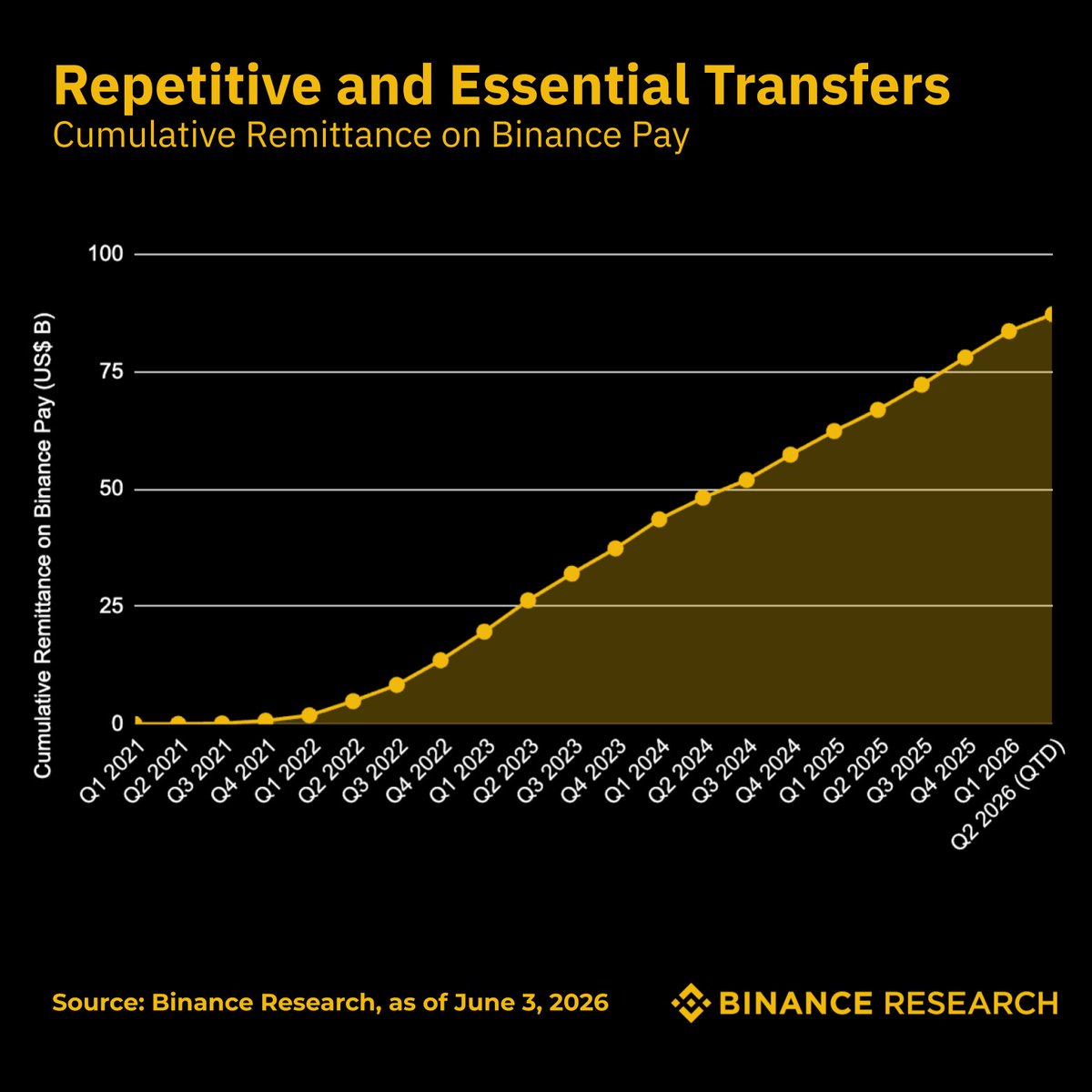
US$87B in cross-border transfers. 34M users. Near-zero fees.
At the World Bank's average remittance cost of 6.36%, stablecoins have saved Binance Pay users over US$5B.
That's US$5B in fees that remained with senders rather than intermediaries.
Cross-border transfer isn't a future use case for stablecoins. It's already happening at scale.
In emerging markets, stablecoins aren't a crypto product. They're a financial lifeline.
Where local currencies are volatile and inflation erodes savings, stablecoins offer something simple: a reliable way to preserve wealth.
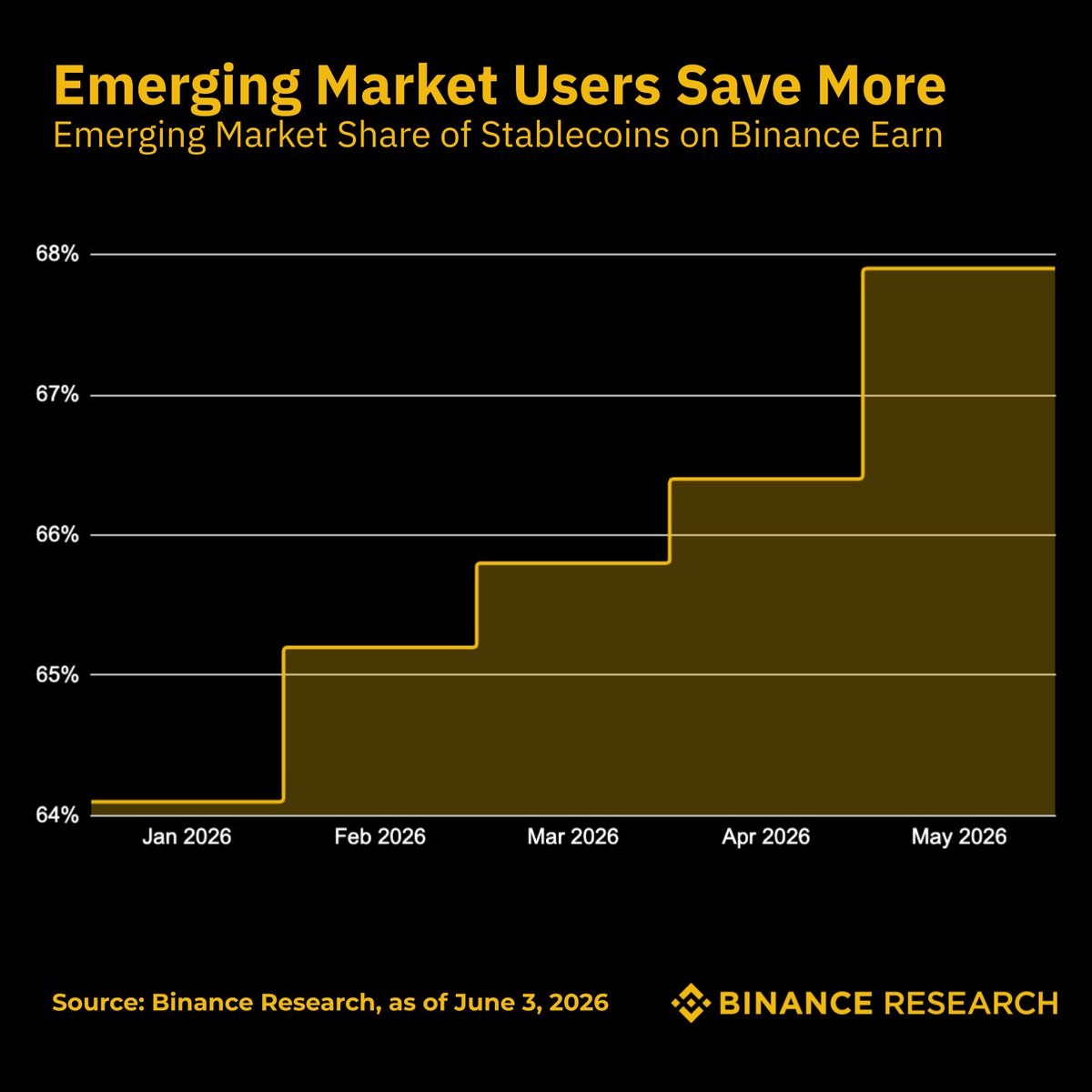
And users aren't just holding them. They're putting them to work. Emerging market users' share of stablecoin deposits on Binance Earn has climbed from 64% to 68% in 2026 alone.
Hard-earned money, actively protected.
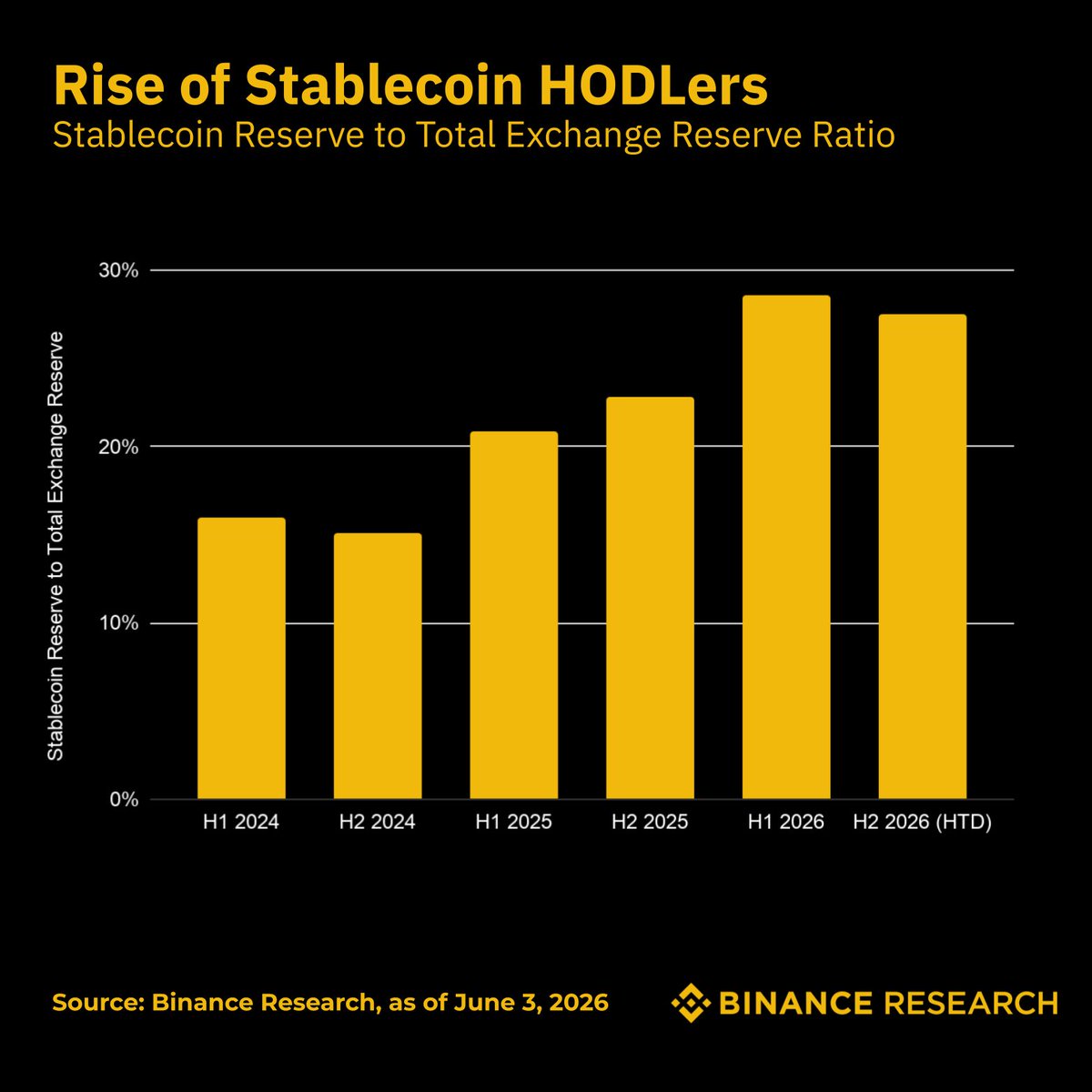
Stablecoin reserves on Binance have risen from 16% to 28% of total holdings.
This isn't a risk-off rotation. It persists across market cycles.
People aren't just parking stablecoins between trades anymore — they're holding them intentionally: for yield, for payments, for transfers, as a store of value.
Stablecoins have quietly outgrown their original use case.
Stablecoins were a crypto trading tool.
Then: payments. Cross-border transfers. P2P remittances.
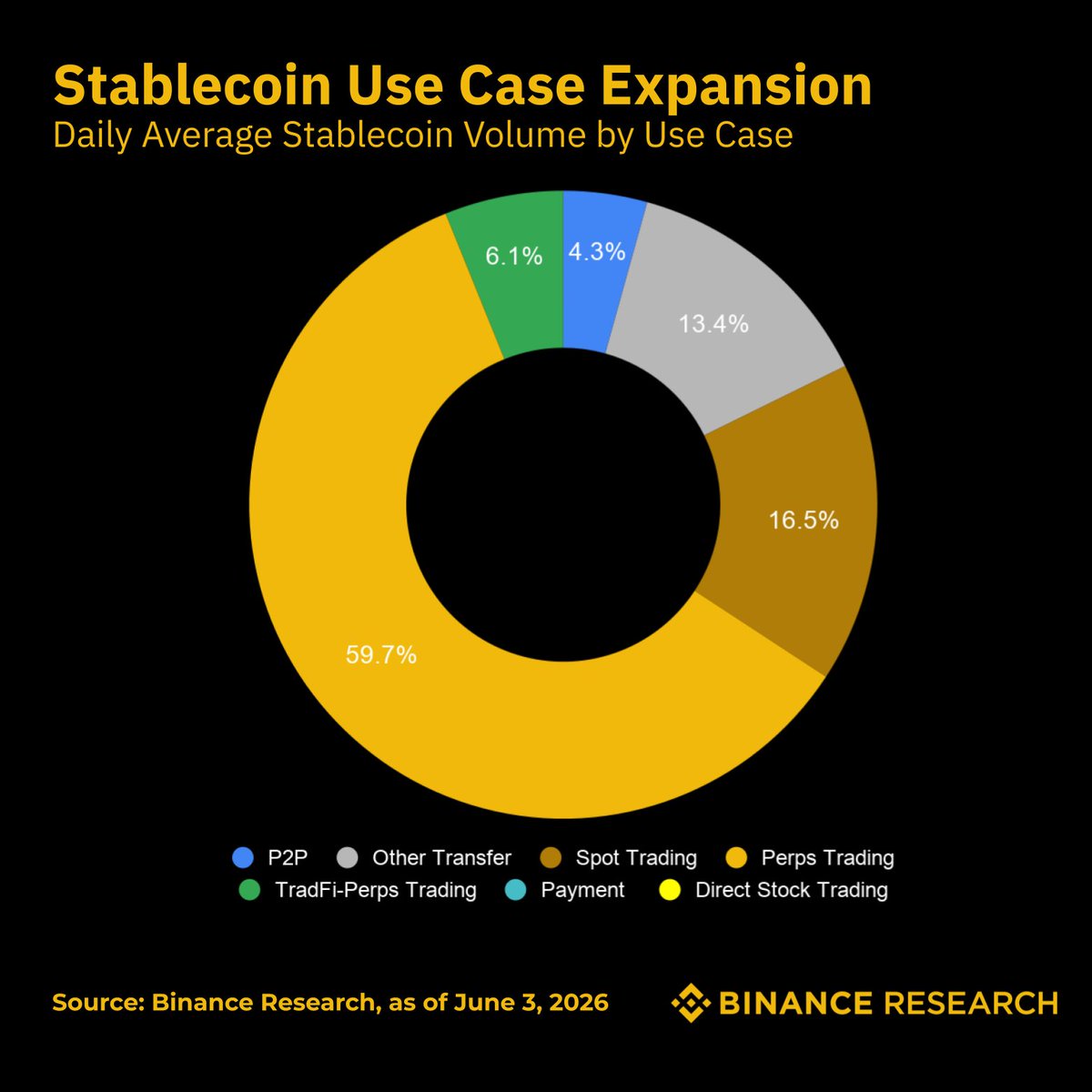
Now: settlement currency for direct/tokenized stocks and TradFi perps — trading 24/7 on-chain.
TradFi-linked perp volume settled in stablecoins: 6.1% of total stablecoin volume, reached in 6 months.
The addressable market is larger than stablecoin supply itself. This is still early.
The next 300 million equity investors are coming from emerging markets.
They'll be onboarded through crypto exchanges, settling in stablecoins, trading 24/7.
We mapped the US$2T opportunity in our latest report on direct stock trading and tokenised equities 👇
https://t.co/B5GiV78eD8
5/5
But historically, after every DSPX peak, BTC recovered. In pure concentration cases (no crypto-native crisis):
BTC bottomed in 0-20 weeks
Median: 2 weeks
Capital diversion is temporary. Currently no crypto-native crisis. Expect faster recovery.
1/5
Why is crypto weak lately? The answer may not lie in crypto itself — but in equities.
CBOE Dispersion Index hit 42 — 3rd highest ever. It means extreme capital concentration within the S&P 500. When a few hot themes absorb all the flows, BTC gets sidelined. 🧵👇
4/5
BTC faces its strongest multi-theme capital diversion ever:
growth capital → AI infra & application
geo-hedge capital → defense/energy
inflation hedge → commodities
Sidelined on all three fronts.
Charting the Week 📊
Institutions are buying Bitcoin 4x faster than it can be created.
Since ETF launch, only 435K BTC was mined — yet institutions absorbed 1.63M, nearly 4x the new supply.
12.7% of circulating supply is now institutionally held — 2.56M BTC, up from just 921K at launch.
Wall Street is draining the float.
Our joint analysis shows strong concentration in LLM outputs for exchange discovery, with Binance at ~90% Top-1 across tested models and languages.
Context-specific shifts (e.g., derivatives) and the English vs Mandarin gap are notable. This points to AI layers potentially accelerating user concentration toward platforms with broad liquidity and global reach.
AI is crypto's new search bar and it now routes nearly all crypto exchange discovery to the same handful of names.
@binance sits at the top of 90% of outputs across 4 LLMs and 2 languages. We dive into what that dominance means and how to earn it:
https://t.co/gL2Y6QOI6C
5% BTC Allocation into Traditional 60/40 is the missing magic in your portfolio.
Return: +59% ➡️ +81%
Sharpe: 0.51 ➡️ 0.62
Sortino: 0.86 ➡️ 1.11
Max drawdown: only 2% wider
Small allocation. Real impact.
Discover the charts 🧵
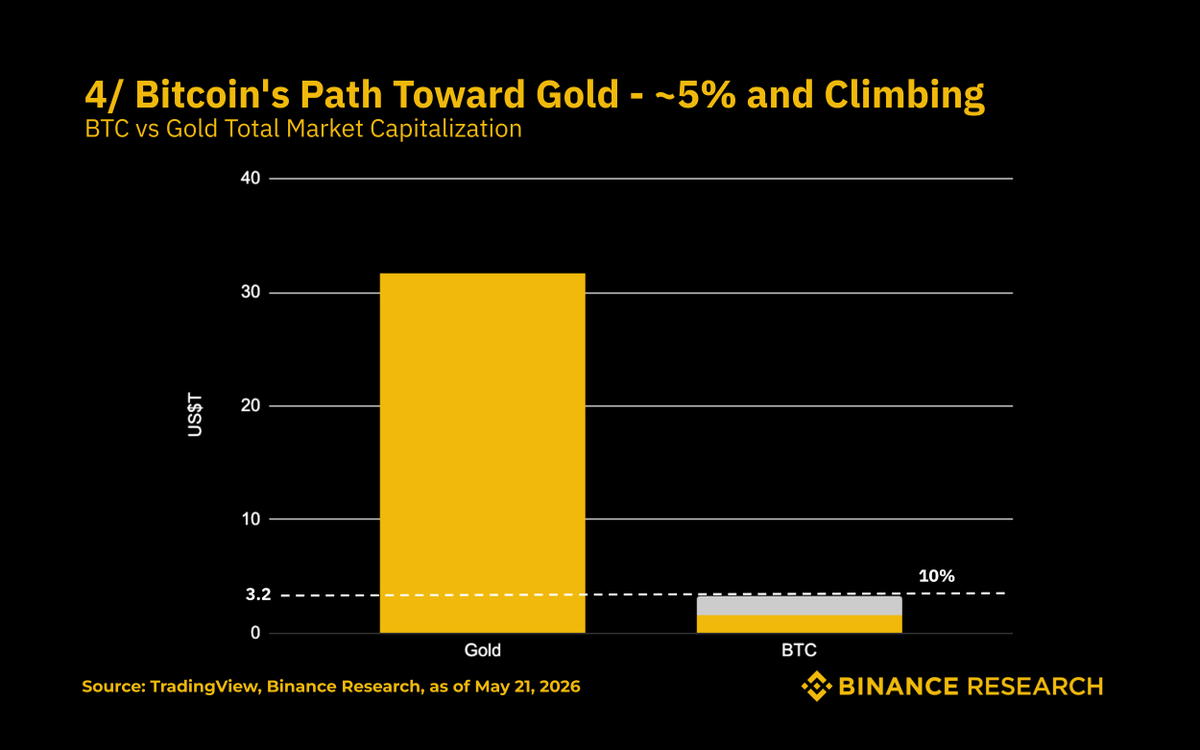
4/ BTC is now ~5% of gold's market cap. In 2010, that number was zero.
🔶 10% of gold = ~$160K per BTC
🔶 1:1 with gold = ~$1.6M per BTC
The upside is now calculable.