¡Boletín en camino a sus bandejas! El tema es un clásico revisitado: ¿Dónde hacer el máster?
Mi consejo es averiguar primero para qué quieres el máster, pero si lo tienes claro, aquí te dejo algunas de las oportunidades que comparto en el boletín👇
Con muchas horas de dron, montones de cámaras trampa y cubos de paciencia, hemos conseguido grabar por primera vez el comportamiento reproductivo de una pareja de turones de estepa salvajes 👇
He ordenado todas las herramientas de IA que se pueden utilizar como ayuda en investigación y publicación científica:
https://t.co/AMGrFmGzwC
Visiten, comenten y compartan!
You should wake up every day thrilled by the race for relevance you find yourself in, sprinting along the frontier, delegating work you previously held dear to open space for new possibilities you never imagined.
So AI labs are buying old books by the pallet, slicing them apart, scanning the pages, and pulping what's left. The orders are keyed to ISBNs and blind to scarcity. Nobody in the pipeline checks whether the book being shredded is one of the last copies on earth. Some of them probably are. 1/6
Spain Celebrates Both a Soccer Win and a Sense of Wider Success
By winning the world championship, Spain’s team have bolstered the sense that — amid a broader cultural, economic and sports renaissance — something promising is happening in Spain, and that to be here now is to be in the right place, at the right time. @nytimes
https://t.co/Nt7dQ0NojI
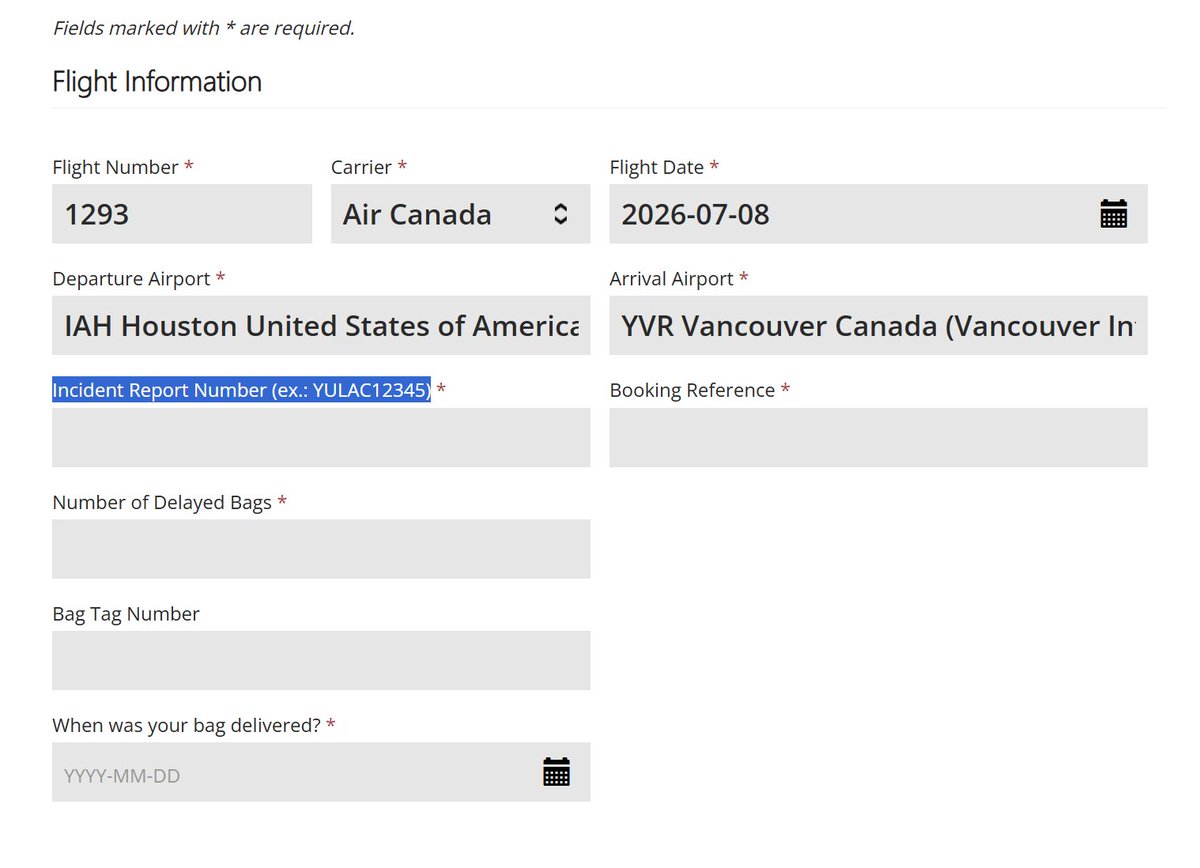
@AirCanada Bag on AC1293 (IAH-YVR, Jul 8) was tampered with in transit, items missing. Only found after leaving YVR so no PIR was filed at the airport. Tried the claim form + Central Baggage (3+ hr wait). Can you help generate a retroactive baggage report? thanks
Hello @googlenonprofit@GoogleWorkspace , our NGO Google Workspace account for https://t.co/w4ipphLtFX appears as deleted and we are locked out of the Admin Console. Standard recovery tools don't work. Can someone help us open a support ticket? Thanks
Llevo todo el día jodido con este tema, con una sensación de impotencia similar a como cuando eliminaban a España del mundial cuando éramos niños. Pero después de mucho darle vueltas y leer muchos comentarios por aquí, creo que va tocando espabilar.
Europa va tarde, todos lo sabemos. Ni una sóla mención oficial al tema en lo que va de día. Esto no va a cambiar nos pongamos como nos pongamos por cómo está montado el sistema. Hay que seguir apretando en masa para que esto sea distinto por supuesto, pero lo que de verdad va a meter presión es que las mentes más brillantes de este continente nos centremos en cambiar la situación.
Es absolutamente racional que el europeo que destaca se quiera ir a USA a trabajar en AI labs cobrando n veces más que en Europa. Jamás culparé a nadie por ello. Pero, tanto los que quedamos aquí como los que se han ido, tenemos que empezar a creernos que esto se puede hacer desde aquí también.
Y eso depende para empezar de que tomemos riesgos como individuos. Hay mucho talento infrautilizado en Europa en trabajos pagados decentemente para lo que es el continente, que podría plantar la semilla para empezar lo que se plantó en USA hace ya tiempo. Tenemos justamente en España el ejemplo the Theker, llegando más lejos de lo que se creía posible en su fase seed. Tenemos el ejemplo de Deepmind en Europa, es complicado imaginarse un nuevo Demis entre nosotros pero hay que buscarlo y no perderlo por el camino.
Cuestionaos vuestro día a día, yo lo estoy haciendo ahora mismo. Alguno de vosotros tenéis capacidad de montar un Mistral o un Theker. Un porcentaje ínfimo evidentemente, pero no os borréis del partido antes de que empiece. De vuestro progreso dependerá que los de arriba vean evidente dónde hay que poner el dinero.
@andrea_wulf Congratulations, Andrea! I’m saving it for a long journey on Thursday, and I can’t wait either...
P.S. What a moment it must have been to find that tree!
I read a paper that was SO WELL DONE. I was impressed. The results were cool, but especially, the paper included all controls that the rest of us ignore - sometimes due to money/time issues, sometimes lazyness.
So I emailed the authors to congratulate them
Reply was emotional
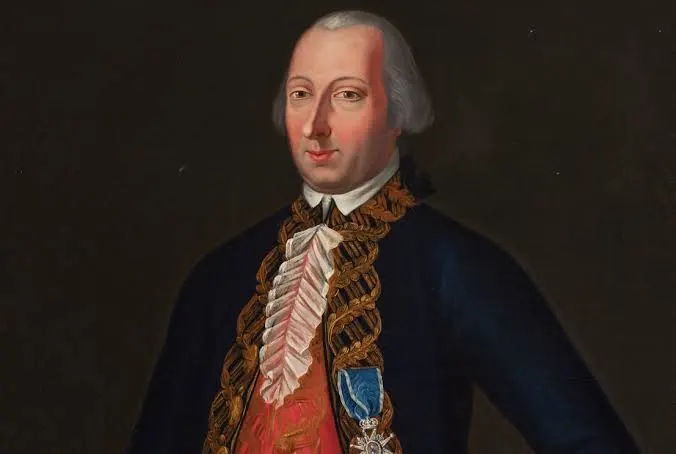
245 years ago today, a 35-year-old Spanish nobleman fired a single artillery shell that redrew the map of North America, broke British power in the Gulf of Mexico, and arguably saved the American Revolution. His name was Bernardo de Gálvez. He's not in your textbook. He should be.
When Spain entered the war against Britain in June 1779, the American cause was bleeding out. Washington's army was unpaid and shrinking. The Continental dollar was worth pennies. The British had taken Savannah and were preparing to take Charleston. France was helping, but France alone couldn't bankrupt the British Empire.
Spain could. And in New Orleans sat the man who would prove it.
Bernardo de Gálvez y Madrid was 33 years old, the governor of Spanish Louisiana, a battle-scarred career officer who had been wounded fighting Apaches in northern Mexico and Algerians in North Africa. The day he learned Spain had declared war, he didn't wait for orders from Madrid. He raised an army of Spanish regulars, Louisiana Creoles, free Black militia from New Orleans, Acadian refugees, German settlers, and Choctaw scouts, and he went on the attack.
In three months he took Manchac, Baton Rouge, and Natchez. The next year he took Mobile. The British presence on the Gulf shrank to one last fortress. Pensacola, the capital of British West Florida, defended by Major General John Campbell with 1,500 redcoats, the 3rd Waldeck Regiment of German mercenaries, loyalist battalions from Maryland and Pennsylvania, and a powerful alliance of Creek and Choctaw warriors led by the brilliant mixed-race chief Alexander McGillivray.
Gálvez arrived off Pensacola in March 1781 with 7,000 men and a fleet. The Spanish naval commander, Admiral Calbo de Irazábal, refused to enter Pensacola Bay. The entrance was narrow, raked by British guns at Fort Barrancas Coloradas, and treacherous with sandbars. So Gálvez did something insane. He boarded his own little brig, the Galveztown, hoisted his personal pennant, and sailed her into the bay alone, in full view of the British batteries, daring the Royal Navy to sink him. The British fired and missed. The Spanish fleet, shamed, followed him in. For this he was awarded the right to put the words "Yo Solo," meaning "I alone," on his coat of arms by the King of Spain.
The siege ground on for two months. Gálvez was shot in the abdomen and the finger directing artillery and refused to leave the field. The British defenses at the Queen's Redoubt, also called the Crescent, held against everything thrown at them. And then, on the morning of May 8, 1781, a Spanish howitzer crew lofted a shell over the parapet. It dropped, by pure luck or perfect skill, directly into the open powder magazine.
The explosion killed roughly 100 defenders in a single instant. Waldeck grenadiers, British regulars, loyalists, all gone. The blast tore the redoubt's wall open like paper. Spanish grenadiers and Louisiana militia poured through the breach within minutes and turned the captured British guns on the inner works. Campbell knew it was over.
The next morning, May 9, white flags went up. By May 10 the entire province of West Florida belonged to Spain. Over 1,100 British troops marched out as prisoners of war.
The strategic consequences were catastrophic for Britain. The Gulf Coast was lost. The Mississippi was a Spanish river from source to sea. Britain could no longer reinforce its southern armies by sea from the Caribbean, and the Royal Navy's Caribbean squadron had to be redeployed. Five months later, Cornwallis surrendered at Yorktown, in a siege funded in part by 500,000 silver pesos that Gálvez and the people of Havana raised in a matter of days to pay French Admiral de Grasse's fleet to come north.
Without that money, no French fleet. Without the French fleet, no Yorktown. Without Yorktown, no independence on those terms.
Gálvez was made Count of Gálvez and Viscount of Galveztown. The bay he charted in Texas still bears his name, Galveston. His portrait hangs in the United States Capitol by act of Congress. In 2014, he was made an honorary citizen of the United States, an honor given to only eight people in American history, including Lafayette, Churchill, and Mother Teresa.
He died of yellow fever in Mexico City at 40 years old, three years after the war ended.
Most Americans have never heard his name.
You've had your best ideas in the shower or on a walk. Almost never at your desk. Stanford ran four experiments to figure out why.
Marily Oppezzo and Daniel Schwartz, Stanford 2014, Journal of Experimental Psychology. The result settles a debate Nietzsche started in 1889 when he wrote "all truly great thoughts are conceived by walking."
Walking is the lever. The outdoors stacks on top.
Across the studies, 81% of participants got a creativity boost on the divergent thinking task while walking. Only 23% got a boost on the convergent thinking task.
That asymmetry is the part nobody talks about.
Divergent thinking is "how many uses can you think of for a brick." Idea generation. The expansive messy phase. Convergent thinking is "what one word connects falling, movie, dust" (answer: star). The narrow phase where one right answer exists.
Walking unlocks the first. Walking barely moves the second.
Experiment 2 added the residual effect. Sit and work. Get up and walk. Sit back down. The creative boost transfers to the chair. The lift outlasts the walk.
Experiment 4 is where it gets weird. Stanford rolled people outside in wheelchairs to control for the outdoors. Four conditions: sit inside, walk on a treadmill inside, walk outside, or get rolled outside in a wheelchair. Same outdoor stimulation, no walking. Walking outside produced the most novel and highest-quality analogies. The walking effect and the outdoor effect were separable, but walking carried the load.
The mechanism is in the locomotion, not the trees.
The protocol that falls out of this:
1. Walk during the brainstorm. Divergent phase.
2. Sit during the evaluation. Convergent phase.
3. Walk first, then sit. The transfer is one-directional.
Most people do the opposite. They sit through the brainstorm trying to force ideas out, then walk away from the desk frustrated when they can't pick the right one.
Your desk is for finishing ideas. Walks are for finding them.