Chronic wounds are often described as being infected with #biofilms. We have a new paper out demonstrating persisting populations of single cells questioning the dynamics of bacterial persistence patterns in chronic #infections. https://t.co/hmw2X8PwiO @BiofilmLab@TBjarnsholt
Our new review compiles current knowledge on non-attached aggregates, showcasing their presence in nature and disease. A fresh perspective on an old concept! #BiofilmResearch#Microbiology With @KraghBio and T. Tolker-Nielsen in @CommsBio https://t.co/SNscPACyKr
Working in chronic wound research? A new chronic wound in vitro model was just published. Great collaboration between @aalborg_uni, @BiofilmLab and @TeknologiskInst with researchers from groups of @TrineRolighed and @TBjarnsholt. Read it here https://t.co/XqP01wfll1
New publication. It's a methods paper that goes step-by-step into how to carry out the calScreener experiments performed by the group of @TBjarnsholt at @uni_copenhagen
Congrats to @bei_Kat & @MadsLichtenberg for their great work.
https://t.co/c1STIrqF0l
Ida Thaarup and @TBjarnsholt just published a chapter in "Chronic Wound Management" on current methods to detect the presence of #biofilms in chronic wounds non-invasively. https://t.co/D8aotXk0LM
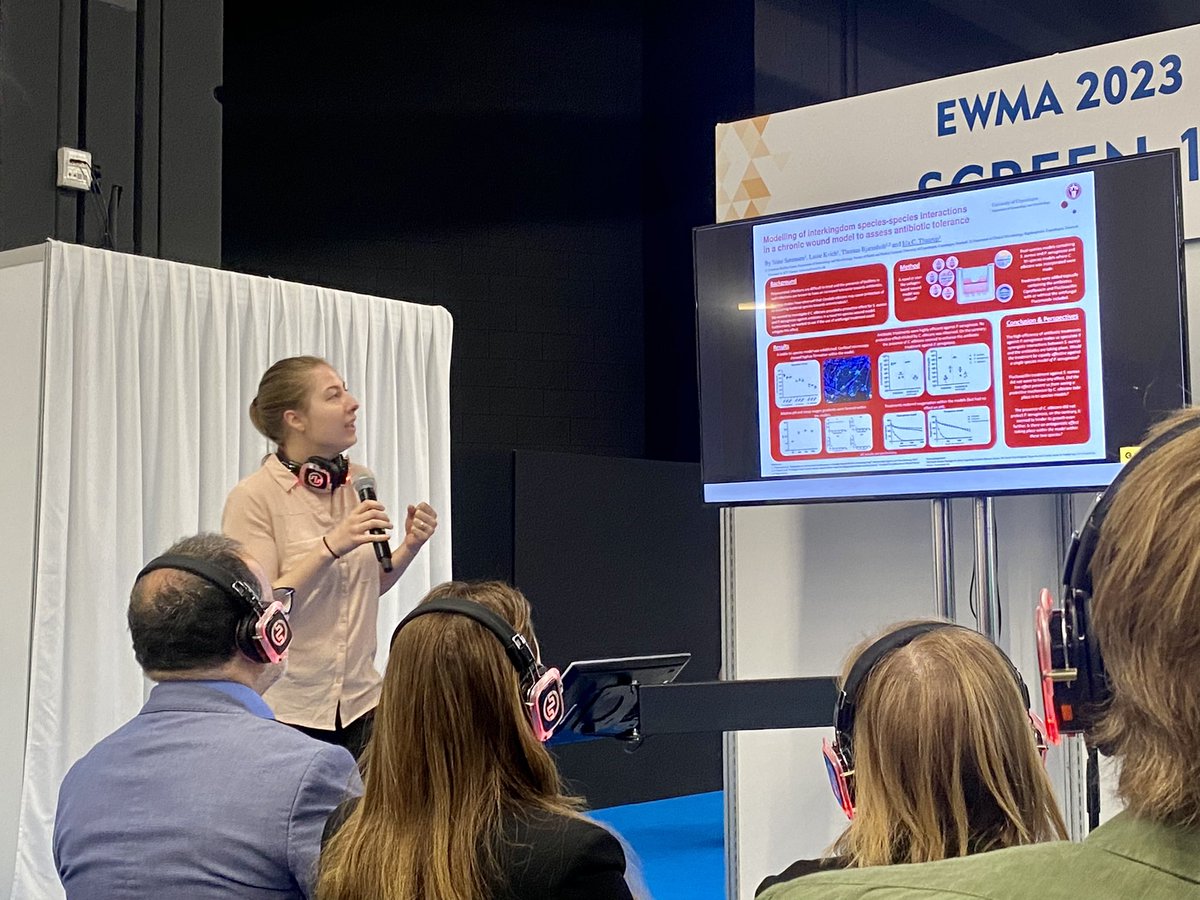
@BiofilmLab was represented at this years @EWMAwound conference in Milano where new research on a new chronic wound model, and a new method to assess bacterial biogeography in wounds was presented.
Full House at the Maersk Tower for the defence of Lasse Kvich…defending an amazing PhD thesis with the topic: bacterial impact on the tumor microenvironment in colorectal cancer @TBjarnsholt @cssdenmark
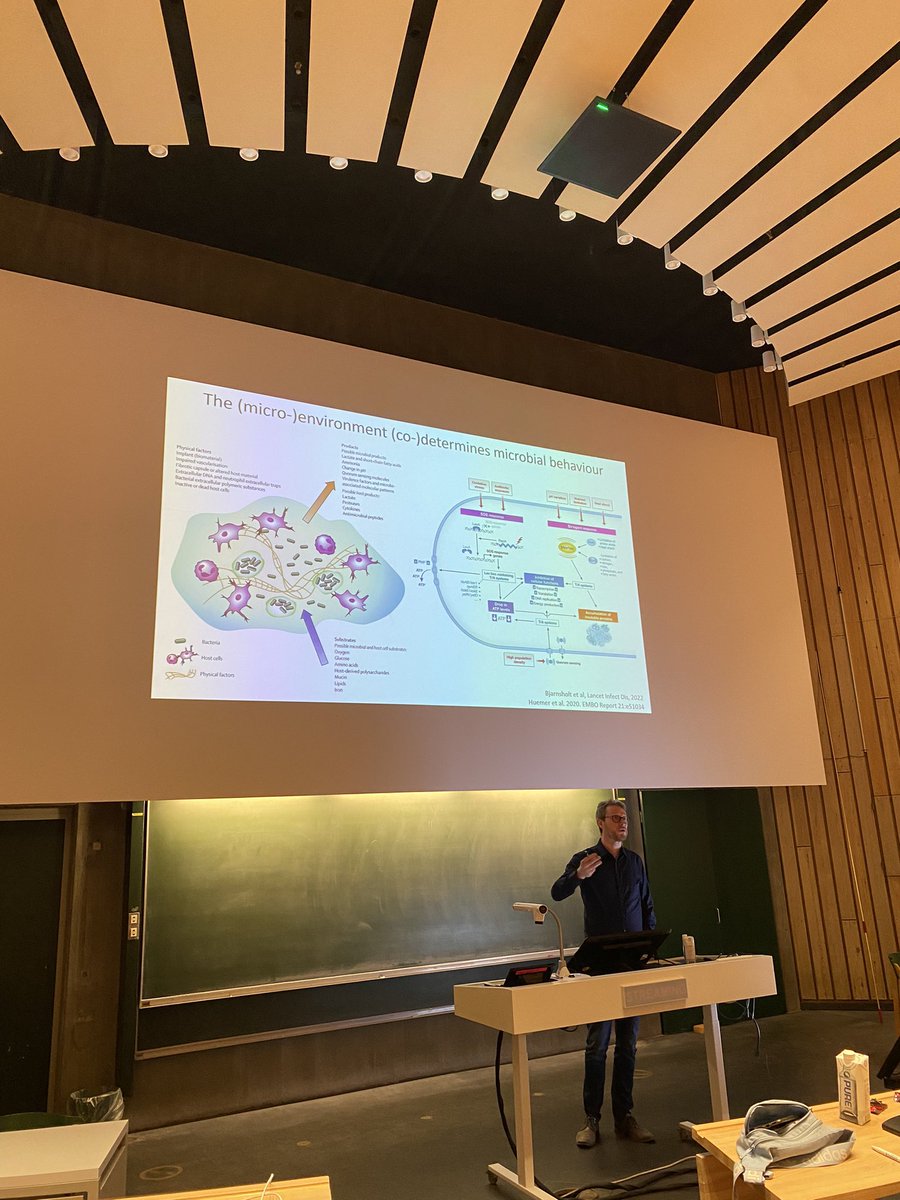
Most of @BiofilmLab members are gathered today for the 5th Costerton Biofilm Center Seminar where current and future projects are shared in an open and constructive forum.
New study from @BiofilmLab shows that rifampicin/colistin combination treatment is effective against colistin resistant Pseudomonas aeruginosa #biofilms. They suggest that the action of colistin on the outer membrane facilitates rifampicin penetration. https://t.co/leVJJTic0A
Join @BiofilmLab Professor Oana Ciofu for a panel discussion and the release of the film ‘Silent Pandemic - The global fight against antimicrobial resistance’ on 9 March in the Cinematheque in Copenhagen
https://t.co/1knGurZGNV
@novonordiskfond
Changing the starting number of bacteria in #biofilm models result in different phenotypic trajectories governed by different #microenvironments. This influences the susceptibility when treating with #antibiotics. Published in @JournalSpectrum@BiofilmLab https://t.co/iOZKdQz6jz
Excited to see our new paper out in @CellReports. We show that #biofilm formation in #Pseudomonas is associated with high metabolic rates, which are mainly caused by production of biofilm matrix components. @BiofilmLab@UCPH_health and Niels Bohr Institute https://t.co/DxIMMkg8wc
[IN DANISH] See you at Culture Night on Friday? Visit our mini lab with @BiofilmLab to test if you can wash bacteria off your hands - and of course learn more about the largest organ of the body: The skin! @LEOFondet@UCPH_health#kulturnattenkbh
https://t.co/0g40lsw1Pf
Thrilled to see that our latest paper from @tbjarnsholt@BiofilmLab has been published in @Jbacteriology. Have a look if you would like to learn how an S. aureus-produced cocktail can ensure coexistence with P. aeruginosa https://t.co/5nkM3wwALL 🦠