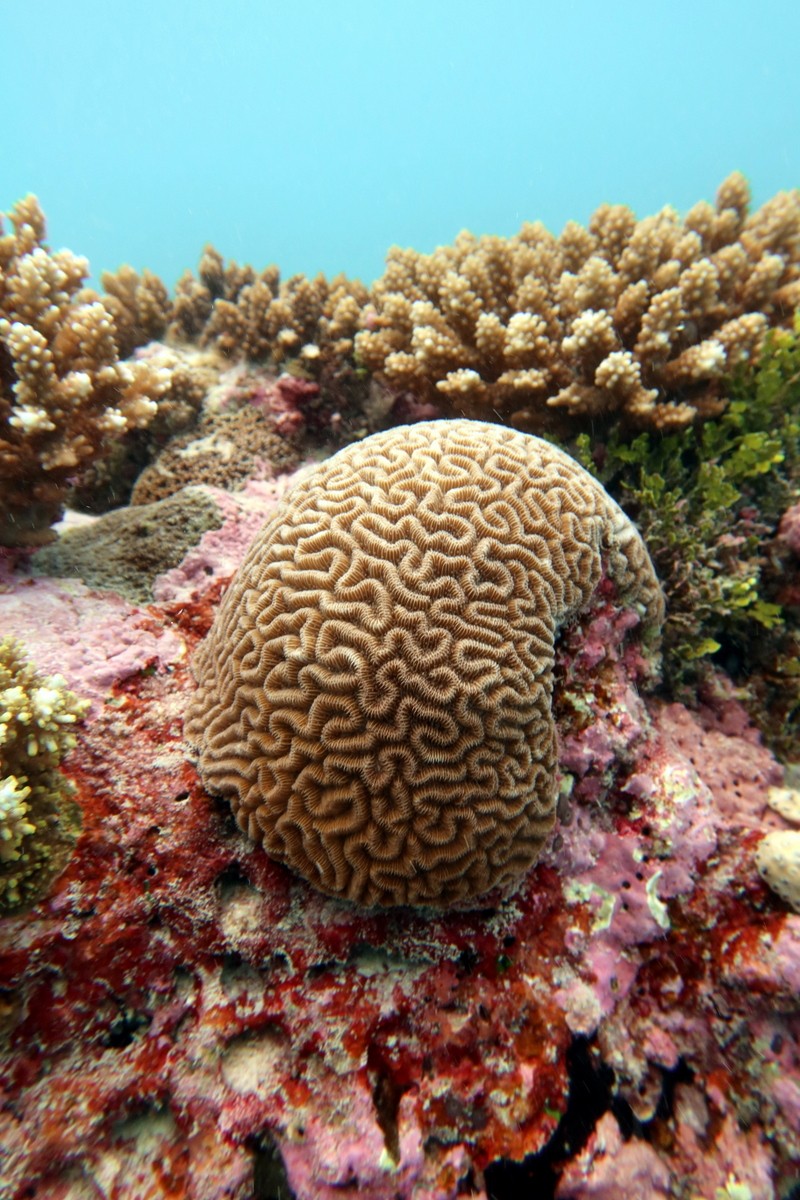
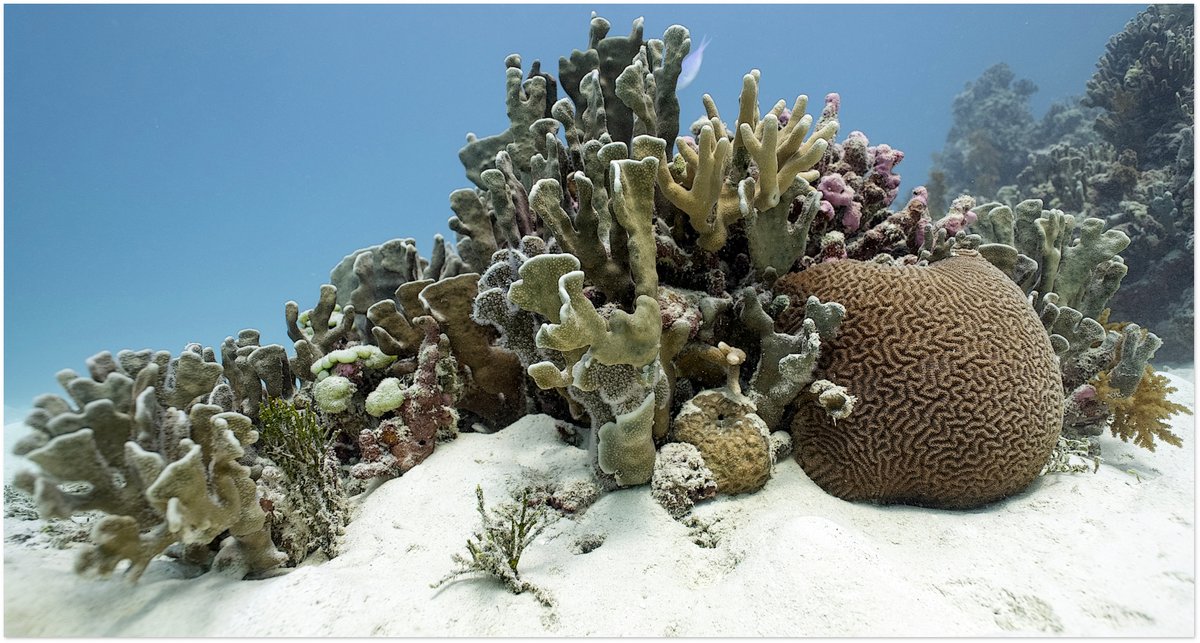
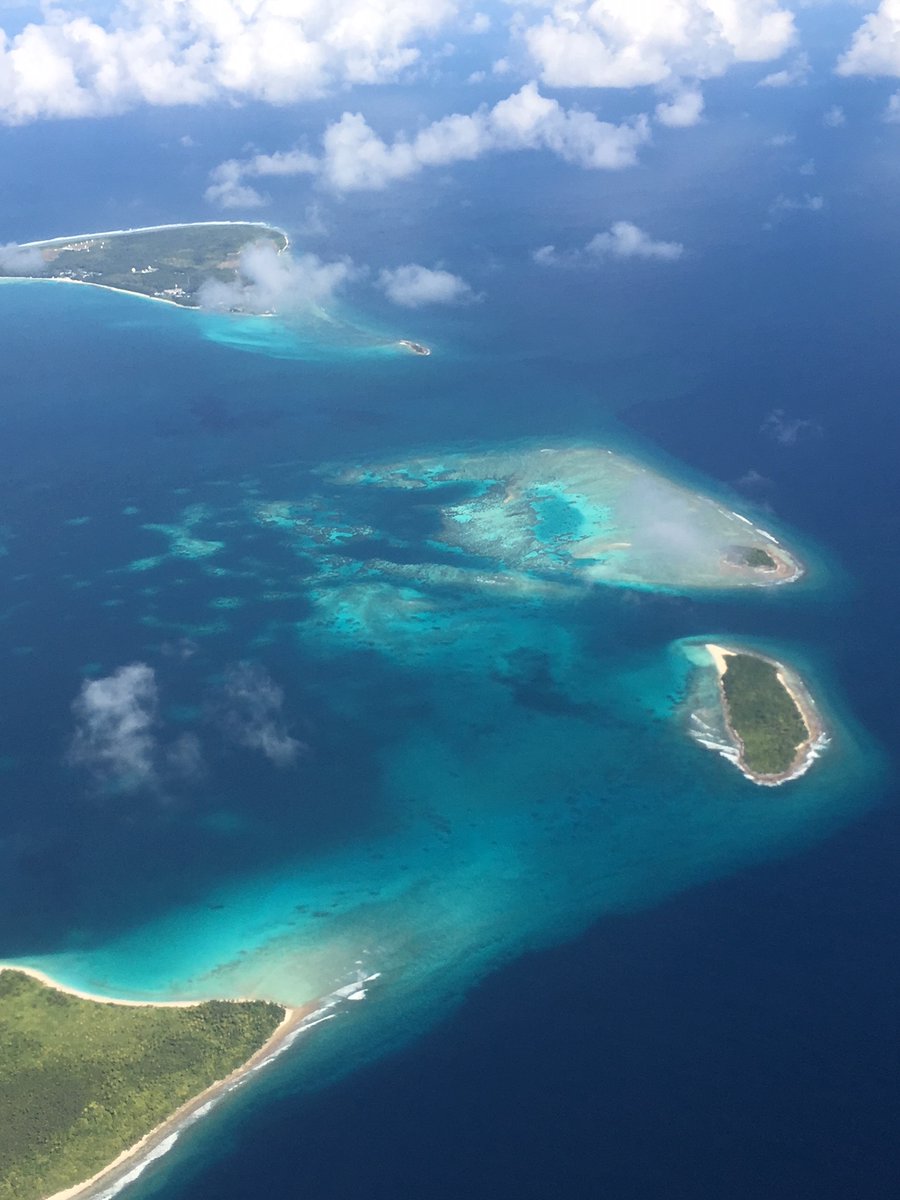
To learn more about action taken to locate and conserve the Chagos Brain coral, you can watch this video created by @OxfordSparks, featuring @MarineBryology (Dr Bryan Wilson, then Research Fellow in Biology at the University of Oxford). On the Edge of Existence: Rediscovering A Lost Coral https://t.co/xdIIRUvDXx - some photos from him below (4/4)
The Chagos Brain coral is a critically endangered coral species found exclusively in BIOT. Once thought extinct, it is often coined the world’s rarest coral. In 2023, as part of an emergency response to ocean heatwaves, BIOT collaborated with coral scientists to conserve this important species. Action was taken by researchers at @OxZooDept, @ZSLMarine, @OceanoMonaco and the @HornimanMuseum, supported by UK Government funding from Darwin Plus, together with the Percy Sladen Memorial Trust and @Bertarelli_fdn, to recover live colonies of Chagos Brain coral and establish a refuge population in aquaria. Successful breeding of these corals is providing a critical safety net for this rare and remarkable coral (3/4)
Isolated from major pollution sources and protected by an extensive marine reserve, BIOT’s waters are considered a near-pristine global example of reef health and recovery. Following marine heatwaves, reefs in the BIOT archipelago have bounced back to optimum health at speeds rarely seen elsewhere in the world. High fish populations and natural nutrient subsidies from seabird communities are thought to play a crucial role in reef resilience (2/4)
On #WorldReefAwarenessDay we wanted to share with you information on #BIOT's coral reefs. BIOT is home to one of the last large-scale coral wildernesses on the planet, with over 20,000 sq kilometres of shallow banks and atolls. These include about 1% of all global reefs. BIOT’s reefs provide important habitat for over 250 species of coral and 800 species of fish (1/4)
The BIOT Administration supports the work of scientists to study sea turtles in the Territory; vital for ongoing management and conservation planning. Most recently, in November 2025, a team from Swansea University undertook work to tag juvenile hawksbills. This work is crucial in identifying critical habitats and understanding how environmental conditions, particularly climate change, affect turtle populations and nesting success (4/4)
If you’ve paid much attention to #BIOT you might have noticed that we're rather proud of our turtles. Both green and hawksbill turtles are native to the Territory. Let’s dive in (pun intended) and learn more. A short turtle 🧵 (1/4)
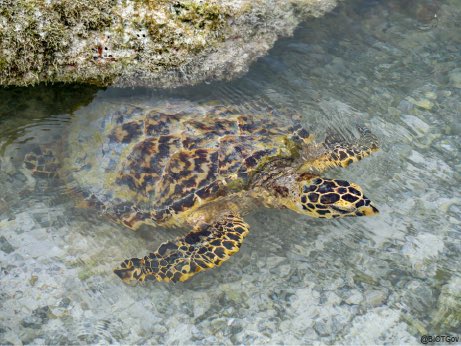
The hawksbill turtle is Critically Endangered, according to the IUCN Red List. Turtle Cove in Diego Garcia has the highest population density of juvenile hawksbills anywhere in the world (3/4)
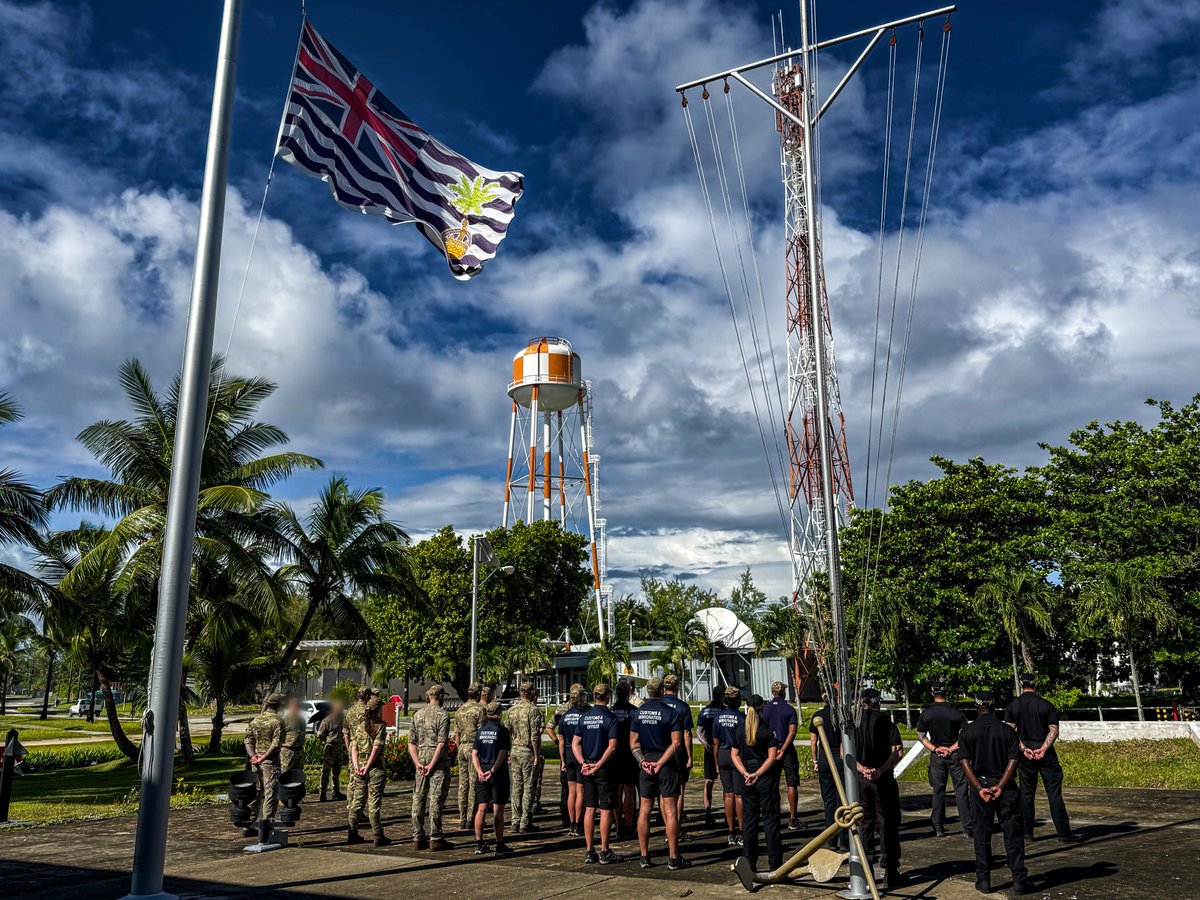
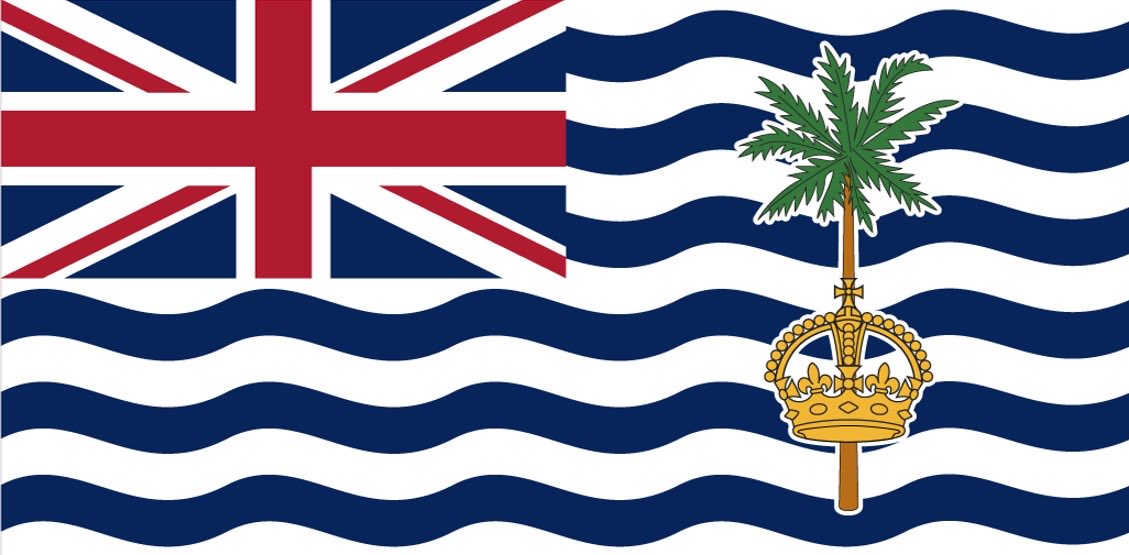
We’re biased, but we reckon the #BIOT flag is among the best in the world. It was gifted to the Territory by Her Late Majesty Queen Elizabeth II on the 25th anniversary of BIOT (which celebrated its 60th anniversary last year). His Majesty Charles III gave permission in October 2025 for it to be updated, to incorporate his preferred Tudor Crown. Note the lack of red velvet in the crown - it needs no adornment. There’s more about the flag on our website.
https://t.co/ODvwcR9BhR
You may have read a lot about the #BritishIndianOceanTerritory recently. If you'd like to learn more about #BIOT directly from those governing it - that’s us: the BIOT Administration. Follow along as we start posting about the Territory; it’s a special place. If you can’t wait for our next post, take a look at our website https://t.co/cxoxOGlYy6