I am an open access database containing ecological community time series. I am free for anyone, anywhere, to use for education, research and conservation.
👀Do you want to have a look at the data available (and coming soon!) in BioTIME?👀
Have a look at the new data explorer on our website!
👉https://t.co/rD5oeMkhku
Interested in long-term ecology? Come and do a PhD on the ecology & palaeoecology of the Anthropocene with me, Anne Magurran @bioTIMEdb & @UK_CEH via @IapetusDTP https://t.co/JrIkSNTItc
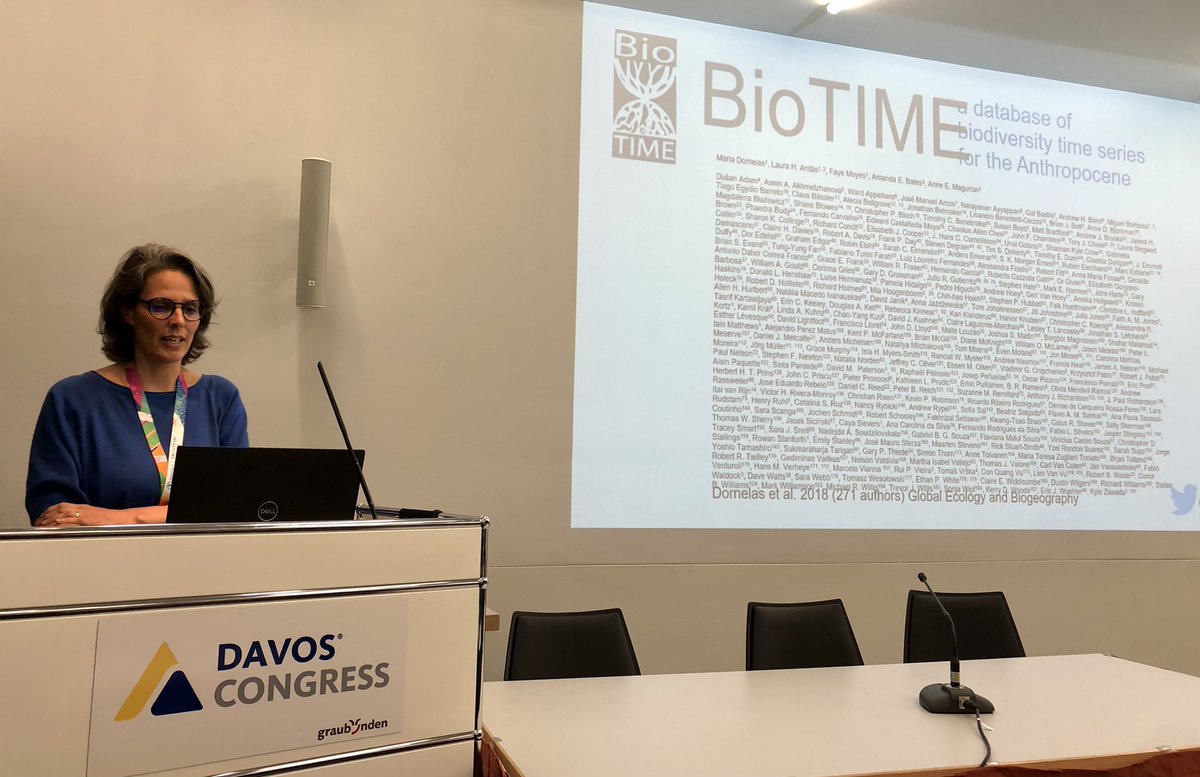
.@maadornelas opens session 3 by telling us about @bioTIMEdb a growing and valuable resource for the science of #biodiversity change. What it represents and an analysis of the data gaps. A plea for time series contributions for undersampled regions #WBF2020
❗️To all of our users, the website is temporary down❗️
We are working on it and apologize for the inconveniente.
In the meanwhile, please feel free to contact us if you need to access the database.
Is the Anthropocene creating novel ecology? #PhD with me @StAndrewsSGSD, Anne Magurran @bioTIMEdb, Lindsay Maskell & Simon Smart @UK_CEH https://t.co/7FrYaCgBSx
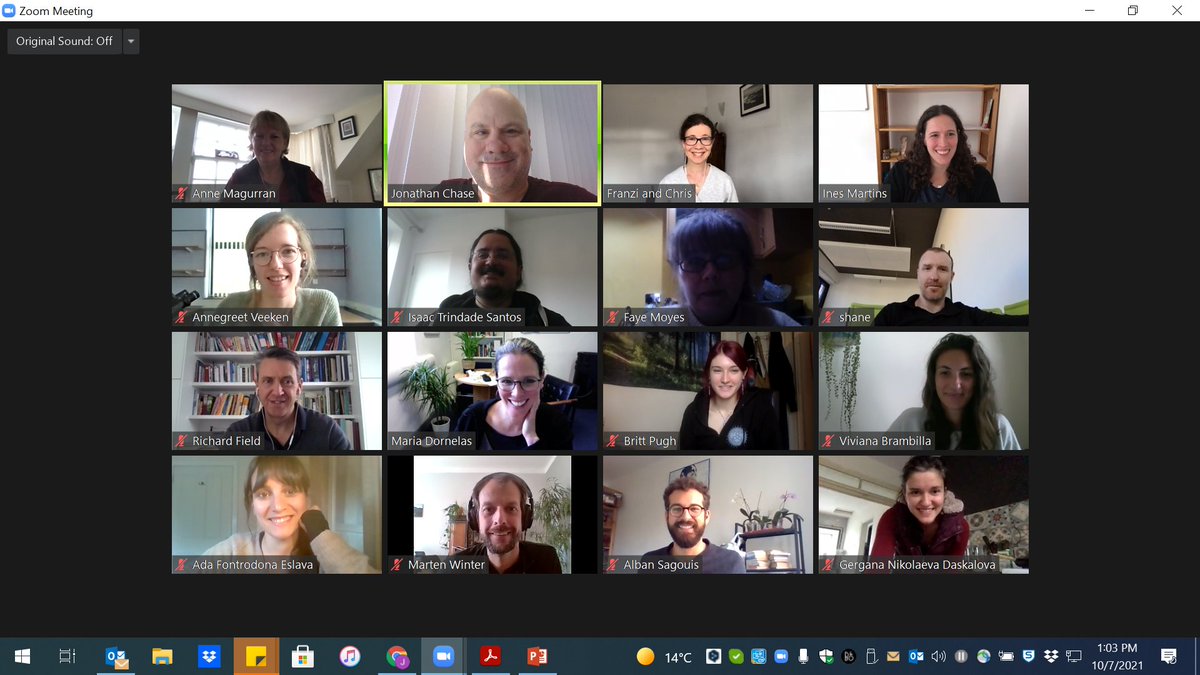
Another great #sDiv@idiv workshop going on this week! (online only this time). Really fun to think about melding functional traits with biodiversity change in @bioTIMEdb. Expertly co-led by @maadornelas, @fschrodt, and @InesISMartins, look for cool results to come soon(ish)!
The talk "Nuance in Biodiversity Trends" @maadornelas gave yesterday for the Saints Talk series @UstAAlumni is now available on Youtube!
Watch it in our BioTIME playlist: https://t.co/AdALl3V64X
@CentreBioDiv
Saints Talk: Nuance in Biodiversity Trends by Professor Maria Azeredo de Dornelas
Tuesday 7 September at 5.15pm (BST)
Live on Microsoft Teams
Register here: https://t.co/Xb5nvq5J9z
#foreversaints
Missing #fieldwork? Take a break with StoryTime!
From snakes🐍 to whales🐋, from tropical islands 🏝️ to forests 🏞️, from sea 🌊to land 🌄, we have many fieldwork stories to cheer you up.
Read them here 👉https://t.co/DlfpLGfykx
@ShyamolinaG @maadornelas Thanks for bringing this to our attention! The studies were split already by our data contributors from the Hurlbert Lab to account for differences in methods, study sites, and grain sizes. We'll be updating the methods to give more info on that + send an email over to you :)
Note to users: BioTIME amended ten datasets. You can find the up-to-date version of the database on our website: https://t.co/A5fleKyHBw and in Zenodo: https://t.co/C7HYwelfMs
More info in the thread 👇
(1/5)
👀Do you want to have a look at the data available (and coming soon!) in BioTIME?👀
Have a look at the new data explorer on our website!
👉https://t.co/rD5oeMkhku