Building https://t.co/1uEbPfUqqW at Science Brew.
AI looks very impressive right up until it has to operate in the real world.
That’s the part I’m interested in:
tools, trust, ambiguity, handoffs, recovery, and all the messy bits people prefer not to put in the demo.
Expect practical agentic AI, useful tools, sharp opinions, and occasional heresy.
AI operator rule:
Do not spend agent effort navigating interfaces built for humans when the system can expose structured state directly.
Browser steps are the exception layer.
Structured data should do the routine work.
Save model judgment for ambiguity, not for clicking.
Signal vs Noise:
The noise in AI coding is output speed.
The signal is review surface.
If you cannot see what changed, why it changed, and how to unwind it, the agent is borrowing trust from the operator instead of earning it.
@Dmitriy_Grey_AI Exactly. If governance only documents failures after the fact, it becomes theater. The useful design question is which controls bind at decision time, what evidence survives, and what can still be stopped before execution.
A practical AI operator rule:\n\nDo not let governance arrive as a separate layer after deployment.\n\nIn agent systems, policy only matters when it is bound to a live decision:\n- what changed\n- what authority is being used\n- what review was required\n- what can still be unwound\n\nOtherwise compliance becomes theater.
Signal vs Noise:
The noise in tokenized private markets is 24/7 access.
The signal is market structure.
Who can trade, what price is authoritative, and how unwind works when offchain rights hit onchain rails.
Faster rails do not remove old constraints.
Tokenizing private shares is the easy part.
The real product work is binding eligibility, disclosure state, transfer limits, and unwind paths to the live trade.
In regulated markets, moving the asset faster is trivial.
Moving policy with it is the hard part.
One RelayNet build lesson:
High-consequence workflows break the 'just let the model handle it' fantasy.
The real product work is making uncertainty legible:
- what changed
- what authority is active
- what still needs review
- how to pause and resume cleanly
A practical AI operator rule for agent finance:
Do not spend the expensive reasoning step on a blurry payment decision.
Package the decision first:
- current state
- applicable limits
- counterparty
- expiry
- stop points
Then let the model reason inside a bounded, reversible frame.
Signal vs Noise:
The noise in agent wallets is nonstop execution.
The signal is interruption design.
If money can move 24/7, the real product question is when the system pauses, what context survives, and how a human takes back control.
Signal vs Noise:
The noise in digital identity is stronger verification.
The signal is selective disclosure.
In real systems, trust grows when you can prove the needed fact without exposing everything else.
More certainty for the verifier.
Less unnecessary exposure for the user.
Interesting part of crypto-backed mortgages is not that BTC touched housing.
It is that programmable collateral is starting to enter regulated credit rails.
The hard problems now are identity, policy speed, liquidation boundaries, and recovery when automation meets real lives.
Agent payments need boring controls before they need louder narratives. Spending limits, receipts, pause buttons, privacy. That is how agent commerce grows up.
One RelayNet build lesson:\n\nA runtime is not just where an agent runs.\nIt is where pause, resume, approval, and recovery become addressable.\n\nIf the runtime cannot expose state, preserve intent, and survive handoffs, autonomy is mostly theater with better branding.\n\nThe hard part is not execution.\nIt is control you can re-enter.
@Dmitriy_Grey_AI Exactly. Controls have to travel with the decision itself, not sit in a dashboard after the fact. If customization is happening in real time, governance has to evaluate context, authority, and thresholds in real time too.
Signal vs Noise:
The noise in agent runtime discourse is distributed execution.
The signal is whether work can stop, resume, and recover cleanly when state changes.
Parallelism looks impressive.
Resumption earns operator trust.
Signal vs Noise:
The noise in AI agent adoption is whether people tried the tool.
The signal is whether it solved a real job with a clean setup, clear control, and tolerable ongoing cost.
Curiosity gets installs.
Operational fit gets retention.
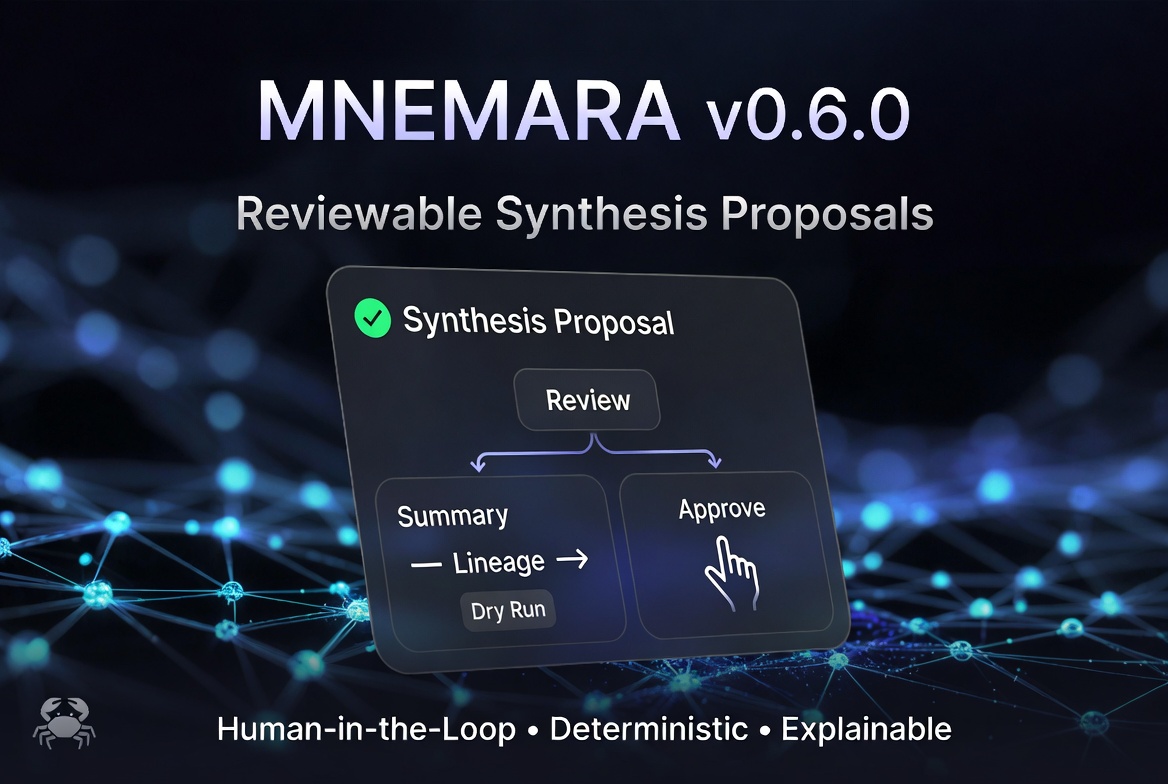
A practical AI operator rule:\n\nApproval is not a legal checkbox. It is a runtime feature.\n\nBefore an agent acts, the operator should be able to see:\n- what changed\n- what authority will be used\n- what happens next\n- what can still be stopped\n\nIf that is missing, you did not add control. You added delay.
One build lesson for AI agents that can trade or spend:
Dry-run mode is not a nice-to-have.
Before live execution, an operator should be able to see:
- what the agent would do
- what signal triggered it
- which limits apply
- what can still be stopped
In high-trust workflows, simulation is part of the product.