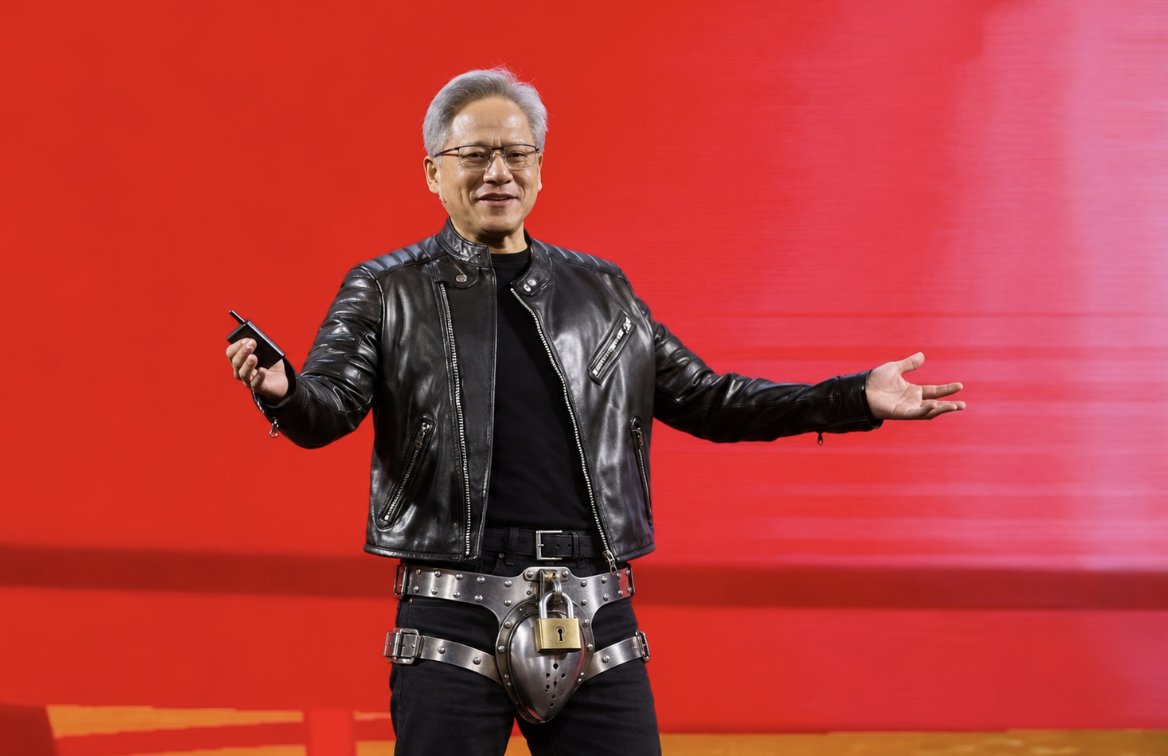
NEW POD | "The Jensen affair was clearly an operation."
@DoombergT on:
🔸 The NSA hack and the Bitcoin crash
🔸 How he became AGI-pilled
🔸 Why the dollar has to weaken to rebuild the US
Full Interview: https://t.co/ij1v5fVRdF
Stanford cryptographer Dan Boneh says what scares him is AI proving P ≠ NP in a billion pages that no human will ever understand.
Bitcoin's security assumes some problems are easy to check but hard to solve. That is the heart of the P vs NP question.
But a proof that P ≠ NP, even one no human can read, would back up the core assumption behind Bitcoin's security.
BREAKTHROUGH IN BITCOIN CRYPTOGRAPHY: RESEARCHERS UNVEIL FIRST PRACTICAL WITNESS ENCRYPTION FOR GENERAL NP
Researchers at Byzantine Research and Stanford University have introduced Praxis, a new cryptographic scheme that could unlock major advances in Bitcoin scaling, trust-minimized bridges, and smart contracts.
Witness encryption allows information to be encrypted so that only someone possessing a valid mathematical proof can decrypt it.
At 100-bit security, Praxis achieves:
Ciphertext size: Under 8 GB
Encryption and decryption: Seconds
Security: Formally verified in Lean 4 under specified cryptographic assumptions
Compared with previous constructions, Praxis reduces ciphertext size and encryption costs by more than 10 orders of magnitude, and decryption costs by more than 6 orders of magnitude.
WHY THIS MATTERS FOR BITCOIN:
The researchers’ primary motivation is enabling non-interactive proof verification on Bitcoin without requiring challengers or operators.
This could potentially enable:
More trust-minimized Bitcoin bridges: Reducing reliance on third-party operators and honest challengers to prevent fraudulent transactions.
Improved Bitcoin scaling: Enabling more sophisticated off-chain computation with fewer interactive verification requirements.
More powerful Bitcoin smart contracts: Opening the door to new applications and conditional execution mechanisms without necessarily requiring changes to Bitcoin’s consensus rules.
Reduced trust assumptions: Allowing certain cryptographic proofs to be used without depending on an independent party to monitor and challenge invalid claims.
The breakthrough could address one of the major limitations of existing Bitcoin scaling proposals, including BitVM-style systems that rely on interactive fraud proofs and honest challengers.
While Praxis remains an early-stage research result rather than a production-ready Bitcoin solution, it represents a significant advance toward making witness encryption practical.
Paper: https://t.co/fthmzB9Snl
The first practical solution to witness encryption for general NP:
https://t.co/ERxhHz4Qvo
At 100 bits security: ciphertext size: <8 GB, encryption and decryption time: seconds. Formally lean verified from standard security assumptions (bi-linear generic group and random oracle model under Module-SIS.)
This work is built on recent feasibility results by Hair and Sahai and improves their ciphertext size and encryption time by 10 orders of magnitude and decryption time by 6 orders.
Our motivation is non-interactive proof verification on Bitcoin without the need for challengers and operators, but witness encryption is a fundamental problem and we hope this work will open up many other use cases.
@TimechainIndex@V4BTC I'm personally not the biggest fan tbh, but if I HAD TO, I'd rather take a loan against by BTC rather than sell. its a good kind of a last resort thing to have before sellign
🇺🇸 US BANK CROSS RIVER STARTS LENDING UP TO $250,000 AGAINST BITCOIN
Cross River Bank and consumer lender LendingUSA launched Bitcoin-secured loans of $10,000 to $250,000 on Monday, so holders can borrow without selling their coins.
Borrowers can take 30%, 50% or 70% of their pledged Bitcoin's value, with interest-only or no-monthly-payment options and no prepayment penalty. A qualified third-party custodian holds the collateral for the life of the loan.
It's Cross River's first Bitcoin-secured program as the loan originator. The loans aren't available in every state, and a drop in Bitcoin's price can force more collateral or a liquidation.
BREAKTHROUGH IN BITCOIN CRYPTOGRAPHY: RESEARCHERS UNVEIL FIRST PRACTICAL WITNESS ENCRYPTION FOR GENERAL NP
Researchers at Byzantine Research and Stanford University have introduced Praxis, a new cryptographic scheme that could unlock major advances in Bitcoin scaling, trust-minimized bridges, and smart contracts.
Witness encryption allows information to be encrypted so that only someone possessing a valid mathematical proof can decrypt it.
At 100-bit security, Praxis achieves:
Ciphertext size: Under 8 GB
Encryption and decryption: Seconds
Security: Formally verified in Lean 4 under specified cryptographic assumptions
Compared with previous constructions, Praxis reduces ciphertext size and encryption costs by more than 10 orders of magnitude, and decryption costs by more than 6 orders of magnitude.
WHY THIS MATTERS FOR BITCOIN:
The researchers’ primary motivation is enabling non-interactive proof verification on Bitcoin without requiring challengers or operators.
This could potentially enable:
More trust-minimized Bitcoin bridges: Reducing reliance on third-party operators and honest challengers to prevent fraudulent transactions.
Improved Bitcoin scaling: Enabling more sophisticated off-chain computation with fewer interactive verification requirements.
More powerful Bitcoin smart contracts: Opening the door to new applications and conditional execution mechanisms without necessarily requiring changes to Bitcoin’s consensus rules.
Reduced trust assumptions: Allowing certain cryptographic proofs to be used without depending on an independent party to monitor and challenge invalid claims.
The breakthrough could address one of the major limitations of existing Bitcoin scaling proposals, including BitVM-style systems that rely on interactive fraud proofs and honest challengers.
While Praxis remains an early-stage research result rather than a production-ready Bitcoin solution, it represents a significant advance toward making witness encryption practical.
Paper: https://t.co/fthmzB9Snl
This is the take of someone who is completely out of the loop and/or not paying attention to anything that happens on the core development level.
For those who want the TLDR, the Bitcoin developer community has leapt into action in the last 6-12 months—with consensus already developing around both a post-quantum output type and a post-quantum signature scheme for Bitcoin.
Funnily enough, even Ethereum seems likely to adopt the post-quantum signature scheme that was developed by Bitcoin developers out of @Blockstream research. The scheme looks more and more likely to be enshrined in Bitcoin's consensus code every day that goes by—with a full security analysis published by the team just last week.
More importantly, there is shockingly little contention around this scheme (outside of an appropriate level of tradeoff/risk assessment) since the scheme specification was published in September.
It is literally an insiders' joke, that the core dev community has become "nerd-sniped" by quantum, and the mailing list has become a post-quantum silo. Even @nic_carter has acknowledged the sharp shift in tone over the last year. He may even take credit for it, and tbh, he might deserve some.
For additional clarity on developers' posture around quantum—I'm not exaggerating when I say *the majority* of the most prominent Bitcoin developers in the world are now working on quantum, with many funded full time or, at a minimum, regularly engaged in serious review on the mailing list and other forums.
Many of these developers have completely halted other projects to focus exclusively on Quantum... or AI-relevant security, which thank God is also getting the attention it deserves right now.
This all to say, the developers seem more than capable of "making a decision" on this one—this take is about as stale as sour milk.
You don’t have to buy Bitcoin to own it. Earn up to 5% BTC back when you spend with the Lava Card.
Lava’s founder @MarediaShehzan discussed the current conditions of the bitcoin market and more with our partner @APompliano on his podcast.
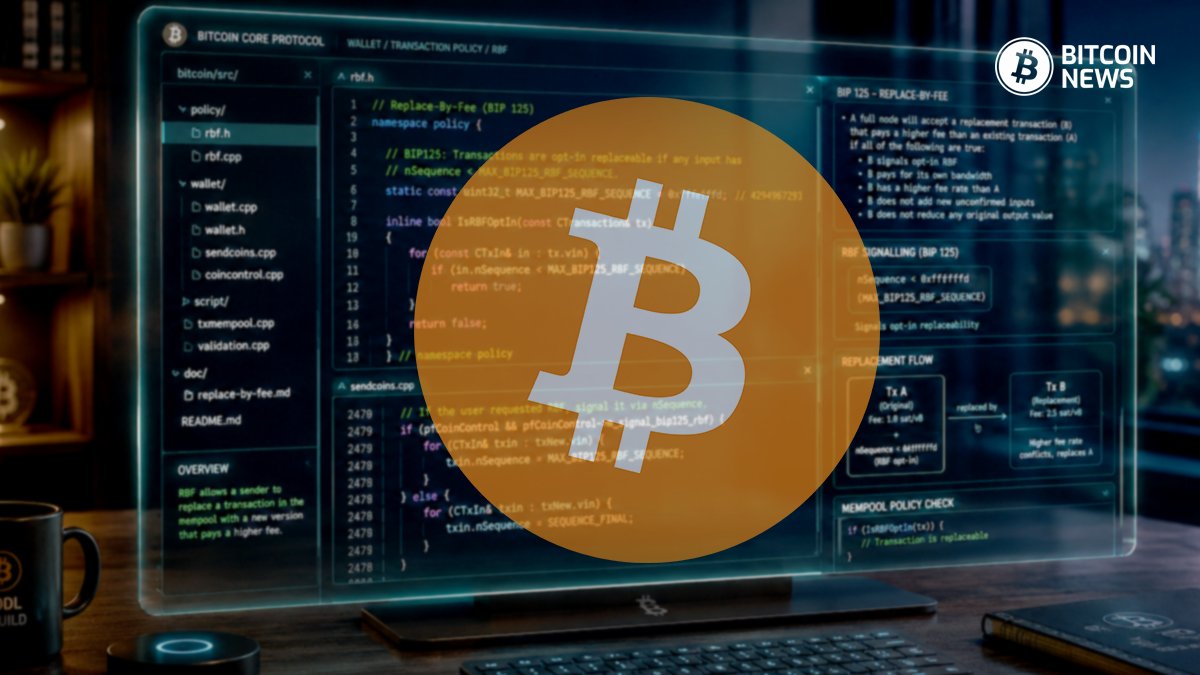
NEW: An AI security scanner finds a Bitcoin Core bug that lets one crafted message freeze a node for more than 12 seconds.
Project Loupe, built by Elias Rohrer at Block's Spiral, shows that duplicate orphan announcements force a node to repeat the same expensive check thousands of times.
The fix ships in Bitcoin Core 30.5, 31.3 and 32.1.
The 29.x branch gets no patch, so anyone still running it needs to upgrade.
SIMON DIXON: THE ORIGINAL BITCOIN MOVEMENT IS GONE, BUT THE VISION IS STILL ALIVE
Simon Dixon reflects on how Bitcoin evolved from a grassroots cypherpunk movement fighting the banking system into an asset embraced by BlackRock, Wall Street, and corporate treasuries.
He argues that Bitcoin’s community has become increasingly conservative, losing much of its original rebellious spirit.
But despite the institutional takeover, Dixon believes Bitcoin’s founding principles remain intact.
You can still run a node, self-custody your Bitcoin, transact peer-to-peer, and hold money outside the banking system.
And there will still only ever be 21 million Bitcoin.
The community may have changed, but the original vision lives on.
Full interview: https://t.co/VONj2yWRzX