These days, I’ve been studying linear algebra through MIT OCW, following Professor Gilbert Strang’s 18.06 course.
Thanks to MIT — and thanks to him.
In times like these, anyone with the will to learn can study almost anything for free.
Today, I built a simple video-to-text pipeline and summarized the raw data. I heard the ChatGPT API tokens have gotten much cheaper.
but when I processed an 18-minute video for transcription and summarization, it still cost about $0.50. Pretty interesting!
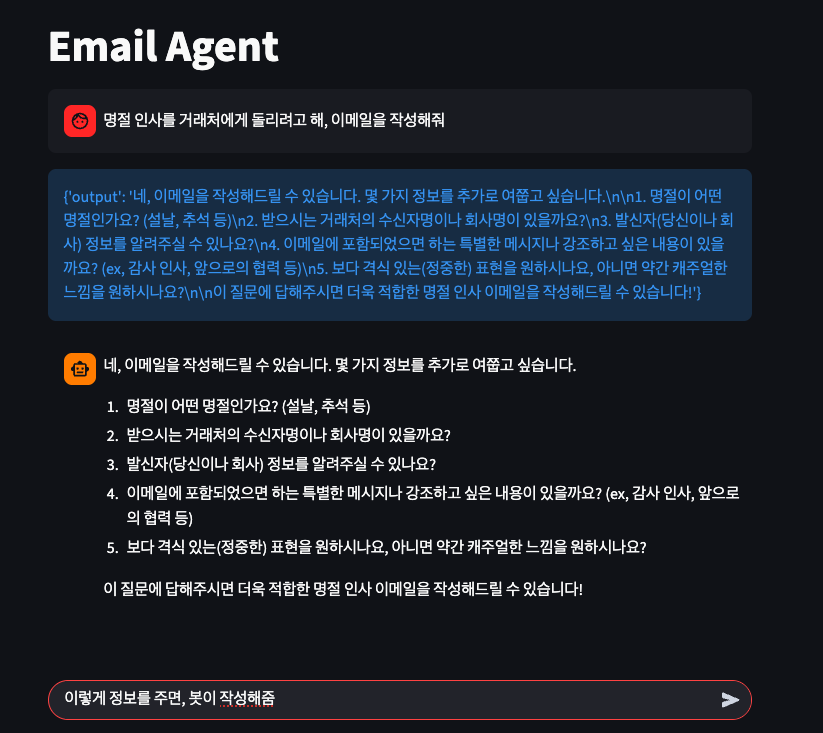
Today, I built an email responder and wrapped its UI into a chatbot. It’s a small and simple start — but I think it marks the beginning of my bigger goal.
These days, I’ve been studying work automation using AI and n8n. I believe this tool can really boost my productivity.
My goal is to automate my repetitive tasks and use that saved time to study AI or other things.
Living in this new era, even if I’m not majoring in AI or working in the AI industry, I still need to learn it deeply.
Using and understanding AI might become one of the basic skills of our time.
So I decided to study MIT’s AI curriculum.
They’ve opened their entire program — lectures, materials, everything — as open source.
I love how, in this era, anyone who truly wants to learn can access knowledge anytime, anywhere.
When Microsoft Office first came out, many people who didn’t learn to use it quickly lost their ground. AI is another powerful shift — or maybe, the biggest challenge I’ll ever face in my life.
But I can already see a massive productivity gap forming between those who don’t use AI at all and those who can seamlessly collaborate with multiple GenAI tools.. What scares me is how quickly that gap is widening.
This weekend, I studied and experimented with Cursor AI and Claude AI — both are amazing.
I work in the strategy department, and to be honest, not many people are even using the ChatGPT Plus plan.
Right now, I’m studying LangChain, especially how to use it to build a chatbot.
It’s pretty tough, and I feel a bit discouraged :(
But I’ll keep going.. after a good run to clear my head.
Okay, now I understand the relationship between Pydantic model and JSON.
Pydantic is a tool that helps ensure my output follows a defined structure. And JSON is a reliable format for Pydantic model to output that structured data.
o that's why we use JSON.
Today, I did a quick study on prompt parsers, the Pydantic model, and the Json model.
But I’m still not exactly sure what the difference is between the two models. I’ll probably review it again tomorrow… 😴
When I first started running, I could barely do 3km in 20 minutes... and Back then, even 3km felt like an endless road..
But these days, I run 6 to 7km at under 5 minutes per km.
I’ve experienced what it’s like to get better over time.
So let’s trust me — I’ve done it before.
I spent a lot of time just trying to understand 20 lines of code — I was moving like a turtle.
But I know that someday, it’ll get better.
Thankfully, I’ve been through this before.. going from turtle to rabbit.
Slow beginnings, but steady progress.