Le Lightning Network⚡ permet de faire des transactions #Bitcoin instantanées et à un prix abordable.
Découvrez comment cette technologie fonctionne dans l’article écrit par @PEChantrel.
https://t.co/HYa1DOaPm2
Un nouvel article signé Sarra Medini, une doctorante et assistante de recherche spécialiste du droit d'auteur, vient d'être publié sur notre site web, n'hésitez pas à aller y jeter un coup d'œil👇:
https://t.co/N96efMtZ1y
🤔 Tether soutiendrait l’interdiction du rendement sur les stablecoins dans le projet de loi sur la structure des marchés, s’alignant ainsi sur la position des banques.
L'émetteur de l'USDT aurait aussi pris ses distances avec Coinbase, expliquant à des sénateurs ne pas soutenir la décision de Brian Armstrong d’exposer le différend publiquement.
🚨 « Bitcoin ne me dérange pas. Je le vois comme un atout important qui peut aider à informer les décideurs politiques quand ils font les bons ou les mauvais choix. »
- Kevin Warsh, futur président de la Fed fraichement nommé par Trump.
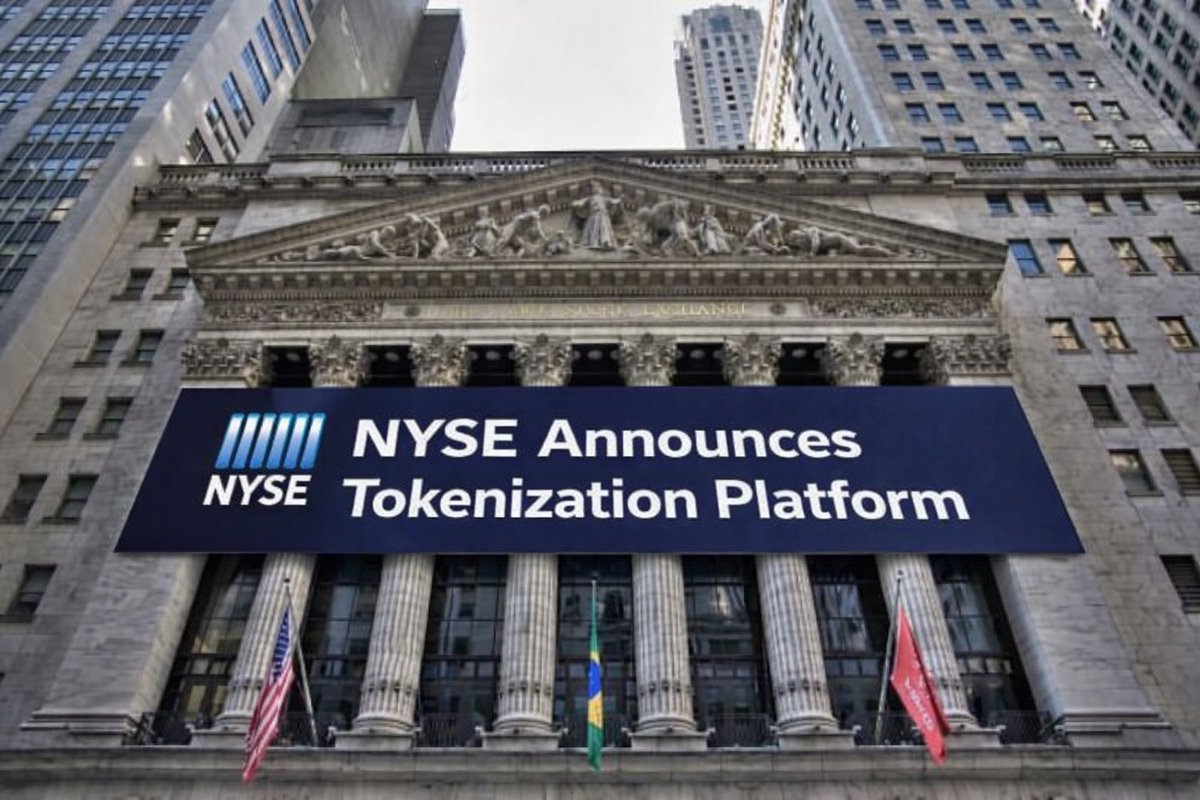
🚨 BREAKING: NYSE announces new tokenization platform.
Here's what they're building:
A completely new trading venue with:
• 24/7 operations (no market hours)
• Instant settlement (not T+1)
• Stablecoin-based funding (not bank wires)
• "Tokens natively issued as digital securities"
Not retrofitting the existing exchange.
Not adding blockchain to the back office.
An entirely new venue.
---
Think about what this means:
NYSE will run two exchanges.
The old one: 9:30-4:00 EST, T+1 settlement, bank wires.
The new one: 24/7, instant settlement, stablecoin rails.
They're not choosing between traditional and digital.
They're operating both in parallel.
---
How does this compare to others?
Everyone else is building infrastructure to tokenize existing assets:
• DTCC tokenizes existing custodied securities
• State Street tokenizes MMFs and ETFs
• Nasdaq amends rules for tokenized trading alongside traditional
NYSE is building a new way to bring equities on-chain AND the venue to trade them.
This puts them in competition with Figure's OPEN and Superstate.
Native digital issuance. Native digital trading.
---
Tokenized stocks enable a world where:
• Settlement happens on-chain
• Custody lives in wallets, not DTCC
• Trading never stops
• Capital formation happens in stablecoins
The question for every institution:
Are you digitizing your existing business or building the business that replaces it?
NYSE just answered: both.
---
#fintech #tokenization #infrastructure #digitalassets #stablecoins
We need more DAOs - but different and better DAOs.
The original drive to build Ethereum was heavily inspired by decentralized autonomous organizations: systems of code and rules that lived on decentralized networks that could manage resources and direct activity, more efficiently and more robustly than traditional governments and corporations could.
Since then, the concept of DAOs has migrated to essentially referring to a treasury controlled by token holder voting - a design which "works", hence why it got copied so much, but a design which is inefficient, vulnerable to capture, and fails utterly at the goal of mitigating the weaknesses of human politics. As a result, many have become cynical about DAOs.
But we need DAOs.
* We need DAOs to create better oracles. Today, decentralized stablecoins, prediction markets, and other basic building blocks of defi are built on oracle designs that we are not satisfied with. If the oracle is token based, whales can manipulate the answer on a subjective issue and it becomes difficult to counteract them. Fundamentally, a token-based oracle cannot have a cost of attack higher than its market cap, which in turn means it cannot secure assets without extracting rent higher than the discount rate. And if the oracle uses human curation, then it's not very decentralized. The problem here is not greed. The problem is that we have bad oracle designs, we need better ones, and bootstrapping them is not just a technical problem but also a social problem.
* We need DAOs for onchain dispute resolution, a necessary component of many types of more advanced smart contract use cases (eg. insurance). This is the same type of problem as price oracles, but even more subjective, and so even harder to get right.
* We need DAOs to maintain lists. This includes: lists of applications known to be secure or not scams, lists of canonical interfaces, lists of token contract addresses, and much more.
* We need DAOs to get projects off the ground quickly. If you have a group of people, who all want something done and are willing to contribute some funds (perhaps in exchange for benefits), then how do you manage this, especially if the task is too short-duration for legal entities to be worth it?
* We need DAOs to do long-term project maintenance. If the original team of a project disappears, how can a community keep going, and how can new people coming in get the funding they need?
One framework that I use to analyze this is "convex vs concave" from https://t.co/1BrMsUAKWK . If the DAO is solving a concave problem, then it is in an environment where, if faced with two possible courses of action, a compromise is better than a coin flip. Hence, you want systems that maximize robustness by averaging (or rather, medianing) in input from many sources, and protect against capture and financial attacks. If the DAO is solving a convex problem, then you want the ability to make decisive choices and follow through on them. In this case, leaders can be good, and the job of the decentralized process should be to keep the leaders in check.
For all of this to work, we need to solve two problems: privacy, and decision fatigue. Without privacy, governance becomes a social game (see https://t.co/uMXcuzQNjM ). And if people have to make decisions every week, for the first month you see excited participation, but over time willingness to participate, and even to stay informed, declines.
I see modern technology as opening the door to a renaissance here. Specifically:
* ZK (and in some cases MPC/FHE, though these should be used only when ZK along cannot solve the problem) for privacy
* AI to solve decision fatigue
* Consensus-finding communication tools (like https://t.co/Nzord32Ub1, but going further)
AI must be used carefully: we must *not* put full-size deepseek (or worse, GPT 5.2) in charge of a DAO and call it a day. Rather, AI must be put in thoughtfully, as something that scales and enhances human intention and judgement, rather than replacing it. This could be done at DAO level (eg. see how https://t.co/pCHI7Mlo2m works), or at individual level (user-controlled local LLMs that vote on their behalf).
It is important to think about the "DAO stack" as also including the communication layer, hence the need for forums and platforms specially designed for the purpose. A multisig plus well-designed consensus-finding tools can easily beat idealized collusion-resistant quadratic funding plus crypto twitter.
But in all cases, we need new designs. Projects that need new oracles and want to build their own should see that as 50% of their job, not 10%.
Projects working on new governance designs should build with ZK and AI in mind, and they should treat the communication layer as 50% of their job, not 10%.
This is how we can ensure the decentralization and robustness of the Ethereum base layer also applies to the world that gets built on top.
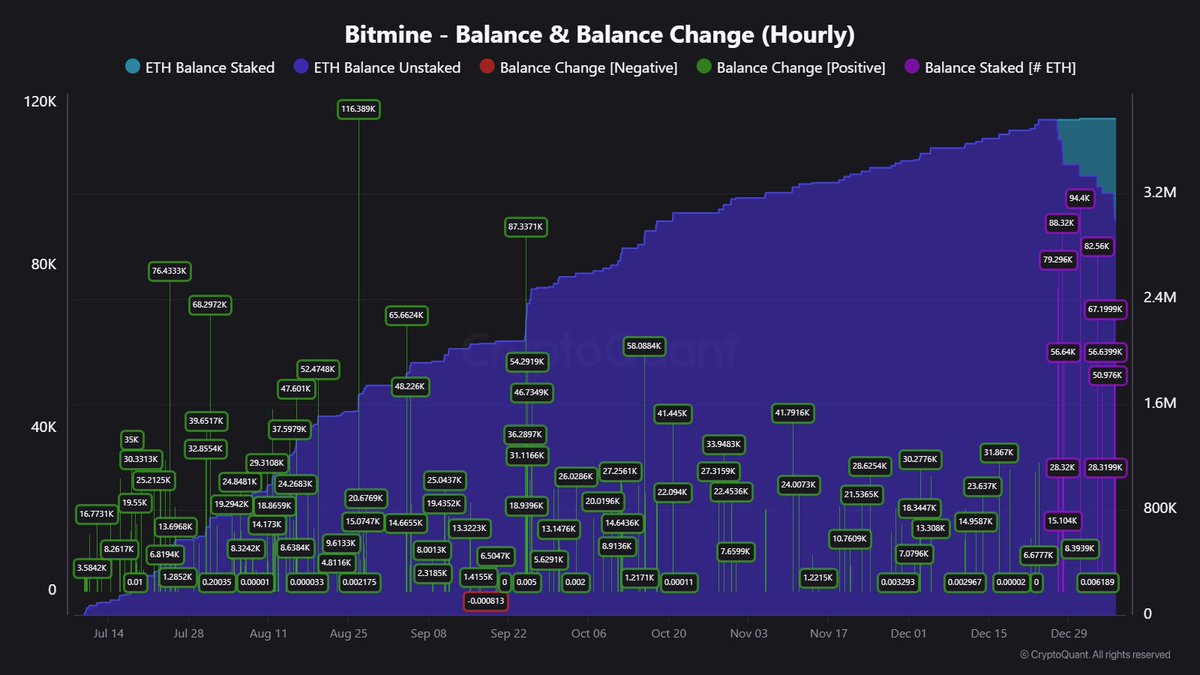
Bitmine, Ethereum’s largest DAT, has started staking.
In just two weeks, they’ve staked ~771K ETH, about 18.6% of their 4.14M ETH holdings.
They’re not just buying ETH with dollars, they’re now earning it through staking rewards too.
Now that ZKEVMs are at alpha stage (production-quality performance, remaining work is safety) and PeerDAS is live on mainnet, it's time to talk more about what this combination means for Ethereum.
These are not minor improvements; they are shifting Ethereum into being a fundamentally new and more powerful kind of decentralized network.
To see why, let's look at the two major types of p2p network so far:
BitTorrent (2000): huge total bandwidth, highly decentralized, no consensus
Bitcoin (2009): highly decentralized, consensus, but low bandwidth - because it’s not “distributed” in the sense of work being split up, it’s *replicated*
Now, Ethereum with PeerDAS (2025) and ZK-EVMs (expect small portions of the network using it in 2026), we get: decentralized, consensus and high bandwidth
The trilemma has been solved - not on paper, but with live running code, of which one half (data availability sampling) is *on mainnet today*, and the other half (ZK-EVMs) is *production-quality on performance today* - safety is what remains.
This was a 10-year journey (see the first commit of my original post on DAS here: https://t.co/Fa0jKFgObW , and ZK-EVM attempts started in ~2020), but it's finally here.
Over the next ~4 years, expect to see the full extent of this vision roll out:
* In 2026, large non-ZKEVM-dependent gas limit increases due to BALs and ePBS, and we'll see the first opportunities to run a ZKEVM node
* In 2026-28, gas repricings, changes to state structure, exec payload going into blobs, and other adjustments to make higher gas limits safe
* In 2027-30, large further gas limit increases, as ZKEVM becomes the primary way to validate blocks on the network
A third piece of this is distributed block building.
A long-term ideal holy grail is to get to a future where the full block is *never* constituted in one single place. This will not be necessary for a long time, but IMO it is worth striving for us at least have the capability to do that.
Even before that point, we want the meaningful authority in block building to be as distributed as possible. This can be done either in-protocol (eg. maybe we figure out how to expand FOCIL to make it a primary channel for txs), or out-of-protocol with distributed builder marketplaces. This reduces risk of centralized interference with real-time transaction inclusion, AND it creates a better environment for geographical fairness.
Onward.
In 2025, Ethereum solidified itself as the secure foundation for our growing digital civilization. From industry-leading adoption to new technology that reinforces protocol resilience, here are 12 themes that defined the past year:
1/ DeFi reinforced Ethereum's role as the financial base layer of the internet.
Transaction costs on Layer 1 (L1) reached 5-year lows and dropped below $0.01 on Layer 2 networks (L2s), making payments, remittances, and savings products an everyday reality. Maturing paymaster infrastructure allowed major apps to abstract (or remove) transaction fees entirely.
These developments paved the way for global adoption:
→ Ethereum’s $99B+ DeFi TVL is over 9x the next-largest L1 ecosystem (per @DefiLlama), the strongest platform for global liquidity.
→ A new wave of neobanks were accelerated by growing regulatory clarity, launching cards, reward programs, and reaching millions in daily spend volume.
→ @RobinhoodApp_EU, @Gemini, and @krakenfx all rolled out stock tokens on Ethereum rails this year (L1 + L2s), bringing extended-hours access to U.S. equities. Robinhood also announced it’s building its own L2 network on @arbitrum's Orbit tech stack.
→ Over $18.8 trillion in stablecoin volume settled on Ethereum in 2025 (per @RWA_xyz), solidifying the role of stablecoins as global digital dollars.
Smart wallets moved into production after the Pectra upgrade in May, improving security and making money programmable all the way to the account-based level. Prediction markets became a mainstream source of truth for macro events, moving $20B volume on L1 + L2s this year (per @tokenterminal).
From per-API-call micropayments to stablecoins improving remittances around the globe, Ethereum is the base layer for a new generation of digital financial infrastructure.
2/ Institutional adoption of Ethereum accelerated, driven by projects with clear utility.
The rise of ETH digital asset treasuries (DATs) brought an explosion of public companies actively managing balance sheets onchain, with $35B+ of ETH held by ETFs and strategic reserves (per @SERdotxyz). Leading institutions began using smart contracts to program their capital, diversifying yield strategies via DeFi allocation and distributing over $12B of real-world assets on Ethereum (per @RWA_xyz). The world’s largest banks, asset issuers, and payment processors are now using Ethereum L2s for verifiable settlement, composable scale, and programmable, 24/7 products.
3/ Ethereum’s rollup-centric roadmap was validated in 2025 by a rapidly-scaling L2 landscape and significant technical unlocks.
→ The ecosystem expanded as @Celo transitioned to become an Ethereum L2, while others like @Ronin_Network & @nillion announced plans to begin the process.
→ Transactions per second on all Ethereum rollups reached a combined 5600 TPS average for the first time.
→ December’s Fusaka upgrade introduced PeerDAS, driving L2 costs down by ramping up to 8x blob capacity.
→ L1 gas limit raised to 60M, expanding L1 settlement capacity by ~33% and setting the stage for further L2 expansion in 2026.
L2s have become leading execution layers for high-frequency economic activity, while upgrades to enhance their throughput have preserved L1 security and decentralization.
4/ Interoperability between Ethereum L1 and L2s also advanced in 2025, moving closer to a seamless, unified Ethereum.
Standards like ERC-7683 standardized order and settlement interfaces, enabling seamless cross-chain execution. The Open Intents Framework (OIF), announced by 30+ teams in February, delivered more secure, cheaper, and faster settlement of user interactions across chains. The Ethereum Interop Layer (EIL) launched on testnet in November, paving the way for unified rollups via trustless single-signature cross-chain transactions.
Seamless, secure, and permissionless experiences across the Ethereum ecosystem empowered individuals and institutions alike.
5/ Privacy became a core focus for the Ethereum ecosystem, driven by project growth and L2 development.
Privacy pools continued to build traction, with privacy protocols on Ethereum reaching new all-time highs for value locked, growing by over 60% in 2025 (per @DefiLlama). The privacy-preserving rollup landscape matured, bringing private execution to Ethereum-based settlement. At the end of 2025, there are 750+ projects in the web3 privacy ecosystem as mapped by @web3privacy, with initiatives impacting DeFi, wallets, apps, storage, and more.
From fully onchain identity solutions to a global ecosystem of privacy advocates, Ethereum continues to advance sovereignty and trustlessness across the tech stack.
6/ 2025 was the year AI agents became economic actors.
Agents don't have bank accounts or passports: they have Ethereum wallets and cryptographic proofs.
The x402 internet-native payment standard + attestation flows on Ethereum now allow agent-to-agent commerce for services, compute, and data, without human intervention. New smart account permissions enforced spending limits and permissions for agents at the wallet level, adding guardrails for trustless agents to manage real capital. And ERC-8004, which is now being finalized and deployed in production, emerged as a standard for trustless agent discovery, reputation, and validation, with 7,500+ agents already registered on testnets (per https://t.co/O9hrqXGe6w).
Ethereum is becoming the settlement layer powering the machine economy.
7/ Ethereum became a critical platform for global coordination, powered by sovereign digital identity.
Onchain finance fueled real-world action, from crypto donations supporting the Myanmar/Thailand earthquake relief to the World Food Program US launching support for ETH donations. Pop-up cities like ETH Enugu in Nigeria were funded, governed, and operated using Ethereum infrastructure, demonstrating real-world, decentralized coordination.
The Kingdom of Bhutan migrated its National Digital Identity system to Ethereum, anchoring 200K+ citizen IDs on a public blockchain for enhanced security and self-sovereignty. Proof-of-personhood tools matured, pushing forward the feasibility of sybil-resistant voting and funding at scale.
8/ Consumer apps, onchain social, and gaming on Ethereum attracted millions of users in 2025.
Decentralized applications on L1 reached a total of over 244M unique active wallets this year (per @DappRadar). Ethereum L1 led in NFT volume and royalties across 2025 (per https://t.co/ltRqn1xYy5), while millions of unique collections launched across Ethereum and L2 networks. "White Rabbit," the anime crowdfunded via Ethereum-based NFTs, won the 2025 Emmy for Outstanding Innovation in Emerging Media Programming—a first for community-driven Hollywood production.
Ethereum provided the coordination layer for hundreds of thousands of participants across decentralized organizations (DAOs) spanning stablecoins, lending, staking, decentralized exchanges, art, infrastructure, social impact, and more. Increasingly sophisticated governance tooling and tokenomics structures helped DAOs manage billions in treasury assets and evolve ownership, while growing adoption of new DAO-friendly regulatory structures helped them scale impact.
Ethereum continues weaving into everyday culture, showing up in mainstream moments and enabling coordination across creators, communities, and builders.
9/ zkVMs saw significant advancements in 2025, changing how the network can continue to expand throughput and strengthen decentralization.
A boom in ZK-coprocessors allowed apps to offload complex compute offchain. The @eth_proofs community achieved live, real-time ZK proving of Ethereum blocks, demonstrating the potential for full ZK light clients to run on low-powered devices like smartphones.
Across the ecosystem, teams are advancing research into how verifiable, real-time proving can supercharge scaling and solidify Ethereum as global trust infrastructure.
10/ Ethereum shipped two major upgrades in 7 months, boosting transaction throughput, creating higher data availability for L2s, and ensuring resilient growth.
The Pectra and Fusaka upgrades made wallets smarter and more accessible for retail and institutional users, expanding account abstraction and making mobile-native app experiences possible without complex middleware. As we move into 2026, Fusaka’s improvements set the stage for Ethereum’s consumer apps to become phone-native, human-friendly, and ready for mass adoption.
Ethereum can improve at a rapid pace while preserving decentralization and resilience.
11/ 2025 showcased Ethereum’s vibrant global ecosystem.
@ETHGlobal hosted 7+ hackathons and 140+ events, from New Delhi to New York, Prague to Taipei. Hundreds of community-led Ethereum events and hackathons like @EthCC, @EthereumDenver, @ETHIndiaco, @EthSafari, @ethlatam, @Ethereum_JP, and many more happened across the world.
14k+ people from 130+ countries attended @EFDevcon in Buenos Aires, collaborating at over 500 community-led events and the first Ethereum World’s Fair. Beginning in April, Destino Devconnect supported over 100 events across 14 LATAM countries. @EFetheverywhere launched permanent Ethereum community hubs in Lagos, London, Berlin, and Dubai, creating space for coworking, meetups, workshops, and more.
Ethereum is more than a global network: it’s a global ecosystem of people from across backgrounds, disciplines, and communities.
12/ Ethereum celebrated 10 years live in July.
The anniversary prompted celebrations across the globe and ushered in a renewed focus on growth and resilience.
After 10 years, Ethereum:
→ Has over 88M total smart contracts deployed
→ Saw daily transactions onchain reach a new all-time high of 1.74M
→ Has the largest developer community of any blockchain, with 32K active developers fueling innovation in the ecosystem, and over 16K new developers welcomed between January and September alone
—
With 10 years of uninterrupted liveness, Ethereum represents trust that is earned over time. Ethereum is infrastructure that has persisted through market cycles and global stress to set the standard for resilience.
Ethereum is no longer just emerging technology. It is becoming the scaffolding of our digital civilization.
Here’s to welcoming in a new year for the Ethereum ecosystem.
🚨 YouTube permet désormais aux créateurs américains d’être payés en PYUSD, le stablecoin de PayPal.
La fonctionnalité est déjà active, mais réservée pour l’instant aux États-Unis.
Une conférence sur l’utilisation des cryptoactifs au Québec aura lieu le 20 novembre 2025 au pavillon Charles-De Koninck!
L'inscription obligatoire et ouverte à tous, n’hésitez pas à venir y assister!
⬇️
https://t.co/cp8vEGL48T
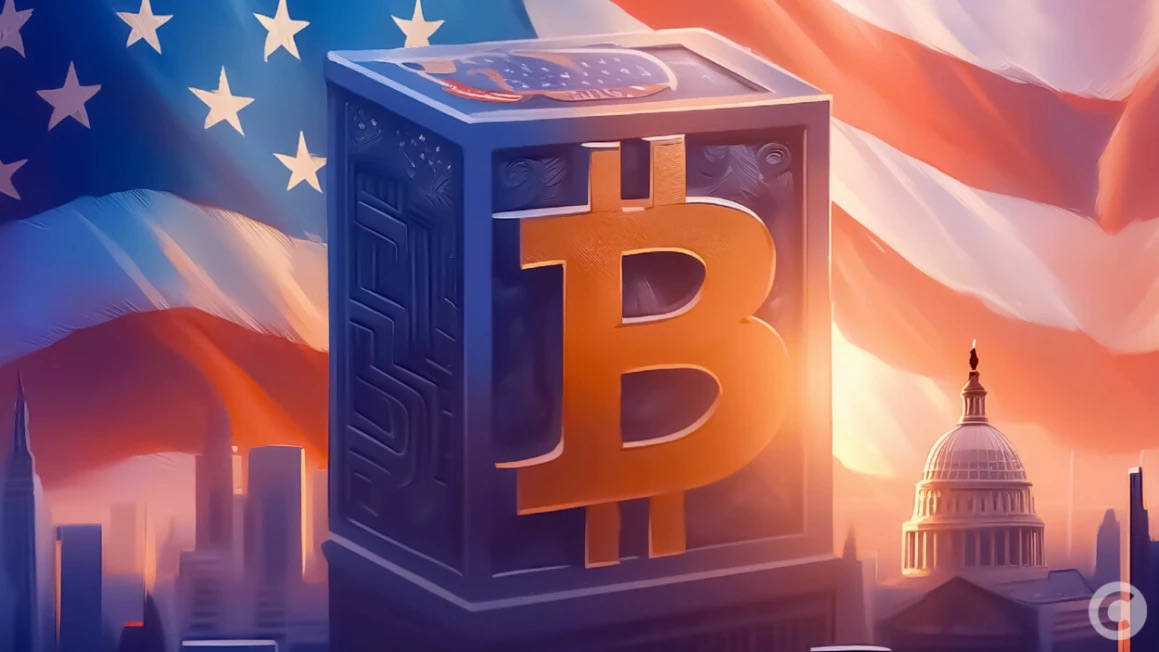
🇺🇸 Les États-Unis ont intégré les 127 000 $BTC saisis récemment à leur réserve stratégique de Bitcoin, faisant bondir celle-ci de 64 % en une nuit, selon Galaxy Research.
Le gouvernement américain détient désormais plus de bitcoins que n’importe quelle entité, à l’exception de Strategy.
🚨 ANNOUNCEMENT: BULL Wallet is now available worldwide on iOS & Android!
A self-custodial, Bitcoin-only wallet designed for low-fee, private payments and long-term cold storage.
Built for cypherpunks. Perfect for beginners.
Bitcoin, Lightning & Liquid: seamlessly swap between networks with non-custodial atomic swaps.
Open-source, privacy-focused, and beautifully simple.
TRY IT NOW ↓
🔓 OneKey signale une vulnérabilité qui pourrait avoir permis le craquage d'environ 120 000 clés privées Bitcoin.
Le problème proviendrait de Libbitcoin Explorer (bx) 3.x, qui utilise l'heure système et l'algorithme Mersenne Twister-32 avec un petit espace de graine de 2³² bits, rendant les clés prévisibles.
Les wallets affectés incluent Trust Wallet Extension 0.0.172–0.0.183, Trust Wallet Core ≤3.1.1, et d'autres produits utilisant les mêmes bibliothèques.
Que s’est-il passé aujourd’hui sur le marché crypto ? C’est le Récap’ du Coin 👇
🇺🇸🇬🇧 Les États-Unis et le Royaume-Uni mènent une vaste opération conjointe contre les réseaux cybercriminels d’Asie du Sud-Est, avec la saisie de 127 217 BTC (15 milliards $) issus d’une escroquerie internationale basée au Cambodge.
🇨🇳🇺🇸 La Chine déclare qu’elle « se battra jusqu’au bout » si les États-Unis veulent une guerre commerciale, tout en affirmant que « la porte du dialogue reste ouverte ».
🇺🇸 Citibank prévoit de lancer ses services de conservation d’actifs crypto en 2026.
🇺🇸 JPMorgan annonce qu’elle permettra à ses clients de trader des cryptomonnaies. Le service de garde devrait suivre, mais pas dans l’immédiat.
🇬🇧 Le régulateur britannique FCA propose d’autoriser les gestionnaires de fonds à tokeniser leurs fonds d’investissement.
Bonne soirée à tous 🌙
Nous sommes heureux de vous annoncer que Pensez Blockchain reprend du service dès aujourd’hui ! ⛓️
Une nouvelle chronique consacrée à l’aspect juridique des développeurs de contrats intelligents est déjà en ligne. Ne la manquez pas !
Lien : https://t.co/P33b4S1u9C
🔴⛓️