Building Blockd... Speak Freely. Stay Private. Be Invisible.
Thinking about privacy, security, and system design.
No phone numbers. No tracking. No compromises.
Choosing a private messenger usually comes down to Signal or Blockd. Here's an honest comparison from the team that builds Blockd, including where Signal beats us.
Signal: elite protocol, open source, free.
Blockd: no phone number, Tor routing that hides your IP from us, a trustless ladder down to hardware.
Encryption isn't privacy.
Read the blog:
https://t.co/ji9l9mRr8s
They map everyone. Who you are, who you talk to, where you stand.
Encryption hides what you say, not the metadata that exposes you. Blockd takes you off the map.
Encrypted isn't private. Blockd is.
Free beta, iOS + Android: https://t.co/PQ79vVBBH2
Sources on the metadata claim: NSA's own description of bulk metadata collection (2013 Stellar Wind disclosures), ACLU metadata surveillance report, and Michael Hayden's 'we kill people based on metadata' quote, UCLA 2014.
What do Signal, WhatsApp, and iMessage have in common?
They encrypt your messages.
They don't protect your metadata.
Blockd does.
https://t.co/IO7lCtc6mN
WhatsApp and Signal both require your phone number.
That means your identity is always attached.
Even if your messages are encrypted—
you’re still known.
Blockd removes identity entirely.
No number. No email. No trace.
WhatsApp → requires your phone number
Signal → still ties identity to a number
Telegram → not fully end-to-end encrypted
Blockd →
• No phone number
• No identity
• No metadata
That’s the difference.
Privacy-first systems aren’t free—because real privacy has costs.
Multi-hop routing
Metadata minimization
Zero-knowledge architecture
If a platform is free, you're paying with your data.
Blockd flips that model.
Most messaging apps protect your messages.
Very few protect your identity.
Encryption ≠ privacy.
Metadata is the real leak.
Blockd was built to eliminate both.
No phone number. No tracking. No footprint.
🔐 Why Password Managers & Passkeys Matter (More Than Ever)
Most breaches don’t happen because encryption failed —
they happen because people reuse passwords or let platforms store their keys.
Real privacy starts with changing habits and default settings:
Unique passwords for every service
Keys you control — not the platform
No reliance on “forgot password” backdoors
Security is now moving beyond passwords to passkeys — cryptographic keys stored on your device or in a trusted password manager.
And where those keys live matters.
If keys are stored by a platform or cloud provider, access can be compelled
If keys are stored locally and encrypted end-to-end, only you control access
That’s why password managers are foundational to real security:
they securely store passwords and passkeys, protect them with strong encryption, and keep them out of centralized databases.
Recommended for Blockd:
👉 Log in using a passkey stored in a reputable password manager or your device’s secure enclave
👉 Avoid SMS or email-based logins whenever possible
Blockd is evolving beyond messaging into a unified privacy platform — combining encrypted communication, identity protection, and password & passkey management in one place.
One app. One threat model. Zero compromises.
#PrivacyByDesign #PasswordSecurity #ZeroKnowledge #DigitalSovereignty #CyberSecurity #Blockd #OwnYourKeys
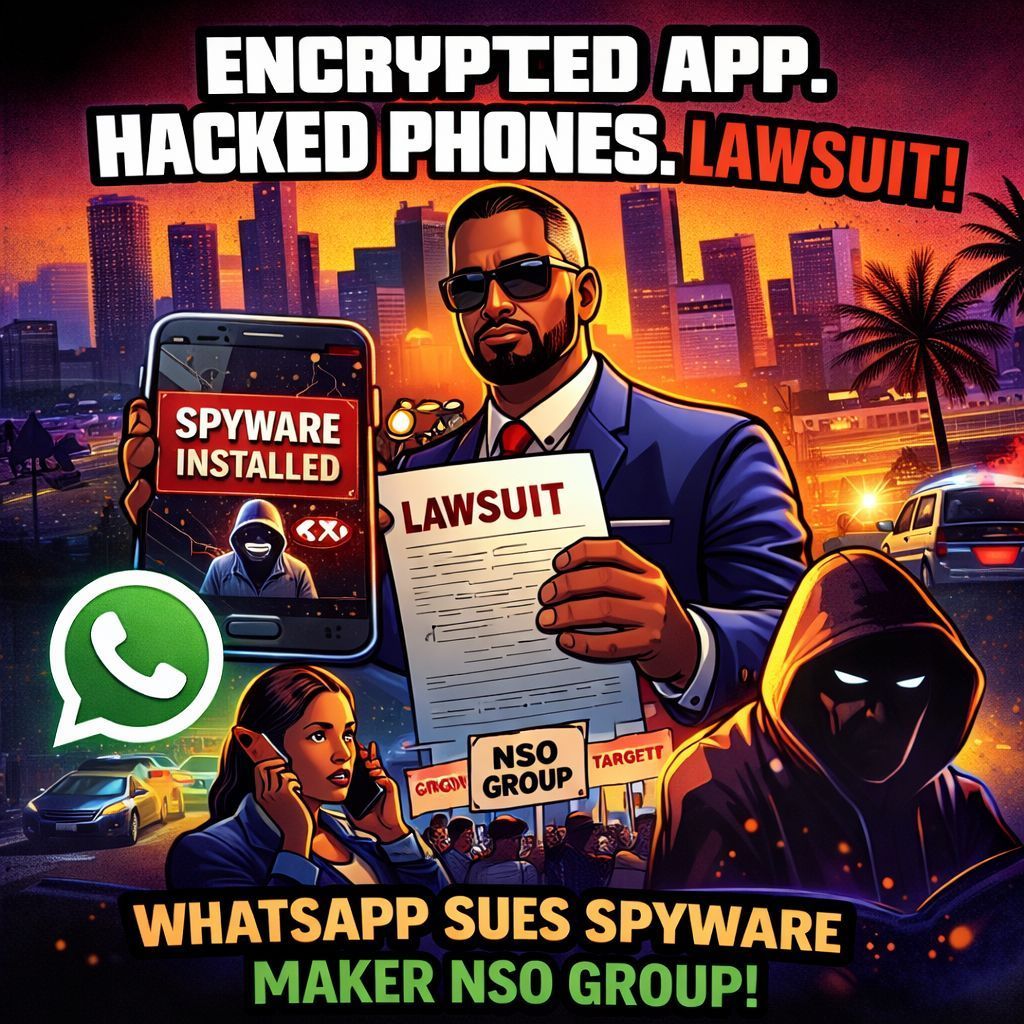
If WhatsApp messages are end-to-end encrypted…
how were journalists and activists secretly hacked without clicking anything?
This video breaks down the real lawsuit where WhatsApp accused spyware maker NSO Group of exploiting WhatsApp to silently install Pegasus surveillance software on phones.
The attack was still possible because WhatsApp is centralized, metadata-rich, tightly integrated with phone numbers and device identifiers
End-to-end encryption did not prevent exploitation at the transport/app layer
Users had no way to know they were targeted
No links. No answers. Just a missed call.
Watch the video 👇
https://t.co/Y0QiGN3b2t
#DigitalPrivacy #OnlineSafety #DataProtection #CyberSecurity
#Encryption #Surveillance #PrivacyMatters #TechNews
@who503ver@naomibrockwell Signal itself does NOT back up your messages to iCloud. But on iPhone, if you have iCloud Backup turned on, your Signal app data can be included in the device backup. A first step for anyone concerned about privacy is to get their iCloud backup settings in order.
@naomibrockwell The push to move people from Signal to Telegram is weird.
Signal’s threat model is adversarial by design. Telegram’s is convenience by design.
If privacy is the goal, recommending Telegram makes no sense unless the goal isn’t privacy.
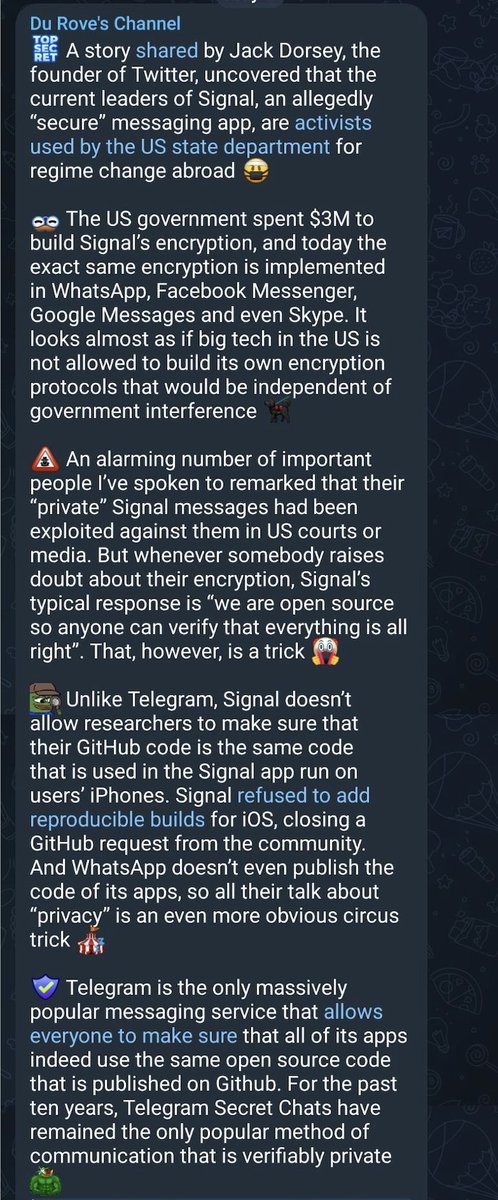
Ok let's confront some of the Signal vs Telegram FUD head on. I've been sent the following screenshot enough times that I'll just repost publicly this great rebuttal a friend of mine wrote.
Before I do, my biggest question about today's strange "organic" push to get people off Signal and onto Telegram: if you really don't want to use Signal for some reason, and say your driver is that you value privacy so much, you do you... but why on EARTH would you recommend an app without any private groups chats, and where private DMs aren't even available on desktop? Where privacy relies on trusting a person, instead of trusting encryption??
Added to my concerns: I've read enough posts from Telegram and their CEO today to have come to the conclusion that Pavel is a master deflector when it comes to questions about Telegram's privacy, and that Telegram is incredibly dishonest when they talk about the privacy guarantees users actually get. They conflate E2EE with encryption in transit constantly, in what can only be viewed imo as a deliberate attempt to mislead people. Red Flags abound! Stay vigilant, Privacy-goers!
Anyway, here is my friend's post that addresses each point of the screen shot separately:
This is textbook FUD and maliciously crafted. No one should feel one iota of safety using Telegram over Signal.
- Board members: The political opinions of Signal's leadership doesn't tell us anything about the security of Signal or of Telegram. If any such opinions matter, see their consistent statements, advocacy, and dialogue with U.K. and European politicians to defend encryption against backdoors for CSAM-scanning.
- US Government Funding: The U.S. also funded Tor. The U.S. government might like doing dodgy shit with data but also have the need for private communications. Wasn't Signal funding advantageous around the time of the Arab Spring to help dissidents operate?
- Ubiquity: If something is good and tested there is no problem with wider adoption. You are free to roll your own crypto but it's a huge risk when known-good solutions exist. What is the advantage of a new system unless you can prove advantages? Other services choose the Signal Protocol because it's the hardened gold-standard after 10 years of real-world testing, and because they know that rolling their own is difficult, fraught, and requires extensive auditing. While the client-side license of Telegram's MTProto protocol is open-source, its server-side license is proprietary and its code is unpublished.
- Signal messages used in court: Please cite any court case in which Signal messages were intercepted in transit and decrypted. All such instances have been because authorities have had direct device access, in which they could just as easily open the Telegram app and read such messages. Wow, big surprise – the people you send messages to can read them.
- Reproducible builds: You can build from source for Android. See also the independent Molly client. The point of reproducible builds is that you can verify that the code on GitHub is what they submitted to Apple. Researchers can, as the only way to do so is through jailbroken iPhones. The average person cannot. Reproducible builds on iOS void the security premise of the device, making it useless for when you actually need it. Also, iOS phones are only popular in the US, everywhere else Android is vastly more used. So as a spy method outside the U.S., choosing not to implement reproducible builds only on iOS seems odd. Apple is outside of the threat model for iPhone users anyways. They can and will ship you anything.
- 'Verifiably private': Telegram's default cloud chats offer zero security assurances and their 'secret chats' use their own encryption which has been found to have glaring bugs (https://t.co/M6Mll8HwCT) bad enough that you could viably bruteforce it if you executed a few attacks on it. Chats aren't 'secret' by default and there's no such thing as secret groups. Secret chats cannot be synced between devices and are wholly unavailable on their desktop client. Telegram has had many years to prioritise default E2EE and has refused to do so. Why? Telegram has open-source clients sure, but the proprietary server handles all cloud messages, which means they could be easily be read and there's no guarantees there.
Security is far from Telegram's core focus or their feature set. Even if they had implemented the Signal Protocol for their secret chats, it doesn't matter: they're not a security-focused company and not doing secure design. Why is Signal slow to roll out features? Because every such feature is painstakingly designed to not compromise the privacy and security inherent in Signal's guarantee.
This coordinated push for Telegram at the expense of Signal is incredibly sketchy.
Free speech doesn’t mean much if you have to self-censor because you know you’re being watched.
Blockd is built for private communication… not engagement algorithms, not surveillance, not data collection.
Say what you want.
Keep your identity and metadata out of it.
Download Blockd. 🔐
Telegram leaks your IP address to anyone in your contacts during a call & a researcher has created a tool to easily exploit this.
#Telegram says this is expected behavior, so there's nothing to fix.
That's why our top WhatsApp alternatives are #Signal and #Threema: https://t.co/blu4pQM2QY
More on this story by @lorenzofb: https://t.co/f8IjQL7YAo