One thing I find really interesting about this is that somehow the actual texts itself is creepier than this like there’s literally like five different versions of the mysterious stranger story like in multiple versions his name is “No. 44” and this one is also unlike the others
There’s something striking about Hugo Simberg’s painting, which portrays grim reapers not as harbingers of death, but as gentle, attentive gardeners.
I really love this painting by Hugo Simberg (1873–1917) because it portrays the end of life not as something terrifying or tragic, but as something quiet, peaceful, and deeply human. The skeletal figures gently tend a garden of flowers, carrying out their work like ordinary gardeners. Rather than evoking fear, they appear compassionate and thoughtful, caring for a natural process that ultimately connects all living things.
The founders of The Pirate Bay built the world's most famous torrent site in 2003.
Three Swedish guys. Peter Sunde. Fredrik Neij. Gottfrid Svartholm.
Their stated goal: help people freely exchange information.
The entertainment industry's goal: destroy them.
What followed is one of the most chaotic legal stories in internet history.
2006: Swedish police raid the servers. Took everything away. the site is back online within three days. the founders publish the cease-and-desist letters they receive from Hollywood studios on the site with mocking responses. They become folk heroes.
2009: trial begins. Hollywood shows up with lawyers. then things get interesting.
it emerges mid-trial that the lead police investigator in the case had secretly taken a job with one of the plaintiff studios while the investigation was ongoing.
the appeal judge was a member of the Swedish Copyright Association.
the defendants screamed corruption. the court said it didn't matter.
guilty. one year each. $4.2 million fine.
None of them went.
Gottfrid fled to Cambodia. Cambodia has no extradition treaty with Sweden. The Swedish government reportedly leveraged a $59 million aid grant to Cambodia to get him deported anyway. he came back in handcuffs.
While evading his copyright sentence in Cambodia, he hacked Danish government systems police records, social security numbers, the Schengen border database. six months of access. When he was finally deported to Sweden and serving his copyright sentence, the Danish charges caught up with him. extradited again. convicted again. ended up doing three years across Swedish and Danish jails
Fredrik fled to Laos. Then Thailand. arrested in 2014. deported. served 10 months.
Peter stayed. served 8 months. came out and built Njalla — an anonymous domain registration service — because he said: "We're going the wrong way in society regarding people's right to be anonymous."
The guy who ran the world's most pirated site came out of prison and built a privacy company.
The Pirate Bay is still online.
Marx argued that the ever-increasing drive for profit and simultaneous wage repression will lead to workers becoming unable to actually afford the products of capitalism, which in turn will lead to economic crises due to corporations being unable to sell their stock
“If you haven't read hundreds of books, you are functionally illiterate, and you will be incompetent, because your personal experiences alone aren't broad enough to sustain you.”
— James N. Mattis
If you’re keen to read myths, folklore and fairy-tales (as we all should), the following are some essential anthologies:
The Book of English Folktales, by Sybil Marshal.
Celtic Folk & Fairy Tales and More Celtic Folk & Fairy Tales, by Joseph Jacobs.
The Chinese Fairy Book, by Richard Wilhelm.
Early Irish Myths and Sagas, translated by Jeffrey Gantz.
English Fairy Tales and More English Fairy Tales, by Joseph Jacobs.
Fairy and Folk Tales of the Irish Peasantry, by William Butler Yeats.
Folklore, Myths and Legends of Britain, by Reader’s Digest.
Italian Folktales, by Italo Calvino.
Japanese Tales, by Royall Tyler.
The Lore of the Land: A Guide to England’s Legends from Spring-Heeled Jack to the Witches of Warboys, by Jennifer Westwood and Jacqueline Simpson.
The Lore of Scotland: A Guide to Scottish Legends, by Jennifer Westwood and Sophia Kingshill.
The Mabinogion, translated by Sioned Davies.
The Mahabharata, translated by Ramesh Menon.
The Mammoth Book of Celtic Myths and Legends, by Peter Berresford Ellis.
Le Morte d’Arthur, by Thomas Malory.
The Norse Myths, by Kevin Crossley-Holland.
The Penguin Book of Scottish Folktales, by Neil Philip.
Popular Romances of the West of England, by Robert Hunt.
Russian Fairy Tales, collected by Aleksandr Afanas’ev and translated by Norbert Guterman.
Scandinavian Folktales, by Jacqueline Simpson.
Sir Gawain and the Green Knight, Pearl, and Sir Orfeo, translated by J. R. R. Tolkien.
Skye: The Island and Its Legends, by Otta F. Swire.
Strange Stories from a Chinese Studio, by Pu Songling.
The Thousand and One Nights, in either the Mardrus / Mathers translation or the recent annotated translation by Yasmine Seale.
The Watkins Book of English Folktales, by Neil Philip.
The Welsh Fairy Book, by William Jenkyn Thomas.
Anyone who can't see what is happening is blind.
1) Banning of the ability to have privacy with a cellphone
2) Banning of the ability to own a foreign router (which may not "comply" with future "required" legislation )
3) Identity checks at the OS, App Store and Service provider levels.
4) Ability to restrict individuals access to the internet, to given types of content, etc
5) Forced front and center "official" news media forced into online services.
6) Control over AI algorithms
7) Control over algorithms for visibility/sharing of content
8) Control over peoples cars (remote kill switches, embedded biometrics, automated reporting to LEO, inebriation checks).
9) Forced biometrics to login to computers, phones, etc
10) Digital ID to replace physical ID.
11) Digital cash to replace physical cash
12) Millions of biometrics and license place cameras + millions of "gun shot detection" systems
13) Banning of mobile applications and endpoint software the government deems wrong, dangerous, or incorrect, etc. (Tiktok, Kaspersky, etc)
14) AI being embedded in every processor, mobile device, desktop OS, etc.
15) Laws demanding "backdoored" encryption.
16) Laws demanding client side scanning.
17) Laws demanding control over speech deemed harmful, violent, dangerous, upsetting, etc
18) Charges and convictions against anyone releasing privacy focused software (tornado cash).
19) AI predictive policing and predictive dissent detection
20) Centralizing of all healthcare, psychological, financial, online, offline, travel and government records.
21) Forced biometrics collection to travel, attend public events, etc
Diving too deep into this sent me on a years long battle with the concept of the demiurge, prison-planet, and ultimately the nature of the light bearer that I have only recently found my way out of.
Fragmented my personality like a git branch only merged to master after years.
Japanese culture reigns in the age of the internet because they had an entire generation there first and have seen its effects on people. "Database Shohi", NEETs, "denpa", all things they named about a decade+ ago are things the west is coming to terms with now
The troll just reinvented a method that is at least 2,300 years old. Greek sailors were boiling seawater and catching the steam back in Aristotle's day, and he wrote down why it works: the water turns to steam, the salt stays behind, and the steam cools into fresh water. The chemistry checks out. The pot really does make drinkable water. The reason your city does not run on it is energy.
Water is hard to boil. Once it hits 100 degrees, almost none of the heat you add makes it hotter. It all goes into turning the liquid into steam. That adds up fast. Boiling a thousand liters of seawater dry takes around 720 kilowatt hours, which is about what an average American home uses in three to four weeks. For one thousand liters of water.
On a beach with a campfire, that cost is invisible. One person needs maybe three liters of drinking water a day, and a pot handles that easily. Sailors and castaways have done it for centuries. The joke only breaks at scale. A city of a million people goes through hundreds of millions of liters a day, and boiling that much would need a power station running full time, around the clock, making nothing but water.
So scientists did the one thing the meme assumes they forgot to try. They stopped boiling. The method that now makes about 70 percent of the world's desalinated water is reverse osmosis. Instead of heating the seawater, it pushes it against a filter so fine that water slips through and salt cannot. No boiling means no huge energy bill for turning liquid into steam. A modern plant does it on roughly 3.5 kilowatt hours per thousand liters, close to 200 times less than the troll's fire.
There is one more catch, and it is sitting in the bottom of the pot. Taking fresh water out of seawater does not make the salt disappear. About half of what a seawater plant takes in leaves as brine, water about twice as salty as the ocean. Dump enough of it back and the oxygen drops, which can leave dead patches where almost nothing lives.
The meme works because it is honest. You really can do this with a fire and a bucket. Scientists just figured out that the campfire version would bankrupt a city, so they spent decades building a way to get the salt out without lighting the fire at all.
I think about this post sometimes because it represents a weird kind of outsider art, and while it has obvious aesthetic value apparent to any viewer, it's seemingly one of a kind. It's strange, pointless, private, and objectively beautiful simultaneously.
BTW if this passes the internet is as good as dead, your privacy will disappear and anything you say on it will be used against you despite free speech
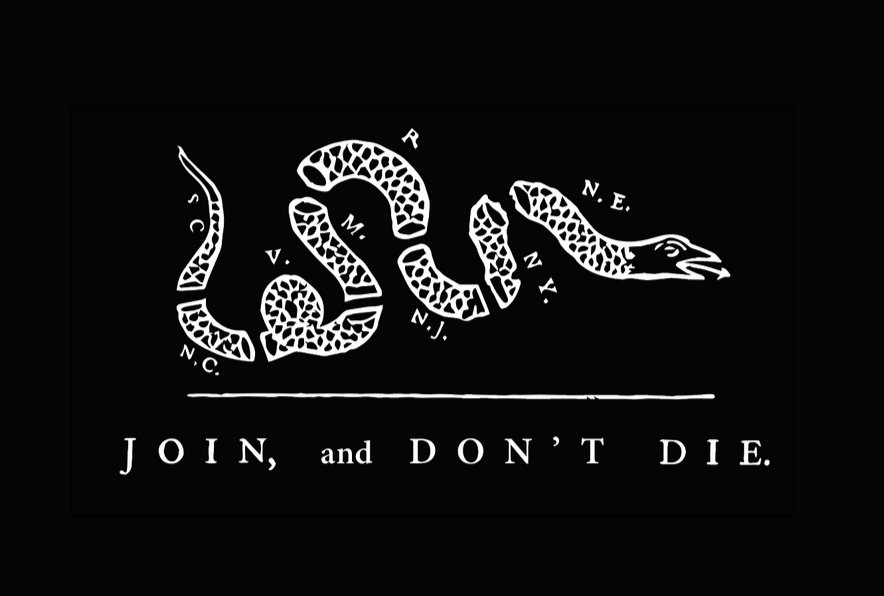
Bryan Johnson recently founded a religion called “Don’t Die.” The emblem is a snake, which is weirdly fitting because in the Epic of Gilgamesh, the hero sets out in search of the flower of immortality following the death of a beloved friend. He finds the flower at the bottom of the sea. But Gilgamesh makes the mistake of setting it down as he bathes, and a serpent emerges from the water and steals it away. Gilgamesh weeps, but he learns an important lesson: human beings weren’t made to live forever. If Bryan Johnson had read the old stories, he would know this.
No child is born able to read. The brain ships with no reading region at all. It builds one, and the construction runs on the exact effort AI removes.
Learning to read physically repurposes a patch of visual cortex. A spot in the left fusiform gyrus starts out tuned to objects and faces. Through months of effortful decoding, a 6-year-old converts it into the visual word form area, the region every literate adult uses to recognize words on sight. Stanislas Dehaene mapped it and called it neuronal recycling. Pre-literate kids show no special response to letters there. It shows up only as they struggle to read.
The struggle is the build signal. When a child strains to sound out a word or hold a sum in working memory, focus chemicals like acetylcholine and norepinephrine flag that circuit as worth keeping. Effort is how the nervous system marks which synapses to strengthen. Low effort, no marker.
Errors carry the same signal. The brain learns from the gap between what it predicted and what turned out true. Each wrong guess followed by a correction releases the dopamine that drives the rewire. Fluent, instant output produces almost none of it.
The wiring locks in later, during deep sleep, when the circuits tagged that day get consolidated. Only the ones that fired hard enough to get tagged. A child who never strained tagged nothing to keep.
Hand that child a model that returns the sentence or the answer on demand, and the strain, the errors, and the prediction gap vanish at once. The worksheet looks finished. The cortex that should have rewired underneath it never fired.
The window is the urgent part. The tissue reading recycles is where childhood plasticity peaks, and ages 6 to 13 are when that repurposing is cheapest. Miss the reps then and the same wiring costs far more to build later, if it builds at all.
Norway is the country that already ran the opposite experiment. In 2016 they gave a tablet to every 5-year-old, went all in on screens in class, and watched the results for a decade. Now they're pulling AI out for ages 6 to 13 and funding paper books again. A government reading its own data ahead of the curve.
The biology is identical in every country. Norway just moved on it first. Watch how fast others follow.