He told his students to go to the windows.
Get out. Jump if you have to.
Then Liviu Librescu walked to the classroom door and pressed his body against it.
He was 76 years old. He weighed 140 lbs
The gunman was in the hallway.
It was April 16, 2007. A Monday morning. Solid mechanics class at Virginia Tech, Room 204. Twenty-two students, most of them 19 or 20 years old.
At 9:45 AM, gunshots echoed through Norris Hall. Room by room, the shooter was working his way down the corridor.
Liviu heard it. He understood immediately.
He had survived the Holocaust. He had survived a labor camp. He had spent decades living under Communist oppression. He knew exactly what evil sounded like.
He told his students to escape through the windows. Second floor — it was a drop, but they'd survive. Then he walked to the door and held it shut with his body.
The shooter tried to force it open. It wouldn't move.
He fired through the door. Wood splintered. Bullets came through.
Liviu stayed.
Behind him, students were climbing out the windows. Dropping to the ground. Running. One by one, all twenty-two of them got out.
The shooter kept firing through the door.
Liviu held it shut until every student was safe.
Then the bullets killed him.
When police arrived, they found his body at the door.
All 22 of his students survived. Not one was injured.
Liviu Librescu was born on August 18, 1930, in Ploiești, Romania.
He was Jewish. In 1941, when he was eleven years old, Romanian authorities sent him and his family to a labor camp. His father died there. Liviu survived. When the war ended, he was fifteen.
He went back to school. Studied engineering. Earned a doctorate from the University of Bucharest.
But Communist Romania had no interest in allowing a Jewish intellectual to succeed. He was blocked from academic positions. Passed over for jobs he deserved. He applied to emigrate. The government kept refusing.
Finally, in 1978 when Liviu was 48 years old — Israeli Prime Minister Menachem Begin personally intervened. Romania let him go.
He had spent most of his adult life trapped in a country that didn't want him.
In Israel, he taught at Tel Aviv University. Published over 300 papers. Became an international expert in aeroelasticity — the science of how air flows over aircraft wings.
In 1985, Virginia Tech offered him a position. He moved to Blacksburg, Virginia. He taught there for 22 years. His students loved him — demanding but kind, high standards, genuine care.
He was still teaching full-time at 76. Still publishing research. Still showing up every Monday morning for solid mechanics.
April 16 was the first day of Passover — the Jewish holiday celebrating liberation from slavery and oppression.
Liviu Librescu died on the day his tradition sets aside to celebrate freedom.
He spent his entire life escaping death and oppression by luck, by persistence, by the intervention of others. And on his last morning, he chose to stand at a door so that twenty-two young people could have the future he had fought so hard to reach.
He could have run. He could have hidden. He could have climbed out a window with his students.
He chose to stay.
The Virginia Tech shooting killed 32 people that day — the deadliest school shooting in American history at the time.
Room 204 had zero casualties.
Because a 76-year-old Holocaust survivor held a door with his body until every student behind him was gone.
His funeral was held in Israel. Students from Virginia Tech flew across the ocean to honor him. The Israeli government awarded him the Star of David Medal posthumously. Virginia Tech named a scholarship in his memory.
His son said his father died the way he lived — protecting others.
A man who survived everything evil threw at him for 76 years.
On his last day, he made sure 22 kids survived too.
Professor Liviu Librescu. August 18, 1930 — April 16, 2007.
Holocaust survivor. Labor camp survivor.
302 published papers. 22 years at Virginia Tech.
22 students out the window.
He held the door.
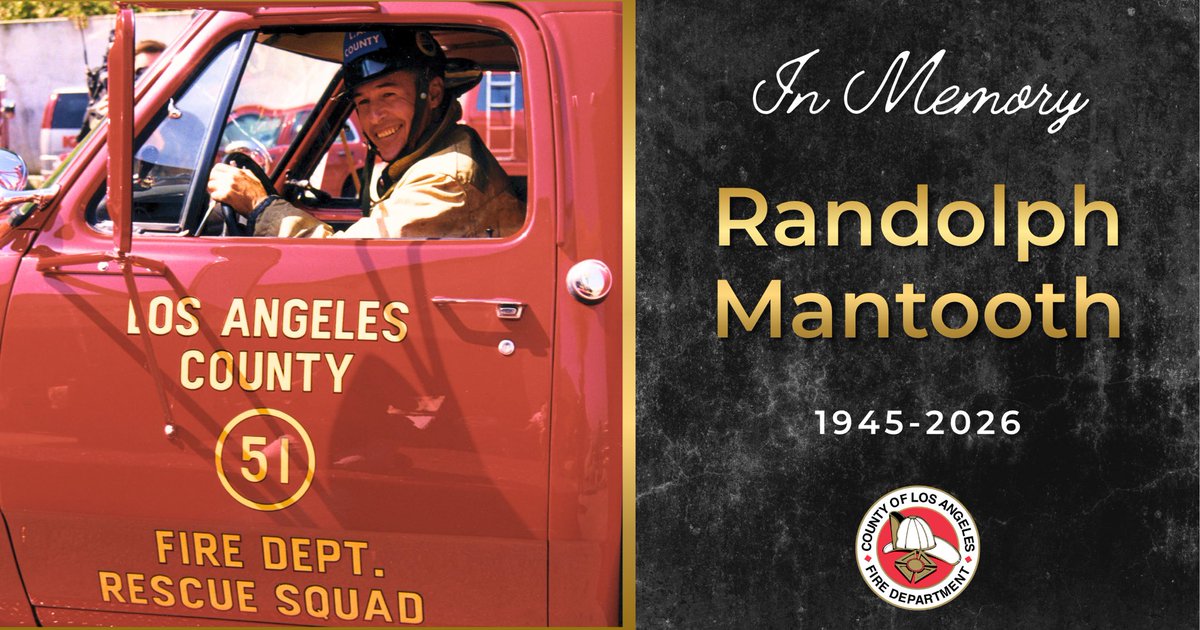
"Squad Fifty-One, this is Rampart…”
The #LACoFD is saddened to hear that our dear friend, Randolph Mantooth passed away yesterday.
Best known for portraying FFPM Johnny Gage in the iconic 1970s television series #Emergency, his character was an integral part of #Squad51, helping to popularize the paramedic and EMS system across the U.S.
Randy was a great friend and supporter of our Department and Fire Museum. He will be truly missed but his memory and legacy will live on in our hearts and in our paramedic program.
RIP 5️⃣1️⃣🚒🚑💔🕊️
“I came without a speech, because I’m hungry.
“I’m hungry for justice, hungry for authentic charity, hungry for a Church that truly knows how to open the doors, welcome, receive everyone, where there is love for all and where no one is an enemy.”
— Pope Leo XIV at lunch with 200 migrants, refugees, and homeless persons.
Translation:
California made it illegal for Elon Musk to buy elections.
And next, we’re going to make it a felony for Donald Trump to rig one.
Watch out.
I worked with a D1 player and a D3 player this morning.
On paper...
They looked almost identical.
6'4 200 pounds...
Both had elite bat speed. Both had power. Both were physically gifted.
But there was one difference.
Every time the D3 player mishit a ball...
He complained.
He got frustrated.
He pouted.
Then he'd struggle for the next 3 or 4 swings.
Pop-up.
Ground ball.
Weak contact.
The D1 player?
He'd mishit one.
Make an adjustment
...And move on.
No emotion.
No drama.
Just the next pitch.
It reminded me of something I learned playing professional baseball...
Sometimes the biggest difference between two players isn't their talent.
It's the conversation they're having with themselves in their head after they fail.
Your bat speed matters.
Your swing matters.
But the operating system between your ears matters just as much.
The best hitters I've been around don't waste energy explaining why they failed.
They spend their energy figuring out what to do on the next pitch.
- Jermaine Curtis
P.S. The next time you mishit a ball, don't ask, "What's wrong with me?"
Ask, "What's my adjustment?"
P.P.S. - If you enjoyed this, and thought it was helpful, share it.
(It tells me you want more content like this)
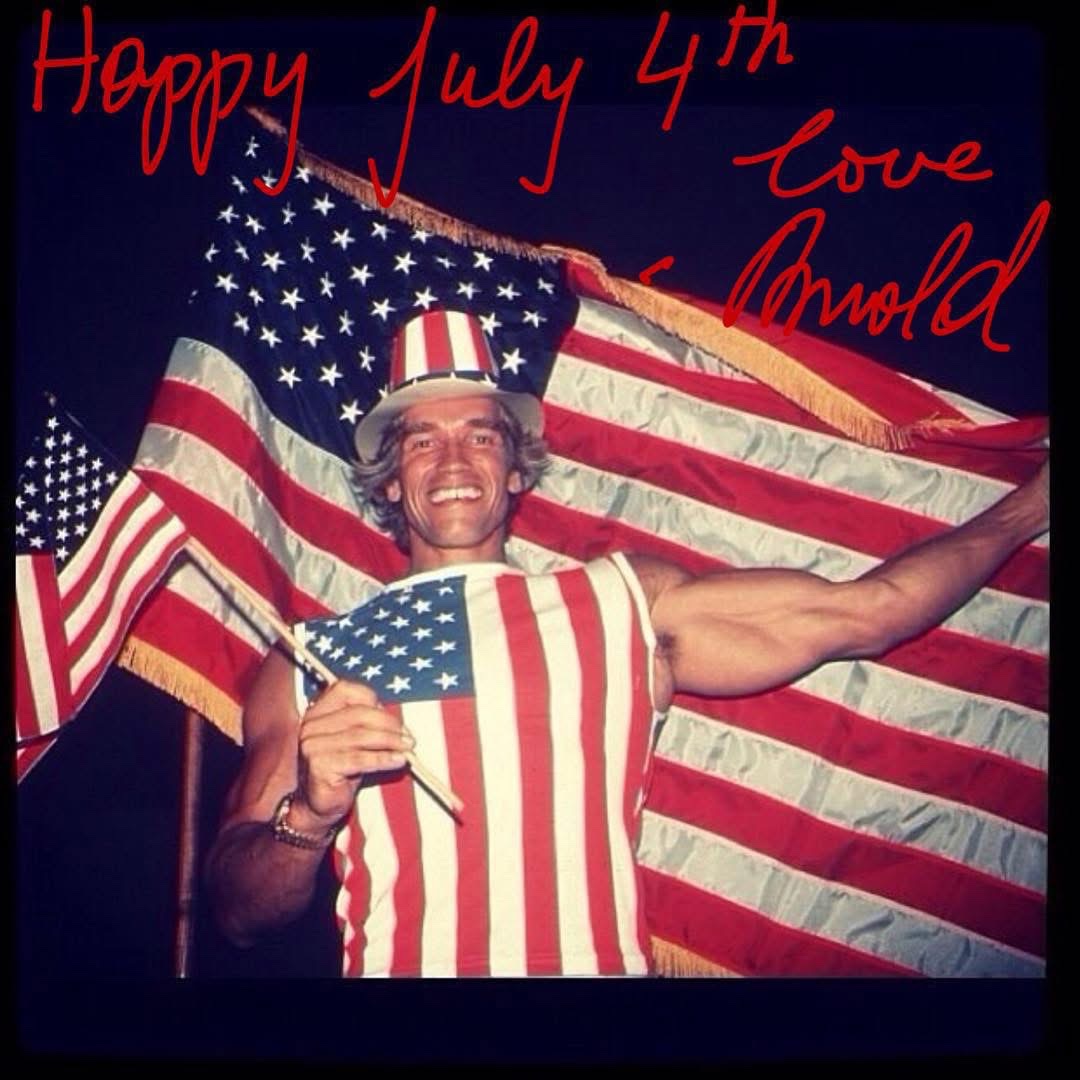
Happy Independence Day!
There’s a story from the end of the Revolutionary War I want to tell as we celebrate America’s 250th Birthday, and it’s one everyone in the world can learn from.
George Washington, at that moment, after commanding the American forces to victory, was the most powerful man in the new country. Many people talked about making him King of America.
Across the ocean, King George was sitting with an American painter, and asked what he thought Washington would do now that the war was ending. The painter said he believed he would go back to his farm.
The King said, “If he does that, he will be the greatest man in the world.”
As the war officially ended, Washington came to speak to Congress and said, “Having now finished the work assigned me, I retire from the great theater of Action.” He returned his commission they’d given him in 1775 - after more than 8 years of leading the Americans to victory without pay, and he was home at Mount Vernon for Christmas.
Of course, he was elected as our first President a few years later, and after two terms, showed the same selflessness again when he willingly gave up his power and went back to Mount Vernon again.
That’s true greatness. He had all the power in the world. But power, alone, does not make you great.
Washington’s greatness came from being a true servant - to a cause much bigger than himself. His greatness was his complete lack of selfishness.
The whole story of American Independence is a story of selflessness. It’s a story of people who set their self-interest aside and worked for each other.
We’ve all heard the line about “We must all hang together, or, most assuredly, we shall all hang separately.”
Apparently, Ben Franklin might have actually never said that.
But that’s fine, because the same mentality is right there in the last line of the Declaration of Independence, published on this day 250 years ago:
“And for the support of this Declaration, with a firm reliance on the protection of divine Providence, we mutually pledge to each other our Lives, our Fortunes and our sacred Honor.”
We mutually pledge to each other.
No one was in this alone. No one was in it for themselves. This was a group of people with different backgrounds who were in it for each other.
Today is a reminder: greatness comes from what we do for each other, never what we do for ourselves.
That’s a lesson that applies no matter what country you call home.
It’s a lesson that doesn’t require any law passed by a politician, because, let’s be honest, if you’re waiting for selfless politicians, I really hope you are not holding your breath.
All of us have the power to be there for the people around us. For our families and friends. For our neighbors. For everyone.
All of us can reach for greatness.
It’s as simple as looking beyond yourself, seeing past the mirror, picking your eyes up from your phone, and pledging to be there for each other.
Happy Fourth. May you all find your own version of greatness today by lifting each other up.
Lift up your neighborhood. Lift up America. Lift up the World.
Ronald Reagan: “You can go to live in France, but you cannot become a Frenchman…But Anyone, from any corner of the Earth, can come to live in America and become an American…This, I believe, is one of the most important sources of America's greatness.”🇺🇸
New York City Mayor Mamdani just gave one of the most amazing speeches you will ever hear:
"We are told that America is exceptional because we are richer, stronger, and more powerful than everyone else.
"The truth, my friends, is that America is exceptional because here, nothing is fixed into place. The frontier may be closed. We may have walked on the moon. But the work of fulfilling the values first enshrined in the Declaration of Independence — that work endures, and it belongs to us all.
"It belongs, too, to our newest Americans: those standing here with me today, all of whom were recently naturalized. Nearly a decade ago, I, too, felt what you feel: the joy of no longer being just a New Yorker, but an American, too.
"You each hold a special power: the power to determine what America means.
"The powerful have always known their answer. America, in their view, is an arena of supremacy where only a select few are allowed freedom; where not all are created equal. America, if you ask them, becomes less the more people it welcomes. America, they will tell you, belongs only to those with the right accent or the right shade of skin. The rest of us, they insist, should be grateful for merely being allowed to visit.
"How small they are. How weak. How unoriginal.
"At every moment in our past, those who led through exclusion and isolation have tried to win power and enrich themselves by turning us against one another. Division is the oldest trick in politics — and the cheapest.
"But time and again, including 250 years ago, those forces of division have been vanquished by the forces of progress."
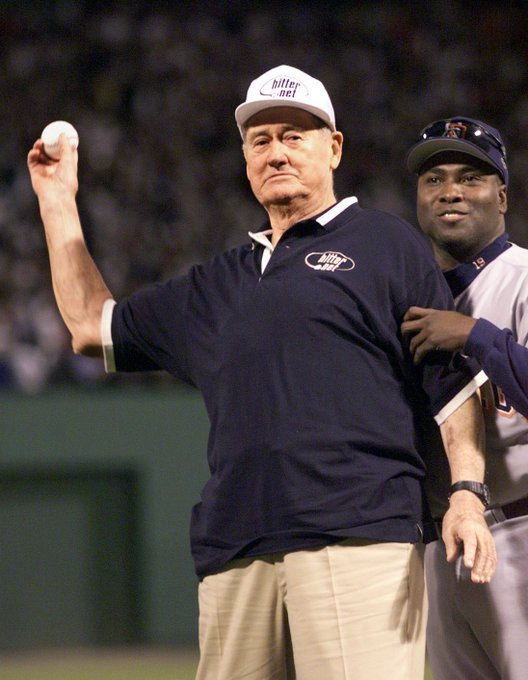
"At the 1999 All-Star Game, an ailing, 80 year old Ted Williams was brought out to a roaring crowd for the Opening Ceremony.
As the cart pulls up near the pitcher's mound, the American League and National League All-Stars, and slew of Hall of Famers all converge on the mound.
The players surround 80 year old Ted Williams and one by one they shake his hand and embrace him.
There's Mark McGwire and Cal Ripken Jr. surrounding Williams.
Then Tony Gwynn, who had developed a close relationship with Williams, breaks through the crowd.
Ted Williams wipes away tears as he chats with star after star;
The fans stand and watch.
Ten minutes pass.
Then fifteen minutes.
Officials from Major League Baseball move in on the spontaneous scene and attempt to break it up so that the game isn't delayed too much longer.
But the players don't budge.
Even the public address announcer asks the players to return to their dugouts.
But they ignore the announcement.
They just wouldn't let go of the moment. Ted Williams asks McGwire to lean in so he can ask him a question.
"When you foul a ball off, do you smell burnt wood?" Williams asks.
"All the time," McGwire responds.
"I did too," Williams says, grinning proudly.
Since 1936, six players have compiled career batting averages of .325 or higher: Ted Williams .344
Tony Gwynn .338
Stan Musial .331
Wade Boggs .328
Rod Carew .328
Joe DiMaggio .325.
Williams and Gwynn.
A 33-year-old woman at MIT wrote the code that ran inside the Apollo 11 lunar lander, and 20 seconds before Neil Armstrong touched the moon, her program made a decision the astronauts didn't know was happening that was the only reason the mission didn't crash.
Her name was Margaret Hamilton.
She led the team writing every line of code that would fly humans to the moon and back. The part almost nobody knows is that she had to fight to be allowed to do the work at all.
Code in 1965 was not treated as real work.
Rockets were serious. Circuits were serious. Writing code was something the men at NASA thought secretaries could do on the side. Hamilton was told this to her face more than once.
So she started calling what her team did "software engineering."
She used the phrase on purpose. In meetings. In memos. To force people to treat it as a discipline instead of a chore. Colleagues laughed at her the first few times she said it out loud.
That phrase is now the name of the biggest engineering profession on earth.
The story of what her code did on July 20, 1969 is the one every kid should be taught.
Neil Armstrong and Buzz Aldrin were 3 minutes from touching down when the computer inside the lunar module started flashing an alarm.
1202.
Then again. Then 1201. Five alarms in four minutes. The computer was telling the astronauts it could not finish everything it had been asked to do.
The computer they were flying with had less memory than a modern microwave.
Someone on the checklist had left a switch in the wrong position, and a radar the astronauts did not even need right then was flooding the computer with data. It was eating around 13% of the machine's brain at the exact moment every second mattered.
In almost any other system, that overload would have frozen the machine.
A frozen machine 30,000 feet above the moon means a crash. It means two dead astronauts and a third one orbiting alone above them, waiting for a signal that would never come.
Hamilton's code did something else.
She had built the software with a rule almost nobody in her field was using at the time. When the machine ran out of room, it would not treat every task as equally important. It would look at the list of jobs it had been asked to do, throw out the ones that could wait, and keep running only the ones keeping the crew alive.
The radar was the low priority job.
The landing was the highest.
So the computer did what she had told it to do. It dumped the radar. It kept flying. The alarm was not a failure. It was the machine reporting that it was handling the overload exactly the way she had designed it to.
Down in Houston, a 24-year-old engineer named Jack Garman recognized the alarm from a test his team had run months earlier. He shouted "Go" to the flight controller. The controller shouted it up to the crew. The landing kept going.
Armstrong touched the surface with 25 seconds of fuel left.
The part that gets lost in every retelling is why Hamilton had built that safety net in the first place.
NASA had not asked for it.
She had added it on her own, years earlier, because her 4-year-old daughter Lauren had once crashed the simulator by pressing a button during a test. The button was one the astronauts had been told they would never press.
Hamilton wanted the code to survive that button press anyway.
Her bosses told her it was a waste of time. Astronauts do not make mistakes.
She insisted. The safety net went in.
Two years later, on the way to the moon, an astronaut left a switch in the wrong position. The exact class of mistake she had been told would never happen.
There is a photograph of her from that period.
She is standing next to a stack of paper as tall as she is. Every page in that stack is the code her team wrote for the mission. She is smiling at the camera like she knows something the rest of the aerospace industry has not figured out yet.
In 2016, Barack Obama put the Presidential Medal of Freedom around her neck and said the astronauts did not have much time, but thankfully, they had Margaret Hamilton.
Every autopilot in every plane you have ever flown on uses a version of what she invented. Every pacemaker. Every self driving car. Every satellite in orbit.
The idea that a machine should know which job matters most and drop the rest when it runs out of room is now the foundation of almost every safety system on the planet.
She wrote it because a 4 year old crashed a simulator and nobody else thought it was worth fixing.
The men in the room laughed at her for calling it engineering.
Then her code was the only thing in the sky that did not fail.
At 12:31 am on this day in 1963 the greatest game ever pitched ends in the 16th inning on a Willie Mays HR. The Giants win 1-0 over the Braves. Juan Marichal defeats a 42 year old Warren Spahn & both pitchers go the distance. Spahn threw 201 pitches, Marichal 227. Remarkable!
Probationary Firefighter Joseph Downey prepared most of his life for Thursday, when he walked across the stage at the Christian Cultural Center in Brooklyn and joined the FDNY as a third-generation firefighter.
He follows in the footsteps of his father, Chief of Rescue Operations Joseph Downey, and his late grandfather, legendary FDNY Deputy Chief Raymond Downey, who made the Supreme Sacrifice on September 11, 2001.
Graduating from the Fire Academy isn't just the start of Downey's career. It's the continuation of a family legacy.
21 years ago today, on June 28, 2005, four Navy SEALs were inserted under cover of darkness into the Hindu Kush mountains of Afghanistan, a place so high and so cold the clouds drift below your feet. Their mission was to find a Taliban commander hiding in the village of Sawtalo Sar. Their names were Michael Murphy, Danny Dietz, Matthew Axelson, and Marcus Luttrell.
By morning, fate walked right up the mountain to meet them. A goat herder and a boy wandered straight into their hidden position. The team had a choice no man should ever have to make: kill unarmed civilians, or let them go and risk everything. They let them go. Within an hour, the mountain came alive with rifle fire.
What happened next is almost too brutal to put into words. Dozens of fighters swarmed the high ground above them. The four men fought their way down a near vertical slope, throwing themselves off ledges and cliffs to escape the fire, breaking bones, tearing flesh, leaving blood on the rocks, and still turning to shoot. One by one they were hit. Still they fought. They would not stop. They would not surrender.
Their radios could not reach the base down in the valley. They were screaming for help into dead air. And so Lieutenant Michael Murphy did something that should never be forgotten. He stood up. He walked out of the rocks and into open ground, into the full teeth of the enemy, with bullets cracking past him on every side, just to get a clear signal. He was shot in the back while making that call. He dropped the radio, picked it back up, finished the call, and said thank you. Then he kept fighting until he could fight no more. That single act of courage is the only reason the world ever learned their names.
Help came screaming up the valley. An MH-47 Chinook, call sign Red Wings 11, packed with eight more SEALs and eight Army Night Stalkers of the legendary 160th SOAR, refused to wait for gunship cover. Their brothers were dying and they would not sit still for it. As the bird flared over the ridge, a single rocket propelled grenade flew through the open rear ramp. The explosion tore the aircraft apart in the sky. All sixteen men aboard were killed the instant it hit the mountain.
Three on the ground. Sixteen in the air. Nineteen American sons gone in a single afternoon. It remains the worst loss of life in Naval Special Warfare history since World War II.
Michael Murphy was posthumously awarded the Medal of Honor. Danny Dietz and Matthew Axelson received the Navy Cross. Marcus Luttrell, blown off a cliff and shredded by shrapnel, was the only one to come home. He survived because a Pashtun villager named Mohammad Gulab found him broken in a ravine and, under an ancient code of honor older than the country these men died for, stood between him and the Taliban and refused to give him up.
Twenty one years later, do not let these be just names on a screen. They had mothers. They had wives. They had children who grew up with a flag folded into a triangle instead of a father. They chose each other over their own lives on a mountain most people will never even hear of.
So today, say their names out loud. All nineteen of them 🇺🇸
In remembrance:
Lt. Michael P. Murphy
Gunner's Mate 2nd Class Danny P. Dietz
Sonar Technician 2nd Class Matthew G. Axelson
Lt. Cmdr. Erik S. Kristensen
Senior Chief Daniel R. Healy
Petty Officer 2nd Class James E. Suh
Petty Officer 2nd Class Eric S. Patton
Chief Petty Officer Jacques J. Fontan
Petty Officer 1st Class Jeffery A. Lucas
Petty Officer 2nd Class Shane E. Patton
Petty Officer 1st Class Jeffrey S. Taylor
Maj. Stephen C. Reich
Chief Warrant Officer Corey J. Goodnature
Chief Warrant Officer Chris J. Scherkenbach
Master Sgt. James W. Ponder III
Sgt. 1st Class Marcus V. Muralles
Sgt. 1st Class Michael L. Russell
Staff Sgt. Shamus O. Goare
Sgt. Kip A. Jacoby
Operation Red Wings. June 28, 2005. Never forgotten.
A U.S. Army soldier sprinted through Dallas Love Field Airport carrying a stranger's toddler so a desperate family could make their flight. 🏃♂️💨Final boarding call. Mom weighed down by luggage. In pure survival mode, she asked the uniformed soldier for help.
He didn't ask questions he just grabbed little River and ran. The internet tracked down the soldier (Daniel) to say thank you. This is what real character looks like. 🦅
Daycare calls me. That's never good.
For them.
Daycare: "your son hurt his elbow and won't move his arm. Can you come take him to a doctor's office?"
Me (ex Special Forces Medic): "A real doctor is on the way to you now. I am 6 mikes out. Alert me of status changes."
I arrive at daycare. I locate the patient. 21 month old male. Scene is not safe. I drag the patient to cover and concealment behind a seesaw, away from the other small terrorists in the AO.
I begin my assessment. Blood sweep negative for massive hemorrhage. Mental status: conscious and verbal but confused (answers "dada" when asked for blood type). One breath every 2 seconds. Bilateral rise and fall of the chest. Strong carotid pulse, strong bilat radial pulse.
Teeth and tongue intact no blood no mucus no dip or foreign objects. Eyes PERRLA, negative JVD/trach deviation, C-spine intact upon palpation.
Heart sounds strong upon auscultation. Percussion negative for hemo-T. Abdominal quads normal upon palpation. Pelvis negative for book sign.
Arms and legs negative for crepitus. However, Patient indicates discomfort in right arm upon palpation and supination/flexion of the elbow.
Nursemaid's elbow.
I begin interventions. Supination/flexion technique complete at 1215. Palpable clunk on successful reduction. I write the time on his chest in Sharpie. I tape a popsicle to his hand and tell the patient to suck but do not bite/chew. I write "1 x popsicle (10g sugar)" on his chest in Sharpie.
I reassess the patient after performing interventions then package the patient for handoff to daycare/higher level of care. I yell at daycare over the Blackhawk in my head: "21 month old male!!! Nursemaids elbow!!! Treated with supination/flexion technique at 1215!!! Patient has 1 x popsicle onboard!!"
Daycare: "sir please leave."
Me: "you should have called my wife."