🎮 Epic Games Account for Sale 🔥
Over 40 premium games incl:
GTA V
Ghostwire Tokyo
A Plague Tale
Bioshock Infinite
Dragon Age Inquisition
Dead by Daylight
Tomb Raider & more!
💻 PC – Epic Games
📦 Full access
💰 DM if interested!
#Titcoin#EpicGames#forsale#gamer#gamedev
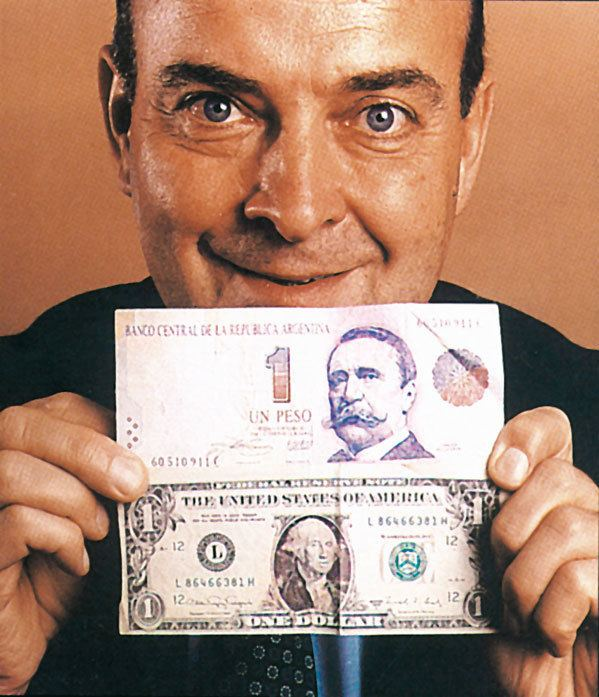
The Argentine government froze every bank account in the country on December 1, 2001. You couldn't withdraw more than $250 per week from your own money. Politicians called it the "corralito" (little fence) because they trapped your savings like livestock.
Finance Minister Domingo Cavallo imposed the freeze to stop bank runs after Argentines pulled $20 billion from banks in eleven months. The peso had traded 1:1 with the dollar for a decade under a currency board, but everyone knew devaluation was coming. Smart money was already fleeing. Cavallo's solution was to lock down everyone else's money and hope for the best.
You can predict what happened next. Riots erupted across Buenos Aires within weeks. Middle-class Argentines banged pots in the streets, stormed banks, and burned buildings. Twenty-seven people died in the chaos. President Fernando de la Rúa resigned on December 20. The peso collapsed to 4:1 against the dollar by July 2002. Every peso-denominated savings account lost 75% of its value overnight.
The government had spent the 1990s borrowing dollars while pegging the peso artificially high. Provincial governments printed quasi-currencies to pay bills. Public debt doubled from 1995 to 2001. You cannot maintain a currency peg while running massive fiscal deficits and expanding credit. The laws of economics don't care about your political promises.
When politicians promise your deposits are "safe," remember December 1, 2001. The corralito lasted two years, but peso savings accounts never recovered their dollar purchasing power. Your money sitting in any fractional reserve bank exists at the mercy of bureaucrats who will sacrifice your wealth to save their system without hesitation.
This explains quite well why socialism has always led to poverty while free markets and capitalism have improved our standard of living.
You cannot multiply wealth by dividing it
Can someone please explain why so many people still follow socialism despite its repeated failures?
The Soviet Union once tried to abolish genetics.
Trofim Lysenko, a poorly educated agronomist, rose to power in Stalin’s USSR by promising miraculous increases in crop yields. He rejected decades of established genetic research as “bourgeois pseudoscience” and instead promoted the idea that characteristics acquired during an organism’s lifetime could be inherited by its offspring. According to Lysenko, if wheat was trained to survive in cold conditions, future generations would inherit that resistance.
With Stalin’s enthusiastic backing, Lysenko’s views became official state doctrine. Genetics was banned from universities and research institutes. Leading scientists who defended Mendelian principles were denounced, arrested, or executed. The most prominent victim was Nikolai Vavilov, one of the world’s greatest geneticists and plant breeders, who died of starvation in a Soviet prison in 1943.
Lysenko’s methods were applied across Soviet agriculture with disastrous results. His techniques repeatedly failed to deliver the promised yields, contributing to chronic food shortages. Yet because his theories aligned with Marxist ideology – which emphasised the power of environment and rejected “bourgeois” notions of fixed heredity – they were protected from criticism.
This episode was not merely a case of bad science. It was a deliberate political project in which the state attempted to subordinate biological reality to ideological requirements. When empirical evidence conflicted with the regime’s worldview, the evidence was suppressed and those who defended it were punished.
The same pattern is visible today whenever political movements insist that institutions must affirm contested claims about human biology - particularly around sex and gender - even when those claims contradict well-established findings in genetics, endocrinology, and developmental biology. When ideology claims authority over scientific truth, the result is not progress, but the corruption of both science and public policy.
“Yo podría terminar el déficit en tan solo 5 minutos. Solo hay que aprobar una ley que diga que cada vez que haya un déficit mayor al 3% sobre el PBI, todos los miembros del Congreso son inelegibles para la reelección”
Warren Buffett
“It is amazing that people who think we cannot afford to pay for doctors, hospitals, and medication somehow think that we can afford to pay for doctors, hospitals, medication and a government bureaucracy to administer it.”
- Thomas Sowell
Few government policies have affected more human lives than China's One Child Policy. The state prevented hundreds of millions of births – and created an irreversible population collapse that will totally change China.
In 1979, the Chinese Communist Party decided that most of its citizens should have only one child – and enforced that decision through forced abortions, mass sterilizations, and the destruction of millions of unborn girls.
The One Child Policy was one of the most extreme exercises in state control over private life in modern history. For over three decades, local officials were given quotas and targets. Women who became pregnant without permission were often dragged to clinics for abortions, sometimes late in pregnancy. Because sons were traditionally expected to carry on the family name and support parents financially in old age, female infanticide and sex-selective abortions became widespread, creating a massive gender imbalance of up to 40 million “missing” women.
The policy succeeded in slowing population growth in the short term. However, it also accelerated China’s demographic decline. Fertility rates collapsed far below replacement level. The country now faces one of the fastest-aging populations in the world, with a shrinking workforce and a rapidly growing number of elderly people who have few children to support them.
Current projections are stark. China’s population, which peaked at around 1.41 billion, is already declining. According to United Nations and other demographic forecasts, it could fall below 1 billion by 2065–2070 and continue shrinking sharply throughout the rest of the century. Some models suggest China could lose more than 500 million people by 2100. This represents not just an economic challenge, but a civilisational one: fewer workers, strained pension systems, and a society struggling with the long-term consequences of treating human reproduction as a problem to be centrally planned.
“I worked hard, so I deserve to be rich.”
This is one of the most common and destructive ideas of the left - and Karl Marx gave it intellectual respectability.
Marx argued that the value of something is determined by how much labour went into producing it. The more hours of work embodied in a good, the more valuable it should be. This is the Labour Theory of Value, and it is fundamentally wrong.
Water is essential for life but cheap, while diamonds are non-essential yet expensive, highlighting the difference between total usefulness and marginal value. A software engineer can create something used by millions in a few hours, while a manual labourer can dig ditches for decades and create almost nothing of lasting value.
Value is not created by effort alone. It is created by scarcity and by how much someone else subjectively wants the end result.
Marx’s theory treats value as something objectively embedded in production. In reality, value is discovered through voluntary exchange. Prices emerge from supply and demand - they tell us what people actually want and how scarce resources truly are.
This is why every attempt to run an economy according to “labour value” has produced chronic shortages, misallocation and eventual collapse. Central planners had no real prices to guide them, only arbitrary calculations of “socially necessary labour time”.
Hard work can produce something worthless. What actually matters is whether anyone else is willing to pay for what you produce.
The period from 1870 to 1913 witnessed the most spectacular economic growth in human history, and you can thank the gold standard for making it possible. Real wages doubled in America. Railroad mileage exploded from 53,000 to 254,000 miles. Steel production increased twenty-fold. Population centers transformed into industrial powerhouses virtually overnight. Sound money created the foundation for genuine capital accumulation.
Under gold, entrepreneurs could calculate decades into the future without worrying about central bankers debasing their savings. Andrew Carnegie built his steel empire because he knew the purchasing power of his profits wouldn't evaporate through monetary manipulation. John D. Rockefeller revolutionized oil refining because stable money allowed long-term planning. These men risked enormous sums precisely because gold prevented government from stealing their wealth through inflation.
The productivity gains were staggering. Between 1880 and 1900, manufacturing output per worker increased by 65 percent. Prices fell consistently (deflation was normal and healthy), which meant your purchasing power grew every year you delayed consumption. Real interest rates reflected actual time preference and productivity, not central bank targets. Capital flowed to its most productive uses because price signals weren't distorted by monetary debasement.
Compare this to our fiat era: since 1971, productivity growth has stagnated, real wages have barely budged, and asset bubbles have replaced genuine wealth creation. The Federal Reserve calls 2% annual theft "price stability" while wondering why inequality keeps rising. They've replaced the automatic discipline of gold with the arbitrary whims of PhD economists who think they can fine-tune a $26 trillion economy.
You want to understand why your generation can't afford houses while previous generations built transcontinental railroads? We abandoned the monetary system that funded the greatest economic boom in recorded history.
🖋️| "Me gusta la visión libertaria, que es dejar a todos en paz. Incluso de niño, me molestaba la gente que quería decirle a los demás cómo vivir."
- Clint Eastwood.
Hollywood necesita más actores como él (sydney sweeney hazlo)
“We have been moving away from the fundamental principles that made this a great country—the principles of freedom, of relying on the individual, of keeping government in its place.”
— Milton Friedman
✒️| “En la raíz de todas las formas de comunismo, está el odio profundo por la excelencia individual, la negación de la superioridad física o intelectual, y un deseo de destruir toda individualidad al nivel de un montón de hormigas comunales”
- Murray Rothbard
True prosperity is about earning your own way and building something you can point to and say, "I made that."
It's knowing that someone valued what you created enough to pay for it. You can't get that feeling from a government check or a charity handout, no matter how generous.
That's the difference between receiving money and earning dignity.
✒️| "Las depresiones y el desempleo masivo no son causados por el libre mercado, sino por la interferencia del Estado en la economía"
- Ludwig von Mises
South Africa's state-owned enterprises have torched over R1 trillion in taxpayer money since 1994, turning what should be profit centers into bottomless pits of waste and corruption. You're watching the textbook failure of socialism in real time.
Eskom, the state electricity monopoly, exemplifies this destruction perfectly. The utility racked up R400 billion in debt while subjecting the entire economy to rolling blackouts. Load shedding became a daily reality because central planners cannot allocate resources efficiently or respond to consumer demand. When politicians control production instead of market forces, you get exactly what South Africa got: crumbling infrastructure and economic paralysis.
South African Airways burned through R57 billion before finally collapsing in 2020. The Post Office hemorrhages R2 billion annually while delivering progressively worse service. Transnet, the freight rail monopoly, watches mining exports rot on sidings while maintenance backlogs grow. Each enterprise follows the same pattern: political appointments replace competent management, unions capture operations, and losses mount until bailouts become routine.
Free market economists predicted this outcome decades ago. State ownership of the means of production makes rational resource allocation impossible due to the calculation problem. Managers face no real profit constraints. Workers have no competitive pressure. Politicians distribute jobs as patronage rather than productivity rewards.
The tragedy is the wasted capital itself. Every rand funneled into these failing enterprises represents resources stolen from productive private investment that could have generated real wealth and employment for South Africans.
Rothbard's greatest contribution was building the entire intellectual architecture proving why every state intervention backfires, from antitrust law to central banking to public education. Government is organized theft.
You get pristine economic logic married to rigorous historical analysis. Man, Economy, and State demolishes Keynesian fallacies with mathematical precision. The Mystery of Banking exposes how the Fed creates boom-bust cycles through credit expansion.
Most economists split hairs over policy tweaks. Rothbard proved the state itself violates basic property rights and economic law.