1. Institutions Aren’t Hunting Your Stop Loss
Large players—banks, hedge funds, prop desks—don’t see individual retail stop losses. They don’t have a screen showing your $50 position on GBPJPY.
What they can see is liquidity.
Markets move because large orders need counterparties. If a fund wants to buy $200 million EURUSD, someone has to be selling it. That liquidity often sits in predictable places.
Those places frequently include:
•Previous highs and lows
•Equal highs / equal lows
•Breakout levels
•Trendline breaks
•Retail support/resistance
•Clusters of stop losses
So institutions aren’t thinking:
“Let’s go get Vincent’s stop loss.”
They’re thinking:
“Where is the liquidity large enough to fill this order?”
⸻
2. Stop Losses = Liquidity Pools
A stop loss is basically a market order waiting to happen.
Example:
•Traders long EURUSD put stops below support
•Price drops below that level
•Those stops trigger market sell orders
Now suddenly there’s a burst of liquidity.
That’s useful for institutions because it allows them to enter large positions without slippage.
This is why you often see:
1.Price spikes through a level
2.Stops trigger
https://t.co/Vj1ccay0Qq reverses hard
That phenomenon is often called:
•Stop runs
•Liquidity grabs
•Stop hunts
•Liquidity sweeps
3. But It’s Not Personal
The key misunderstanding retail traders have:
❌ “They hunted my stop.”
✔️ “Price moved to a liquidity area where stops were clustered.”
The move happens because large orders require liquidity, not because someone targeted your trade.
⸻
4. Why This Happens So Often
Retail traders tend to place stops in very obvious places:
•Just below support
•Just above resistance
•Exactly at swing highs/lows
•Round numbers
Institutions know these areas are dense with orders.
So price frequently pushes into those zones.
⸻
5. Ironically, Algorithms Make It Even More Visible
Today’s markets are dominated by algorithmic execution.
Those algos are designed to:
•Find liquidity
•Reduce slippage
•Execute large orders efficiently
Which means liquidity pools get tapped constantly.
⸻
6. The Real Lesson for Traders
Instead of asking:
“Are they hunting my stop?”
A better question is:
“Where is liquidity likely sitting?”
Professional traders often:
•Avoid placing stops at obvious levels
•Wait for the liquidity sweep before entering
•Trade after the stop run, not during it
⸻
7. A Quick Example (What You’ve Probably Seen)
Classic pattern:
1️⃣ Price approaches resistance
2️⃣ Breaks above it
3️⃣ Breakout traders buy
4️⃣ Short traders’ stops trigger
5️⃣ Liquidity floods in
6️⃣ Institutions sell into that liquidity
7️⃣ Price reverses
That’s why so many breakouts fail.
Bottom line:
Institutions aren’t hunting your stop loss—but markets absolutely gravitate toward liquidity, and retail stop clusters are one of the biggest liquidity sources.
Know a guy who passed his first $100,000 prop challenge in 9 days.
Made 12.4% and hit a $9,920 payout in his first month.
Then lost the entire account 3 weeks later.
I asked him questions to try and find out why.
It turns out that it was because he thought he was invincible.
One win changed his identity.
He stopped seeing himself as a developing trader.
He started seeing himself as “different”.
Thought he didn’t need to backtest anymore, or journal, or spend time putting in practice.
During the challenge he was risking:
0.5-1% per trade. Max 3 trades per day. Shut down at -2R.
Disciplined.
But once he was funded he bumped to 2% per trade.
Started taking 6-8 trades a day.
Held losers longer because “I know this will work.”
That’s how it begins.
Confidence turns into certainty.
Certainty turns into size.
Size turns into drawdown.
He had two red days in a row.
-3.8%, then -2.6%
Instead of slowing down…
He tried to make it back in one session.
Took four trades in 40 minutes.
Hit -10% drawdown.
Account gone.
And the most dangerous part?
He didn’t think he did anything wrong.
“I just had a bad week.”
No.
He had a good month and let it inflate him.
Passing a challenge doesn’t mean you’ve mastered risk.
It means you survived a small sample size.
Prop firms don’t blow traders.
Ego does.
We reviewed his data.
His edge worked best when:
Risk stayed under 1%. Trade frequency stayed controlled. He treated every session like he could lose the account.
So we rebuilt his rules:
Funded account = smaller risk than challenge. No scaling size after a payout month. Mandatory cooldown after 2 red days.
The next time he passed?
He didn’t celebrate.
He tightened up.
And that’s when he actually became dangerous.
He had learned from his mistakes and vowed to remain a student of the markets.
If you just passed a challenge and feel unstoppable…
That’s the moment you’re most at risk.
Looking back at the trades I executed.
I discover that-
Forced trades usually end up in loss because I can't wait for my setups so I enter blindly.
Not cutting my loss short hereby ending up in drawdown.
While majority of well plan one's do go my way.
Still I yet I do win😎
Now I'm forcing myself to being patience.
Today no trades taken because I didn't see any setup.
Perhaps maybe my setup will form this week, since market always present an opportunity every week.
Looking back at the trades I executed.
I discover that-
Forced trades usually end up in loss because I can't wait for my setups so I enter blindly.
Not cutting my loss short hereby ending up in drawdown.
While majority of well plan one's do go my way.
Still I yet I do win😎
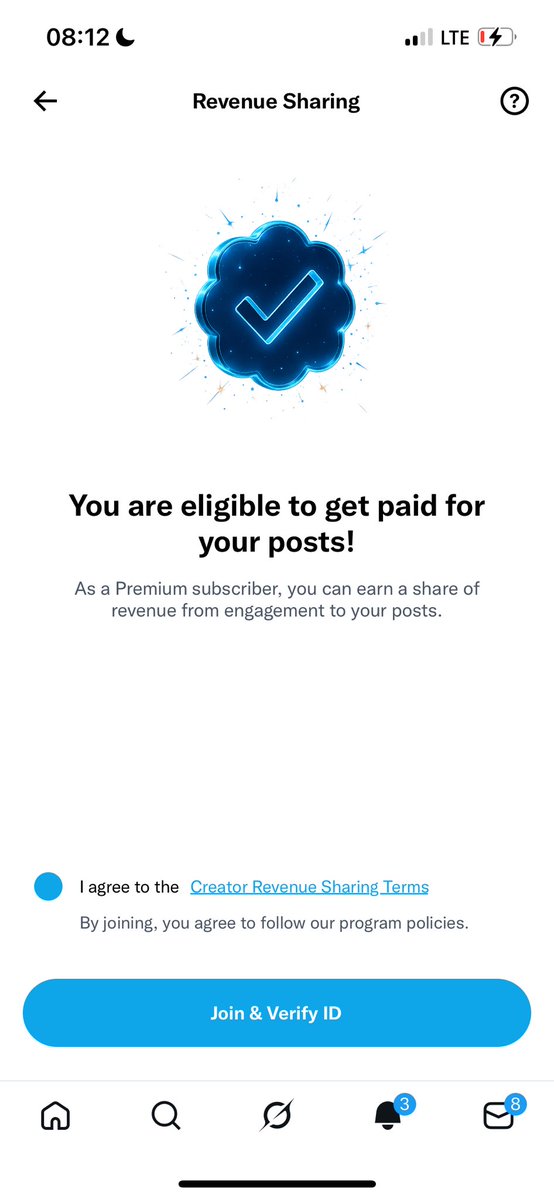
I woke up this morning and noticed the added revenue from 𝕏.
Monetization on 𝕏 isn’t just luck, it’s about leveraging opportunities.
I’ve transformed ideas into distribution, consistency into reach, and attention into revenue.
There are no gimmicks. No shortcuts. Just value, timing, and showing up every day.
If you treat 𝕏 like a system rather than a social app, it pays off. 💰🚀
Before >>>>>>>>>>> After
I woke up this morning and noticed the added revenue from 𝕏.
Monetization on 𝕏 isn’t just luck, it’s about leveraging opportunities.
I’ve transformed ideas into distribution, consistency into reach, and attention into revenue.
There are no gimmicks. No shortcuts. Just value, timing, and showing up every day.
If you treat 𝕏 like a system rather than a social app, it pays off. 💰🚀
Before >>>>>>>>>>> After
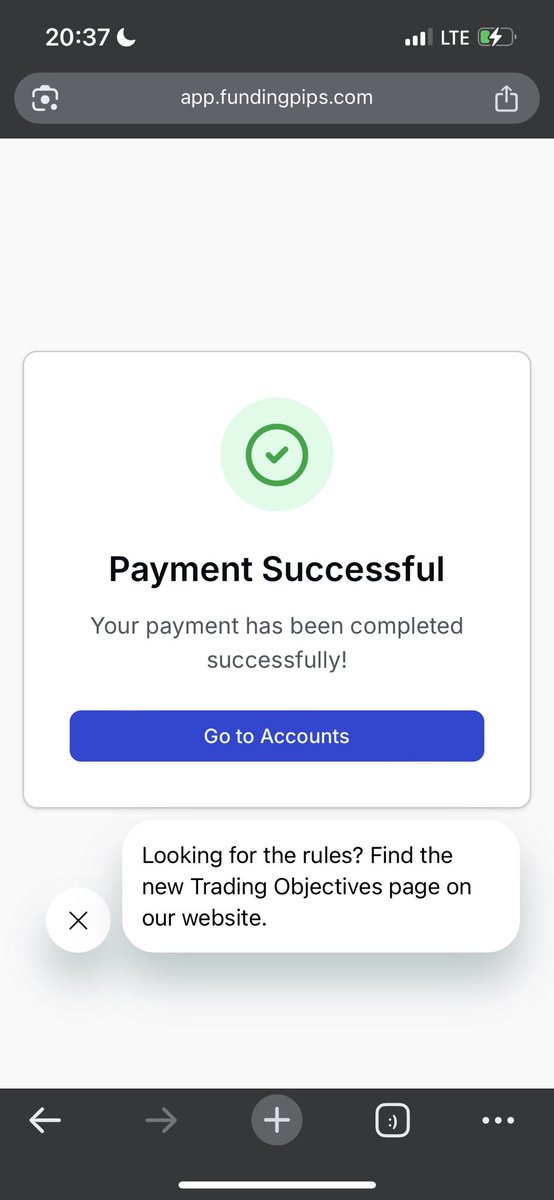
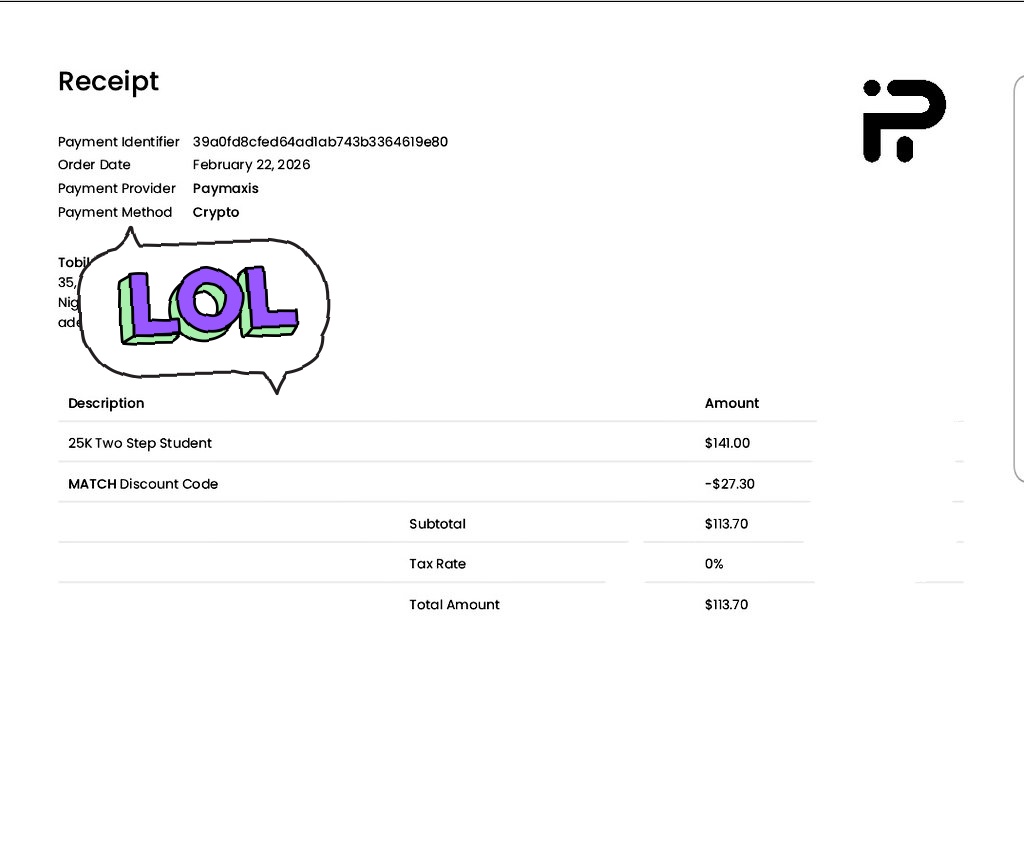
Just bought a $25k account from @fundingpips.
Using MATCH discount code gotten from @PropFirmMatch
Wish me luck guys. I need to pass this for me to start living my dreams🤲🤭
#forextrading#forex