Evidence-based biohacking, sleep & longevity. Turning Nature, JAMA & clinical trials into protocols you can actually use. No supplement hype. Not medical advice
Running and HIIT aren't #1 for lowering blood pressure—holding a wall sit is.
Across 270 RCTs (15,827 adults, BJSM 2023), isometric exercise cut systolic BP by 8.24 mmHg—beating aerobic (-4.49), lifting (-4.55), and HIIT (-4.08).
The $0 clinical protocol:
1) Hold a wall sit 2 min
2) Rest 2 min, repeat 4 sets
3) Run 3×/week
Not medical advice.
People spend $80/month on NMN or NR capsules off mouse lifespan charts.
Yes, oral NAD+ precursors raise blood NAD+ in humans. Yet pooled RCT meta-analyses tell a blunter story:
> 2024 (8 RCTs, n=342): no broad gain in fasting glucose, insulin, or HbA1c
> 2025: no significant gain in muscle mass, grip, or gait speed
Blood NAD+ up ≠ longer life.
Not medical advice.
Dragging yourself onto a treadmill at 5:30 AM on an empty stomach won't melt extra body fat.
In a 2014 trial, 20 young women ate a matched calorie deficit and did 1 hour of cardio 3×/week for 4 weeks—fasted or right after a shake.
Both lost fat. The difference? Zero.
You burn more fat during a fasted session, then burn less later that day when total calories match.
You lift five days a week, take 5 g of creatine, and your lab flags "low eGFR" kidney decline.
Standard eGFR uses serum creatinine—a byproduct of muscle mass and creatine turnover. More lean mass or daily creatine can push creatinine up and depress eGFR without kidney injury.
Clinical trials show Cystatin C stays independent of muscle mass and creatine intake. Ask your doctor to pair Cystatin C before panicking.
Not medical advice.
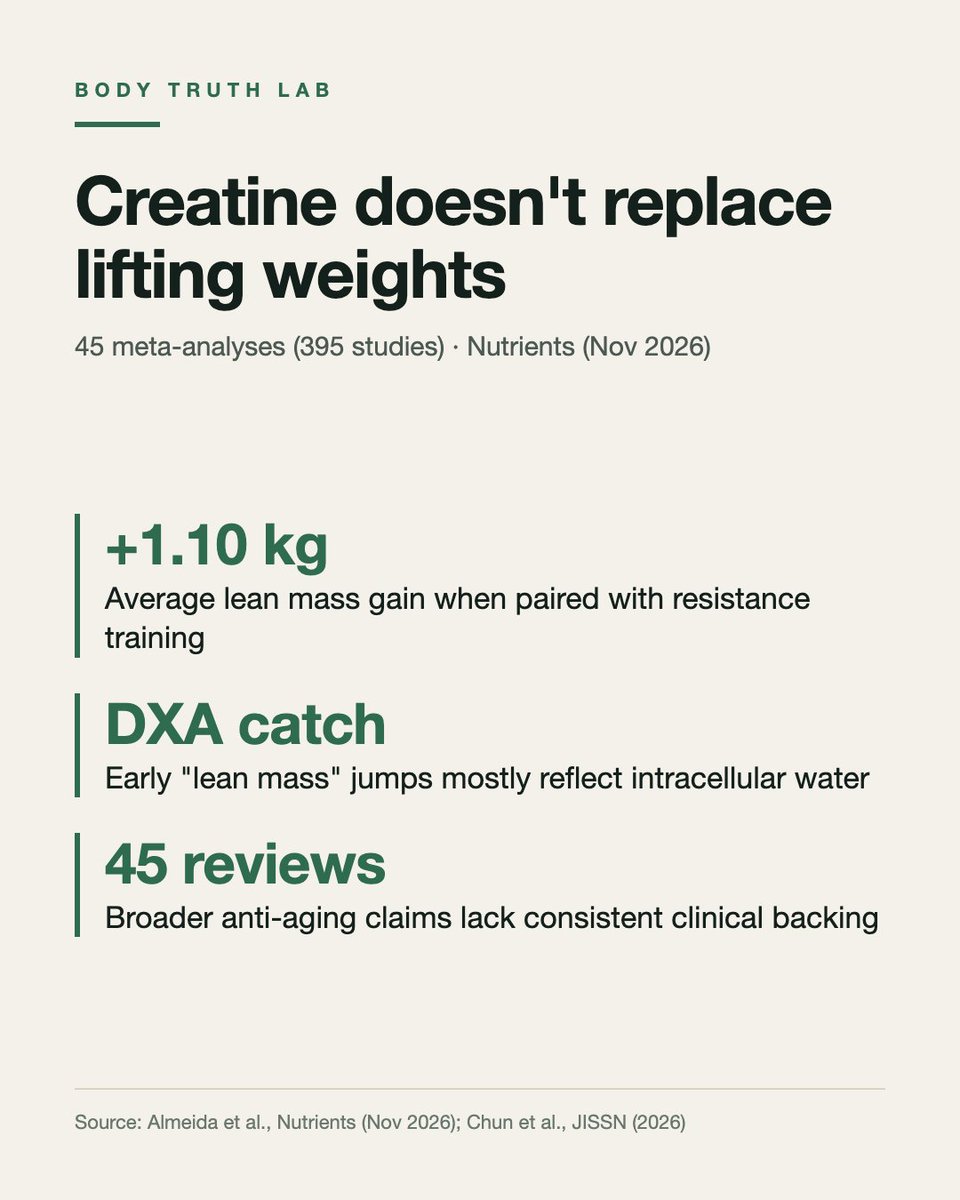
"Creatine builds more muscle than lifting weights" is making the rounds again—and Layne Norton just tore the headline apart.
DXA scans count intracellular water drawn in by creatine as "lean mass," not actual muscle fiber growth.
A Nov 2026 Nutrients umbrella review of 45 meta-analyses (395 studies) settled the hype:
> Reliable lean-mass gains (+1.10 kg) and strength show up WITH resistance training
> Broader longevity claims still rest on weak review quality
Creatine amplifies lifting. It doesn't replace it.
Not medical advice.
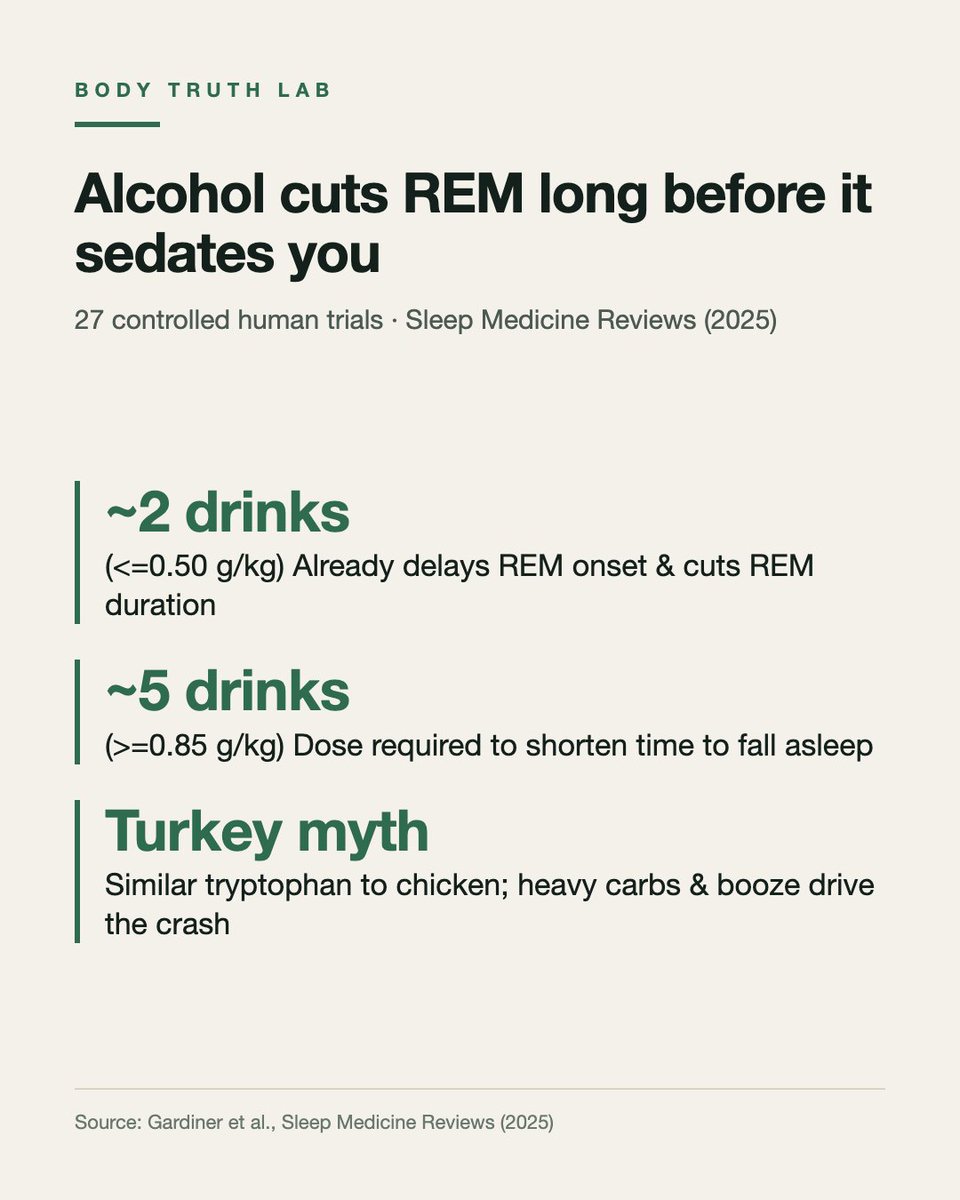
Blaming turkey for tonight's Thanksgiving crash? Two holiday drinks do the real damage.
Across 27 human trials in Sleep Medicine Reviews (2025), alcohol only sped up falling asleep at high doses—around 5 standard drinks.
Yet at just ~2 drinks (0.50 g/kg or less), it already delayed REM onset and cut total REM sleep.
Sedation isn't recovery. Skip the late nightcap if you want tomorrow back.
Low-carb circles treat a plain potato like a candy bar—while snacking on 250-calorie "keto" bars and staying hungry.
Max Lugavere called out the carb-phobia again, and classic human satiety data backs him up.
In the Sydney Satiety Index trial across 38 equal-calorie (240 kcal) foods, boiled potatoes scored 323%—more than 3× white bread (100%) and nearly 7× croissants (47%).
Water, volume, and fiber drive fullness far better than fear of starch.
Afternoon crash after coffee? Half of wellness X still blames "adrenal fatigue" and pushes $60 cortisol pills.
Andrew Huberman called it out: coffee isn't frying your adrenals.
A 58-study review (Cadegiani & Kater, 2016) found zero objective evidence that "adrenal fatigue" exists as a medical condition.
Fix sleep regularity and caffeine timing instead. Persistent exhaustion warrants a doctor, not supplements.
Not medical advice.
Before buying a $100 cholesterol stack, check a $10 jar of psyllium husk.
Across 28 randomized trials (1,924 adults), ~10.2 g/day lowered LDL-C by ~13 mg/dL, non-HDL-C by ~15 mg/dL, and ApoB by 5 mg/dL:
> Mix 5 g in water before two main meals
> Ramp up slowly over 7 days
> Keep a 2-hour gap from oral medications
Not medical advice.
Millions take daily calcium and vitamin D pills believing they shield aging bones from fractures.
Across 69 randomized trials (153,902 mostly healthy adults), routine supplements made virtually no difference: vitamin D alone scored RR 1.00 for fractures, and calcium + D barely budged (RR 0.91).
A Nov 24 BMJ piece warns blanket dosing adds GI and kidney-stone risks without meaningful payoff. Lift weights and fix diagnosed deficiency instead.
Not medical advice.
Roughly 11% of US adults are navigating Thanksgiving on a GLP-1—and the trap isn't one holiday plate.
Starving all day to "save room" triggers nausea when slowed digestion hits rich food, while skipping protein and weights erodes strength.
In a 40-week Nature Medicine trial on tirzepatide (120 adults):
> Drug alone: -4.67 kg lean mass, strength fell 4.1–4.4 kg
> Drug + 3x/wk lifting: kept 1.09 kg more lean mass, strength rose +4.7 to +8.6 kg
Eat normally, lead with turkey, and keep lifting.
Not medical advice.
Your 5 mg melatonin gummy is an overdose—and the label is often fiction.
In a 2023 JAMA test of 25 US melatonin gummies, 88% were mislabeled. Actual content swung from 74% to 347% of the claim, and one had zero melatonin plus 31.3 mg of CBD.
A 2001 trial found 0.3 mg restored sleep efficiency, while 3.0 mg lingered into daylight.
Not medical advice.
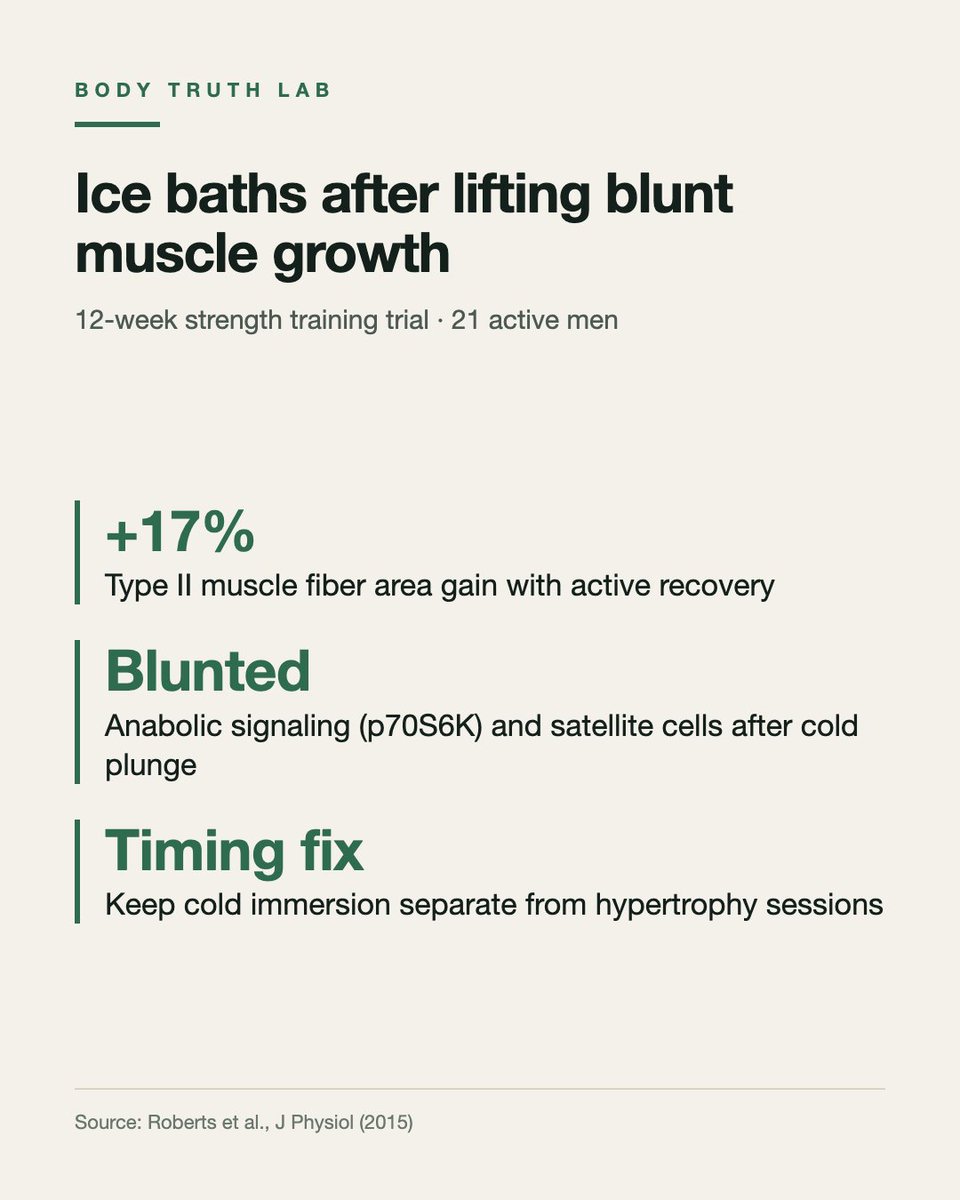
Jumping into an ice bath right after leg day feels hardcore. It can also cost you muscle.
In a 2015 12-week lifting trial, men who did active recovery grew type II muscle fibers by 17% and added more muscle mass. The group doing 10-minute post-workout cold plunges saw blunted anabolic signaling and no significant fiber growth.
Save the cold plunge for rest days—not right after lifting.
What does “progression-free” mean when a cancer trial measures it in months?
The FDA just approved bezuclastinib with sunitinib for adults with advanced gastrointestinal stromal tumors previously treated with imatinib. In the trial, the clock ran from the first dose until the cancer progressed or the patient died.
Whether people lived longer overall is still an open question. Bezuclastinib carries a boxed warning for liver injury.
Not medical advice.
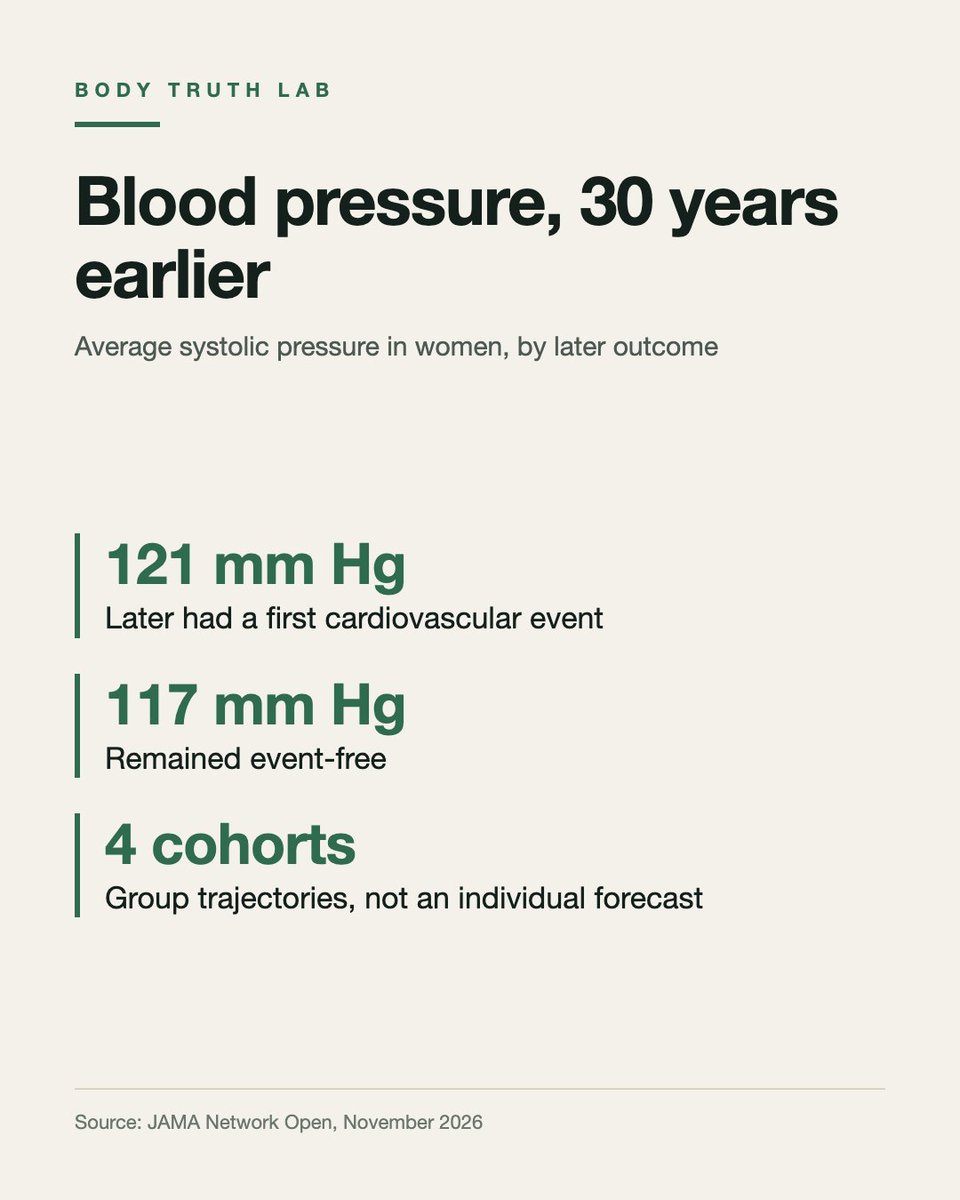
A single blood pressure reading tells you very little about the next 30 years. A long record can show something a snapshot misses.
Across 4 cohorts, women who later had a first heart attack, stroke or cardiovascular death averaged 121 mm Hg systolic three decades earlier. Women who stayed event-free averaged 117. Those are group averages. They cannot tell one person when an event will happen.
30% lower hazard is the headline. Here are the trial rates behind it.
The FDA approved giredestrant after initial treatment for adults with early ER-positive, HER2-negative breast cancer at intermediate to high risk of recurrence.
At 3 years, invasive disease-free survival was 92.4% with giredestrant and 89.6% with standard hormone therapy. That's a 2.8 percentage point difference. Overall survival data are still immature.
Not medical advice.
The longevity stat supplement companies don't want you to see.
A Cleveland Clinic cohort of 122,007 adults (JAMA Network Open, 2018) measured fitness on a treadmill and followed them for years. Low cardiorespiratory fitness carried a mortality risk comparable to or greater than smoking, diabetes, or coronary artery disease.
And there was no upper limit: elite performers outlived even the high-fitness group.
Your cardio is the anti-aging stack. Not medical advice.