200 years on Shelley's still right "the House of commons is not a representation of the people" but exercises sovereignty 'in contempt of them in a hospital for lunatics" #brexit#Parliament
Hot off the press! Read the extra chapters that never made it into my new book, BEHIND ENEMY LINES. These are the original materials from the main protagonist, Lewis 'Archie' Gibson's, own manuscript, written shortly after the war. Enjoy! (Photo of Gibson courtesy of his son, Paul Gibson).
https://t.co/Qhd6XEXwao
We're sitting just SEVEN away from another milestone for the show. Can we wrangle together a few more people and make this lowly peasant proud of his hardworking?
HEAD OVER TO FORTUNE'S WHEEL PODCAST ON SPOTIFY OR WHEREVER YOU LISTEN TO IT AND HIT THAT FOLLOW/SUBSCRIBE BUTTON!
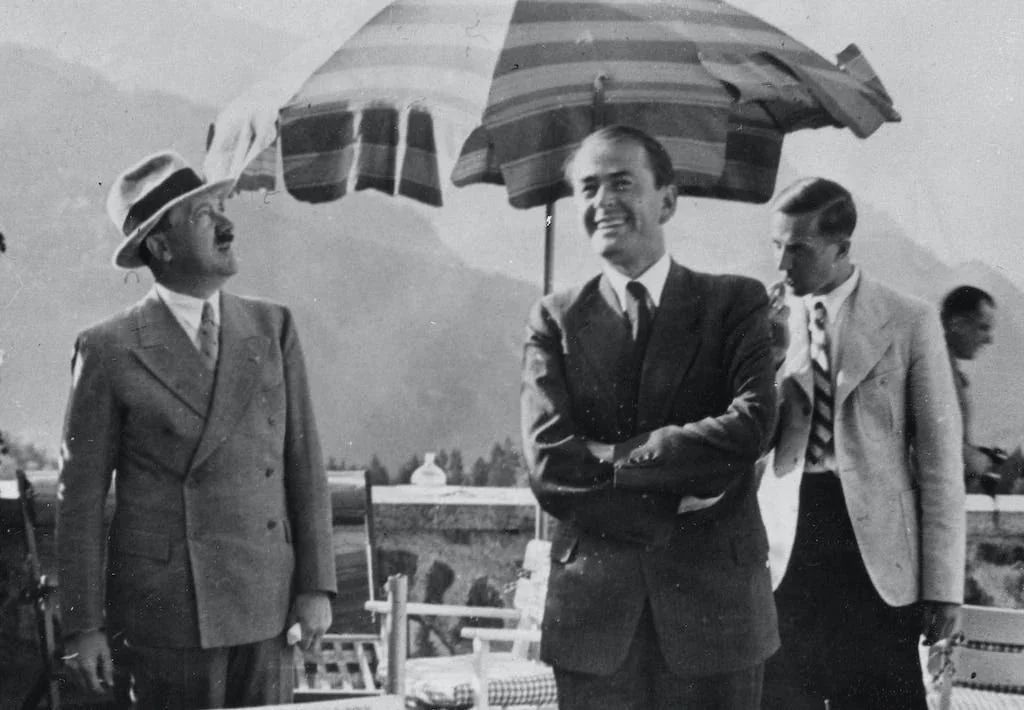
In 1939, Albert Speer was Adolf Hitler's favorite architect and one of the few people Hitler treated as a friend. He was a frequent guest at the Berghof, Hitler's mountain home in the Bavarian Alps.
Speer designed the Nazis' grand buildings and rally grounds, including the new Reich Chancellery in Berlin, finished in 1939. He also drew up Hitler's plans to rebuild Berlin as "Germania," the capital of a world empire. To make room for the project, his office helped evict Jewish families from their Berlin apartments.
In 1942, Hitler made Speer Minister of Armaments and War Production. He kept the German war machine running into 1945, using millions of forced laborers and concentration camp prisoners in brutal conditions.
At the Nuremberg trials in 1946, Speer took a different approach from the other defendants. He accepted general responsibility for the regime's crimes but insisted he hadn't known about the Holocaust. The court believed enough of his story to spare him the death sentence. He was sentenced to 20 years and served the full term in Spandau Prison, getting out in 1966.
Speer then rebuilt his reputation as "the good Nazi." His 1969 memoir, Inside the Third Reich, became an international bestseller and earned him a fortune. Historians later found that he had known far more than he admitted. In a letter made public in 2007, he wrote that he had been present in October 1943 when Heinrich Himmler told Nazi leaders that the Jews were being exterminated.
Speer died in London in 1981, a rich and famous man.
Chilling historical photos: https://t.co/5nIVtOBX72
🇭🇷 In Croatia’s Dubrovnik State Archives, a manuscript dated March 11, 1445, still bears inky cat paw prints.
Historian Emir O. Filipović discovered them in 2011, and his photograph went viral in 2013.
He imagined that a medieval cat had stepped into ink and jumped onto the open book, leaving an accidental mark on history.
Nearly 600 years later, the prints remain a charming reminder that cats may have been interrupting people’s work for centuries.
@VonBarkenTwins@Oct7NeverForget I think I have read similar tales but they were attacked by the guards for stopping and immediately separated from the child
Susie is a famous cat in Dorchester, England. the town unveiled a bronze statue of her as a Roman cat. it was a big deal. there was a town crier, bards, a choir, and a poem.
Susie skipped it. it was raining, so she went to the supermarket instead. impeccable cat behavior.
“He Must Not Fall”: A Mother's Final Act of Love at Auschwitz
In 1944, as Nazi guards marched a mother and her young son toward the gas chambers of Auschwitz, she suddenly stopped. She knelt down to tie his shoelaces.
A guard shouted at her to hurry. She did not move any faster. She simply finished tying the laces and quietly replied:
“He must not fall.”
Another prisoner watched from the crowd. Years later, he would recall that this moment haunted him more than the screams, the beatings, or the countless acts of brutality he had witnessed.
In a place built to erase human dignity, a mother's hands still moved with tenderness. She knew where they were going. She knew what awaited them. Yet she still worried that her little boy might trip and hurt himself.
When Soviet soldiers liberated Auschwitz in January 1945, they discovered thousands of children's shoes piled in storage rooms. Tiny soles, worn leather, little shoes that would never carry their owners home again.
Every pair represented a stolen childhood. A life that should have continued. A child who should have grown up, laughed, played, fallen in love, and grown old.
And somewhere among those countless murdered children was the boy whose mother had stopped to tie his shoes.
She could not save him from the gas chambers. She could not stop the guards or change their fate. But she could still protect him from stumbling. She could still offer one final gesture of care.
The Nazis could take everything from her, including her life and the life of her child. But they could not take away her love.
At the gates of death, she was still a mother. And in the darkest place humanity had ever created, she chose to remain human.
P.S. I'm leaving Twitter/X and LinkedIn behind and moving my writing to Substack. You can follow me for free or support my independent journalism with a paid subscription.
https://t.co/CRmAgIp5CW
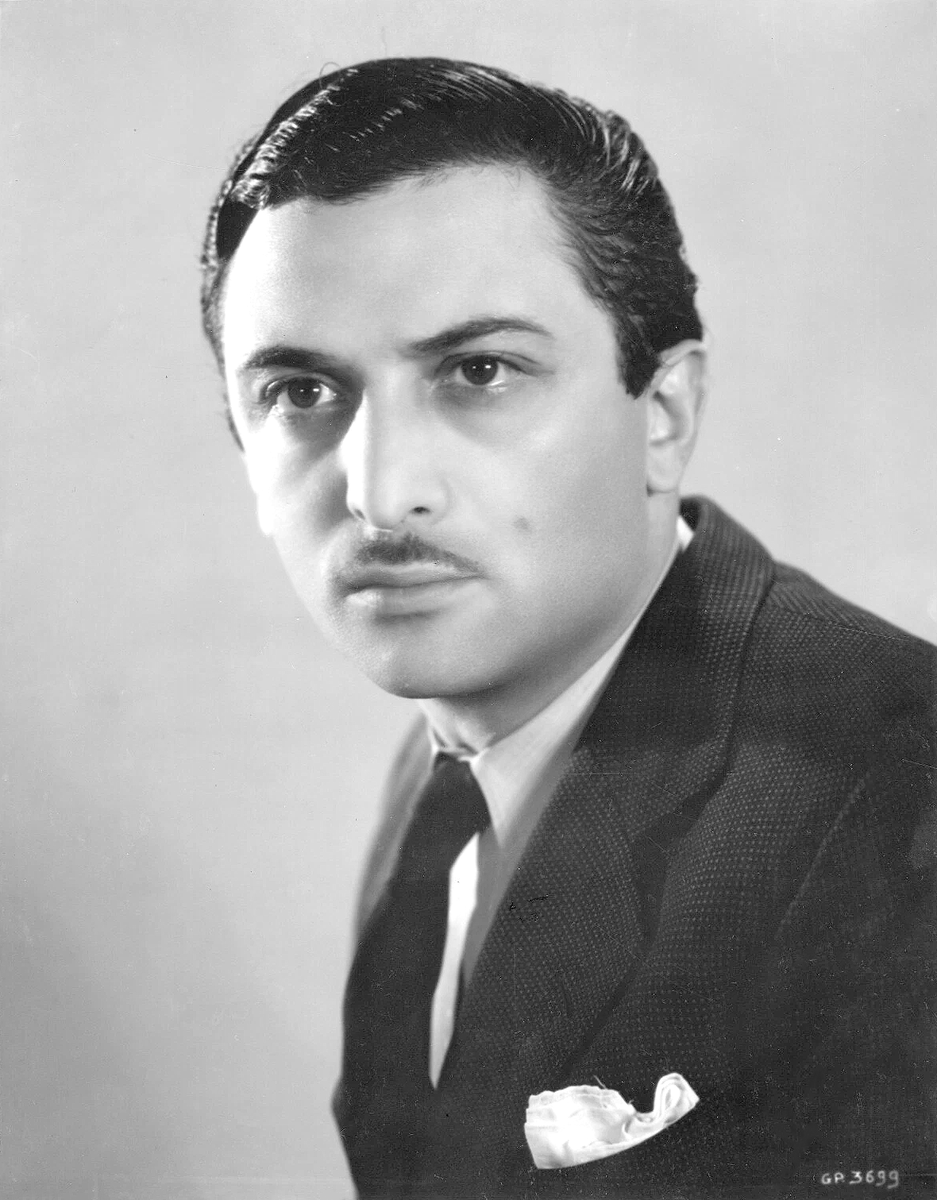
Pendant l'Occupation, son visage est placardé par les nazis, sous les mots « Juif typique ».
Lui a fui à temps. On le retrouve à Hollywood, dans Casablanca.
Il naît Marcel Blauschild le 23 novembre 1899, à Paris, rue de la Bûcherie. Ses parents, juifs d'origine roumaine, sont maroquinier et domestique.
Il prend un nom de scène, Marcel Dalio. Et devient l'un des visages du grand cinéma français.
En 1937, il est Rosenthal, le fils de banquiers juifs de La Grande Illusion, de Jean Renoir. Le prisonnier qui s'évade avec Jean Gabin.
En 1939, il est le marquis de La Règle du jeu.
En 1940, l'armée allemande entre en France. Dalio s'enfuit avec sa femme, l'actrice Madeleine Lebeau.
Lisbonne, puis le Mexique avec de faux visas chiliens, puis le Canada. Enfin les États-Unis.
À Paris, les occupants se servent de ses photos de cinéma pour leurs affiches antisémites.
À Hollywood, il décroche un petit rôle. Le croupier du café de Rick, dans Casablanca. Sa femme y joue Yvonne.
Le film remporte l'Oscar du meilleur film. L'enfant de la rue de la Bûcherie joue dans l'un des films les plus célèbres de l'histoire.
Les membres de sa famille restés en France meurent dans les camps nazis.
Il rentre en France en 1945. Il reprend sa carrière, des deux côtés de l'Atlantique.
En 1973, le visage que les nazis affichaient comme « Juif typique » fait rire la France entière.
Il est Rabbi Jacob, le vrai rabbin du film de Gérard Oury, face à Louis de Funès.
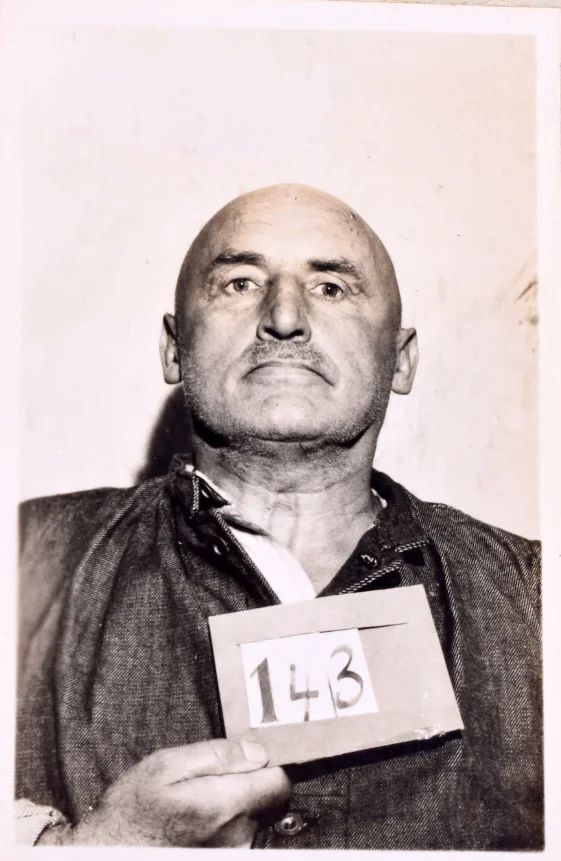
Julius Streicher never ran a camp or gave an order to kill. His weapon was a newspaper.
In 1923, Streicher founded Der Stürmer, a weekly paper in Nuremberg devoted to hatred of Jews. It printed crude caricatures, sexual smears, and the medieval lie that Jews murdered Christian children in rituals. Its front page carried the slogan "The Jews are our misfortune."
Under Hitler, the paper reached hundreds of thousands of readers, and it was posted in public display cases on street corners across Germany. Streicher also put out antisemitic books for children, including The Poisonous Mushroom, which taught young readers to recognize and fear Jews.
He became so corrupt that the party stripped him of his posts in 1940. But Der Stürmer kept printing. As the killing of Europe's Jews went on during the war, it called openly for their extermination.
American troops captured Streicher in May 1945. He was posing as a painter. At Nuremberg, the tribunal found that his writing and speeches had stirred Germans to persecution at a time when he knew Jews were being murdered in the East. He was convicted of crimes against humanity and hanged on October 16, 1946.
He was the first person convicted for propaganda alone. Decades later, the international tribunal for the 1994 Rwandan genocide relied on his case to convict the journalists and broadcasters who had urged on the killings.
The creepiest photos ever taken: https://t.co/0WklG7bVfh