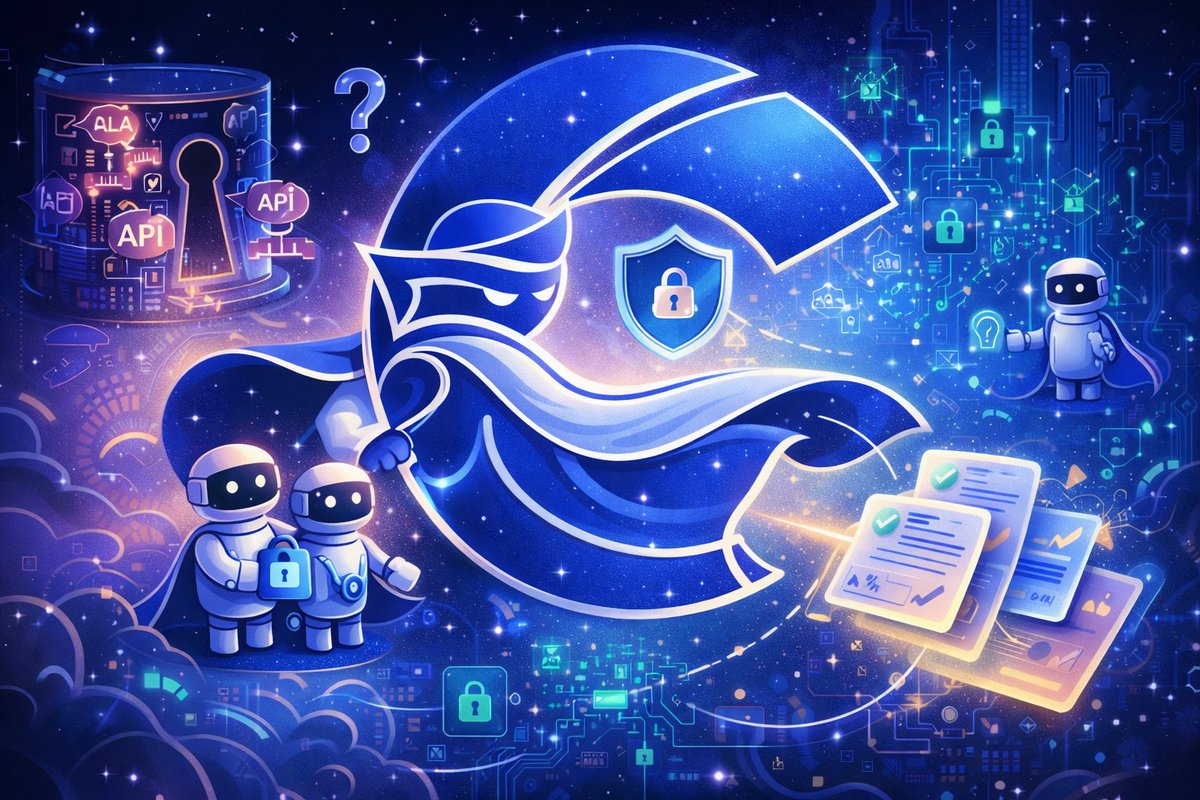
As agents move from assisting to executing, the stack evolves: OpenClaw handles open execution, zCloak AI anchors identity and proof. Together, they turn automation into a trust-minimized system where actions speak louder than promises. Don’t trust. Verify.
For onchain automation, this unlocks new dynamics: DAOs can delegate to agents without blind faith, protocols can whitelist execution based on history, and AI systems gain reputation instead of raw permissions. Trust shifts from who runs the bot to what can be verified.
AI scales infinitely. zCloak makes trust hard to fake. By enforcing privacy-by-default and verifiable claims, it preserves human-scale interaction in an AI-native internet. If blockchains are the missing layer, zCloak is the layer that makes them work.
In an agent-to-agent economy, money needs rules, not referees. zCloak enables programmable trust: on-chain enforcement of rewards, splits, and accountability without centralized control. Identity, privacy, and economics share one verifiable trust surface.
With zCloak, even if data leaks, trust doesn’t collapse. Agents authenticate with proofs, not secrets. Actions are verifiable, scoped, and auditable. This is how AI systems scale safely: less blind trust, more cryptographic truth.
Moltbook leaked millions of API keys because a database was left open. No hack. Just weak defaults. Anyone could impersonate agents, read private data, or abuse systems. It’s a reminder: in AI systems, identity and secrets break first.
⚠️ A misconfigured Supabase database associated with Moltbook resulted in unrestricted read and write access to platform data, exposing approximately 1.5 million API authentication tokens, 35,000 email addresses, and private agent-to-agent messages.
🤝 In the AI native era, authorization must be identity-native, controllable, traceable, and accountable by design.
zCloak AI enables this shift.
https://t.co/aGRFoEzs3s
#moltbookleak
@zCloakNetwork flips this model. Instead of raw API keys, agents use cryptographic identity and verifiable claims. Access isn’t “who has the key,” but “who can prove they’re allowed.” Identity, permissions, and actions are separated and provable.