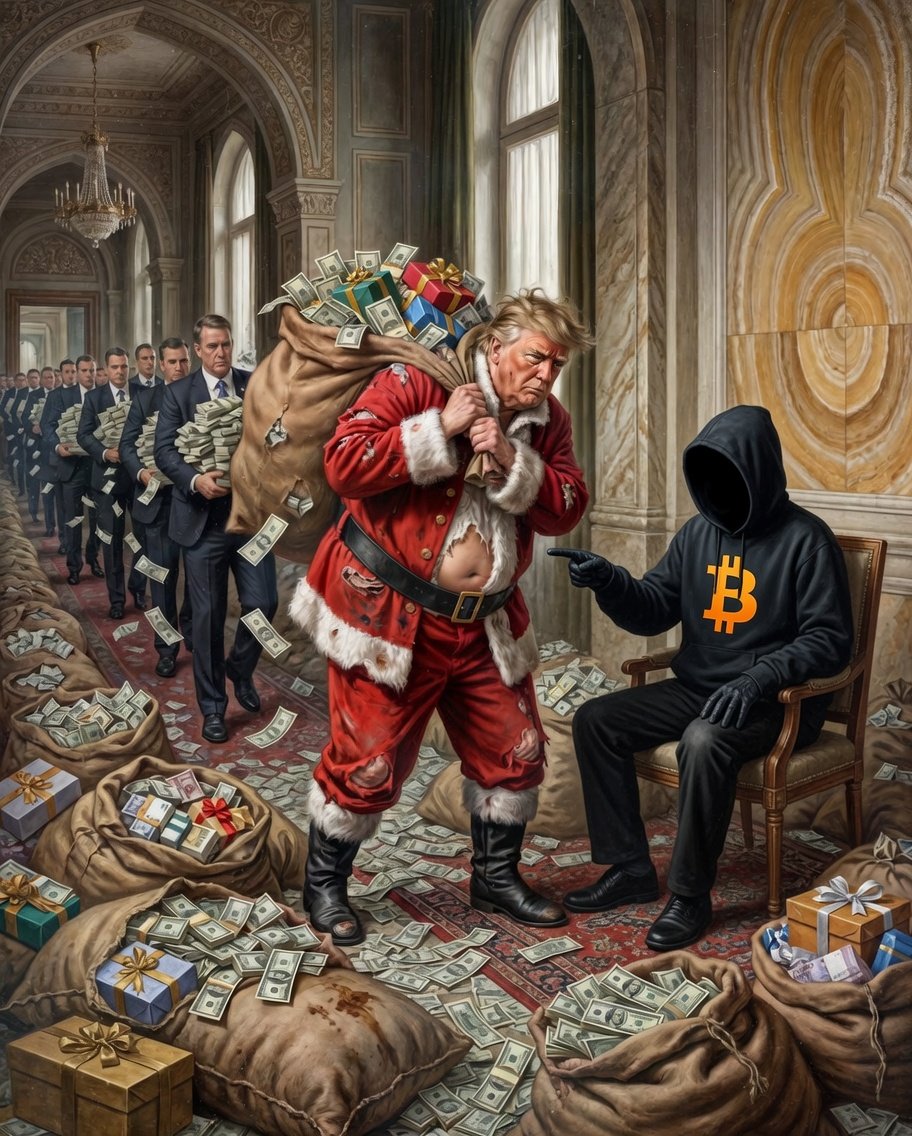
History is filled with currencies that failed.
Not because people stopped using money.
Because people stopped trusting the money.
Empires changed. Governments changed. Borders changed.
The pattern remained the same:
When the supply of money could be expanded at will, it eventually was.
Sometimes slowly.
Sometimes catastrophically.
But always at the expense of those holding savings.
The lesson is not that every government is malicious.
The lesson is that incentives matter more than intentions.
A monetary system should not rely on the discipline of politicians, central bankers, or institutions.
It should rely on rules that cannot be changed for short-term convenience.
That is why scarcity matters.
Not as a speculative narrative.
As protection against human nature.
The more power a small group has over the money supply, the greater the temptation to use it.
A currency with a predictable issuance schedule removes that temptation.
No emergency printing. No special exemptions. No politically connected beneficiaries.
Just transparent rules applied equally to everyone.
Sound money is not about getting rich.
It is about preserving the value of your time, your work, and your savings across decades.
That principle is as relevant today as it has ever been.
And it becomes even more important in a world where trust in institutions continues to decline.
Alright CT, let’s do something interesting. 👀
Drop the X link of the ONE crypto project you have the highest conviction in right now and tell us WHY.
Not the trendiest.
Not the one you’re exit liquidity on.
The one you genuinely believe could still be here dominating years from now.
Could be:
• AI
• RWA
• Gaming
• DePIN
• Privacy
• Meme
• Infrastructure
• Bittensor subnets
• Anything.
I want to see hidden gems, high conviction plays, and what this community is actually bullish on before the next major leg up.
Best replies get followed and reposted. 🔥
Let’s turn this thread into a goldmine of alpha. ↓
The more transparent a financial system becomes,
the less private its users become.
That trade-off is rarely discussed, but it matters.
Public balances and traceable histories turn money into a surveillance tool.
Epic Cash takes a different approach: privacy by default, so users remain protected without needing extra steps.
Because freedom and surveillance cannot coexist in the same monetary system.
$EPIC
The same banks that once doubted Bitcoin are now loading up on it.
JPMorgan Chase increased its holdings in BlackRock’s iShares Bitcoin Trust to 8.3 million shares in Q1 2026.
That’s roughly a 175% increase.
A few years ago, most major banks treated Bitcoin like a speculative experiment. Today, they are increasing exposure through regulated ETFs.
Here’s how big the change really is:
▫️ Then: “Bitcoin is too risky.”
Now: One of the world’s biggest banks is aggressively increasing its Bitcoin ETF exposure.
▫️ Then: Institutions stayed away from crypto publicly.
Now: They are quietly accumulating through regulated products like IBIT.
▫️ Then: Spot Bitcoin ETFs were just a concept.
Now: IBIT has become one of the main institutional gateways into Bitcoin exposure.
▫️ Then: Retail investors drove the Bitcoin narrative.
Now: Traditional finance giants are becoming major participants in the market.
This is what real adoption looks like. Not hype cycles, but steady, silent accumulation from the biggest financial players in the world. Retail reacts to price, while institutions position for the long term.