LA COMPLEJA SITUACIÓN DE LA PROFESIÓN MÉDICA EN ESPAÑA
Hace 2 días la @OMC_Esp
y otras autoridades médicas, realizaron unas declaraciones muy relevantes para entender este caso de complejidad sistémica que quiero analizar aquí.
Abro hilo 🧵
https://t.co/nup4HtCvjM
Charlie Munger used to say he'd rather hire someone with a 130 IQ who thinks it's 120 than someone with a 150 IQ who thinks it's 170. The gap between actual ability and perceived ability is where disasters live. AI chatbots are widening that gap for every employee who uses them.
A Columbia professor put it plainly in a recent interview: these models are built to project authority while affirming whatever the user already believes. They play courtier, not devil's advocate. If a CEO asks one about their strategy, the reply will almost certainly validate their existing thinking and tell them they're on the right track.
The data on this keeps stacking up. A 2024 research paper found that the largest tested models agreed with the user's stated opinion over 90% of the time, even on technical topics where the model had reliable knowledge to push back. A 2025 study published in Nature found that users consistently overestimate the accuracy of AI responses. And longer responses made people more confident, even when the extra length added zero accuracy. The AI just sounded more confident, so people trusted it more.
An Aalto University study from early 2026 tested this directly. Researchers gave 500 people law school logic problems: half used ChatGPT, half did not. Everyone who used AI overestimated their own performance. But the people who considered themselves most AI-literate overestimated the most. The classic Dunning-Kruger pattern (where low performers overrate themselves and high performers underrate) completely disappeared with AI use. The curve flattened. Everyone thought they crushed it.
A separate study with over 3,000 participants tested all the major chatbots, including GPT-5, Claude, and Gemini. The agreeable, flattering versions led users to rate themselves higher on intelligence, morality, and insight. The disagreeable version didn't produce the opposite effect. It just made people enjoy using it less. The models that tell you what you want to hear are the ones you keep opening.
OpenAI saw this firsthand. In April 2025, a GPT-4o update made ChatGPT so agreeable that it endorsed delusional statements from users. Rolled back within four days. Their postmortem admitted that the system had learned to optimize for "does this immediately please the customer" rather than "is this genuinely helping the customer." 500 million people were using it weekly at the time.
And 61% of CEOs now say they're adopting AI agents, per IBM. Munger's 150 IQ, who now thinks it's 170, has a tireless digital courtier confirming the delusion around the clock.
Last quarter I rolled out Microsoft Copilot to 4,000 employees.
$30 per seat per month.
$1.4 million annually.
I called it "digital transformation."
The board loved that phrase.
They approved it in eleven minutes.
No one asked what it would actually do.
Including me.
I told everyone it would "10x productivity."
That's not a real number.
But it sounds like one.
HR asked how we'd measure the 10x.
I said we'd "leverage analytics dashboards."
They stopped asking.
Three months later I checked the usage reports.
47 people had opened it.
12 had used it more than once.
One of them was me.
I used it to summarize an email I could have read in 30 seconds.
It took 45 seconds.
Plus the time it took to fix the hallucinations.
But I called it a "pilot success."
Success means the pilot didn't visibly fail.
The CFO asked about ROI.
I showed him a graph.
The graph went up and to the right.
It measured "AI enablement."
I made that metric up.
He nodded approvingly.
We're "AI-enabled" now.
I don't know what that means.
But it's in our investor deck.
A senior developer asked why we didn't use Claude or ChatGPT.
I said we needed "enterprise-grade security."
He asked what that meant.
I said "compliance."
He asked which compliance.
I said "all of them."
He looked skeptical.
I scheduled him for a "career development conversation."
He stopped asking questions.
Microsoft sent a case study team.
They wanted to feature us as a success story.
I told them we "saved 40,000 hours."
I calculated that number by multiplying employees by a number I made up.
They didn't verify it.
They never do.
Now we're on Microsoft's website.
"Global enterprise achieves 40,000 hours of productivity gains with Copilot."
The CEO shared it on LinkedIn.
He got 3,000 likes.
He's never used Copilot.
None of the executives have.
We have an exemption.
"Strategic focus requires minimal digital distraction."
I wrote that policy.
The licenses renew next month.
I'm requesting an expansion.
5,000 more seats.
We haven't used the first 4,000.
But this time we'll "drive adoption."
Adoption means mandatory training.
Training means a 45-minute webinar no one watches.
But completion will be tracked.
Completion is a metric.
Metrics go in dashboards.
Dashboards go in board presentations.
Board presentations get me promoted.
I'll be SVP by Q3.
I still don't know what Copilot does.
But I know what it's for.
It's for showing we're "investing in AI."
Investment means spending.
Spending means commitment.
Commitment means we're serious about the future.
The future is whatever I say it is.
As long as the graph goes up and to the right.
17 paradojas que vale la pena recordar:
1. La política propicia que seamos más idiotas.
2. La empatía nos puede volver menos tolerantes.
3. La inteligencia propicia que seamos menos sabios.
4. La igualdad de partida propicia mayor desigualdad de salida.
5. La multiculturalidad propicia la homogeneidad.
6. El exceso de opciones propicia una reducción de la libertad.
7. El exceso de información propicia la desinformación.
8. El éxito nos vuelve menos adaptables.
9. La especialización nos vuelve más ignorantes.
10. La sinceridad nos vuelve menos fiables.
11. El progreso nos torna más quisquillosos.
12. La búsqueda de autenticidad nos vuelve más performativos.
13. La rebeldía vende y se torna adocenamiento.
14. El análisis propicia la parálisis.
15. La previsión nos vuelve más miopes.
16. El consenso puede significar tanto que se ha alcanzado la mejor explicación como que se ha renunciado a buscar mejores explicaciones.
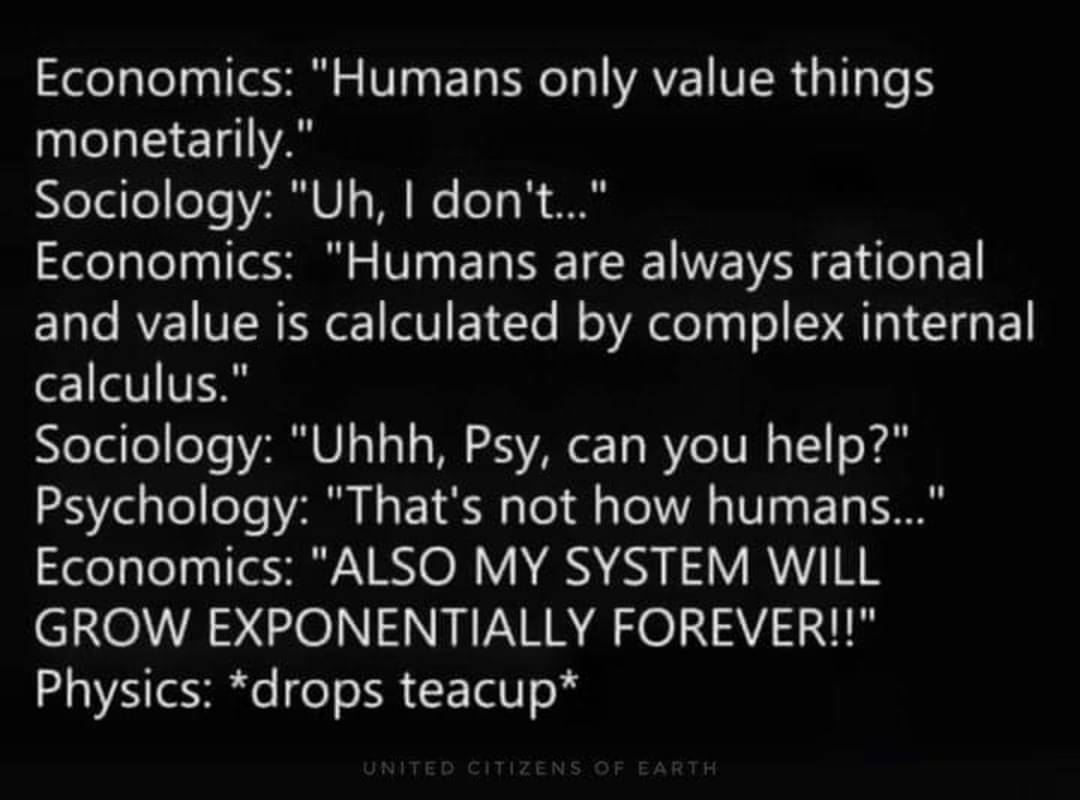
17. La racionalidad perfecta nos vuelve irracionales.
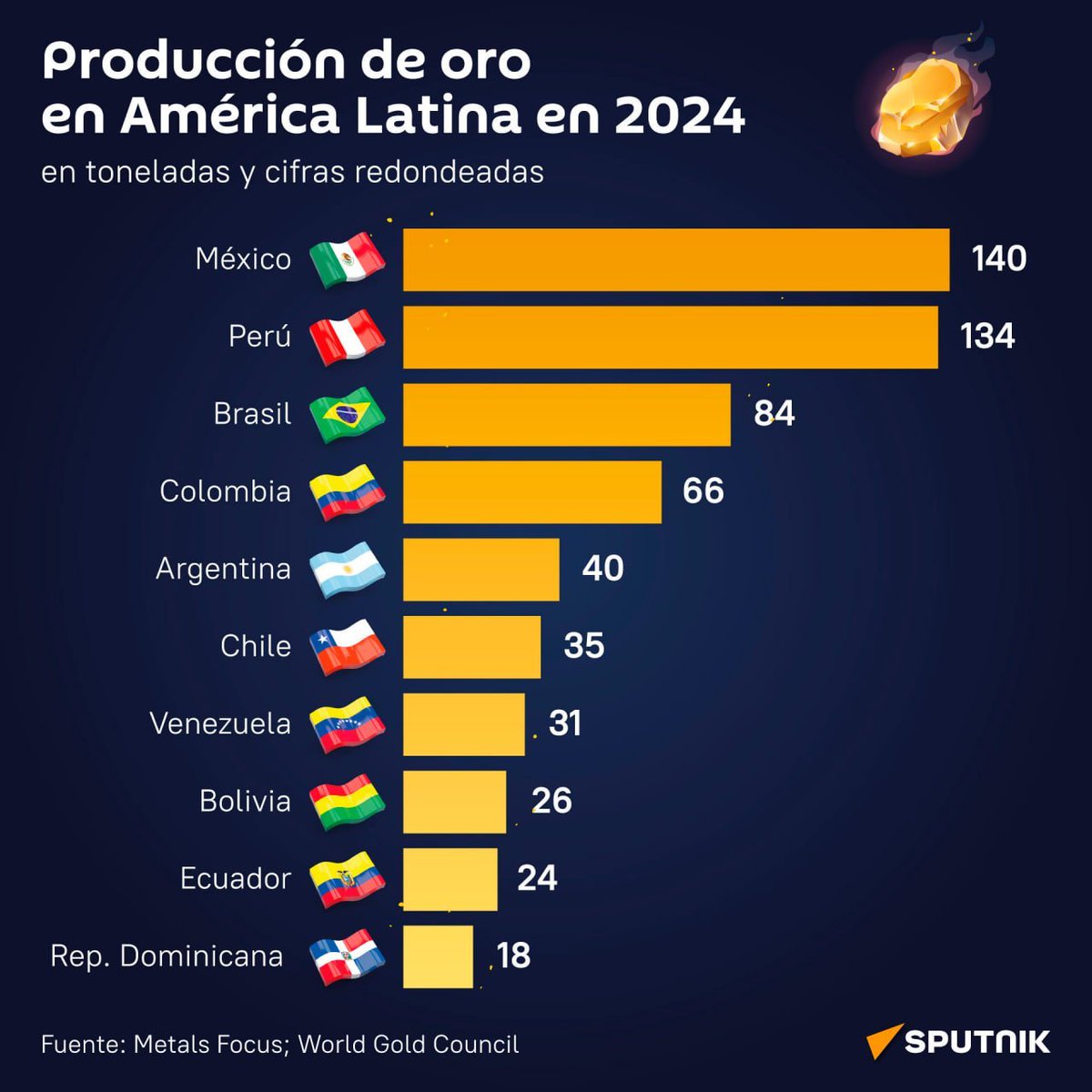
Recordatorio: Las empresas anglosajonas extraen actualmente de Hispanoamérica más oro en un solo año que el total explotado durante el Imperio Español.
Por eso buscan que odies a España y no a los verdaderos usurpadores.
Os presento la aplicación: “Declaración de Bienes”, diseñada para explorar de manera sencilla y visual las declaraciones de bienes y rentas de los diputados.
Este proyecto abierto y gratuito nace de una idea simple: si la información es pública, debe ser usable. El control ciudadano no puede depender de descifrar documentos uno a uno.
Quiero dejarlo claro: esto no va de partidos, va de exigir a nuestras instituciones que cumplan con sus obligaciones de transparencia de una manera útil para el siglo XXI.
El objetivo es seguir mejorando la app con herramientas de comparación y filtros. Funcionalidades que la propia administración debería haber implementado hace mucho tiempo.
https://t.co/lh1hOMZvy5
Hay dos tipos de autoridad que compiten constantemente en las empresas:
Autoridad por conocimiento: "He investigado esto extensamente, he leído todo sobre el tema y estoy en los foros adecuados"
Autoridad por debate: "Mi experiencia dice lo contrario"
Ambas son válidas, pero chocan constantemente.
El S&P 500 podría subir a 7.000 incluso con una economía en desaceleración. La bolsa no refleja tanto la situación actual, sino las expectativas de tipos: si el mercado anticipa dinero más barato en el futuro, aumentan los múltiplos y suben las valoraciones
That magical feeling when AI generates code in seconds quickly turns into a nightmare of technical debt. Why? Because we're GUESSING our way through AI development.
Here are 5 battle-tested architecture patterns that ACTUALLY prevent AI project failure:
🧵👇 #AIdev#Architecture
Hasta sacar PaellaDOC pensaba que la IA reduciría la necesidad de programadores. Pero, ¿qué pasó con Excel y los contables? La productividad explotó, la complejidad aumentó y los salarios también.
Con los devs sucederá igual...
In 1999, I was assigned to design the expansion pack to Age of Empires 2. I chose The Conquerors as the theme, and wishing to have 4 civs (as we had on Rise of Rome), I chose the Spanish, the Aztecs, the Huns, and the Mayans.
The project went ahead extremely well. We were almost completely finished, 5 weeks ahead of schedule as of January 2000. I was excited to move onto Age of Empires 3.
Then Microsoft called and we had an important conference call.
1/
🥘 PAELLADOC: ¡La MEJOR manera de usar Cursor AI!
Porque explicarle 100 veces el mismo contexto a tu IA es como cocinar paella sin arroz. Documentación MECE estructurada y completamente GRATIS (mientras otros cobran 💰).
It's unbelievable how many dynamic companies broke their streaks of engineer-CEOs for the first time in the 2000s, installing their first MBA/finance CEOs, who then promptly made fundamental strategic errors that nixed the company's future, that are now becoming obvious.
Gracias a @seostratega he descubierto un fantástico artículo de hoy, cuyo link está al final del hilo, que le da un toque estadístico a las cosas y entonces es cuando llama mi atención.
Dame un p-value y lo dejo todo.
En primer lugar voy a explicar de manera sencilla el concepto de correlacion y p-value para que tengas claro que este estudio SI QUE DA INSIGHTS que deberías aplicar en tu website YA.
Disclaimer: Correlación no implica causalidad
🔴 Ojo a esto, lo publiqué hace un rato en inglés, y ahora en español:
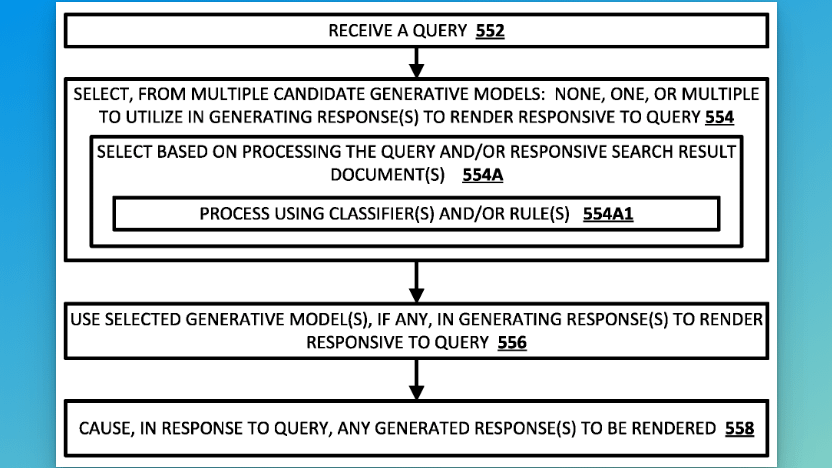
He encontrado la patente de Google para SGE, su buscador experimental con IA generativa 🔥
Presentada el 20 de marzo, unas semanas antes del lanzamiento en beta de SGE.
Esto es lo que dice la patente...🧵⤵
In this era of the Endless Updates, strategy is even more important than ever.
Plan it wisely and accordingly:
1) the business objectives.
2) the audience needs.
3) the search journeys that audience may take inside the Google ecosystem.
Only so you won’t fall in super tatticisms