I created LearnCoronary (https://t.co/VtlXhrUHJv), an interactive tool designed to help general cardiology fellows and other early-career learners better understand coronary angiography and the spatial relationships between different angiographic views.
#cardiotwitter@OpenAI
Tomorrow's the 49th anniversary of Andreas Gruentzig doing the 1st coronary angioplasty. Watch this extended version of the story, told by those who were there: Adolph Bachmann (1st patient) Bernhard Meier (his doctor) & Maria Schlumpf (Gruentzig's assistant). Next year's the 50th: surprises coming! #AngioHistory
In preparation for #ESCCongress 2026 🇩🇪 the EAPCI Congress and Young Committees have curated a special selection of scientific sessions just for you 🧳🛫
Get ready to learn the latest research, clinical updates and breakthroughs in #InterventionalCardiology
Don't miss this chance to connect with global leaders, engage in high-level discussions, and elevate your clinical practice 🩺🫀
Download the official App and start browsing the Programme
App Store: https://t.co/h9Z4nJZfex
Google Store: https://t.co/Gdon6Svonn
@escardio
#EAPCIfamily #EAPCIcommunity #ESCCongress
How to approach calcified coronary lesions in contemporary PCI?
This State-of-the-Art review exploreD the role of intravascular imaging and available plaque modification strategies, offering a practical algorithm to guide treatment and optimise PCI results.
https://t.co/ybsPuoc3dn
Breaking and MASSIVE;
Targeting IL6 fails to improve CV outcomes in Zeus trial. While ziltivekimab demonstrated target engagement and inhibition of the IL-6 pathway, as reflected by expected reductions in free IL-6 and high-sensitivity C-reactive protein (hsCRP) respectively, this did not translate into major adverse cardiovascular events (MACE) risk reduction versus placebo in people with atherosclerotic cardiovascular disease (ASCVD), chronic kidney disease (CKD) and inflammation (hazard ratio, 0.99; 95% confidence interval, 0.88 to 1.11).
https://t.co/P98lKhbujI
Three days. One stage for the region's leading interventional cardiologists.
𝐆𝐈𝐒 𝐀𝐧𝐧𝐮𝐚𝐥 𝐂𝐨𝐧𝐟𝐞𝐫𝐞𝐧𝐜𝐞 𝟐𝟎𝟐𝟔 brings together renowned regional and international faculty for three days of world-class scientific sessions, live cases, expert-led discussions and valuable networking opportunities in Dubai.
⏳ Early Bird rates are still available. Register today and save on your conference registration: https://t.co/Sf9s018SRM
🗓️ 26–28 November 2026 I 📍 InterContinental Dubai Festival City, UAE
#GIS2026 #GISConference2026 #InterventionalCardiology #Cardiology #MedicalEducation #CardiovascularMedicine
Education starts wherever you are with Level 1 of the EAPCI Educational Pathway 🚀
9 dedicated Coronary Modules 🫀
💻 100% Online Format accessible via the ESC eLearning platform
⏱️ Learn at your own pace!
🔓 Exclusive and FREE access for EAPCI Members
Prep material for EAPCI certification 📝
Take the first step in sharpening your skills and advancing your career in interventional cardiology 👨⚕️👩⚕️
Structural Modules COMING SOON 🥼
🔗 Explore the pathway and start learning today: https://t.co/To2oXwRPPY
@escardio
#EAPCIEducationalPathway #EAPCIfamily #EAPCIcommunity
Be a part of EAPCI and apply to become a Committee Member for the 2026-2028 mandate 🧑🧑🧒🧒🫀
🌍 This is your opportunity to actively contribute to our community and collaborate with colleagues across ESC National Societies and Affiliated Countries
📌 Important Details:
👤 Eligibility: You must be an EAPCI Member to apply
⏰ Deadline: 26 July 2026
📢 Results Announcement: September 2026
🔗 Submit your application today: https://t.co/80zebWV0jJ
Not a member yet? Join Today: https://t.co/yw6iY4Xpuv 🚀
#EAPCIfamily #EAPCIcommunity #EAPCIcommittees
@escardio
Episode 2️⃣ of the new EAPCI 5️⃣ Webinar series on VHD is coming up
Some choices can impact a lifetime 🌱 that’s why contemporary VHD management requires a longitudinal perspective 🌳
Join us to dive into:
⚖️ Balancing timing, age, comorbidities and anticipated future needs
🎯 Appraising the durability and haemodynamics of contemporary technologies
🧩 Integrating predictors of structural valve deterioration and preparing for reinterventions
Let’s build a framework for long-term clinical success 🧓🏾👴🏻👵🏼
📅 June 16th 2026
⏰ 6 PM CEST
Free for EAPCI members
Ask your questions LIVE 🔗 https://t.co/Hd36DgYRIA
@escardio
#EAPCIWebinar #EAPCIfamily #EAPCIcommunity
🔥#ACC26 Late-breaking trials 🔥: OPTIMAL
🔗https://t.co/y1tPatzym6
@ANazmiCalik provides his take ✍️ on the results 📊 of this trial, designed to determine whether routine IVUS-guided PCI improves clinical outcomes compared with angiography-guided PCI in patients with unprotected LMCA disease.
OPTIMAL was presented by Adrian Banning in New Orleans.
#interventionalcardiology #imagingfirst #clinicaltrial
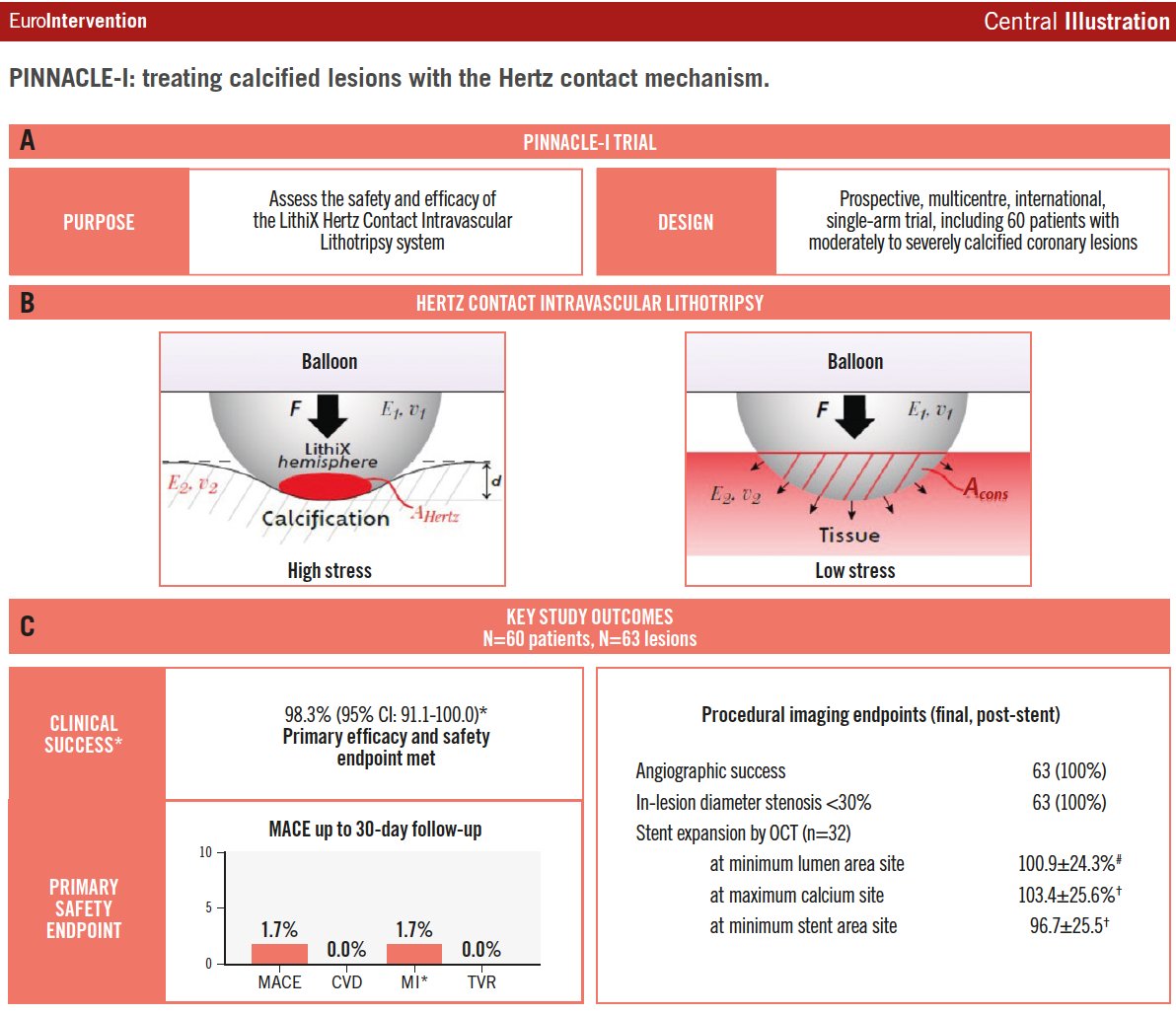
The novel LithiX Hertz Contact IVL catheter fractures coronary calcium via a unique Hertz contact mechanism—no external energy source required. Early outcomes show high procedural success, >90% calcium fractures, and optimal stent expansion across diverse morphologies.
https://t.co/TmAFP3H1Vv
@valeriaparadies@ZMehmedbegovic@mc_morice
Last in the trilogy!
Bench to Bedside: From Results to Patient Care
Topic: GLP-1 RAs and HFpEF – Which patients should receive them?
Monday, 15 December | 18:00–19:00 CET.
Register now – free for everyone👉 https://t.co/SrUrDfSUf7
Missed Webinar 2? Watch on demand👉 https://t.co/fum4TCbJOs
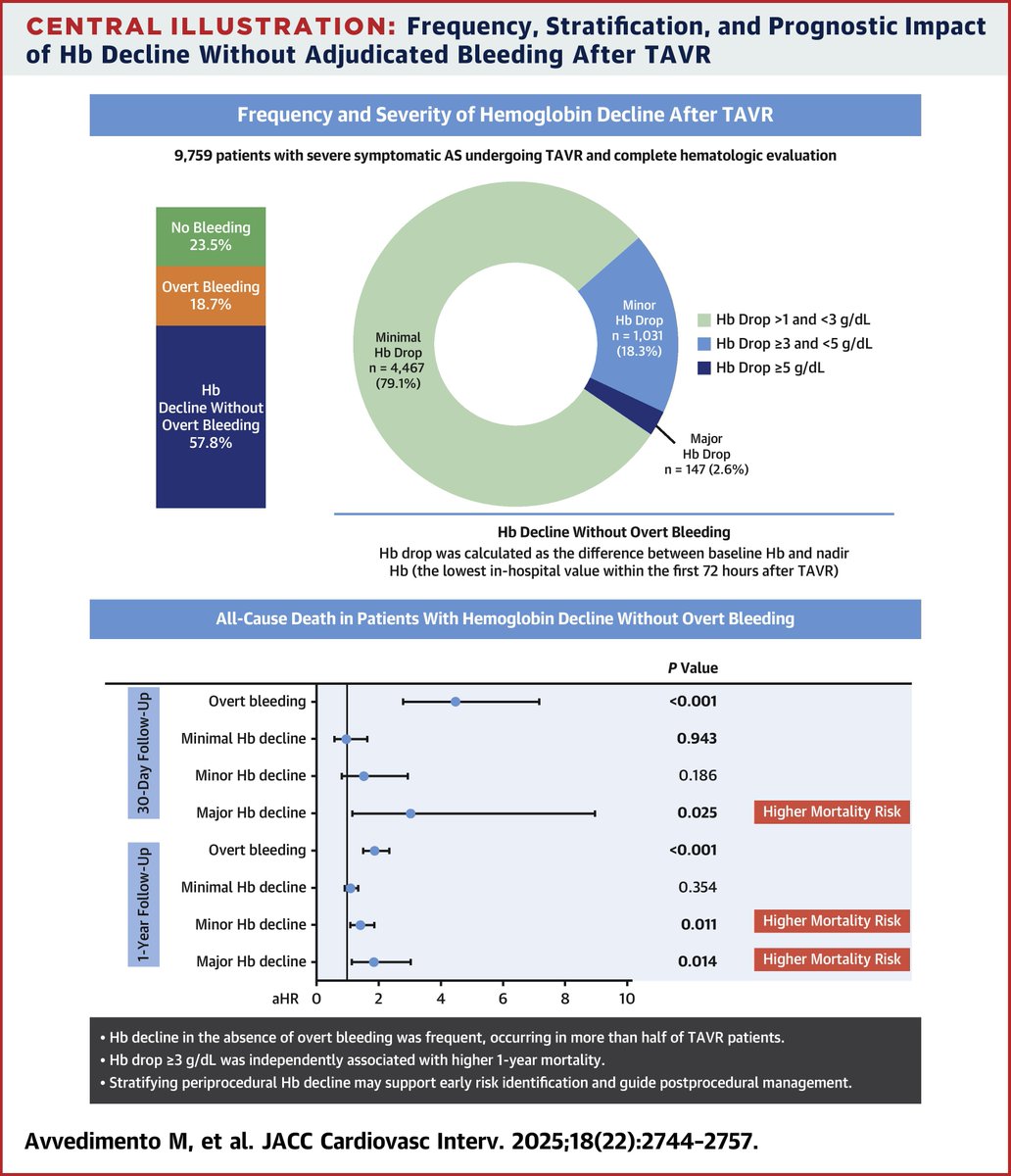
In-hospital hemoglobin decrease ≥3 g/dL after #TAVR, even in absence of overt bleeding, was very common & independently associated w/ worse outcomes. Stratifying hemoglobin loss may improve early risk detection & postprocedural management. https://t.co/xWNtv7TpOM #JACCINT
My 10 Commandments for Those Starting Rota program
(Some hard-earned lessons from the lab 👇)
#cardiotwitter#CardioX
1️⃣ If you feel rota is needed, it probably is; don’t postpone in obvious calcium.
2️⃣ Always image (IVUS / OCT) when you see mod/severe calcium.
3️⃣ Guide support > everything , long femoral sheath; 7F preferred.
4️⃣ Wire selection matters — Floppy for most; Stiff for ostia. Park distally; avoid tip marker → no wire fracture.
5️⃣ Entry: Dynaglide + DRAW test instead of forceful push.
6️⃣ Burr size — 1.5 mm for most; 1.75–2.0 mm only when vessel demands it.
7️⃣ While burring: pecking motion, avoid >15k RPM drop, <30s runs, 1-min wait between passes.
8️⃣ Speed strategy — 180k for balloon-uncrossable; 120–140k (with good wire bias) for nodular calcium.
9️⃣ Never rota alone, have an experienced colleague/tech with you.
🔟 Never lose wire access , and know your bailout strategy .
Let the younger operators master Rota early
#InterventionalCardiology #CardioTwitter #CathLab #IVUS #CHIP
✨ Counting down to the very first #EAPCI26 Summit! ✨
@ilkecelikkale from our Young Committee reminds to all #EAPCI members who had a case or abstract accepted at #EAPCI26 Summit 19-20 February in Munich 🇩🇪
🔹 You are eligible to apply for a Travel Grant!
🗓️ Application deadline: 4 December
🌸Don’t miss your chance!
⏰Apply now and see you in February!
@escardio #EAPCI26Summit #EAPCIYoung #InterventionalCardiology #CardiologyCommunity #riseandlift @mmamas1973@mirvatalasnag
Long-term melatonin use for insomnia was associated w/ a higher hazard of #heartfailure, an ↗️ in HF hospitalizations & a doubling of all-cause mortality over 5️⃣ years, according to a large, multinational cohort study presented at #AHA25.
More: https://t.co/d7mhoMMrly #CardioX
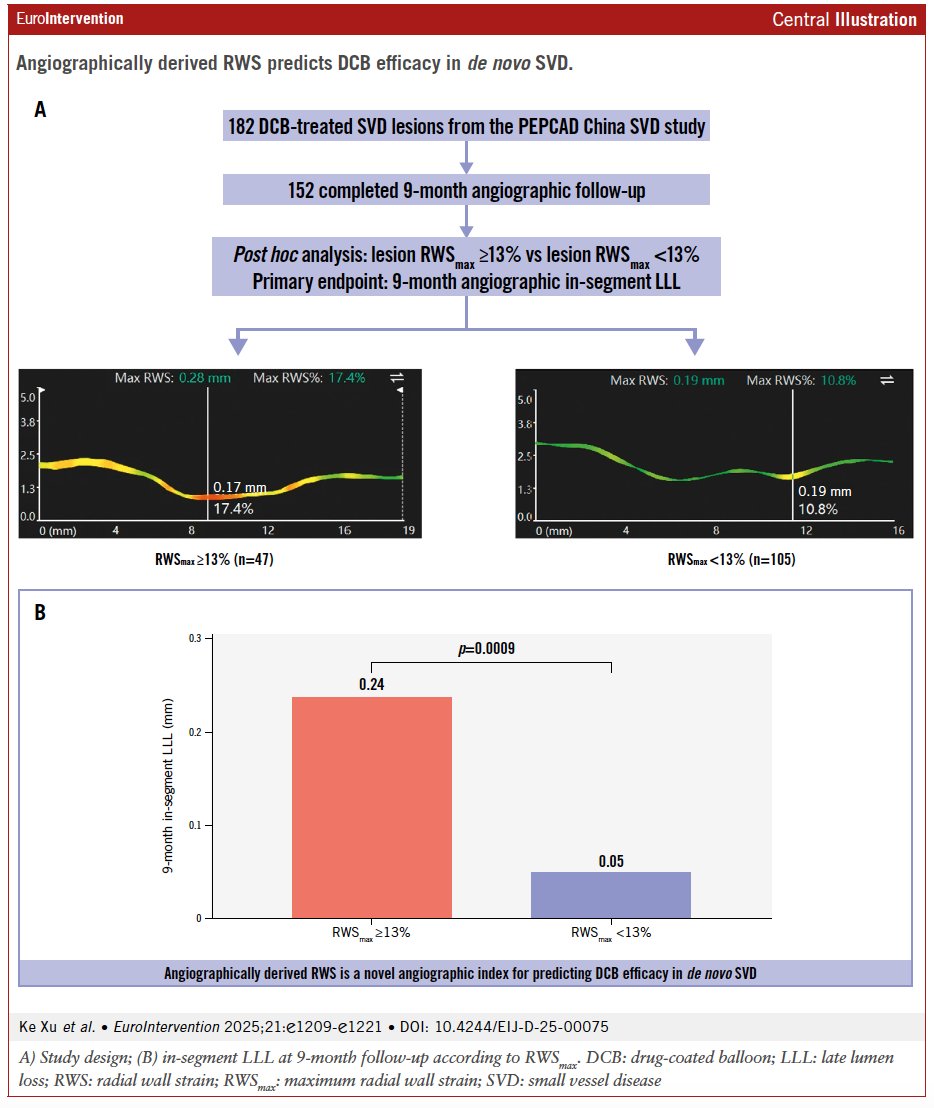
A novel angiography-derived index, radial wall strain (RWS), may help predict drug-coated balloon (DCB) efficacy in small vessel disease (SVD).
💡 Lesions with RWS ≥13% showed higher late lumen loss and restenosis after DCB treatment.
Read more 👉 https://t.co/mZSwVDSeOm
#CardioTwitter #InterventionalCardiology #DCB #SVD