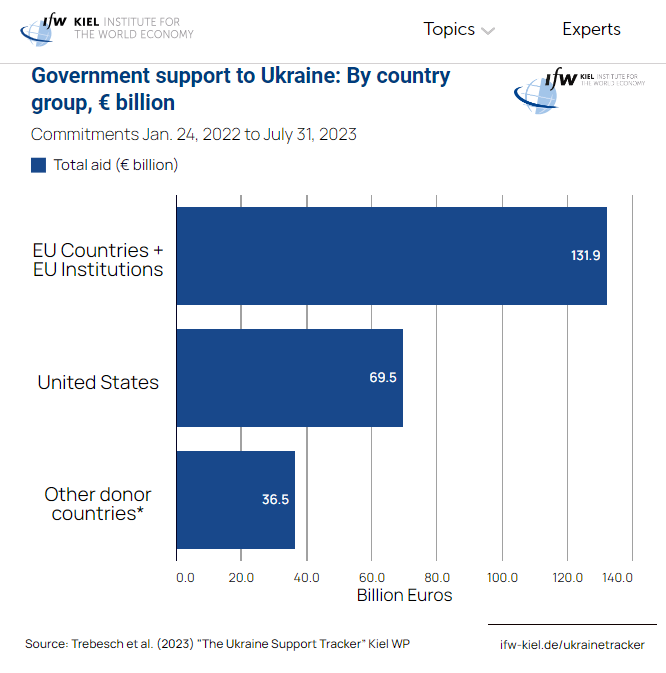
Trump again illustrates his total lack of of an anchor in reality: "Why is it that they're in for a tiny fraction of what we are in terms of payments with regard to Ukraine?" he asked. “So we're in for perhaps $200 billion,” he added. “It could be more. Nobody really even knows the number. And they're in for a tiny fraction of that. Very unfair, I say they have to equalize it."
Someone needs to wake up this campaign about the facts!!! The US needs to catch up to Europe, not the other way around. RETWEET please.
Hi, I’m a lawyer. Do want to know what is really meant by a “#proportionate response” under international law? Then read on - and feel free to ask questions!
Under International Humanitarian Law, #proportionality requires that any degree of damage (up to and including death) to #civilians not be “excessive” in relation to the “military advantage anticipated from a strike against a military target.”
We are going to break that down, so everyone understands what exactly that means.
However, first, you should be aware that it is a misnomer that anytime #Palestinian civilians die after an #Israeli strike, it is automatically evidence of an Israeli war crime. This is completely false - the law does not work that way.
Simply, and unfortunately, the international rules of law recognize that civilians are often killed during war; and, most of the time, those deaths are actually not indicative of a war crime.
Instead, the legal test for “proportionality” requires that each individual strike be looked at with a particular balancing analysis.
First, here is a hard and fast rule: the strike must be intended to target a military objective; it is, therefore, an unlawful war crime to strike with the intent of targeting civilians without any military objective whatsoever.
Now, let’s get a little technical while still keeping it simple.
Under the First Additional Protocol to the Geneva Conventions of 1977 at both Article 51(5)(b) and Article 52(2), we know that when #Hamas uses its own population (or Israeli #hostages) as #humanshields - either by using them to shield themselves or to shield their weapons depots - Hamas has, under international law, turned civilians targets into military targets.
That means that when Hamas places weapons caches in and under schools, hospitals, mosques, etc., Hamas has made each of those places legitimate military targets.
So, it has been well-known for many years that Hamas purposefully placed its headquarters underground beneath the al-Shifa Hospital. In doing so, international law holds that the hospital is no longer just a civilian target, it is a legitimate military target.
That does not necessarily give the IDF carte blanche to attack hospitals, schools, mosques, etc.; however, it does mean that an IDF attack on a civilian target that has been made into a military target by Hamas’ use of human shields is not per se illegal under international law.
Instead, such a strike (as is the case with any strike conducted by a military like the IDF), must be analyzed through a balancing test.
One part of this balancing test performed by Israel before each strike is to determine whether the human shields in question are being used voluntarily or involuntarily.
If the human shields are being used voluntarily - meaning the human shields are there protecting Hamas and its weapons of their own volition - then the target remains a completely legitimate military target.
If the human shields are being used involuntarily - meaning Hamas is forcing people to act as human shields to protect themselves and/or their weapons - then the IDF must go back to the balancing test to determine whether the anticipated military advantage of a successful strike would outweigh the reasonably anticipated loss of civilian life.
Importantly, the IDF rules state that if it cannot determine whether a human shield is being used voluntarily or involuntarily, it must presume the civilian is being used against his or her own will and treat the civilians as an involuntary participant.
Assuming that there is a military target & that there may be human shields that are there involuntarily, the next step in the proportionality analysis for each individual strike (remember, proportionality is determined on a strike-by-strike basis, and not as the accumulation of strikes over time) is to try to determine the likely amount of damage to civilian persons and/or property as a result of the strike.
In other words, under international law, Israel must be able to give a sort of “value” to the anticipated impact on civilians (including potential civilian deaths). Simply, a smaller number of anticipated civilian casualties may make the strike proportionate if there is a significant military advantage to be gained by conducting the strike.
However, if Israel determines that the anticipated impact of a strike may cause many civilian casualties, it must make the difficult determination of whether the anticipated military advantage is so significant that it warrants carrying out the strike anyway.
So, if Hamas has a weapons depot underneath a house with two civilians inside, and that house has been used to fire 500 rockets at Israeli civilians, and it is reasonably expected that there are hundreds more rockets under that house, Israel can almost certainly carry out the strike within the confines of international law.
If that same house, however, had 10 families living inside, including many children, it could - and likely would - tip the scales of the proportionality balancing test toward Israel not being permitted to carry out the strike, even though the house has been used to attack Israeli civilians and can be expected to continue to be used to carry out attacks against Israeli civilians.
Now, that balancing test can always change. If that same house is being used to fire long-range, precision-guided missiles at Israel’s major population centers in places like #TelAviv (effectively putting millions of Israeli civilians in danger), the balancing test may tip back in favor of Israel being legally permitted to carry out the strike.
This all suggests the third and final step in the proportionality balancing test: the #IDF must determine and place a “value” on the anticipated military advantage that would be gained if it were to carry out a particular strike.
An attack on Hamas leadership and/or its weapons manufacturers would be considered a high value target. An attack on a single Hamas member who has no special skill, would be a much lower value military target.
Similarly, an attack on a small cache of mortars would have less military value that an attack on a large cache of advanced rockets that can reach large Israeli civilian population centers.
Once the @IDF determines the anticipated “value” of the likely effect on civilian persons and property and the anticipated “value” of the likely military advantage to be gained if the strike is carried out, the balancing test can be performed, and a certain amount of judgment must go into the determination of whether that strike would or would not be “proportionate.”
Importantly, this decision is so vital that the IDF does not simply permit a single solder on the ground with his or her hand on the proverbial (or actual) “trigger” to make that determination.
In fact, the decision of whether a strike is proportionate is not even left up to IDF officers. It’s not even left up to IDF Generals.
Instead, before any IDF strike can take place, IDF Guidelines provide that the proportionality balancing test must be presented to and analyzed by IDF military lawyers who then determine whether the strike is legally permissible as “proportionate” under international law and the rules of war.
And these IDF military lawyers are not mere patsies or people who simply “rubber stamp” what the IDF requests.
In fact, the IDF’s military lawyers work entirely independently of the IDF. They are outside of the chain of command and do not answer to anyone in the IDF, including a General (for example).
Plus, every IDF military lawyer knows he or she may very well be held to account if he or she makes a wrong decision based on the evidence available at the time.
Furthermore, sometimes the decisions to be made while balancing the likely military advantage against the likely civilian casualties can be so difficult that the legality of the strike is first brought to the Israeli Supreme Court for instant review.
Another important concept: the comparison of civilian body counts of #Israelis versus #Palestinians (to the extent those numbers can be trusted since they come directly from Hamas-only) is not relevant to a proportionality analysis. Each strike must be viewed individually to determine proportionality. It is not a test of the cumulative nature of the strikes.
Also, by simply comparing body counts, it does not factor in how many people killed were actually #HamasTerrorists, how many were Hamas collaborators there voluntarily, and it does not consider what military advantage was gained by Israel carrying out any individual strike.
As Israel is now in the process of seeking to secure the military advantage of preventing Hamas from having the capacity to carry out repeated attacks of the kind and nature seen on October 7th, Israel is permitted to act proportionately insofar as necessary to achieve that military objective (the elimination of Hamas and/or its ability to make war).
One more important fact people do not know, but that they should know: according to UN statistics of global conflict, the average civilian to combatant killed ratio is a rather appalling nine civilians killed for every one combatant killed.
That’s why civilian body counts in and of themselves are never indicative of a war crime. Each individual strike has to be analyzed, and unfortunately civilians always suffer disproportionately in wars.
In fact, while Israel is routinely criticized for any of its strikes that kill civilians, you may be surprised to know that Israel’s civilian to combatant ratio is routinely much lower than the nine to one average.
In the very last operation carried out by the IDF prior to October 7 (in Jenin), 0.6 civilians were killed for every one combatant killed.
In that conflict, not only were the IDF’s ratio numbers nowhere near the nine to one international average, but the IDF actually managed to kill more combatants than civilians - something that is extremely rare.
In truth, Israel is targeted by accusations of war crimes almost immediately by the media, by politicians, and by the UN General Assembly despite the fact that those accusations are near 100% of the time based neither in fact nor in law.
Since a proportionality balancing test must be used to determine whether a single specific Israeli strike falls within the confines of international law, someone providing an analysis must have all of the facts Israel considered before carrying out that strike as to the anticipated impact on civilians and the anticipated military advantage. Obviously, anyone who is making a snap judgment critical of Israel could not possibly have that information.
Understand then, that when you see talking heads accusing Israel of “war crimes” immediately after and/or during Israeli strikes, that is not an actual legal analysis under international law of what constitutes a war crime.
Much more likely, what you are witnessing is part of Hamas’ ongoing psychological and propaganda warfare campaign of demonizing and delegitimizing the State of Israel in the eyes of public opinion.
#Hamas_is_ISIS #HamasisISIS #HamasISIS #HamasMonsters #October7massacre
On November 7th, 1920, in strictest secrecy, four unidentified British bodies were exhumed from temporary battlefield cemeteries at Ypres, Arras, the Asine and the Somme.
None of the soldiers who did the digging were told why.
The bodies were taken by field ambulance to GHQ at St-Pol-Sur-Ter Noise. Once there, the bodies were draped with the union flag.
Sentries were posted and Brigadier-General Wyatt and a Colonel Gell selected one body at random. The other three were reburied.
A French Honour Guard was selected and stood by the coffin overnight of the chosen soldier overnight.
On the morning of the 8th November, a specially designed coffin made of oak from the grounds of Hampton Court arrived and the Unknown Warrior was placed inside.
On top was placed a crusaders sword and a shield on which was inscribed:
"A British Warrior who fell in the GREAT WAR 1914-1918 for King and Country".
On the 9th of November, the Unknown Warrior was taken by horse-drawn carriage through Guards of Honour and the sound of tolling bells and bugle calls to the quayside.
There, he was saluted by Marechal Foche and loaded onto HMS Vernon bound for Dover. The coffin stood on the deck covered in wreaths, surrounded by the French Honour Guard.
Upon arrival at Dover, the Unknown Warrior was met with a nineteen gun salute - something that was normally only reserved for Field Marshals.
A special train had been arranged and he was then conveyed to Victoria Station, London.
He remained there overnight, and, on the morning of the 11th of November, he was finally taken to Westminster Abbey.
The idea of the unknown warrior was thought of by a Padre called David Railton who had served on the front line during the Great War the union flag he had used as an altar cloth whilst at the front, was the one that had been draped over the coffin.
It was his intention that all of the relatives of the 517,773 combatants whose bodies had not been identified could believe that the Unknown Warrior could very well be their lost husband, father, brother or son...
THIS is the reason we wear poppies.
We do not glorify war.
We remember - with humility - the great and the ultimate sacrifices that were made, not just in this war, but in every war and conflict where our service personnel have fought - to ensure the liberty and freedoms that we now take for granted.
Every year, on the 11th of November, we remember the Unknown Warrior.
At the going down of the sun, and in the morning, we will remember them.
Having had the great fortune of spending 16 years in overseas locations during a 38 year military career, I always think of how US current events are seen from the perspective of our allies, partners & foes.
A short 🧵 on those thoughts. 1/9
What we had in Europe was precious.
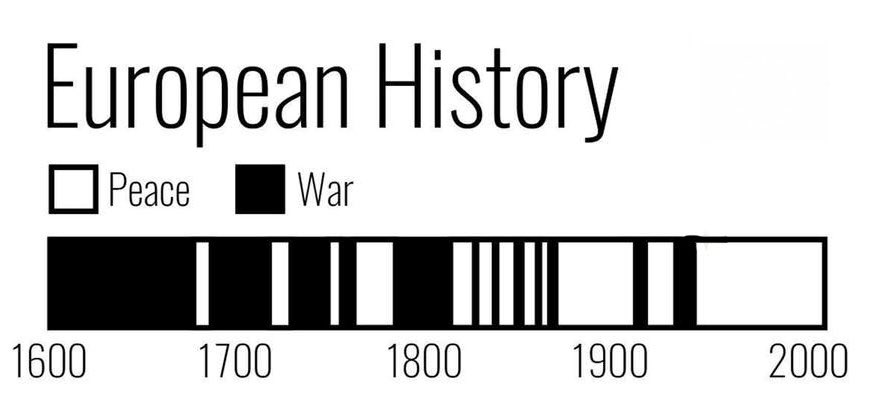
Peace is not inevitable. It’s not “the way things are.” It is a direct consequence of the rules-based order established after WWII.
Peace used to be an intermission between wars — not the other way around.
russia hasn’t “just invaded 🇺🇦,” it reintroduced the war of conquest — one of four gravest crimes under the Rome Statute of the ICC — back in Europe.
Make no mistake, Ukraine is fighting for all of us. Whatever the costs are of helping 🇺🇦 now, they pale in comparison to the costs of existing in the world where internationally recognized borders are not restored.
PS the graph below is notional & shows major wars involving “great powers”
Putin knows he has to conquer Ukraine to survive politically and personally. This means his only viable strategy to succeed in Ukraine is to erode support for Western military aid. He believes this will allow him to win a war of attrition.
Consequently, Putin has developed a narrative that Ukraine will be a "forever war" like Vietnam, Iraq and Afghanistan. He maintains that if we go on sending Ukraine weapons, we are only fuelling a pointless conflict that would otherwise soon be resolved.
To be clear, what Putin is actually saying is that the only way to stop the war in Ukraine is to let him win. But to allow him to triumph would send a clear message to all dictators and authoritarian regimes that aggression is perfectly justifiable.
A terrifying aspect of Putin's strategy is that through a variety of Russian agents already in the USA, Britain, Germany and elsewhere in the West, Putin is paying lobbyists to promote his message. We know that he has previously tried to interfere in Western elections. Right now he is doing everything possible to get Trump re-elected, because he believes Trump is sympathetic to Russia.
Another part of the narrative is that Western for Ukraine support risks Russia collapsing internally, which could be much more dangerous than maintaining the status quo. Which may be true.
There are also efforts to discredit Zelensky and his Government, with accusations of corruption and authoritarianism which as bad a Russia's.
Much of what is being whispered into Government ears has a ring of truth about it. But let's not forget that the most convincing lies are often very close to the truth.
The worst thing about what is going on is that many of the people who have been paid by Putin are respected advisors who should know better. I have seen it firsthand and am appalled by it. Shame on them. Luckily, Western media is starting to pick-up on this.
I just hope politicians on both sides of the Atlantic will not be taken-in by such sedition. We must stay the course in Ukraine until Russia is pushed out. This day is definitely coming. So let's not snatch defeat from the jaws of victory. Many thanks to @randymot4 for pointing out the same problem in the USA.
The Evidence that Russia is Losing Badly
The Russian media gives us a clue on their perception of the war even if they try to hide it. More and more Russian media commentators call for escalation of the war to strikes on London, Paris, Berlin and New York. These fantasty fits are actually an admission that they cannot win the conventional war in Ukraine. There is no talk of "massive Russian army" counter-attacks now. Defeatism settles in among the most boastful with ridiculous talk to be followed by finding scapegoats.
Here is the three-part series on Russia losing the war.
Most of the items are empirical observations or Russian admissions of what is clear in the reported losses.
Part 1: https://t.co/WOIcVimqVu
Part 2:
https://t.co/l8tlTYvsCM
Part 3:
https://t.co/ddRAc1W6A7
The reported losses as of September 14, 2023 can be verified by the actual impact opbserved on the battlefield (described in the threads).
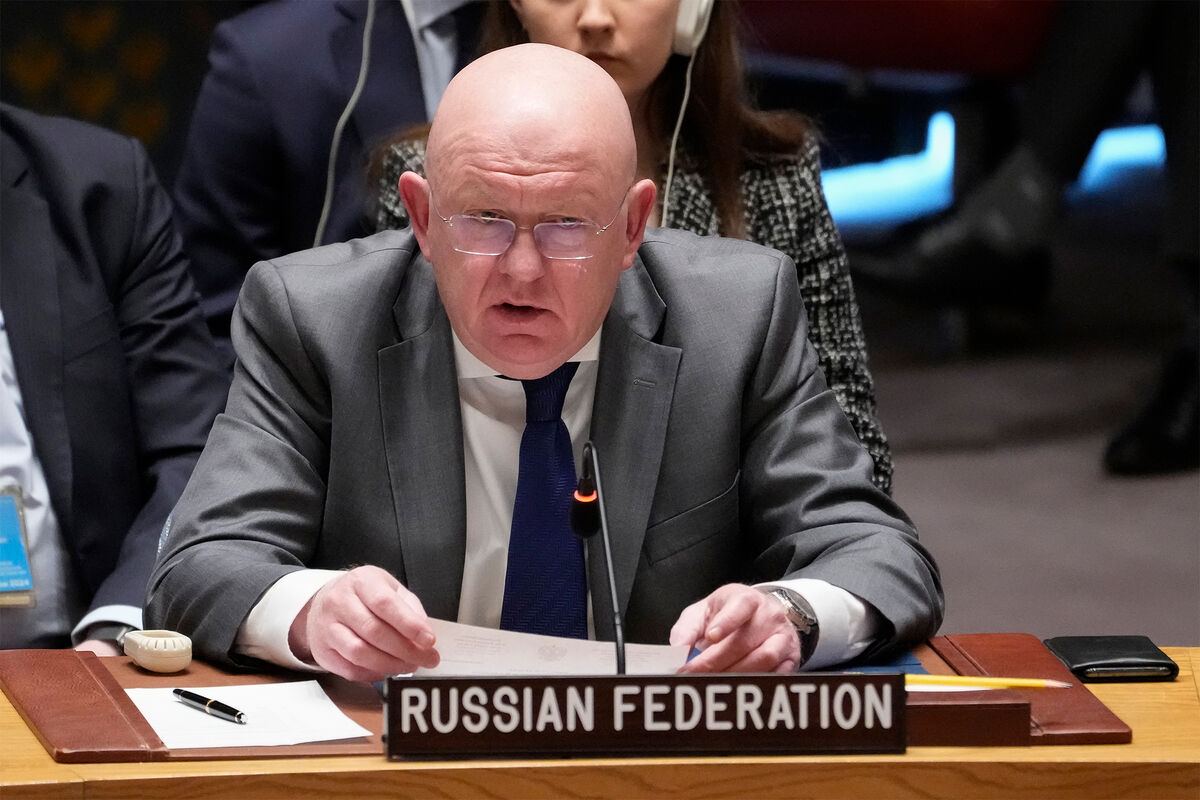
Russian Permanent Representative Nebenzya tried to disrupt Zelenskyy's speech at the UN, he was calmed down by the prime minister of Albania
Nebenzya was outraged that Zelenskyy would speak second after UN Secretary General António Guterres.
Albanian Prime Minister Edi Rama, who chairs the Security Council, explained that the order of speeches had long been agreed upon and was in line with the organization's practice.
Nebenzya responded by saying that "the Albanian presidency demonstrates open disregard for the procedures and practices of the UN Security Council, putting NATO-wide political and ideological guidelines above the duties of the Security Council chairmanship."
To this Rama replied: "I want to assure our Russian colleagues and all present that this is not a special operation of the Albanian Chairmanship, but a continuation of the long-standing and established practice of the Council, and therefore today's order of speeches fully corresponds to the order of the Council's work. But there is a solution. You stop the war, and President Zelenskyy will not speak."
It's August.
People outside of Ukraine are on vacations or getting ready for school.
And then the news from Ukraine come. I know it's painful to read many of them as they are tragic and traumatizing.
The war has already been going on for a very long time. We don't know when and how it will end.
So I thank each of you who are not tired of Ukraine. Each of you who stands by us in our grief. Each of you who supports us.
Each repost helps. It helps us speak up and be heard.
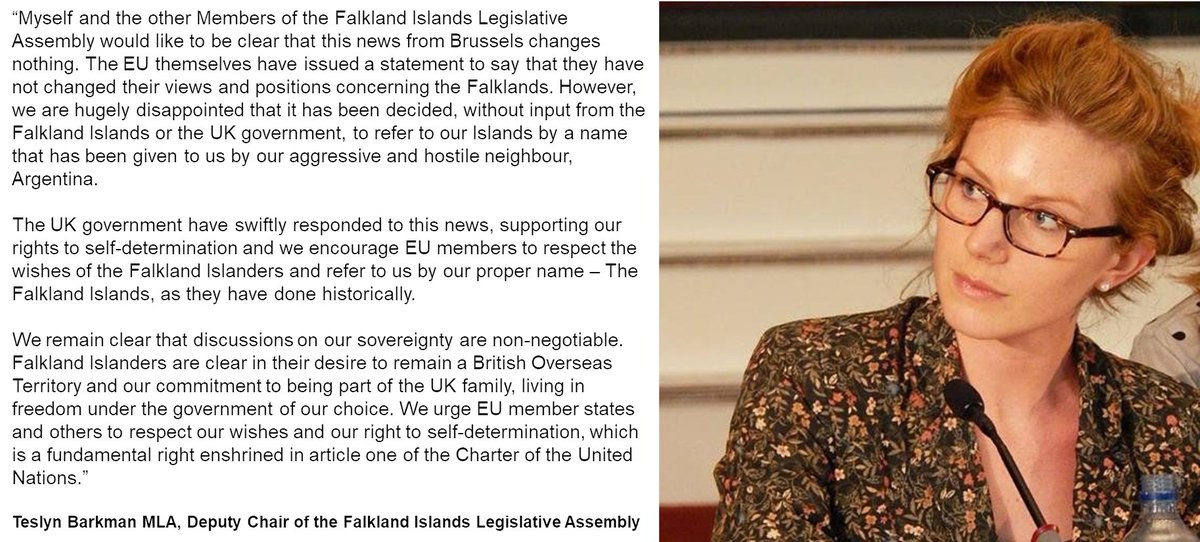
Statement from @teslynbark, Deputy Chair of the Falkland Islands Legislative Assembly, in response to a declaration agreed at the European Union and the Community of Latin American and the Caribbean states earlier this week. #Falklands#SelfDetermination
No, EU — the Falklands are British and want to stay that way
Grateful that @joshglancy took the time to visit the #Falklands and ask our people https://t.co/uWjn2hyhnn
This message addresses a crucial matter, and I invite all those who support Ukraine's cause to read it. On March 13th, I wrote a detailed message, advocating for a more restrained outlook on the then-upcoming counter-offensive and proposing an alternative strategy. Other analysts also recommended emphasizing a long-term approach as well.
As the war rages on, both sides gradually deplete their assault capabilities. Operating a large army, equipped for operational maneuvers, becomes increasingly challenging over time. Many observers tend to focus on equipment forgetting that there are humans operating it. In light of this situation, several potential paths lie ahead:
A) The Frozen Conflict Scenario: Some find the idea of a frozen conflict attractive, as it appears to offer an illusion of a problem resolved through a simple signature on paper. However, such a view is overly simplistic and fraught with difficulties for several reasons:
- Per the Constitution, neither the President nor the Parliament can cede territories of Ukraine. Territorial changes require an all-Ukrainian referendum, which is practically impossible to conduct, especially in occupied regions like Donbas and Crimea, under Ukrainian supervision. The population of Ukraine is extremely unlikely to vote in favor.
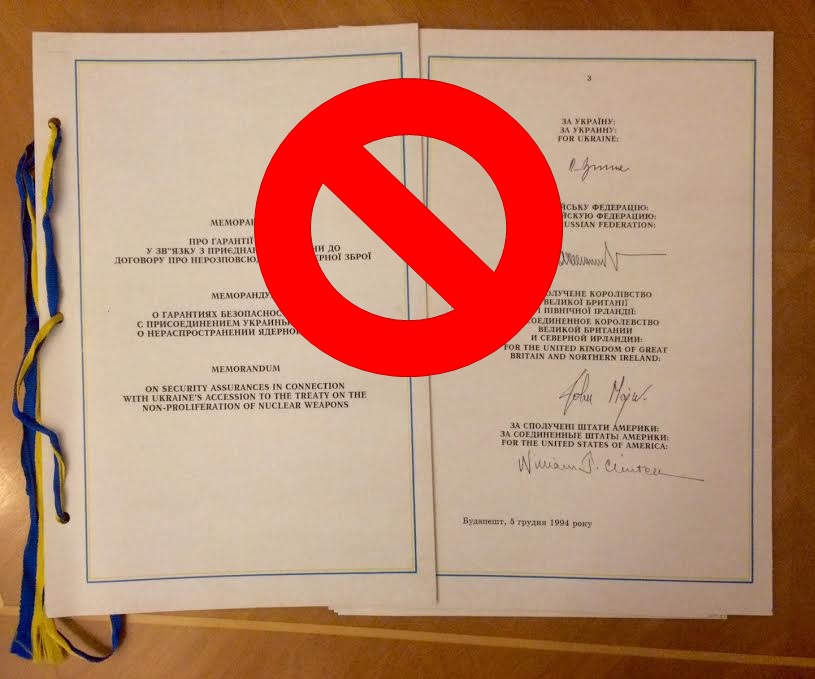
- Past experiences with negotiated ceasefires and security guarantees have shown that they are unreliable. Ukraine has been deceived by Russia in the past, losing territory despite agreements like the Budapest Memorandum and Minsk Accords. The presence of United Nations blue helmets has proved ineffective in preventing conflicts, as evident in Mali, Congo and other countries.
- The lack of tangible security guarantees or a clear path to NATO membership raises doubts about Russia's commitment to honoring any truce or peace deal. Without broader acceptance and assurance, such agreements are unlikely to be embraced by society.
- Embracing this scenario would create a sprawling, thousands-kilometer frontline perpetuating a sluggish war. As we've seen in Syria since 2011, such conflicts can endure for years, fueling instability, poverty, and escalating immigration crises. Russia could continue to exploit this leverage to further destabilize Ukraine and pursue its political objectives.
Now, let’s take a look at the second scenario:
B) Ukrainian Victory and Regime Collapse in Russia
The objective of this scenario is to induce a regime collapse in Russia through a series of continuous military defeats. Recent events, such as the Wagner Group mutiny, suggest that the Putin regime might be more susceptible to collapse than previously assessed.
To achieve long-term goals, I think that the following strategies and approaches should be applied:
- Rather than fixating on the notion of a single game-changing weapon, we all should focus on adapting production, economics, weaponry delivery, logistics, experience exchange and long-term security policies to ensure victory and a new post-war reality.
- Multiple countries must increase ammunition production to meet the demands of the front. Instances like Bakhmut, where artillery shortages resulted in avoidable casualties, underscore the need to prioritize human lives over ammunition.
- Extensive worldwide training programs are essential, extending beyond soldiers and sergeants. Emphasis should be placed on developing larger and improved combat medic, pilot, and senior officer training programs.
- We should foster experience exchange programs to share valuable combat insights with our partners. Additionally, allies can contribute their expertise, particularly in the maintenance, operation, and logistics of Western equipment.
- Our allies should assist with more Anti-Air assets, not only to challenge Russian air supremacy but also to safeguard civilian infrastructure. Investing in protection is more cost-effective than dealing with the aftermath of destruction.
- Increase pressure on russian oligarchs and elites through tougher sanctions. Address the issue of certain individuals potentially circumventing sanctions by spending money in Europe and continuing business operations through shell companies.
-We must procure additional engineering and mine-clearing equipment to bolster our capabilities. Additionally, we need more cooperation to efficiently demine liberated territories, ridding them of landmines and unexploded ordnance for the safety of people
- Demanding changes from our allies must be accompanied by our own progress. Long-term commitment deals with partners should include conditions like adopting anti-corruption laws and aligning the legal system with EU standards for a smoother transition into the European system.
- An essential step towards progress involves hiring retired Western generals and experts to enhance and later rebuild the current command structure. Their valuable insights can aid in eliminating remnants of the Soviet system within our military approach.
- To attain air parity, a mere few dozen jets won't suffice; a larger fleet and additional maintenance crew programs are imperative. Teaching pilots to operate machinery and cooperate effectively as a team is essential, but we must go beyond that. A comprehensive training program in NATO-standard combat arms is vital to ensure optimal utilization of these assets. This strategic approach will be instrumental in achieving the desired air parity objectives.
Neither option proves appealing nor straightforward and easy. Although various alternatives and potential events may arise, discussing them becomes pointless as our efforts should center around operating within the realm of likelihood rather than entertaining black swan events.
Starting this conversation within the community is vital to work towards the right outcome. I urge everyone to actively participate by liking and sharing, engaging a larger audience in the conversation. Your constructive suggestions and opinions are highly encouraged as we collectively strive for positive change.
My article on #Ukraine this week for @abcnews explores the adaptation battle, and the need for Ukraine to keep adapting faster, and better, than Russia. 1/16 🧵
https://t.co/elWBjPIs5d
A just and enduring peace is not possible until #Ukraine defeats Russian forces occupying its territory, ejects Russian forces and establishes the deterrent regime that ensures the long-term security of its territory and its people. 1/22🧵
There has been some information that instead of Sergey Surovikin the "special military operation" is, in fact, led by Colonel General Mikhail Teplinsky, commander of Russian Airborne Forces. Teplinsky is considered to be close to Surovikin and Prigozhin, and at the same time to have a certain authority in the army - FSB Colonel and former head of the Ministry of State Security of "DPR" Andrey Pinchuk.
This seems to be another part of the Kremlin's arrangements with Prigozhin for the soft settlement of the mutiny.
● There are reports that Teplinsky allegedly had a serious conflict with Chief of Russian General Staff Gerasimov, based on Teplinsky's regular refusals to follow the orders of the General Staff and his close ties with Surovikin and Prigozhin. Teplinsky was allegedly against the use of Airborne Forces troops in the Bakhmut assault, considering it an unusual task for those troops. At some point, Teplinsky scandalously brought in his resignation. letter But the conflict was hushed up in time. Teplinsky remained in his position.
● Teplinsky and Surovikin have known each other for a long time. For example, in 2014, Colonel General Sergey Surovikin, then commander of the Eastern Military District, solemnly presented the shoulder straps of Lieutenant General to Hero of Russia Mikhail Teplinsky, commander of the Combined Arms formation of the Eastern Military District stationed in the Republic of Buryatia.
● Teplinsky, like Surovikin, has authority among the army, unlike Shoigu and Gerasimov. He was responsible for the relatively successful "negative offensive" of Russian troops from the western bank of the Dnieper River - with minimal losses. Girkin-Strelkov praised Teplinsky: "However, our military commanders are different: there are those who are very well spoken about. For example, my comrades-in-arms praise General Mikhail Teplinsky very much".
● It seems that after gently removing Surovikin, who is close to Prigozhin, Teplinsky, who is close to Surovikin, was put in charge of the 'special miltary operation" as a compromise figure. This suggests that there are agreements between Prigozhin and the Kremlin to resolve the conflict and they are being implemented by the Kremlin.
● What will change in this regard? Despite the conflict with Gerasimov, Teplinsky is generally known as a man ready to carry out any orders without regard for personnel losses. Teplinsky's appointment is not only about weakening the influence of Shoigu and Gerasimov and the preservation of some influence by Prigozhin. It is also about the fact that Russian defense in Zaporizhzhia direction, it seems, will be accompanied by "meat assaults" and will be brutal and bloody.
Lots of recent discussion about the ‘slow’ Ukrainian offensives. What is actually occurring now is a steady, deliberate taking down of the Russian 'operational system'. This takes time. 1/25 🧵
This is a friendly reminder to those who believe that Russia will win the war in Ukraine because it is large, powerful, has nukes, or whatever …
Large powerful countries with nukes lose wars all the time.
1. The Vietnam War (1955-1975)
2. The Soviet-Afghan War (1979-1989) 1/