Mr Matthew William from the Cereal Rust surveillance team, PBI Cobbitty, is visiting paddocks across
Cobbitty → Wagga Wagga → Dubbo → Tamworth → Goondiwindi → Gatton. Need survey envelopes or want to discuss surveillance activities? Please reach out to him @MattWillrust ,
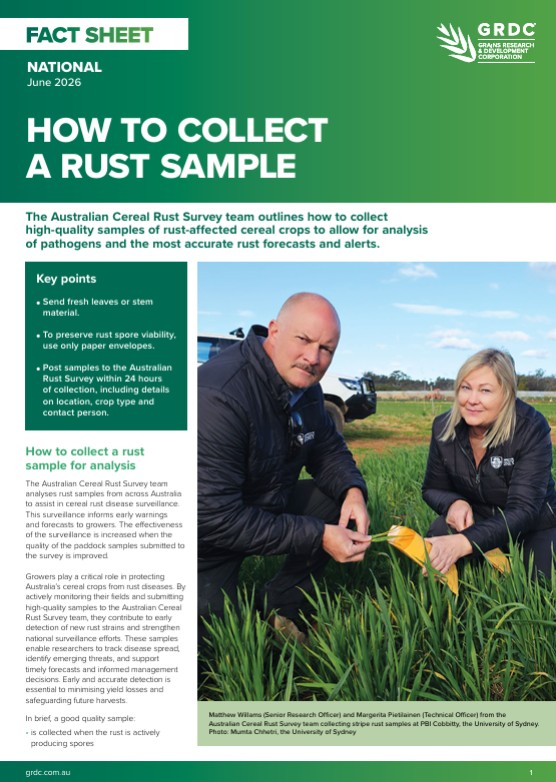
This fact sheet shows growers how to collect and send rust samples in cereal crops ▶️ https://t.co/HSwb2GDZ6g
Assessed samples show which rust strain is present, which helps to manage and reduce impact.
Key points
1️⃣ Send fresh leaves or stem material.
2️⃣ To preserve rust spore viability, use only paper envelopes.
3️⃣ Post samples to the Australian Rust Survey within 24 hours of collection, including details on location, crop type and contact person.
#GRDCFactSheet #CerealRust #RustSample #CropDisease
First reports of stripe rust coming in from sNSW. Monitor crops and send samples to rust survey for pathotyping. It’s a vital surveillance program to track and monitor rust populations and detect any new or emerging pathotypes. @NSW_AGRONOMY@s_simpfendorfer@theGRDC
Our 2026 cereal rust survey map is live: https://t.co/irgqJhhXj2
Wheat stripe rust has been confirmed at Galong, NSW, as pathotype 239. Please stay vigilant and report cereal rust to your regional pathologist.
The West Wyalong & Dubbo GRDC Disease ID workshops are a chance to get the latest information from leading grains pathologists while ground-truthing your skills in ID and management. Both soil borne and foliar diseases covered. Spots available.
Details: https://t.co/VWNR4vY183
Time running out on no charge @theGRDC national cereal stubble testing for Fusarium crown rot levels. Staff still keen with 2 week turnaround from when we get samples. Get them off before end of month to not miss out. Over 600 paddocks tested nationally so far.
We’ve heard reports of increased loose smut in northern barley crops.
Planning to retain seed?
👉 If more than 5% of crop heads show smut, source clean seed or apply a seed treatment.
👉 Ensure correct coverage when applying treatments.
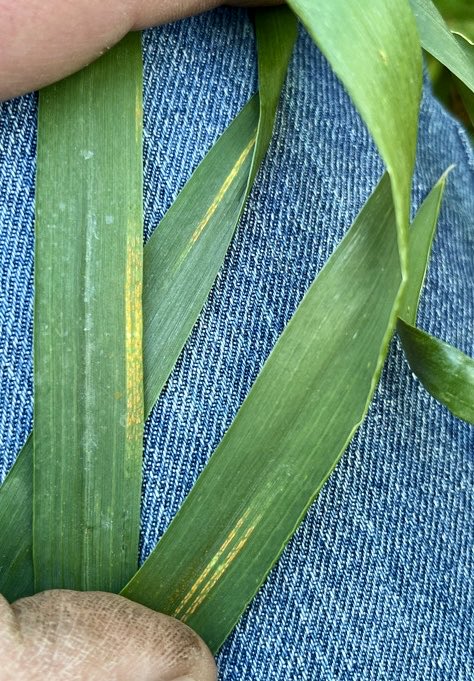
Got my favourite field day comment after explaining adult plant resistance (APR) last week (photo 1). ‘Yeah, but you are still losing green leaf area with APR!’ 🤔😤Response: then grow a variety with little or no APR (ie susceptible, photo 2). Problem solved. 🤣
NSW Gov plant pathologists are tackling a fungal threat to #barley — Ramularia leaf spot (RLS).
GRDC backs work to understand its epidemiology, with @_Ben_Ovenden (@nswagriculture) running field trials on infected crops for 2 years.
NSW DPIRD story 👉 https://t.co/kPmA9SexrG
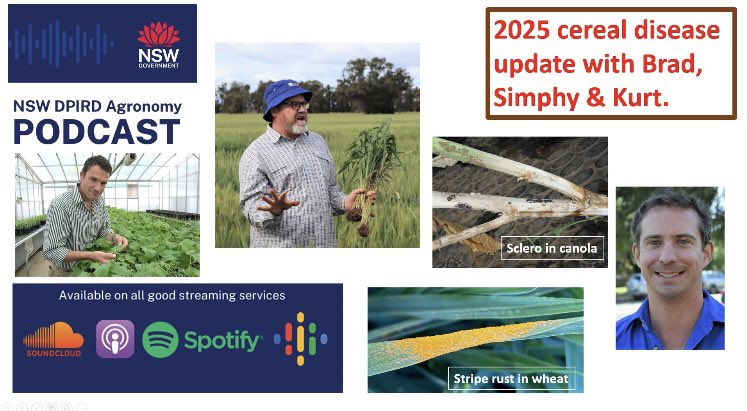
🎧PODCAST: disease update with Brad, Simphy & Kurt.
⛅️Weather impact on disease.
🚜What could be an issue from now till harvest.
🌾Bacterial blight in oats.
🟡Sclerotinia .
LINK👇
https://t.co/vbvDsFc8Bl
@GRDCNorth@theGRDC
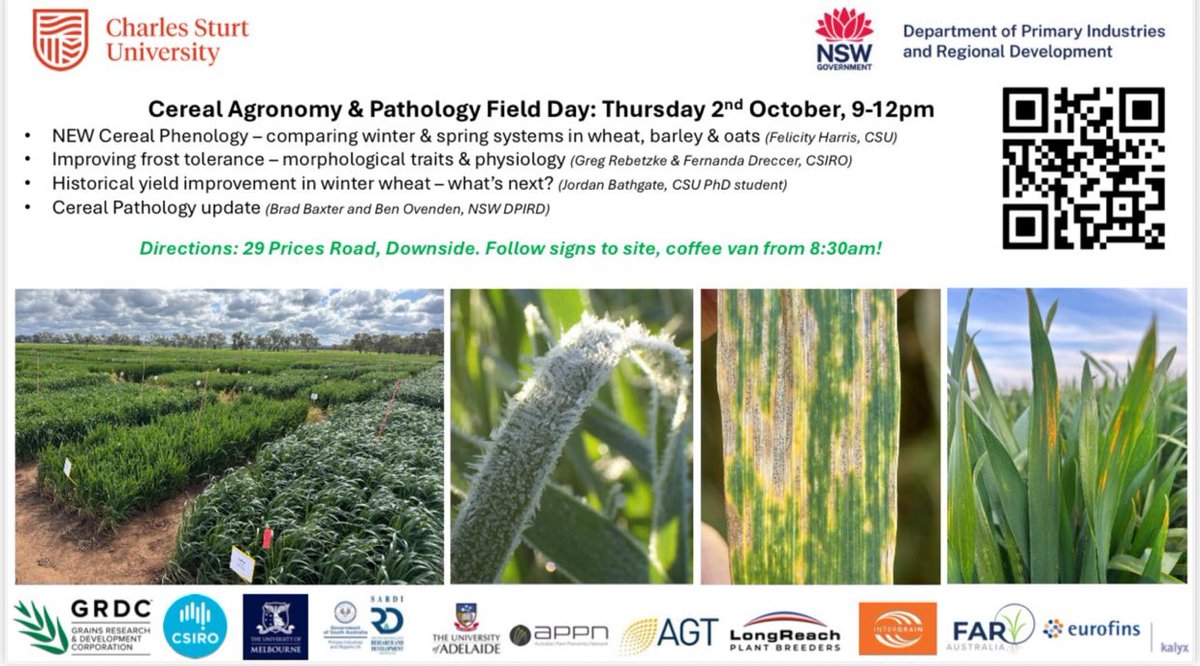
All things cereal with @CharlesSturtUni@NSW_AGRONOMY Thursday 2nd October for new cereal phenology, frost and winter wheat physiology PLUS pathology update with @BradBaxter1985@_Ben_Ovenden! 🌾
Register: Cereal Agronomy & Pathology Field Day https://t.co/O8FpcfeyoX…
https://t.co/u7Rri6vzY2
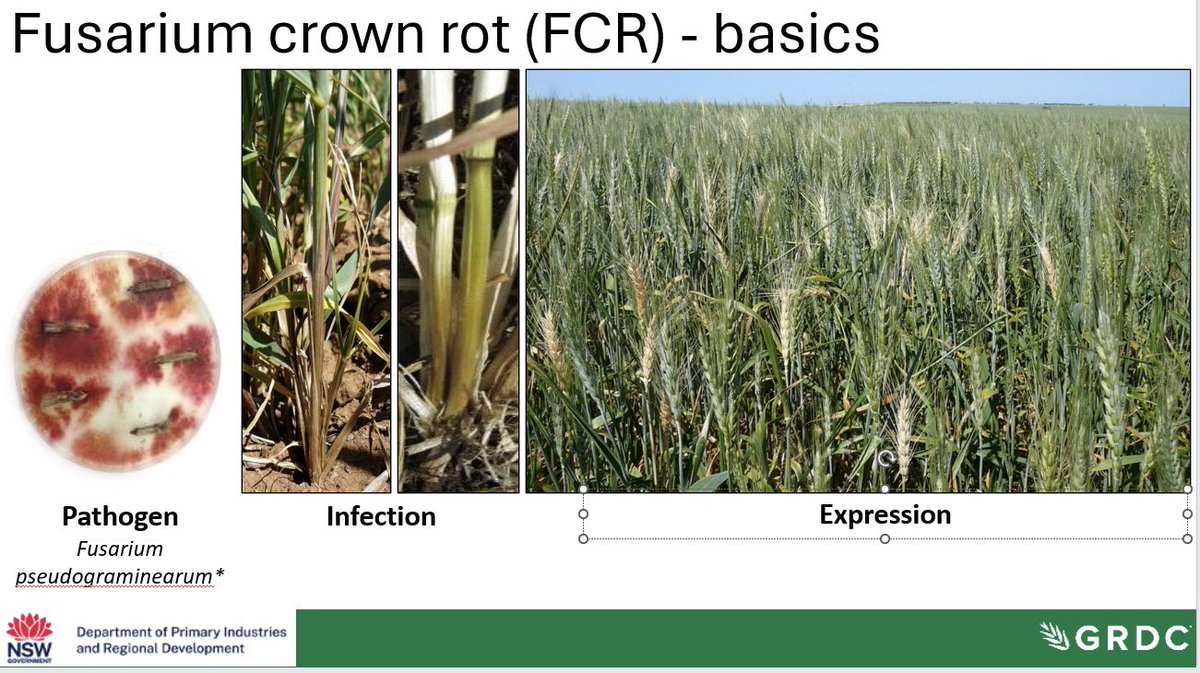
Link above to quick (<5 min) multichoice survey on Fusarium crown rot (FCR) to determine recent changes in understanding and management.
Clicking on link and doing survey would be greatly appreciated. Closes Friday 26th September. Thanks heaps!
@GRDCNorth
Join @CharlesSturtUni@NSW_AGRONOMY Thursday 2nd October for new cereal phenology, frost and winter wheat physiology PLUS pathology update with @BradBaxter1985@_Ben_Ovenden! 🌾
Register: Cereal Agronomy & Pathology Field Day https://t.co/6vUaL8OgVA
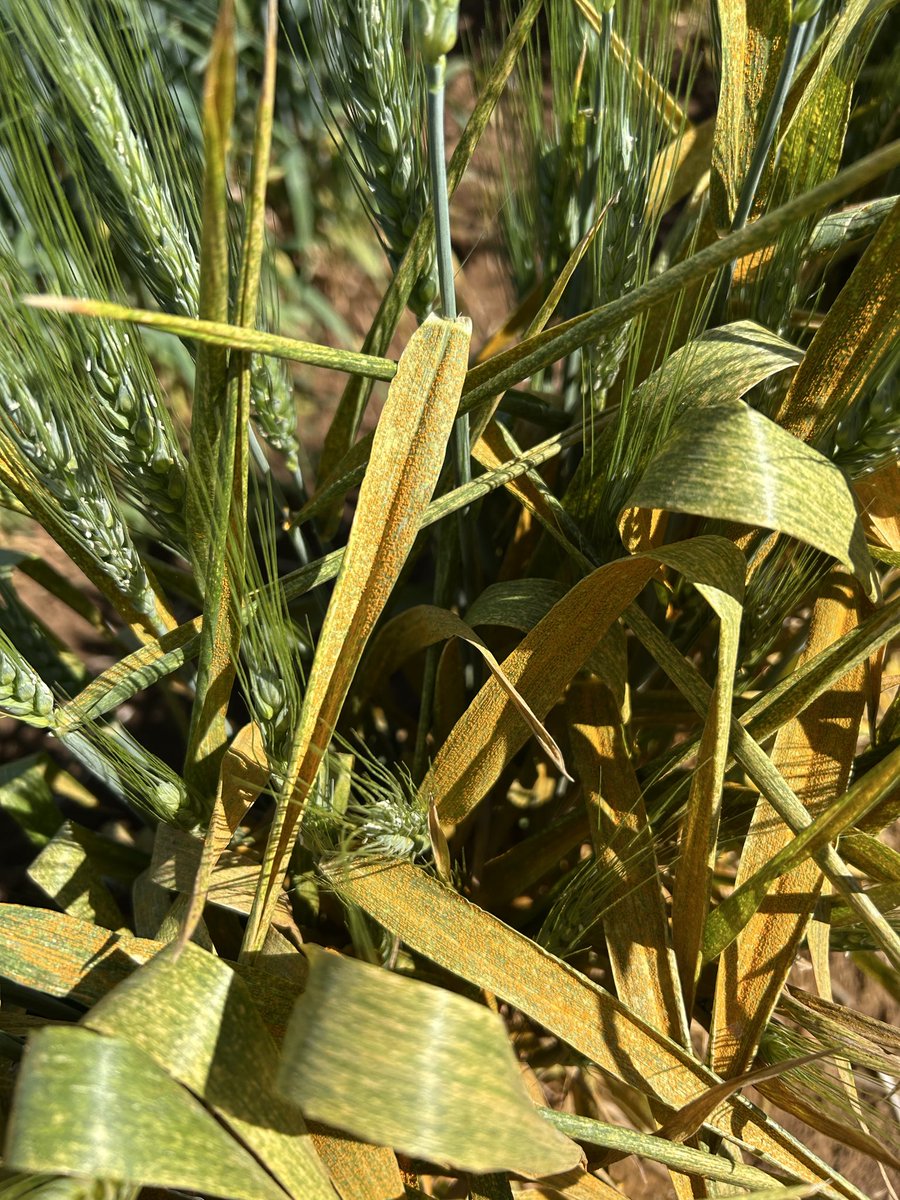
We’ve been seeing stripe rust for a few weeks now but only very isolated. Looks to be a later developing year so far. Interested to hear if anyone else is seeing any in their travels. Scepter no fert or foliar fungicide in this pic @s_simpfendorfer
AGT launches variety agronomic trait comparative ratings to aid better decision making.
AGT have launched a resource that will help farmers and agronomists make even more informed choices when it comes to what varieties to grow.
The first of its kind, the publication brings together many years of data collection by AGT’s team across Australia.
Covering major cereal crops wheat, barley and durum, and important grain legume lupin, the publication provides ratings, descriptions, and relative rankings between varieties on traits not usually provided by other industry parties. Traits include plant height, coleoptile length, sprouting tolerance, and physical grain quality characteristics, amongst others.
Read more here: https://t.co/SrB037gf5f
The trait ratings booklet can be found here: https://t.co/LIk6S1RS9r
🎧PODCAST: cereal disease update with Brad & Simphy.
Join us for our first in-crop chat about what is AND what isn’t happening in the paddocks at the mo.
LINK⬇️
https://t.co/muYsmS8tjr
@GRDCNorth@theGRDC@GRDCSouth@s_simpfendorfer@BradBaxter1985