At the age of 16, Annelise Michel began blacking out at school and would soon start convulsing, vomiting, eating spiders, and coal, and even drinking her own urine.
After undergoing 67 exorcisms, she died in 1976.
She died of malnutrition, for which her parents and priest were convicted of negligent homicide.
At the time of her death, she only weighed only 67 pounds.
Doctors came to the conclusion she suffered from Grand Mal Epilepsy and Psychosis. Her story directly inspired the 2005 film "The Exorcism of Emily Rose".
Consenting adults should do whatever makes them happy, provided it does not harm others, but a child is not capable of consent, which is why we have laws protecting minors.
It’s the movie they really don’t want you to see: #WhatIsAWoman?
Watch the explosive documentary starring @MattWalshBlog FREE on Twitter for 24 hrs. https://t.co/qDi7thCNid
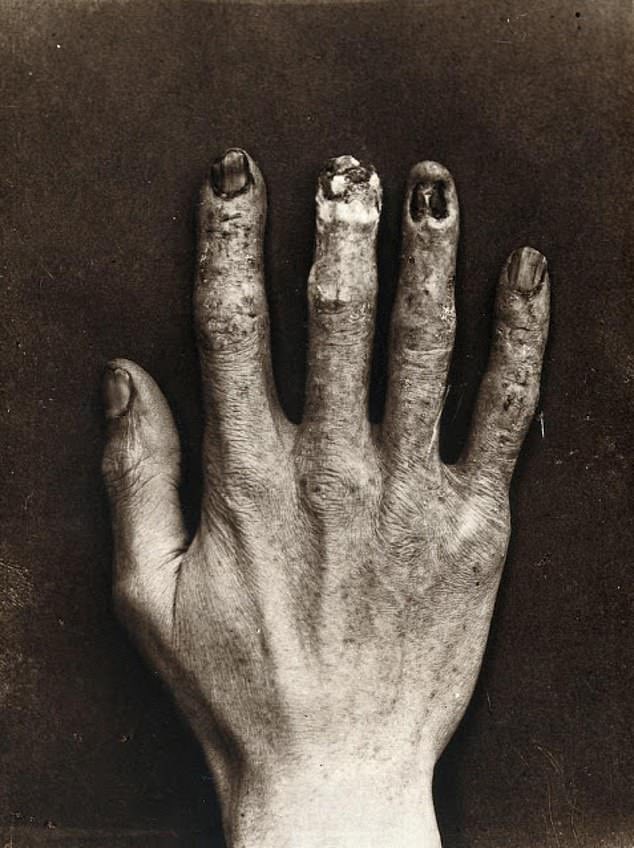
Hand of an X-ray Technician at the Royal London Hospital in the 1900s.
Physicist Wilhelm Conrad Röntgen unveiled one of the most significant breakthroughs in medical history with the discovery of X-rays. While experimenting with cathode light's ability to penetrate glass, Röntgen noticed an unexplained glow emanating from a nearby screen. Fascinated, he named this mysterious light "X-rays."
X-rays are electromagnetic waves similar to light, but with wavelengths 1,000 times shorter. Röntgen soon realized their remarkable ability to penetrate flesh while being absorbed by bones, leading to their immediate recognition as a medical marvel.
Although the usefulness of X-rays was swiftly recognized, the harmful effects of radiation were not initially understood. It was only later, as X-ray equipment operators began falling ill with conditions like cancer, that the dangers of radiation poisoning became apparent.
During the Balkan War, X-rays were first employed in battle to locate bullets and identify fractures. In recognition of his groundbreaking discovery, Wilhelm Conrad Röntgen was awarded the first Nobel Prize in Physics in 1901. Remarkably, he chose not to patent X-rays for personal gain and remained humble in the face of his monumental achievement.
The accompanying image portrays a severely damaged hand, resulting from the practice of testing X-ray machines by capturing an X-ray image of the technician's hand. At the time, the immense radiation exposure involved was not fully comprehended.
Exposure to certain levels of radiation can cause harm to the human body and prove fatal when the dosage is sufficiently high.