Nakivubo: A Living Asset, Not a Buried Hazard
======
Yesterday’s post “Nakivubo Channel: Beauty, Business, and the Science We Ignore” drew strong reactions. Many of you agreed: covering Nakivubo is denial, not development. Others raised the challenge of restoring beauty and order to what has become a dangerous, dirty scar across the city. The debate is healthy. But it reminds us that Kampala stands at a real crossroads.
And if we treasure clarity, Nakivubo’s problems will not be solved by slabs of concrete. They will only be hidden. Silt and plastic waste will still choke the flow. Methane gas will accumulate in trapped chambers, posing new hazards. Raw sewage and industrial effluent will continue to enter untreated, spreading disease downstream. And Lake Victoria will face deeper contamination, with untreated water fuelling algae blooms, poisoning fish and aquatic life, and raising the cost of water treatment. This crisis already forced NWSC to shift its supply from Ggaba to Katosi, but contamination will eventually reach Katosi too if Nakivubo’s source is not fixed. Concrete does not purify water. It only buries filth.
The smarter path is to restore Nakivubo as a living corridor. That begins upstream: treating sewage and industrial waste before they enter the channel. With cleaner flow, we can then rebuild natural defences, papyrus wetlands and green buffers that filter and oxygenate the water, reducing toxicity. These are not luxuries. They are the city’s cheapest, most effective treatment plants.
Once ecological function is secured, beauty and business can be layered in: landscaped walkways alongside the open channel, safe pedestrian bridges, shaded resting spots, and lighting to make the corridor secure. In a city where walking along main roads is unsafe, Nakivubo could become Kampala’s green artery of safety, a place to move, breathe, and connect.
Cities that bury their rivers end up regretting it. Nairobi and Lagos tried, and floods followed. Others, like Seoul with the Cheonggyecheon Stream, uncovered their rivers and gained parks, tourism, and cleaner air. Kampala should not repeat mistakes when solutions already exist. A tradition of covering the channel and reclaiming it for non-functional applications will not bring order; it will only compound the damage and multiply the consequences.
The real choice before us is simple: do we want a dead, buried trench of hidden dangers, or do we want a living corridor that cleans itself, sustains life, and gives dignity to the city? Yesterday we concluded that covering Nakivubo is denial. Today, let’s go further: restoring it is not just science, it is also beauty, safety, and business sense. Kampala deserves nothing less than a channel that lives. Let shit be cleaned. Let hydraulic structures do their work. Let's give life to aquatic creatures.
I am intrigued by this post because I presented a related paper at a small workshop last week and I will summarize my thesis in 4 or 5 posts, if you don’t mind @TimKalyegira
Remember that everything people do is a sign of some sort; there is no such thing as a gesture that does not communicate.
You will pay attention to people’s silences, the clothes they wear, the arrangement of objects on their desk, their breathing patterns, the tension in certain muscles (particularly in the neck), the subtext in their conversations—what is not said or what is implied.
All of these discoveries should excite and impel you to go further.
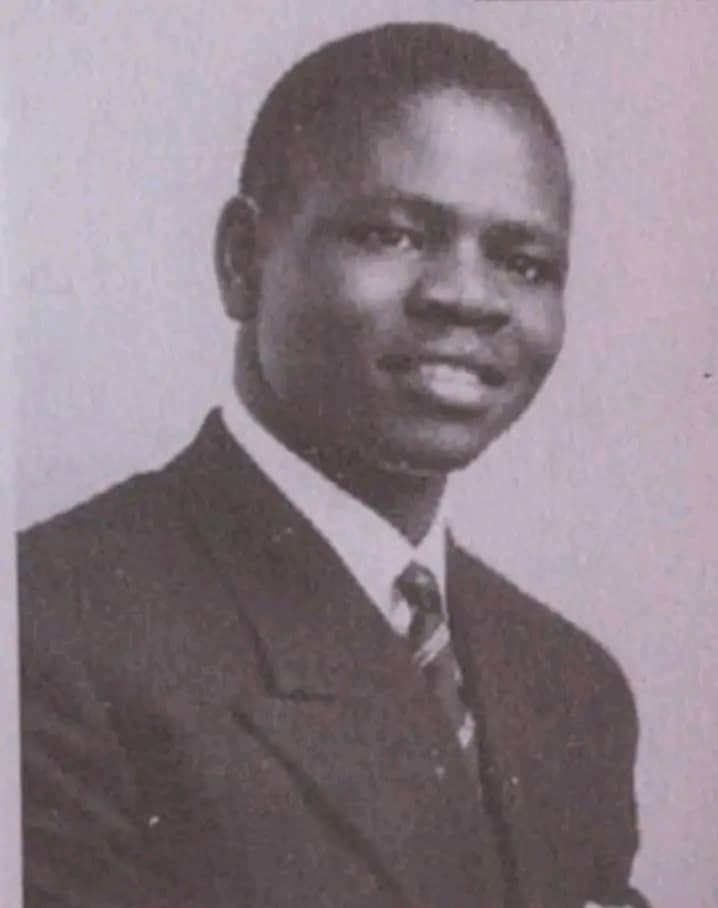
Eng.Martin Wangutusi Wambwa
was Uganda's first black Engineer and Mbale's first town Engineer.
Eng. Wambwa was born on 20th December 1928,the first child of Mr.Eriya Wangutusi and Teresa Nabifo Khisa. He was named "Wambwa" after his grand father,the founder of the Busibalango Clan and was baptised on 24th January 1929 in Nyondo.
He started school at a church parish aged 10 in 1938 and eventually sat his Primary Leaving Examinations in 1944. He later joined St.Peter's College Tororo and completed his Junior Secondary School in 1946. Eng. Wambwa eventually sat for his Cambridge examinations at an Indian Secondary School in Jinja in 1949. He then moved to thè engineering school in 1950 where he eventually graduated in 1954 as a full engineer.
His first posting was in Fort Portal where he worked closely with the District Administrator to design the town. He was later tasked to find the shortest motor route to open up the rich coffee area of Bulago and Buginyaynya. Engineer Wambwa is the brain that surveyed and designed the current road to Bulago.
He was then posted to Kampala City Council as City Engineer before being transferred to Mbale as the town's first Engineer.
He also fixed the telephone antenna on Tororo rock,worked on the Nagongera power line after Independence and was project manager for construction of the Bomas(Present day DA) and the staff houses around it.
He is credited with taking many of the images of Mbale in the 1960s and 70s that circulate on social media.
Some of his notable achievements was building of dual carriage Nile avenue and Kitante road just before 1975 OAU conference. He also designed the northern bypass in the 60’s and only implemented in the 2000’s.
Engineer Wambwa unfortunately passed away on January 7th 2019 at the age of 91.
A True Ugandan Hero!
The more you know, the more you realize how much you don’t know. The less you know, the more you think you know everything. Knowledge is humbling. Ignorance is arrogant.
The 'Foolish Man' and his mega refinery complex
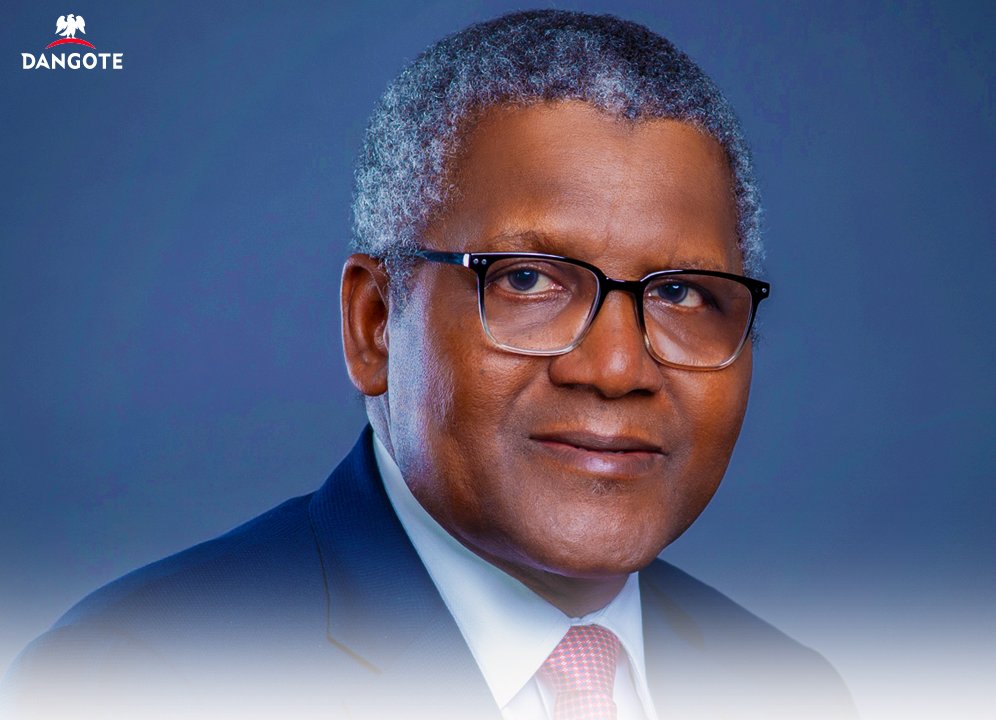
Some years ago, Aliko Dangote, Africa's richest man invited media leaders to a luncheon at then Protea Hotel in Ikeja to mark his 55th birthday.
Some of his guests sat around him at the centre table. They chatted freely. Discussions about our country, the state of the economy soon veered into discussing the absurdity of our country, being a major crude exporter, and also a major importer of refined petroleum products. Our colleague from a major business paper said the local conditions were unfavourable to any investor who wanted to build a refinery. He then made a remark that I believe he would live to regret: "Only a foolish man will build a refinery in Nigeria".
Aliko who had listened to all our business and political pontifications, interjected: "I am that foolish man". A pin drop silence enveloped the table as he dropped the unexpected news: "My company has just decided to build a refinery in the country. But we are doing it big". Those were his exact words, as the multi-dollar billionaire told us he was willing to spend close to $9 billion on the project.
The media big man became speechless. The rest of us caught the contagion of being flummoxed as well, as Aliko expatiated on the project. He said it will be a petrochemical complex. As the project was still on the drawing board, he did not tell us it will be the biggest refinery in the world, capable of processing 650,000 barrels of crude daily. All the hint he gave was that it will be 'big'. Our takeaway was that it will be big like Aliko's involvement in cement, sugar, pasta and other businesses.
He didn't say it will include a fertiliser plant and a power plant that can supply enough electricity to Nigeria's South West, excluding Lagos.
Initially billed for Ogun State, the Dangote Petroleum Refinery surprisingly shifted location to Lagos, just opposite the creek separating the two states. Governor Dapo Abiodun may want to probe his predecessor, Ibikunle Amosun, why he allowed the complex to move to neighbouring Lagos.
The gigantic project is now sitting in all majesty in the Lekki Free Trade Zone in Ibeju-Lekki, covering a land area of approximately 2,635 hectares, seven times the size of Victoria Island.
The complex is the world’s Largest Single-Train 650,000 barrels per day Petroleum Refinery with 900 KTPA Polypropylene Plant.
It comes with a 435 MW Power Plant, which will be able to meet the total power requirement of Ibadan DisCo of 860,316 MWh covering five States including Oyo, Ogun, Osun, Kwara and Ekiti.
The refinery, according to its fact sheet, can meet 100% of the Nigerian requirement of all refined products, including Gasoline,Diesel, Kerosene, and Aviation Jet.
It will also be able to produce surplus of each of these products for export.
Designed for 100% Nigerian Crude, the refinery has flexibility to process other crudes. No wonder it is located near the sea shore.
Today President Muhammadu Buhari commissioned the gigantic petrochemical complex.
Just as we rejoice with Aliko Dangote and the Dangote Group family, we need to give kudos to the Buhari administration for ensuring that the complex comes to fruition, by ensuring that it was not starved of needed foreign exchange and taking a stake in it.
For Aliko, all is well that ends well. The complex will bring to an end our country's many decades of shame, for being unable to refine its crude and having to depend on importation, wasting scarce forex.
The 'foolish man' of 11 years ago has demonstrated once again that he is a man of wisdom, a peerless shrewd investor who sees clearly the 'bigger picture', when his compatriots are bogged down by parochialism and immediate monetary gains.
Educate yourself about things. Study hard what interests you the most. Don't worry about what others think of you, that's none of your business. Train your mind to think, doubt, and question. That's how you grow. 🧠
SEMBULE IS GONE...
They hatched the bank in November 1984 but the situation in Uganda was far from conducive.
When NRM took charge, the bank blossomed and this is OwanaPaedia's salute to the fallen pioneer...
#Owanapaedia Archives
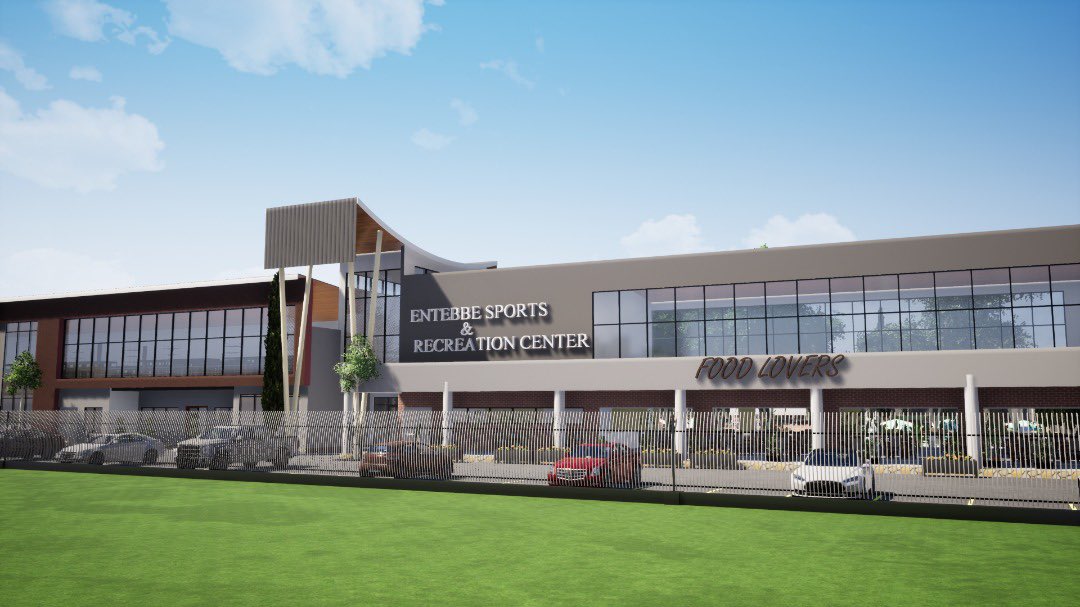
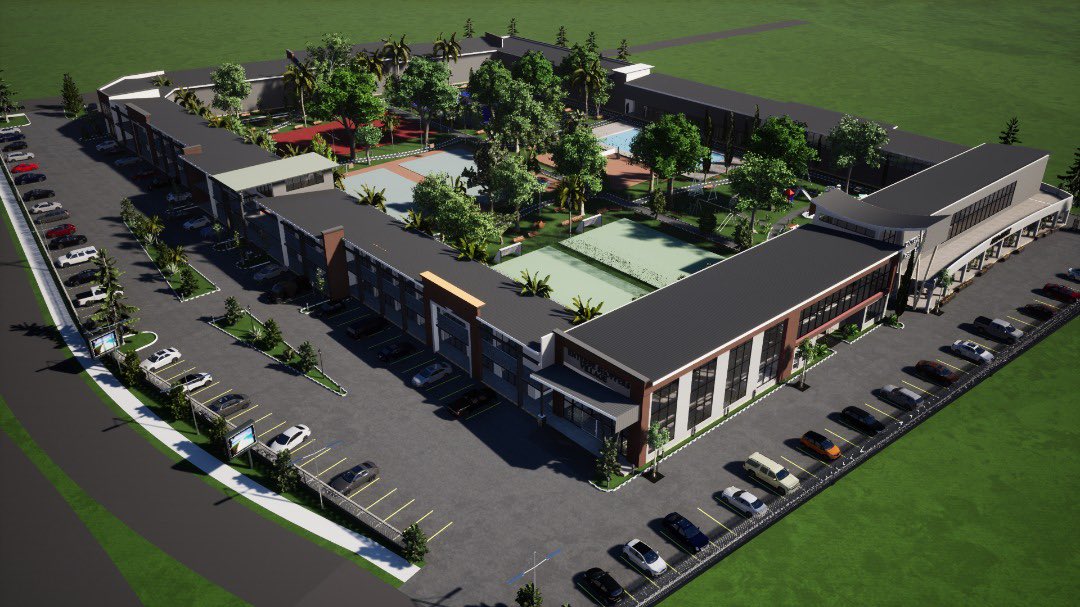
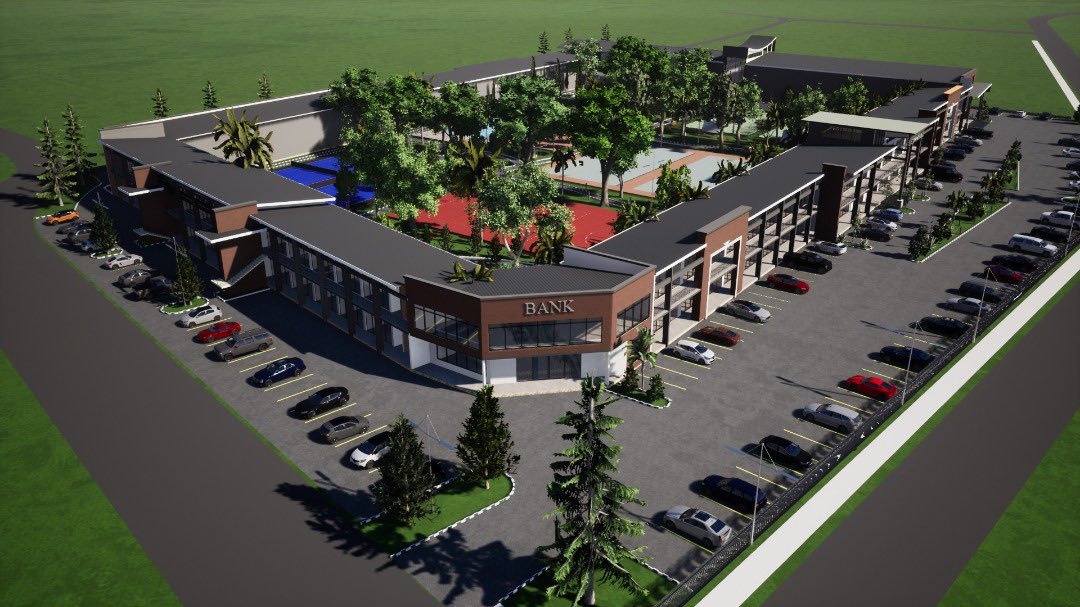
ENTEBBE SPORTS AND BUSINESS PARK ESBP
In line with the DI Concept of Living Stadiums, our Next Project will be in Entebbe City.
The ESBP will have various indoor sports activities like Basketball Netball Volleyball Tennis Swimming. Get Ready to own a Shop and become Landlord.
When you seek help, it doesn't mean that you're weak.
You just lack information about a particular subject or situation & would want clarity.
You have nothing to lose but if you let your pride & low self-esteem get in the way, you may as well have everything to lose. #AskKirubi
“Third World is a state of the mind and until we change our attitude as Africans, if there is a fourth, fifth and even sixth world, we will be in it.” - Patrick L.O. Lumumba.