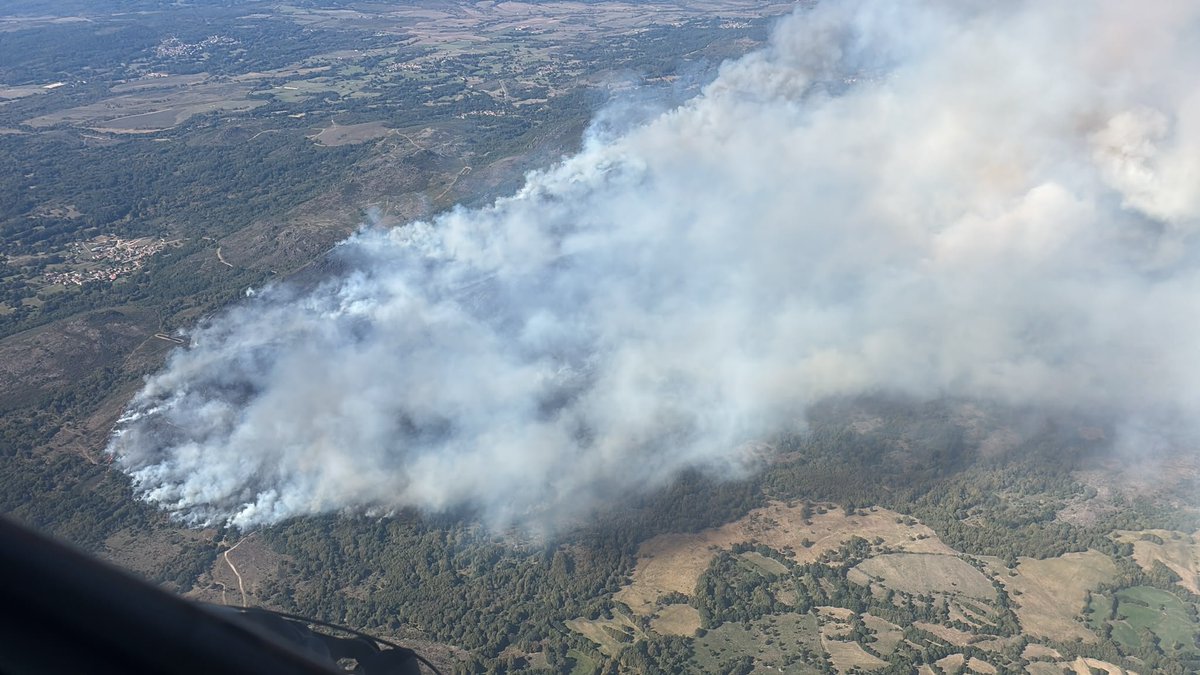
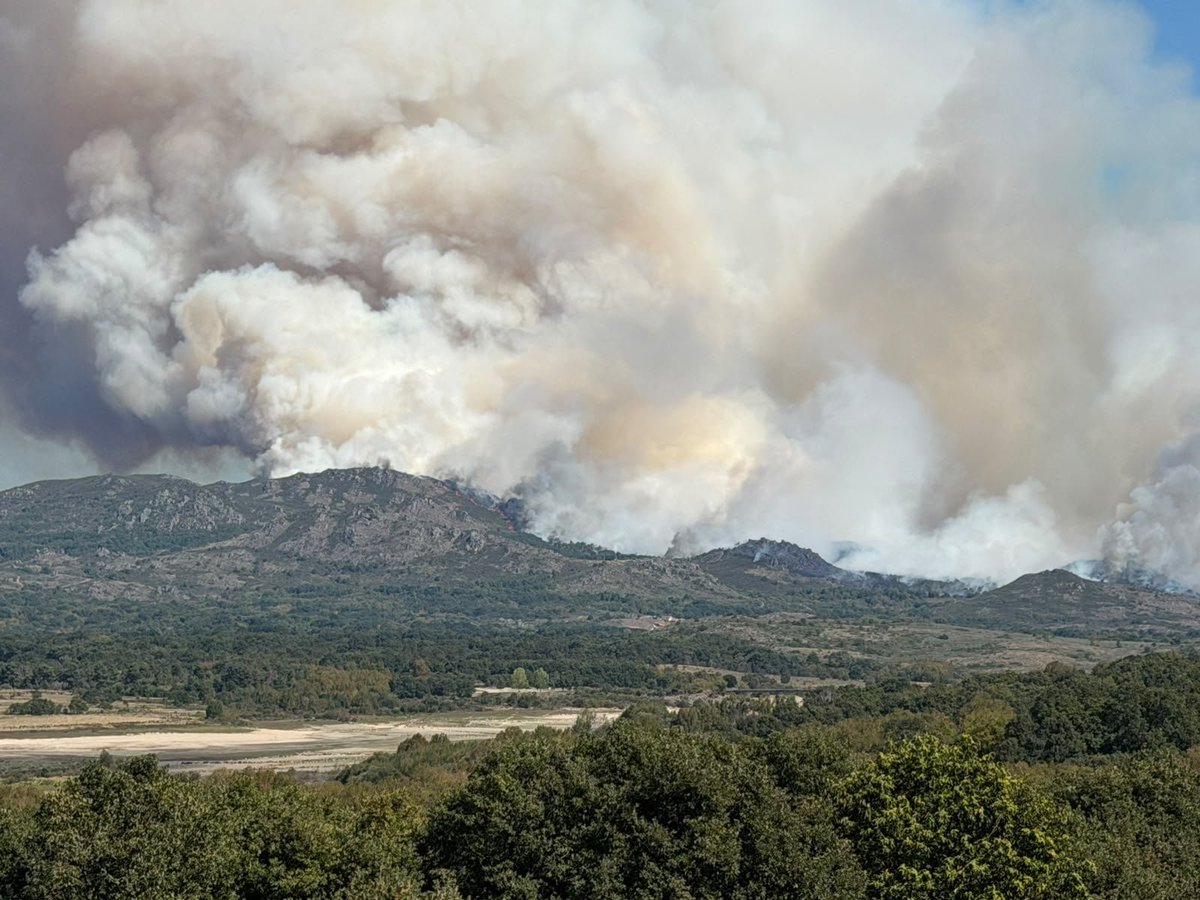
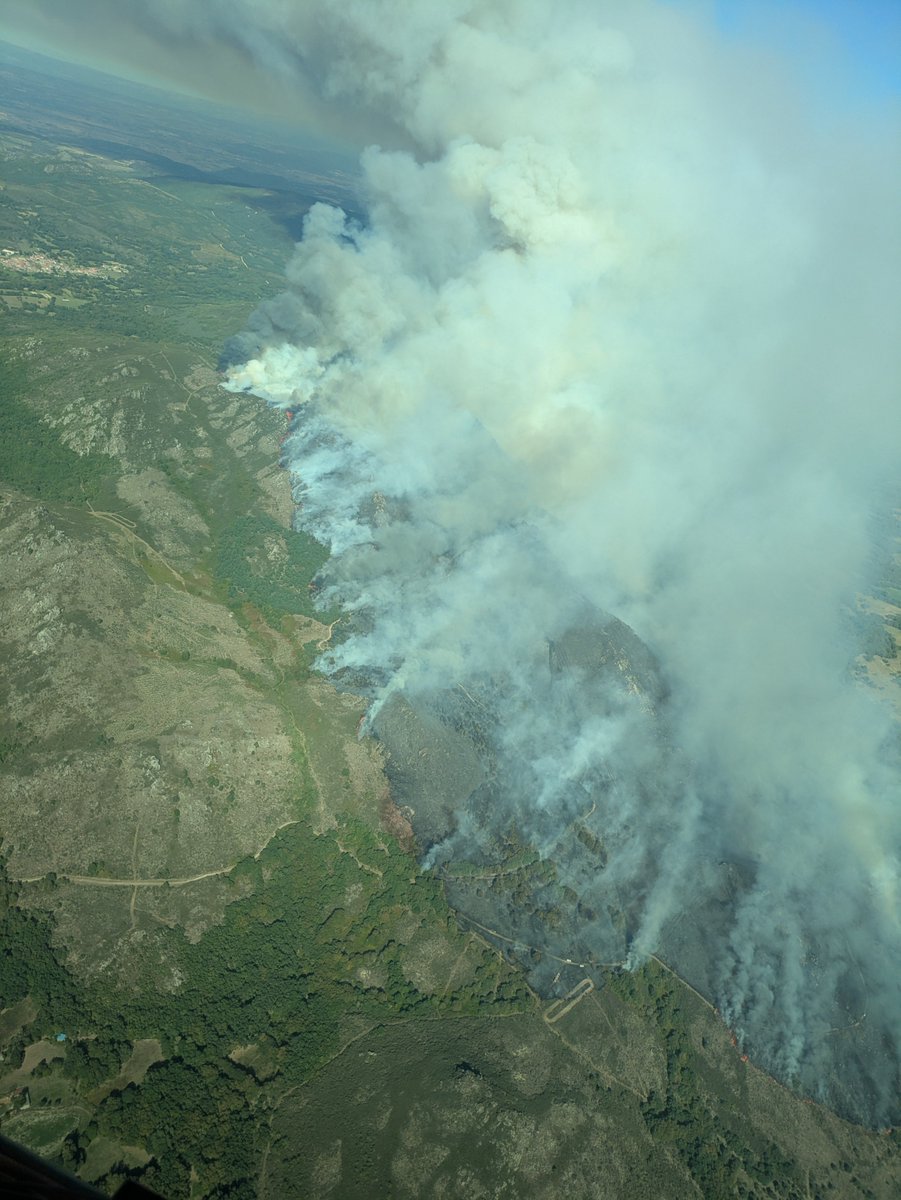
19:50🎥#IFElRaso#Ávila@brif_iglesuela se retira a su base después de trabajar en la extinción de este incendio que así queda gracias al trabajo conjunto de todos los medios que han intervenido!
Somos #BRIF de @mitecogob
🚨5️⃣5️⃣ incendio 🔥 de la campaña de extinción para #Brif Laza. Nos encontramos trabajando en incendio de Porto Do Son, un equipo formado por 18 bomberos forestales 🧑🚒 y dos helicópteros 🚁🚁.
17:20🎥#IFElRaso#Ávila
El equipo @brif_iglesuela ya trabaja sobre el terreno en consolidación de perímetro en flanco derecho con sus motosierras y herramientas manuales.
Somos #BRIF de @mitecogob
In 1985, Carl Sagan sat in front of the United States Senate and described the weather of 2026.
Not as prediction. As physics.
Sitting across from him was a junior senator named Al Gore — who would later win the Nobel Prize, the Oscar, and build a climate investment fund worth over $36 billion repeating almost word for word what Sagan said that afternoon.
Sagan opened with Venus.
470°C surface temperature. 900°F. Hot enough to melt lead.
"Not because it's closer to the sun," he told the senators. "Venus actually reflects more light than Earth. It should be cooler."
The reason it wasn't: carbon dioxide. A runaway greenhouse effect that turned a planet nearly identical to Earth into a furnace.
Then he looked at the committee and said: we're running the same experiment here.
The senators nodded politely.
Then they went back to approving fossil fuel subsidies.
What Sagan told Congress in 1985:
Global average temperature will rise several degrees by mid-to-late next century.
Local climates will redistribute.
Glaciers will melt. Sea levels will rise.
And the problem cannot be solved by any single nation — not even if the US and Soviet Union agreed on everything — without China.
China, he said, had the world's largest coal reserves and was about to industrialize.
Every sentence was correct.
He also said something that got almost no coverage at the time:
"The initial stages of global temperature increase — one region might benefit while another suffers."
That is the sentence that explains the last 20 years of geopolitics.
Canada's growing season expanding while Pakistan floods. Russia opening Arctic shipping lanes while Bangladesh disappears. The politics of climate was never going to be clean because the physics wasn't distributed evenly.
Sagan mapped all of it from first principles, in a Senate hearing room, 41 years ago.
The part nobody quotes:
He didn't say stop burning fossil fuels immediately.
He said: "That has such severe economic consequences that no one will take it seriously."
So he proposed something else — remove government subsidies from fossil fuels, accelerate solar, develop safe nuclear fission, and begin building international frameworks before the crisis made them impossible.
That's not an environmentalist's speech. That's an economist's.
Carl Sagan wrote 20 books. Cosmos was watched by 500 million people across 60 countries. He won the Pulitzer. The ideas in this testimony became the scientific foundation for a carbon market now valued at over $800 billion annually.
He said one line at the end that nobody remembers.
"We are all in this greenhouse together."
In 1985, that was poetic.
Now it's a weather report.
The full testimony is free on YouTube. 17 minutes. Almost nobody outside of climate policy circles has watched it as a complete predictive model — laid out in plain language before any of it happened.
⚠️🔴 AVISO ROJO | Lluvias torrenciales en Campo de Cartagena y Mazarrón.
➡️ Se han superado 60 l/m² cuadrado en una hora. Podrían repetirse chubascos de esta intensidad en la zona. Aviso en vigor hasta 11:59.
➡️ Peligro extraordinario. Sigue recomendaciones de Protección Civil.
⚠️ ATENCIÓN
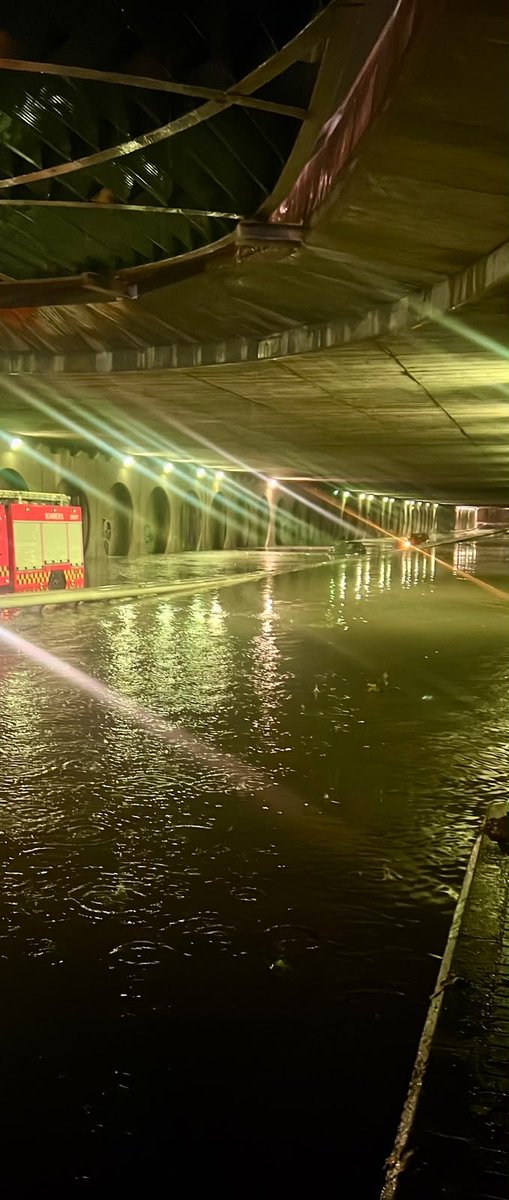
En estos momentos permanecen cerrados la mayoría de los túneles de València y del área metropolitana.
🚫 Insistimos: evitad circular por túneles y zonas inundables.
🙏 Máxima precaución y seguid las indicaciones de los servicios de emergencia.