Inadd uli ako ng ex ko, nasa states na pala sya. Naisip ko, kung hnd kami naghiwalay, natuloy kaya sya? Natutuwa ako para sakanya, ang saya nya ngayon. Tadhana nga naman..
These are the Pro-China narratives that some groups are spreading:
1. CLAIM: Claiming that speaking up against China's aggression in the West Philippine Sea will lead us into a war.
FACT: Exposing China's aggression is not inciting war. By keeping our political leaders and countrymen aware of China’s violations of international law, we are safeguarding our country from political manipulation and disinformation. Also, by calling out China’s bad behavior at sea, we highlight which party is really responsible for raising tensions and increasing the likelihood of a kinetic conflict.
2. ARGUMENT: Arguing that our efforts for transparency are solely influenced by the United States.
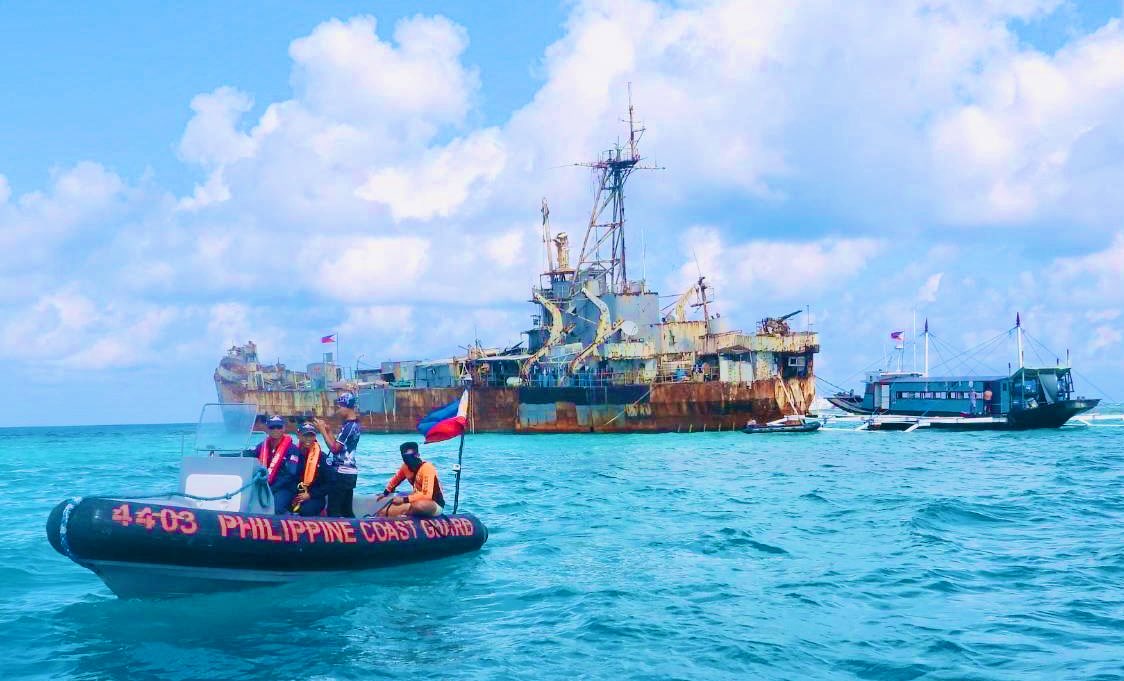
FACT: Our transparency efforts are driven by our own national interest - the protection of the Philippines’ maritime rights. The Philippine Coast Guard and other government agencies are utilizing their own resources to document and monitor Beijing's aggression in the West Philippine Sea. For instance, the PCG has chosen to embed Filipino news journalists to ensure accurate and unbiased reporting of the events they witness. The PCG does not have editorial control over what these journalists report. Our dedication to transparency is independent of any external influence, and we prioritize the dissemination of factual information to the public.
3. ACCUSATION: Accusing those who are critical of China as anti-Filipino and pro-US.
FACT: Experts and government officials who are critical of China's actions in the West Philippine Sea are driven by their dedication to the Philippines. Their arguments are rooted in international law, such as the UN Convention on the Law of the Sea, and the Philippine Constitution. These individuals take principled positions based on defending our national interests. Instead of offering solutions that prioritize Philippine national interests, they resort to labeling patriotic Filipinos as pro-US in an attempt to discredit them. This aligns with China's narrative that the South China Sea is solely a US-China issue, disregarding the agency of claimant states and the importance of defending our maritime rights based on international law.
Ironically, these individuals claim to be pro-Filipino while promoting Chinese narratives and even contradicting factual reports from Philippine authorities. Their intention is to manipulate public opinion and divert attention from the issue of Chinese aggression. Their strategy revolves around discrediting both the message and the messenger.
Ultimately, their proposed solutions amount to accommodating China's unreasonable and illegal claims, rather than seeking fair and just resolutions that safeguard our national interests. @JeffreyOrdaniel
Sobrang makakalimutin ko na, to the point na nakakaapekto na sa buhay ko. Mga kompormiso, promiseo at nagkakautang sakin nakakalimutan ko. Ang bata ko pa. Hayup
If you are a Filipino, whether in government or private sector, regardless of your politics, defending and making excuses for China's aggressive behavior should deem you unpatriotic, and a traitor to the Philippines and to our people. Given current developments in the West Philippine Sea, it is important to show loyalty to country.
While I recognize freedom of speech as an important right guaranteed by our constitution, it should not be misused as a means to justify unpatriotic actions by acting as China's mouthpiece. All Filipinos should unite in calling out China's aggressive and unlawful actions in the West Philippine Sea. Together, we should stand united in protecting our nation's interests and pursuing a peaceful resolution to the issues.
Dahil sa West Philippine Sea ang yaman nito ay para sa Pilipino!
To think na lahat ng pinagdadaanan ko ngayon eh kinaya ng parents ko nung mga bata pa sila. Withouth anything literal, pati technology(na super big deal satin). Mapapatanong ka, pano kaya ko magsusurvive??
Sanju Bhagat was born in Nagpur, India, in 1963. He had a normal life until his late 20s when his abdomen began to protrude as if he was pregnant. It kept increasing until he couldn't carry out his daily activities.
Things got out of hand in 1999 when his breathing almost stopped due to his extremely enlarged abdomen which didn't give his chest room to take in air; he was rushed to the hospital. At the hospital, the doctors believed he had a massive tumor growing inside of him and worked him up for surgery.
To their utter amazement, when they opened him up, they saw a baby in his stomach. It appeared Sanju didn't have a tumor, he had his unborn brother growing inside of him for more than 35 years. In medical terms, this was a rare case of fetus-in-fetu.
Basically, what happens is that one twin doesn't fully separate from the other during development, and ends up growing inside of the other twin's body. The twin that's growing inside is usually very small and undeveloped, and is called a "parasitic twin.”