Department of Biosciences and Bioengineering, IIT Bombay, India. This is a page curated by a group of faculty members. Tweets & RTs are not endorsements.
Fbxo36 is usually active in reproductive tissues, but Preeti also saw it appear in prostate and testicular cancers, suggesting it may play a role in cancer biology. Her work revealed Fbxo36’s structure and its possible link to cancer. #Fbxo36#Proteostasis#ProteinCancer (4/4)
Preeti defended her PhD thesis titled "Unraveling the Structure and Putative Function of Fbxo36 in the SCF Ubiquitin". Many Congratulations to Preeti and her guide Ashutosh Kumar @NmrAshutosh@iitbombay@iitbmonash#theBSBEgrad (1/4)
She worked out its 3D structure and found it has three main parts: one that anchors Fbxo36 to the cell’s machinery, one that helps it recognize target proteins, and one that keeps it stable by pairing with another copy of itself. (3/4)
Ankita Joshi defended her PHD thesis titled "Elucidating the functional significance of two novel CTG clade-specific proteins of the RSC chromatin remodeling complex in Candida albicans". Many Congratulations to Ankita and her thesis advisor Santanu Kumar Ghosh @iitbombay (1/3)
Candida albicans is a fungus that can cause deadly infections, and drug resistance is a big problem. Her research showed that Nri proteins (proteins that control fungal growth) are key for the fungus’s survival and ability to cause disease. (2/3)
Dr. Khan presented her data on in vitro screening and validation to develop lipid nanomaterials for mRNA delivery to various target tissues. #mRNA#LipidNanoparticles (4/4)
Dr. Amreen Khan, an alumnus of IIT Bombay, delivered a seminar on screening of lipids to formulate lipid nanoparticles for the delivery of mRNA. @iitbombay#IITBBSBESeminars (1/4)
Interestingly, Dr. Khan showed that lipids can determine tissue tropism and the release of loaded material, both of which are important aspects of drug delivery. (3/4)
Using experiments and computer simulations, she discovered that these parasite proteins are built differently from human ones, showing how shutting down the parasite’s gatekeepers could lead to new, safer treatments. #ToxoplasmaResearch#ParasiteBiology#DrugDiscovery (4/4)
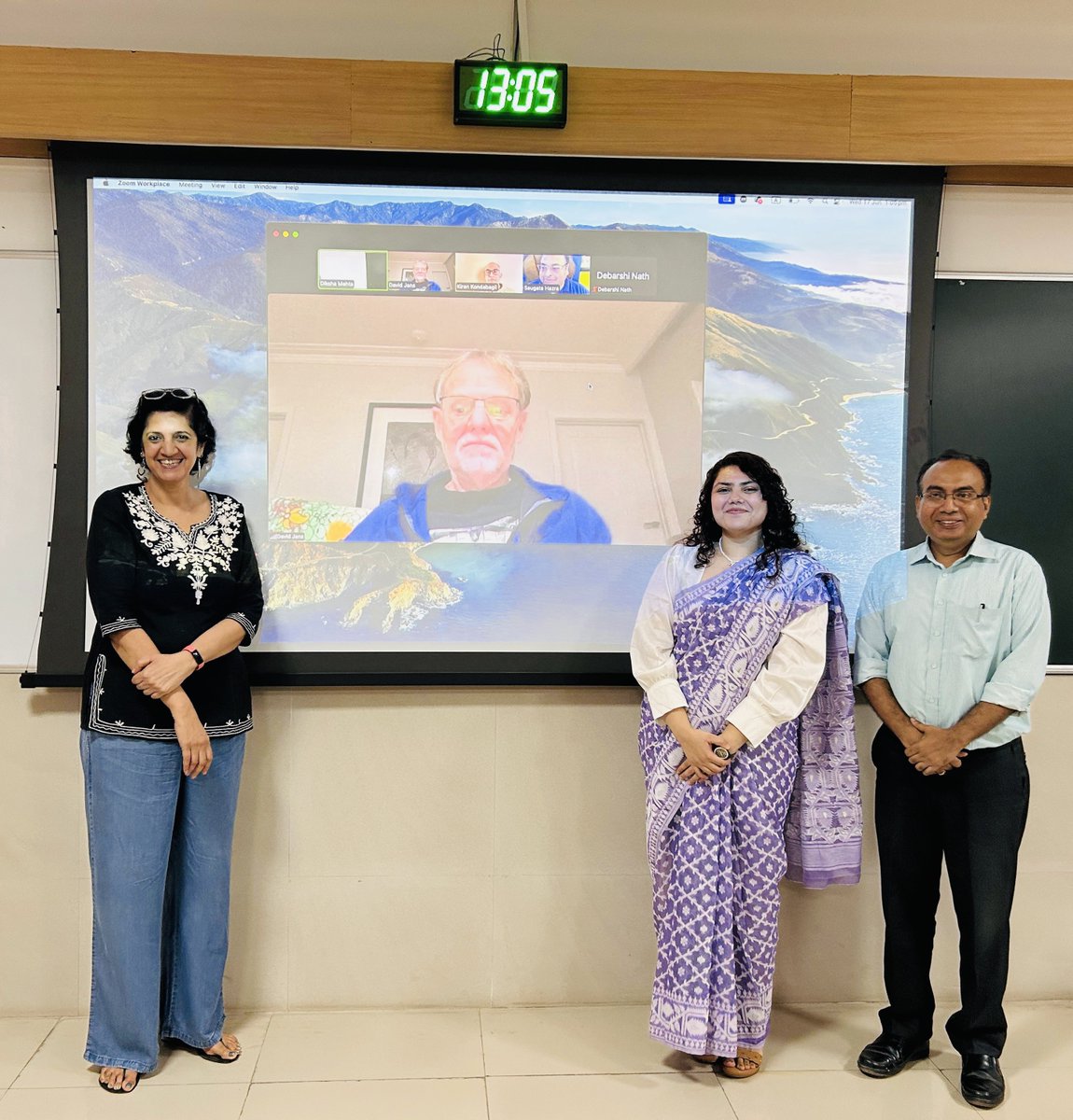
Diksha Mehta defended her PHD thesis titled "Molecular Characterization of Importin α and β1 from the apicomplexan T.". Many Congratulations to Diksha and her thesis advisor Swati Patankar @patankar_lab@iitbombay@iitbmonash#theBSBEgrad (1/4)
She focused on two proteins, TgIMPα (Toxoplasma gondii Importin Alpha) and TgIMPβ1 (Toxoplasma gondii Importin Beta 1), that work together like a security system: TgIMPα checks the “ID” of proteins, and TgIMPβ1 escorts them inside. (3/4)
Sanket's research work provides novel insights into the mechanism of pore formation by toxins and could aid in the development of strategies to fight against the diseases caused by pathogenic microorganisms.
#CryoEM#StructuralBiology#PoreFormingToxins#MolecularDynamics (5/5)
Sanket Patil defended his PHD thesis titled "Understanding the structural basis of pore formation by toxins". Many Congratulations to Sanket and his thesis advisor Prasenjit Bhaumik @iitbombay#theBSBEgrad (1/5)
He also investigated the membrane interaction and pore-formation dynamics of a malaria parasite pore-forming protein using molecular dynamics simulations. (4/5)