Nigeria's civic tech organisation, raising the standards of transparency, citizen engagement & accountability most especially in public finance. #AskQuestions
🗣️ Fellow Nigerians,
If there’s one thing you should pay attention to today, it’s the 2026 budget.
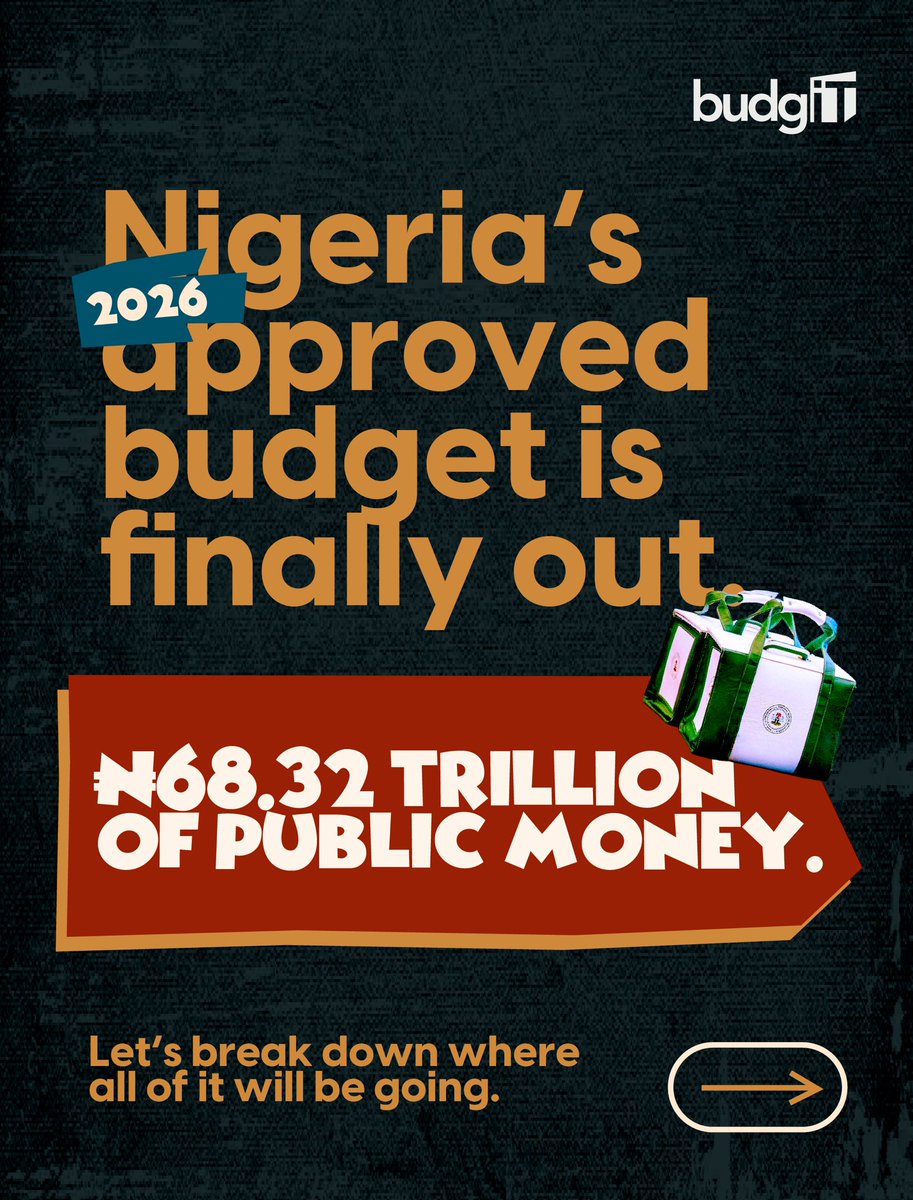
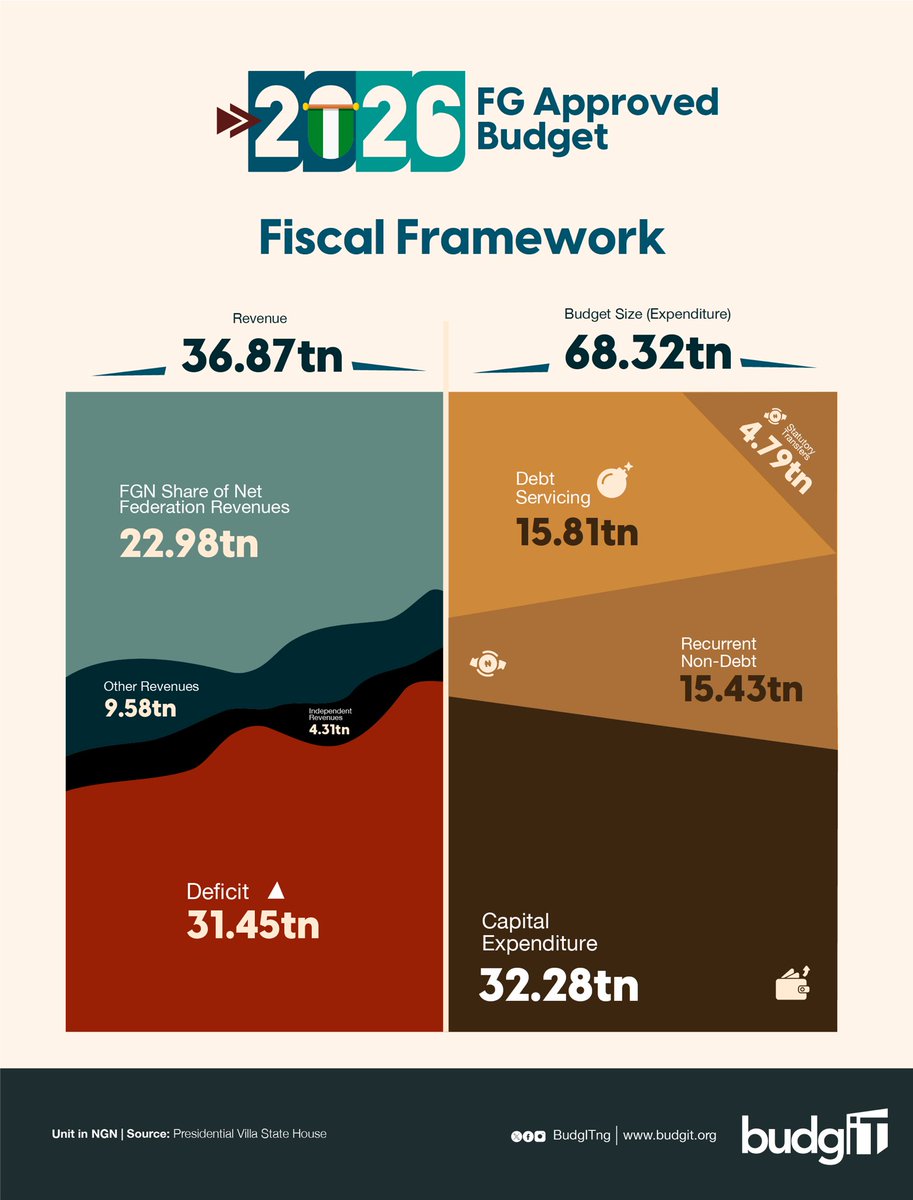
₦68.32 trillion has been proposed. That’s public money. Our money.
Here’s the breakdown:
📌 ₦32.29tn — Capital projects
📌 ₦15.81tn — Debt servicing
📌 ₦15.43tn — Running government
📌 ₦4.79tn — Transfers to agencies
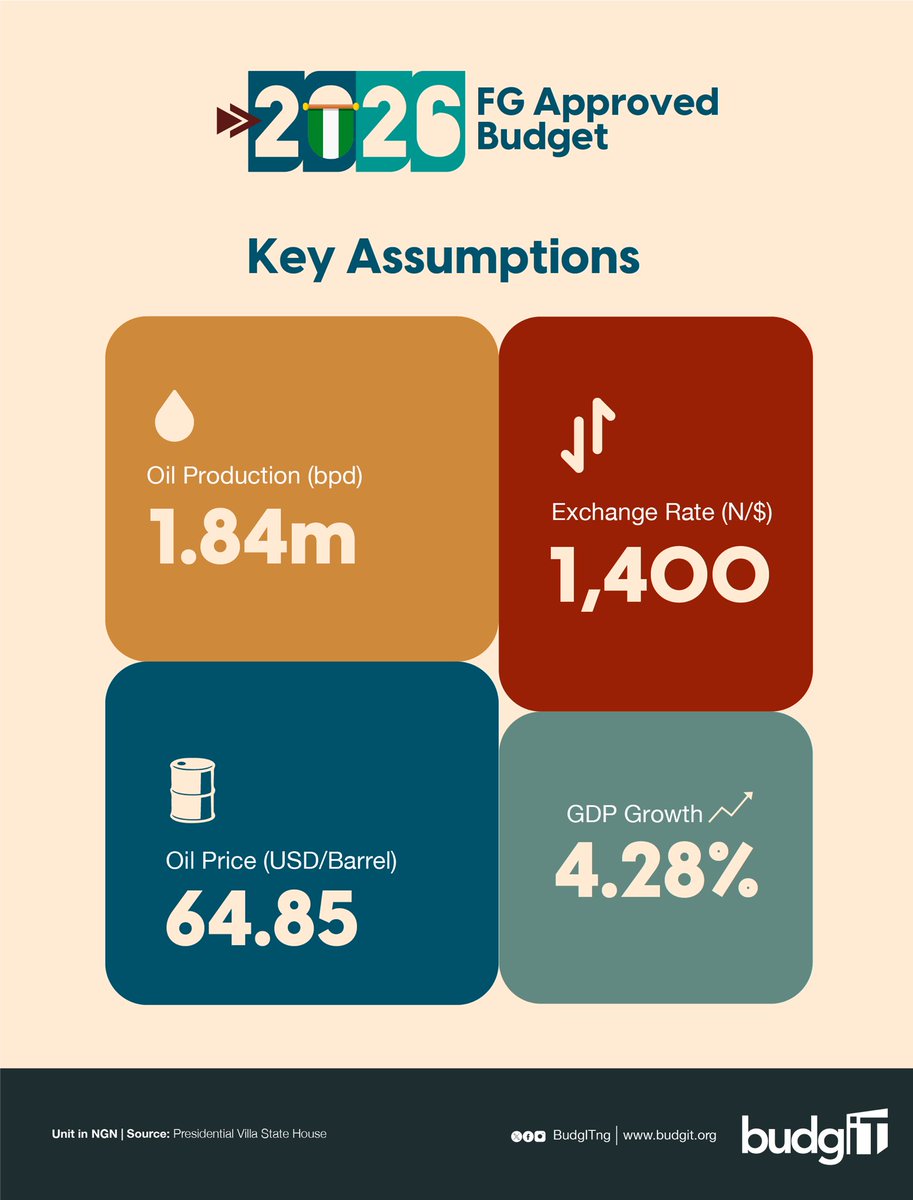
The government expects ₦36.87tn in revenue but plans to spend ₦68.32tn. Before the spending, these are the assumptions behind it:
📌 Oil production — 1.84m barrels per day
📌 Oil price — $64.85
📌 Exchange rate — ₦1,400/$
📌 GDP growth — 4.28%
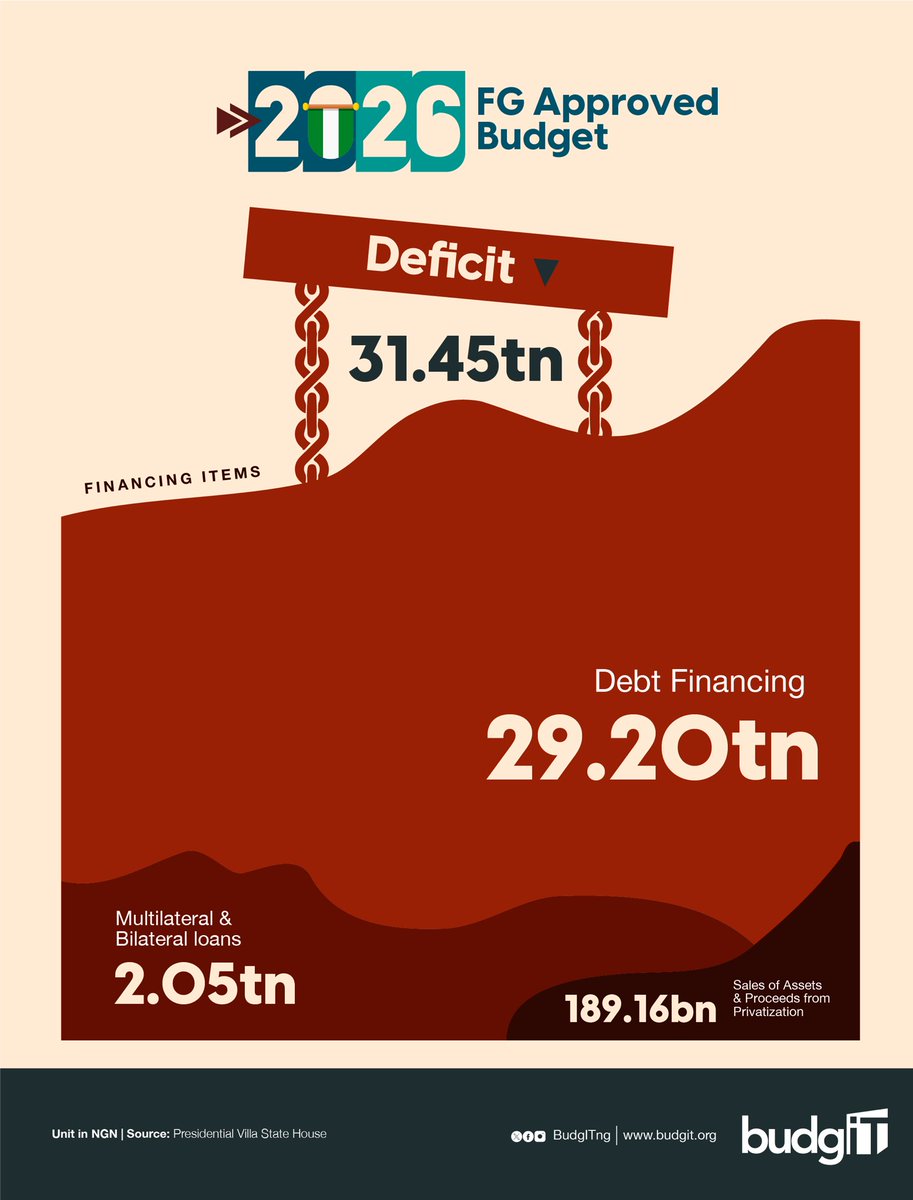
The ₦31.45tn deficit will be covered by:
📌 ₦29.20tn — borrowing
📌 ₦2.05tn — external loans
📌 ₦189bn — asset sales
#2026BudgetNG #FollowTheMoney #AskQuestions
This year’s International Youth Day theme, “Different Contexts, Common Aspirations,” reminds us that while our struggles may differ, we share the same hope for a better future.
Today, we stand with young Nigerians in demanding a country where public resources are used to create opportunities, improve lives and make that future possible.
Happy International Youth Day.
#AskQuestions #GetInvolved
Our parents told us to go to school, work hard, learn a skill, start something of our own and build a better future.
So many young Nigerians are doing just that. Yet, the rising cost of living, limited opportunities and struggling businesses continue to make that future harder to reach.
Thread👇
#AskQuestions #GetInvolved
We’ve heard your takes on who an “olodo” is, debated intelligence, education and success, and watched the conversation take over social media.
Now, let’s look at it from our lens.
What does being an olodo look like when it comes to governance and the issues that affect our everyday lives?
An olodo is one who follows every social media trend but has nothing to say when things go wrong with the system.
An olodo is one who knows every detail of the Okoyes’ story but doesn’t know what their government is doing with public money.
A disengaged citizen is also an olodo.
When you stop paying attention to the decisions that shape your everyday life, you give up your ability to question, demand answers and hold power accountable.
Read the piece 👉 https://t.co/f2iGYWJvlK
It’s worth your time.
#GetInvolved
Absolutely!
Our latest Price of Survival report found that the cost of a healthy diet rose 11.7% in just three months, from ₦1,380 to ₦1,541 per person per day.
In Ekiti for example, eating a healthy diet would take up 89.6% of a ₦70,000 minimum wage, leaving just about ₦7,261 for rent, transport, electricity, school fees, healthcare and everything else.
GDP can grow. Inflation can fall. But can a Nigerian salary still carry a Nigerian life?
That is the real economic indicator. Every other thing is further maths.
Read report 👉 https://t.co/xUyJJQudpy
The real economic indicator is the size of the food basket Nigerians can afford, the distance they can travel with their income and whether their salary survives until the end of the month.
Here’s what every Nigerian should understand: your loan balance can stay almost the same while the amount you pay on it keeps rising.
That is what makes Nigeria’s debt situation worrying.
By Q3 2025, Nigeria had already spent ₦12.52 trillion servicing debt against ₦18.63 trillion in revenue. That means 67 out of every ₦100 the government collected was going to debt service.
So when we hear “hard reforms” and the difficult choices government had to make, this is also part of the result we should be looking at.
How much of government revenue is left to actually run the country and deliver development?
Our Debt Service vs Development report takes a closer look at that squeeze, and what it means for Nigeria’s ability to fund infrastructure, social services and economic growth.
Read 👉https://t.co/KbtQuGQ242
Nigeria’s domestic debt service more than tripled to N3.14 trillion in the first quarter of 2026 from N989.24 billion in the same period of 2024, driven largely by a sharp increase in interest payments.
The latest figures from the Debt Management Office (DMO) show that the federal government spent N2.97 trillion on interest payments in the first quarter, up from N902.68 billion two years earlier...
Read more: https://t.co/9tmMwK9ycR
You wake up, open your door and find water where your street used to be. Your car is stuck, your belongings are soaked, and the road to work is no longer passable.
Suddenly, the flood warning you heard yesterday has become the water at your doorstep.
Flooding continues to affect communities across Nigeria, and there is money meant to help states respond to it. The Ecological Fund is a federal allocation distributed to all 36 states every month to address environmental challenges including flooding, erosion, desertification and oil-related pollution.
Since 2022, N223.44 billion has been distributed to states through the fund.
States like Bayelsa, Delta and Rivers, which face severe flooding and environmental pressures, are among the lowest recipients, with Bayelsa at the bottom.
Your state has received its share. What is it doing with the money to protect your home, livelihood and community?
It’s time to start asking questions that matter.
#AskQuestions #GetInvolved
Dear Young Nigerians,
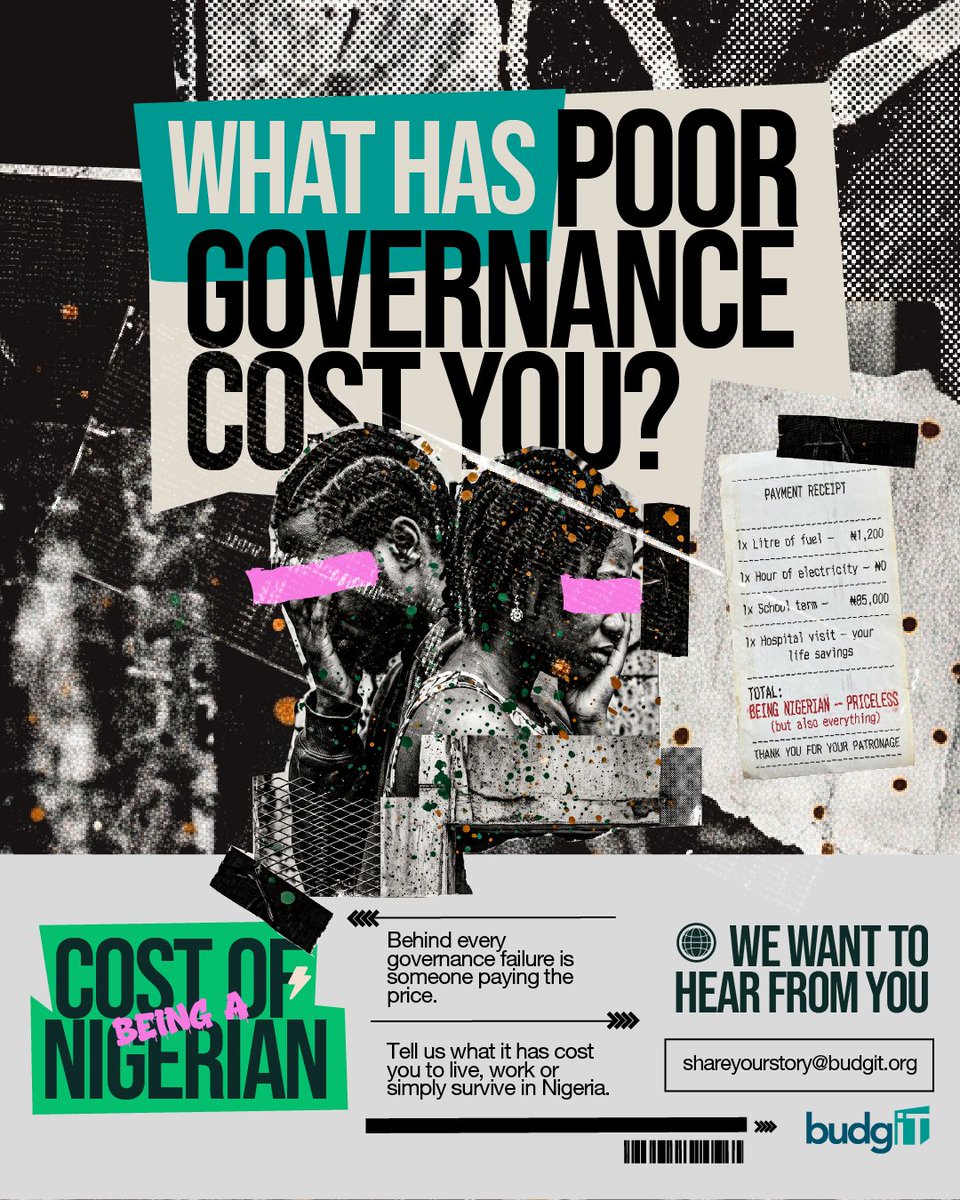
Think about the things you have had to spend more on, wait longer for or give up because of the realities of living in Nigeria.
Maybe it is the transport fare that went up after the latest fuel increase. The rising price of food. The cost of keeping your phone charged. The hours spent on the road because of bad infrastructure. Or an opportunity you had to let go because you simply could not afford it.
These everyday realities can shape how we live, work, study, earn and plan for the future.
With International Youth Day coming up on August 12, we want to hear your story.
What has being Nigerian cost you?
Tell us what it has cost you at [email protected].
Your story can help put a face to the numbers and show what these realities look like for young Nigerians.
#InternationalYouthDay #ShareYourStory #GetInvolved
Dear Young Nigerians,
Think about the things you have had to spend more on, wait longer for or give up because of the realities of living in Nigeria.
Maybe it is the transport fare that went up after the latest fuel increase. The rising price of food. The cost of keeping your phone charged. The hours spent on the road because of bad infrastructure. Or an opportunity you had to let go because you simply could not afford it.
These everyday realities can shape how we live, work, study, earn and plan for the future.
With International Youth Day coming up on August 12, we want to hear your story.
What has being Nigerian cost you?
Tell us what it has cost you at [email protected].
Your story can help put a face to the numbers and show what these realities look like for young Nigerians.
#InternationalYouthDay #ShareYourStory #GetInvolved
You wake up, open your door and find water where your street used to be. Your car is stuck, your belongings are soaked, and the road to work is no longer passable.
Suddenly, the flood warning you heard yesterday has become the water at your doorstep.
Flooding continues to affect communities across Nigeria, and there is money meant to help states respond to it. The Ecological Fund is a federal allocation distributed to all 36 states every month to address environmental challenges including flooding, erosion, desertification and oil-related pollution.
Since 2022, N223.44 billion has been distributed to states through the fund.
States like Bayelsa, Delta and Rivers, which face severe flooding and environmental pressures, are among the lowest recipients, with Bayelsa at the bottom.
Your state has received its share. What is it doing with the money to protect your home, livelihood and community?
It’s time to start asking questions that matter.
#AskQuestions #GetInvolved
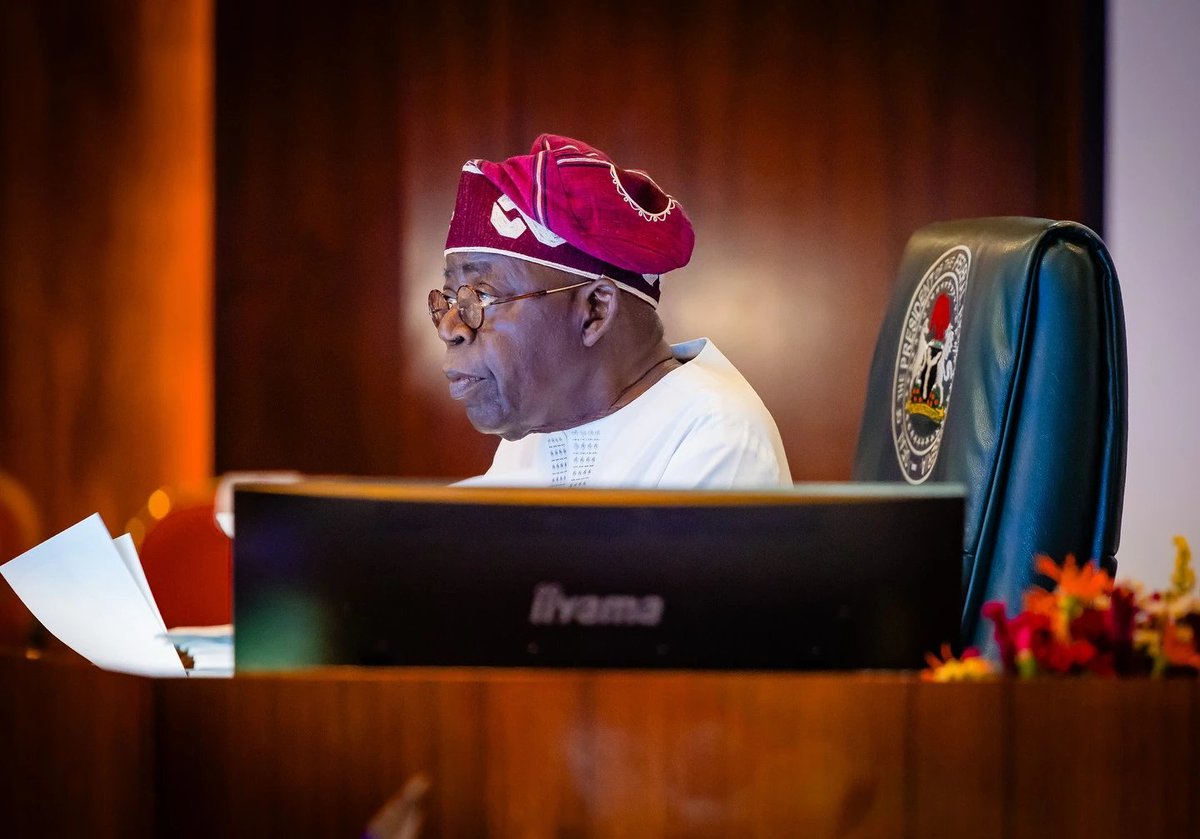
Hmmmm! Mr Chairman,
Electricity can affect how Nigerians work, study and spend their evenings. But population growth? That one needs more than darkness.
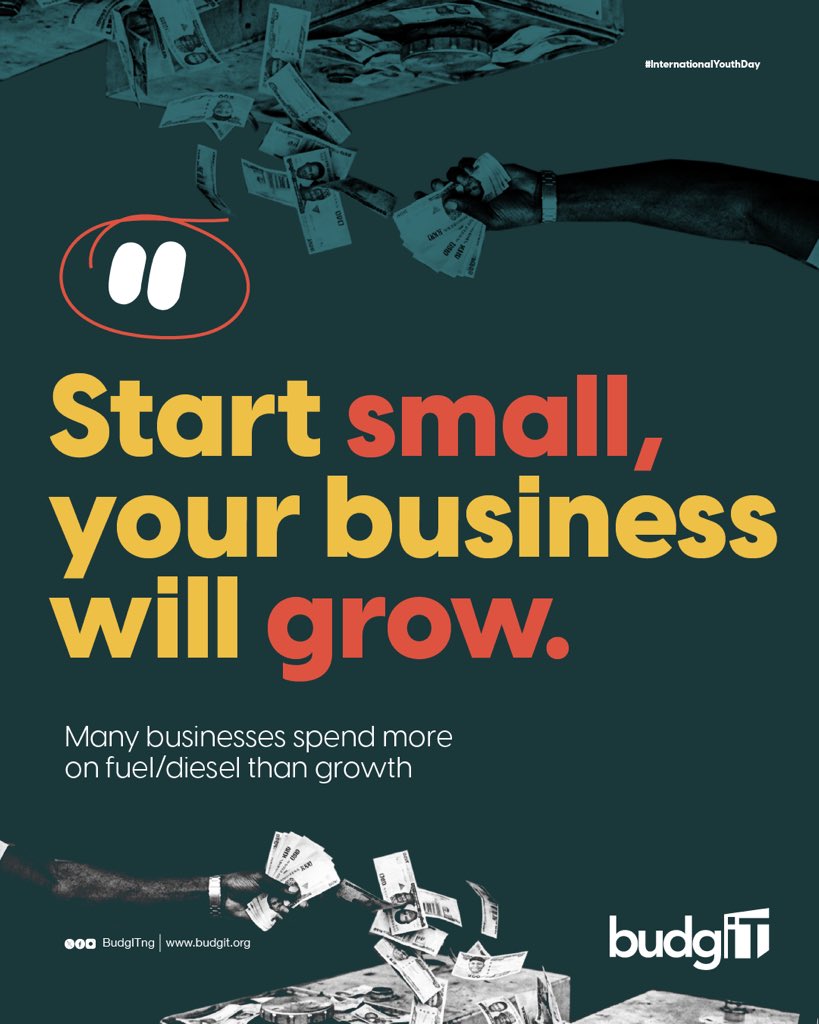
Nigeria’s electricity problem is much bigger than whether people go to bed at 7pm. Poor power supply means businesses spend more on diesel, students can’t study after hours, households spend more to stay productive.
In a recent @TrackaNG report, we highlighted how we monitored 16 dam-related power projects across 13 states and found that none had been completed.
Maybe we shouldn’t focus on what Nigerians do when the lights go off, but on why projects meant to bring the lights back on keep failing to deliver.
Lack Of Electricity Makes The Population Double In Nigeria - Fayose
When you don’t address the issue of electricity, by 7 o’clock it gets dark, and people start engaging with their wives, so the population doubles. The simple problem is that, because there is no electricity, people go to bed early. Their minds are already prepared for it. If this is the only option available, they simply stay at home. But if we address the electricity problem, there will be nightlife.
Ayodele Fayose, Chairman, Rural Electrification Agency
We can give you a snapshot.
2021: ₦39.56tn
2022: ₦46.25tn
2023: ₦97.34tn
2024: ₦144.67tn
2025: ₦159.28tn
Q1 2026: ₦159.35tn
Nigeria's public debt stock has more than quadrupled since the end of 2021, from ₦39.56 trillion to ₦159.35 trillion.
But you should know, the debt stock barely changed between Dec 2025 and March 2026, yet Nigeria still spent ₦3.14 trillion servicing domestic debt in Q1.
One important caveat: these are debt stocks, not a record of exactly when each loan was taken, and exchange-rate changes also affected the naira value of external debt.
But that is precisely why we need to ask: when was each debt taken, what was it meant to fund, and what did Nigerians get for it?
Source: Debt Management Office (DMO)
Good question 👏
No she cannot. Borrowing is not inherently the problem.
Let’s explain.
Between December 2025 and March 2026, Nigeria’s total public debt stayed almost the same, at about ₦159 trillion.
But the mix changed. Domestic debt increased by ₦2.56 trillion, while external debt dropped by ₦2.48 trillion.
In simple terms, Nigeria is still borrowing, but more of the borrowing is now coming from inside the country.
So it’s not whether Nigeria can afford to stop borrowing. It’s about what the borrowed money is used for.
If the money builds roads, power projects, agriculture infrastructure and other things that help the economy grow, borrowing can be useful.
But if we keep borrowing while Nigerians struggle to afford food, rent, electricity and other basics, then what exactly are we borrowing for?
If you do the maths, ₦3.14 trillion in three months is roughly ₦34 billion every day going to service domestic debt.
And this is happening while Nigeria is still borrowing to finance its budget.
Our 2026 budget analysis projects that the Federal Government will spend ₦15.81 trillion servicing debt this year. That’s almost half of the money it expects to earn.
It’s no longer about how much Nigeria owes. It's what Nigerians are getting for all this borrowing.
Nigeria spent N3.14 trillion servicing its domestic debt obligations in the first quarter of 2026, representing a 20.3% increase from the N2.61 trillion recorded in the corresponding period of 2025. https://t.co/mPdPOdMNqI
📍Ahead of the Osun State Governorship Election, we asked active citizens at the WACTC2026 “What does democracy mean to them?”
Tell us What it means to YOU in the comment?
#OsunDecides2026#Democracy#ActiveCitizenship#wactc
A teaser from BudgIT Research expected to be released next week 🙈
“Personnel expenditure declined as a share of total state expenditure from 24.99% in 2022 to 16.16% in 2025. Our findings show that aggregate personnel expenditure increased from ₦1.55 trillion in 2022 ₦2.89 trillion in 2025, representing an overall nominal growth of 85.90% and a compound annual growth rate (CAGR) of 22.96% over the review period. While states’ revenue had a CAGR of 46.74%, personnel costs grew at a weaker pace, meaning either labor had bargained poorly, or the state government had not increased wages at a commensurate level. This might causally explain poor transmission of economic reforms at the micro- level.”
Don’t miss it.
@BudgITng has again placed Nigeria's commitment to fiscal transparency under the spotlight with the Q1 2026 report. From the document published by the BudgITng, I spotlighted 9 states with perfect ratings.
Read more here:
https://t.co/lynNUKDvwH
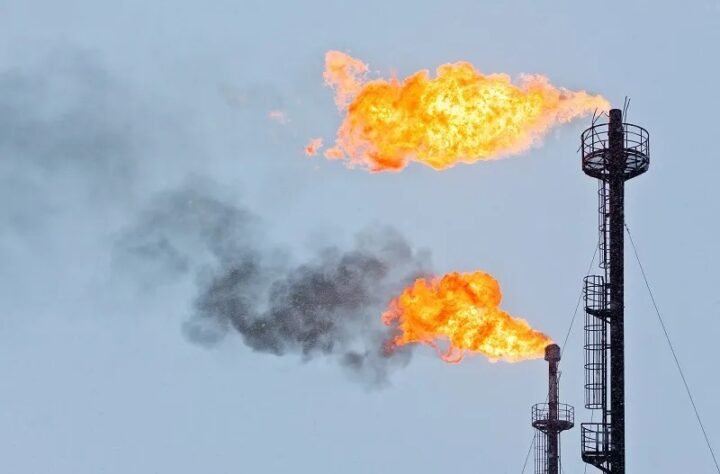
BudgIT: Nigeria lost N1.19tn to gas flaring in 2024
A new report by BudgIT has found that Nigeria lost about N1.19 trillion to gas flaring in 2024.
The report, titled ‘Nigeria’s Gas Flaring Crisis in Numbers’, said the volume of gas flared in 2024 could have generated significant electricity and economic value if it had been captured and commercialised.
https://t.co/vNjtFm7YCL
Before we advise her, can she explain the source of funds?
We just want to be sure it didn't disappear from a budget line. 👀
Just asking for public accountability reasons o.
Incase it's public money, no worry... GovSpend will tell us where it was originally supposed to go. 👉 https://t.co/51yTmXnCA3
Justice may have been served. But the communities promised electricity are still in the dark.
After the 2024 national grid collapses, @TrackaNG monitored 16 dam-related power projects across 13 states. Not one was completed. Four were abandoned. Six were still crawling. Another six had not even started despite receiving funding.
The problem is that by the time cases like this reach the courts, the damage has already been done. Citizens often don’t have access to the information that would help them ask questions while projects are still being implemented.
That is reflected in our State Fiscal Transparency League (Q1 2026) report, where we found that 20 states have e-procurement portals with little or no data, while five states have no e-procurement portal at all.
Want to know how your state is performing? Our latest SFTL rankings say a lot. Read 👉 https://t.co/gopjApwGGc
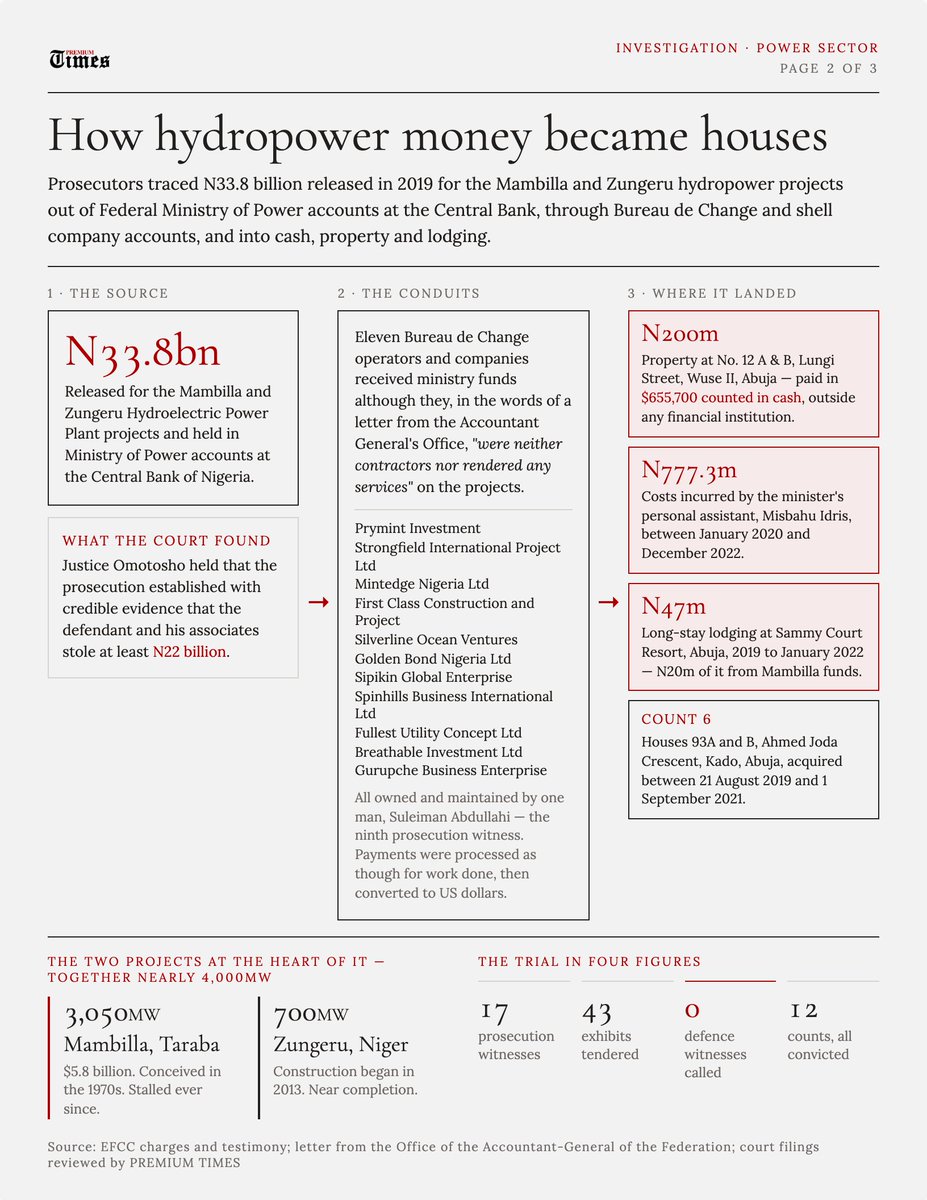
𝗛𝗼𝘄 𝗱𝗶𝗱 𝗯𝗶𝗹𝗹𝗶𝗼𝗻𝘀 𝗺𝗲𝗮𝗻𝘁 𝗳𝗼𝗿 𝗲𝗹𝗲𝗰𝘁𝗿𝗶𝗰𝗶𝘁𝘆 𝗽𝗿𝗼𝗷𝗲𝗰𝘁𝘀 𝗲𝗻𝗱 𝘂𝗽 𝗲𝗹𝘀𝗲𝘄𝗵𝗲𝗿𝗲?
According to evidence examined by PREMIUM TIMES, prosecutors traced funds released for the Mambilla and Zungeru hydropower projects from Ministry of Power accounts through multiple bureau de change operators and companies before they were allegedly converted into cash, property purchases and other expenditures.
The court ultimately convicted former Minister Saleh Mamman on all 12 counts.
READ MORE👇
https://t.co/hcZdD5NVyn