$BTC / $USDT.D
looking like this to me
o timing off on my top prediction
o was expecting a LTC, we got a RTC
o expected a 102k top, we hit a 125k top
been out of the market for some months, and still remain fully out.
$BTC update
conservative thesis for #Bitcoin hit.
the levels hit much later than I expected, which is also why I think we have higher to go. I also think we have more room to go on altcoins before it's time to start scaling out.
with that being said I am going to be real careful with how I play things going forward.
going into next week I expect altcoins to rip.
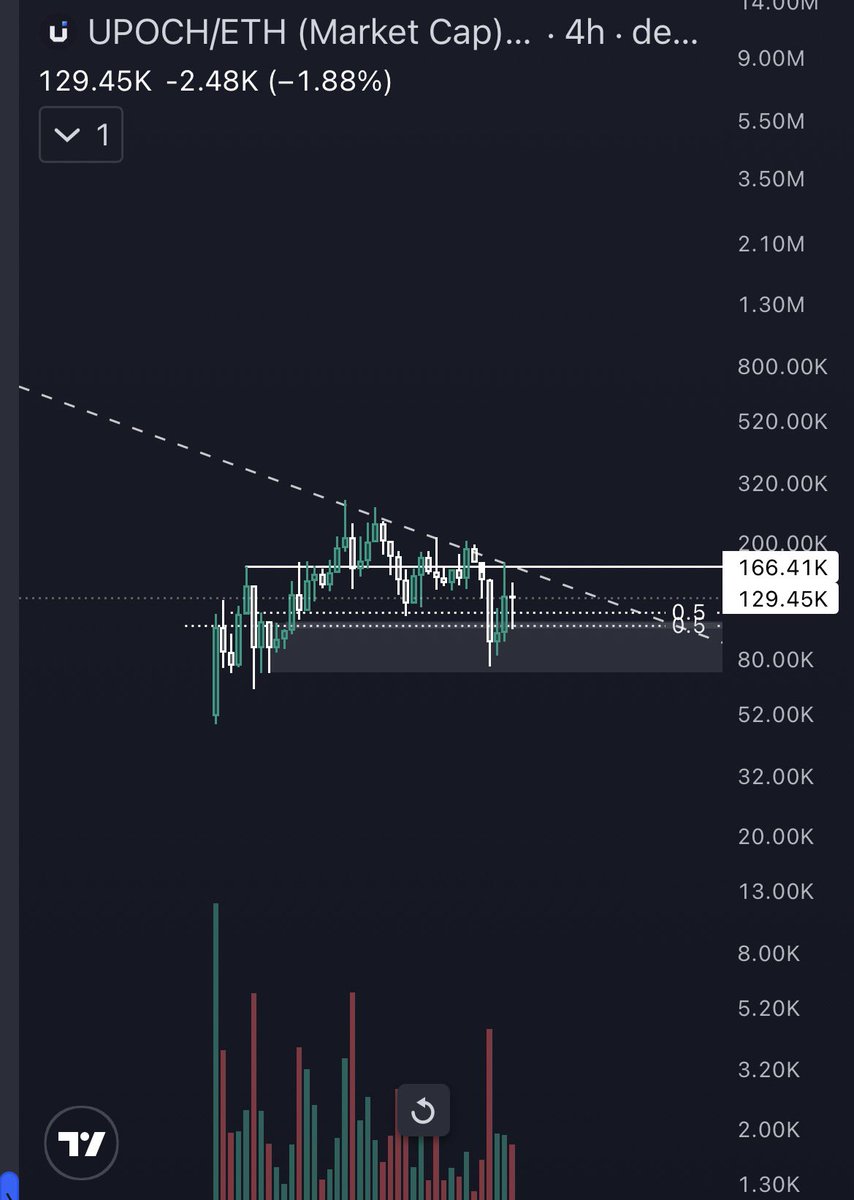
$UPOCH
o The early cohort of buyers has mostly cycled out. Around 90% of the launch-day buyers are gone. That’s the main source of the bleed from the highs, and that supply is now sold.
o Newer buyers are holding. 75% of post-week-1st buyers still have their bags, which fits the holder growth I've been seeing from 79 to 322.
o currently 47 wallets from day 2–3 still sit on a good share of supply. That’s the remaining supply that could still take profit on any bounce. Yet I don't think it's likely they will sell until Upoch eventually starts running.
Generally this is a healthy rotation from early flippers to new holders. Price doesn’t break the UPOCH thesis. And as long as the project keeps pushing the thesis is valid.
Currently I think we will be seeing someting like this.
I wouldn't trade this setup. But rater planning on adding to my position at the deviation of the range low. Could be a deviation like this or simply a wick outside the range, reclaim and reversal.
Let's see.
robinhood:0xa2753fd0bc86b8ceb55ffd2698679c7f214785f1: the compute layer agents actually run on
Model. Letronna is an open-source agent written in Rust. It runs on desktop, in the cloud or from the CLI, and installs on macOS with one command. It can use local GGUF models offline, or hosted frontier models at a fraction of retail price. Letronna Cloud adds containerized hosting for sites, databases, Redis and game servers, which sleep when idle so you only pay for what runs. Credits can be paid in LETRO or topped up by card.
Overlaps. Open-source agents and decentralized compute aren’t new. Open agent frameworks give you the brain, and compute markets like $Akash give you the hardware. What’s different is that Letronna packages both into one product: the agent, the models and the hosting. Agents get one place to think, run and pay, and the token is wired into that loop.
Edge. Agentic finance needs agents that can pay for their own resources. Letronna has already done a real x402 purchase on mainnet, and it’s integrated with robinhood:0x6511c233790ec10f7d673c64dc82c3f941d57828 MCP. Every trading, payments or research agent on chain needs inference and uptime. Letronna sells both, and accepts its own token for them with no fee.
Token loop. Part of every LETRO credit purchase is burned. 50% of hosted-model margins are earmarked for buybacks. Staking pays out credits worth 20% a year of the stake’s value, paid daily, so holders get compute, not just exposure.
The dev burned 6M LETRO from his own wallet.
The more agents use it, the more LETRO leaves supply.
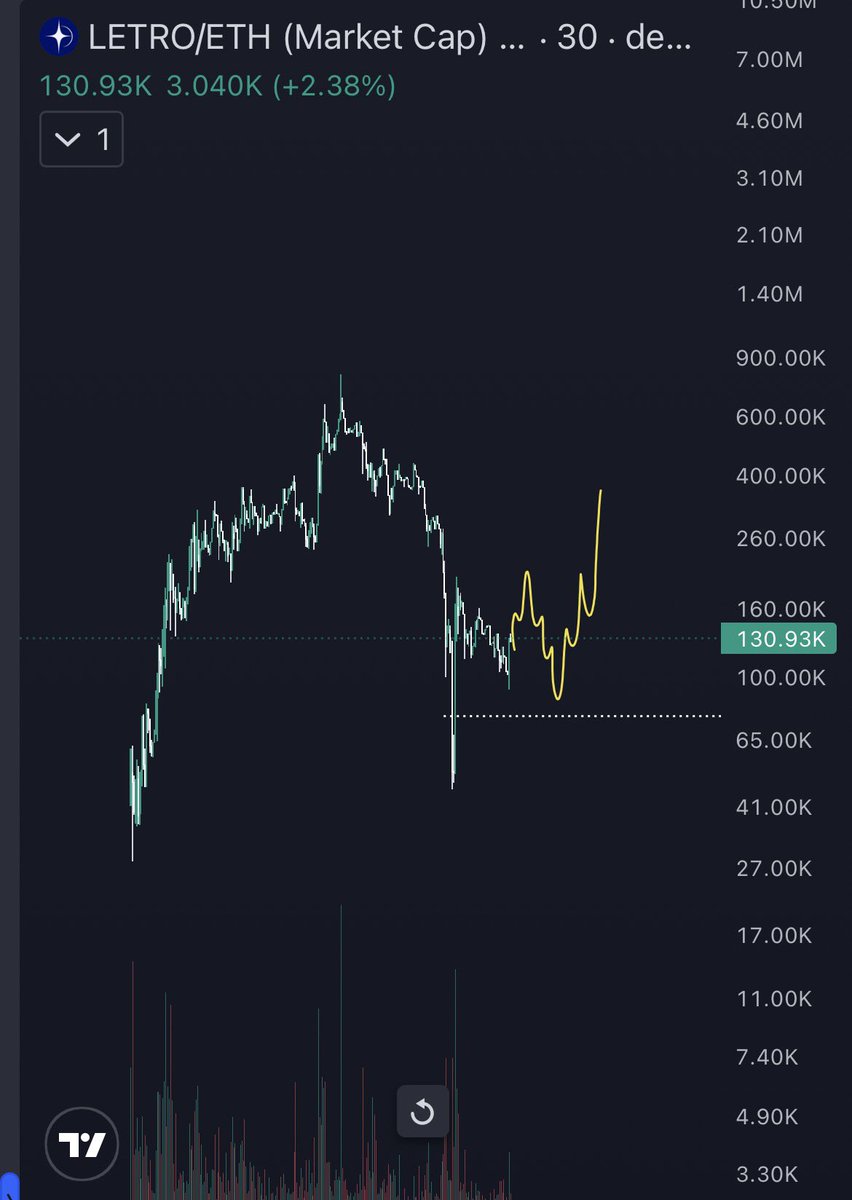
At this stage, robinhood:0xa2753fd0bc86b8ceb55ffd2698679c7f214785f1 is a shipped, open-source agent stack with its token inside the usage loop, after its first pump and a full retrace, at about a $100K cap.
Just bought robinhood:0xa2753fd0bc86b8ceb55ffd2698679c7f214785f1 at the 12H wick fill. DYOR.
$OSTRA
Most agent wallets ask you to trust them. Ostra proves it.
o Its vault logic was run through Aristotle by @HarmonicMath, and every property came back proved. An agent’s key can never touch the guardians, the lock, the policy or the allowlist. Each one-time key signs once, then it’s gone.
o Now that vault lives inside Claude. Connect it once, and your agent pays, sends and checks balances just by chatting, in USDG and only within the limits you signed on-chain.
o It’s already doing business. Ostra agents buy data from @useautonomo a cent at a time, from a payment key that never holds more than 5 USDG. Everything else stays in the post-quantum vault.
o On Ostrapad, agents take jobs and get paid. Every decision comes with the judge’s written reason, checked against a hash on-chain and open to appeal.
The team keeps buying $OSTRA back for agent rewards and burns.
Proven, private, already earning. The deepest build in agentic finance on RH.
$OSTRA DYOR.
$OSTRA: the deepest build in agentic finance on RH
Post-quantum vault: every vault is signed with WOTS one-time keys. Each key is used once and replaced after every transaction, so funds stay safe even when quantum computers can break the ECDSA keys most wallets use today. The agent never holds the owner’s key. Guardians handle recovery, and upgrades sit behind a 72-hour timelock.
Ostrapad: a job market with on-chain escrow. Payment is locked when the order is placed, an evaluator judges the work, and there’s a 48-hour appeal window before payout. Private jobs are encrypted: only the client, the agent and the evaluator hold the keys.
Reputation: every finished job writes a statement to the agent’s ERC-8004 identity. Agents can prove their record meets a threshold with a zero-knowledge proof, without revealing which vault is theirs.
Vault v4: idle earnings work in Spark, Steakhouse and Raeto, held inside the agent’s own vault.
Vault v5: in formal verification with Aristotle (Harmonic). 19 properties, plus differential tests, published run by run.
Access: the Ostra MCP plugs into Claude Code, Cursor, ElizaOS and any MCP client. One config line, and an agent can work.
Token: half of every swap and Ostrapad fee goes to OstraBuyback (verified on Sourcify), which buys OSTRA every hour and burns it.
Partners: Kann Audits (security), @HeyResearch Research (builder data). And Ostra and @OakAgentKit already follow each other 👀
$OSTRA DYOR.
Agentic finance on Robinhood Chain won’t have 100 runners. It’ll have a handful.
Rotating out of the very few with market fit to chase the next $20K shitter can easily set you up for a bad cycle.
What has actually happened? The projects that already broke out weren’t the cheapest or the loudest. They were the ones other projects built on:
o $PRIORS: credit scores agents check before borrowing
o $RAETO: model routing and budgets agents run on
o $ORBIO: setting the ceiling for what an AI platform on RH can be
They became the default in their layer, and everything after them is fighting for second place.
Meanwhile most new launches follow the same arc: a polished feed, a “dev burned his bag” post, and a bundle quietly dripping into every bid. Most of them go to zero.
Taking profit is an important part of the game. Trim into strength, pay yourself, protect your capital.
But there’s a difference between trimming a winner and exiting it entirely to rotate into the next unproven microcap launch. The first compounds. The other resets you to zero odds every week.
The game isn’t buying every launch at $20K. It’s finding the one that matters, buying it as low as you can, and holding it as long as the team keeps building in the right direction:
o shipping on a steady cadence
o more projects integrating it
o holders growing even when price doesn’t
o value flowing back to the token on-chain
When those stop, you leave. Not because the chart is red for a week.
Agentic trading and agentic credit already have product-market fit. That story hasn’t reached the broader market yet. When it does, the money won’t look for the 47th launch of the week. It’ll look for the names that already won their layer.
Those are the ones worth compounding.
$PRIORS $RAETO $ORBIO robinhood:0x6511c233790ec10f7d673c64dc82c3f941d57828 $OSTRA robinhood:0xdcd885f5c60b3ad49f6d58718696417314e8724d robinhood:0xd4dc6b48ad73ec51e71d9b8f65568f88609b92c1 robinhood:0xe83c85e1ead16fcfe85401e2b337fb4fb5b5cc96 $METRION $ACTUARY $UPOCH $HEY robinhood:0xacc8de336f5d2366fa7334383d8fab73499f582a $SENTRO robinhood:0xa2753fd0bc86b8ceb55ffd2698679c7f214785f1 $TEXEL $WORM
robinhood:0xa2753fd0bc86b8ceb55ffd2698679c7f214785f1: the compute layer agents actually run on
Model. Letronna is an open-source agent written in Rust. It runs on desktop, in the cloud or from the CLI, and installs on macOS with one command. It can use local GGUF models offline, or hosted frontier models at a fraction of retail price. Letronna Cloud adds containerized hosting for sites, databases, Redis and game servers, which sleep when idle so you only pay for what runs. Credits can be paid in LETRO or topped up by card.
Overlaps. Open-source agents and decentralized compute aren’t new. Open agent frameworks give you the brain, and compute markets like $Akash give you the hardware. What’s different is that Letronna packages both into one product: the agent, the models and the hosting. Agents get one place to think, run and pay, and the token is wired into that loop.
Edge. Agentic finance needs agents that can pay for their own resources. Letronna has already done a real x402 purchase on mainnet, and it’s integrated with robinhood:0x6511c233790ec10f7d673c64dc82c3f941d57828 MCP. Every trading, payments or research agent on chain needs inference and uptime. Letronna sells both, and accepts its own token for them with no fee.
Token loop. Part of every LETRO credit purchase is burned. 50% of hosted-model margins are earmarked for buybacks. Staking pays out credits worth 20% a year of the stake’s value, paid daily, so holders get compute, not just exposure.
The dev burned 6M LETRO from his own wallet.
The more agents use it, the more LETRO leaves supply.
At this stage, robinhood:0xa2753fd0bc86b8ceb55ffd2698679c7f214785f1 is a shipped, open-source agent stack with its token inside the usage loop, after its first pump and a full retrace, at about a $100K cap.
Just bought robinhood:0xa2753fd0bc86b8ceb55ffd2698679c7f214785f1 at the 12H wick fill. DYOR.
$QHOOKS
We’ve seen robinhood:0x000de658153f47f23e92973c8eb1e89762703676 and robinhood:0x000050e18ffa3f8f7ad170eb9cef160eb3ed1111 doing legs.
The difference with $QHooks: the fees don’t just pump the chart, they build the floor.
o Platform fees become permanent liquidity, owned by no one, leftover ETH feeds a buy wall that only bids
o Buybacks go 75% into liquidity, 25% burned
o Arb profits go 100% into liquidity
o Timed staking with graduating bonuses
Every launch makes the pool deeper. When the next leg comes, this one has something under it.
@qHooks_
$QHOOKS just doubled down on depth.
o Added liquidity moves into concentrated ranges, so the same ETH works 3–5x harder where trading actually happens
o Buybacks shift to 75% liquidity, 25% burn. Depth first while it’s thin.
o Arb profits now go 100% into liquidity
o Part of the builder fee from the coming perps trading hub goes to liquidity, not to the dev
o Timed staking: 1, 2 or 4 weeks, with bonuses that graduate the longer you stay
Most devs take the fee. This one keeps feeding the floor.
This is becoming more and more bullish @qHooks_
@anakintrading94 Correction on $SELCIER: I was wrong. On-chain, the same wallet funded the dev wallet and 29 bundle wallets 3 min before launch, and the dev exempted them from snipe tax in the launch tx. The “dev burn” was 1%; the bundle dumped 21%. Avoid.