A literatura e a filosofia nos protegem da arrogância de acreditar que somos os primeiros a pensar como pensamos, sofrer o que sofremos e errar como erramos. Não há absolutamente nada de novo debaixo do Sol.
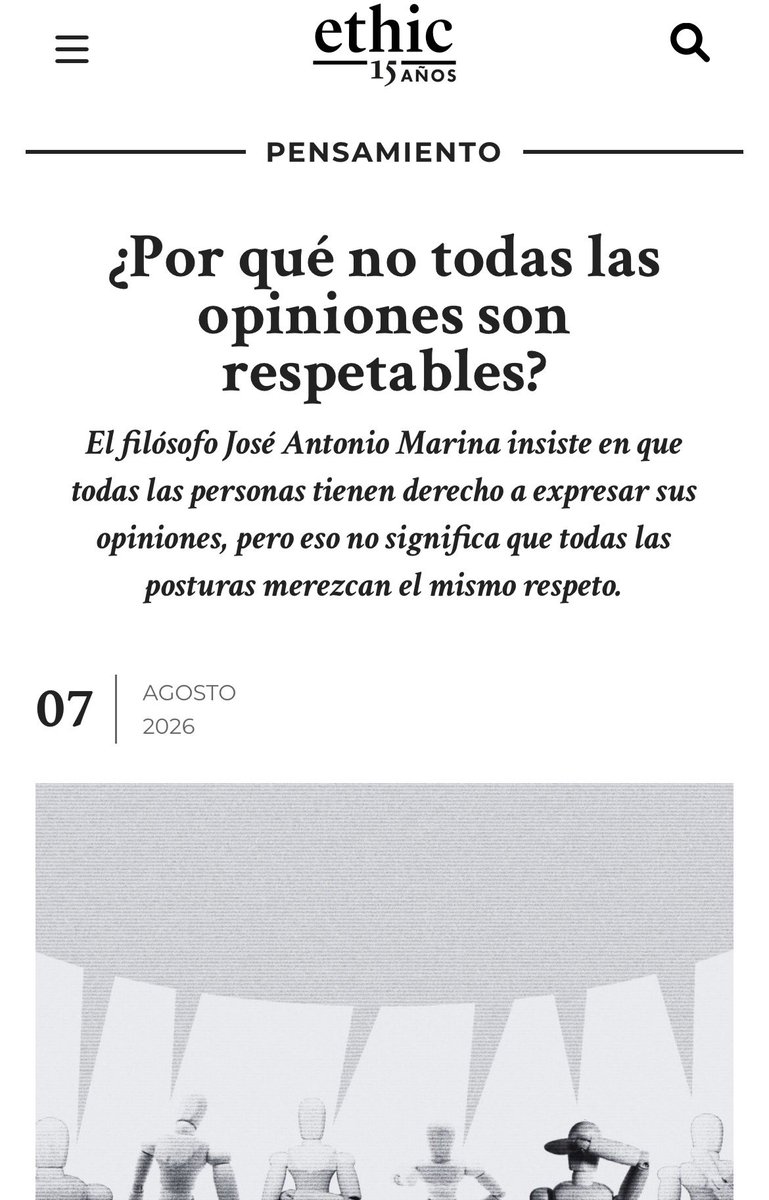
En tiempos de redes e IA, la alfabetización mediática debería ser una competencia básica.
José Antonio Marina.
No basta con buscar información: hay que evaluar fuentes, distinguir hechos de opiniones, detectar falacias y cambiar de idea cuando hay mejores evidencias.
Pensar críticamente no es desconfiar de todo. Es razonar mejor.
https://t.co/KSbVmaQ8g8
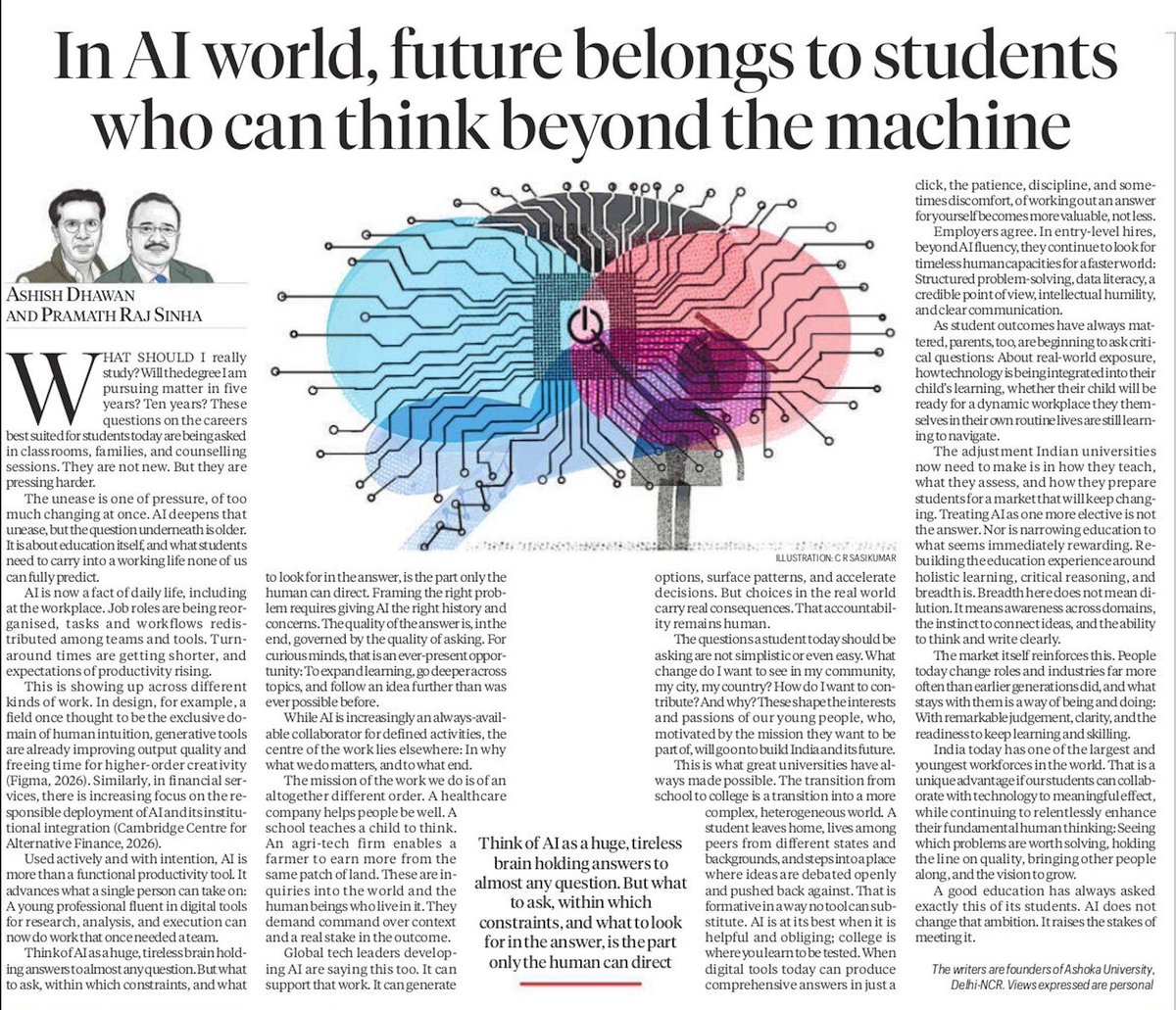
En un mundo con IA, la pregunta educativa ya no es solo “qué sabes hacer”, sino qué sabes pensar. La máquina puede producir respuestas, pero el criterio, la duda, la paciencia, la imaginación y la responsabilidad siguen siendo profundamente humanos. Ahí está el futuro de la educación.
La IA puede acelerar tareas, ordenar información y ofrecer opciones. Pero no sustituye lo esencial: aprender a formular buenas preguntas, distinguir lo verdadero de lo plausible, sostener la atención y pensar más allá de la primera respuesta. Educar será enseñar a ir más allá de la máquina.
https://t.co/xebYy9A0za https://t.co/jxdr3bSoOC
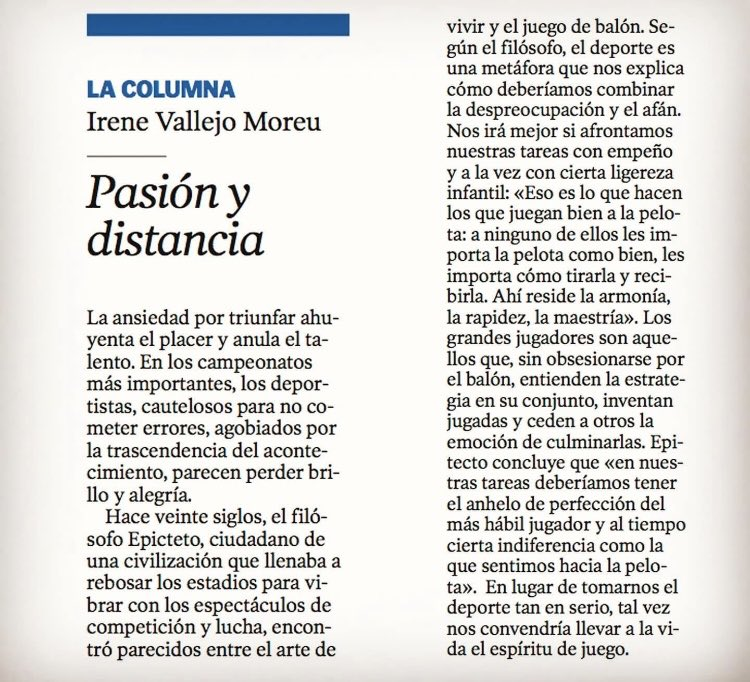
“La ansiedad por triunfar ahuyenta el placer y anula el talento”. Irene Vallejo recupera una lección de Epicteto: afrontar nuestras tareas con empeño, pero también con cierta ligereza. Pasión por hacerlo bien y distancia para no quedar paralizados por la obsesión de no fallar. @irenevalmore
Hasta siempre, LEYENDA. Siento como un gran honor que mi selección haya formado parte de tu último partido en la Copa del Mundo. Dejas un legado imborrable. Seguramente merecías otro final, pero, al menos, te ganó tu segundo país. Aquí siempre serás querido y bien recibido por los auténticos aficionados a este maravilloso deporte.
Para mí no necesitas tener un Mundial en tu palmarés para ser el mejor jugador de la Historia del Fútbol.
Gracias por ser un ejemplo en el deporte y en la vida. Te quiero mucho, Cristiano Ronaldo dos Santos Aveiro.
Gracias por todo. Siempre.
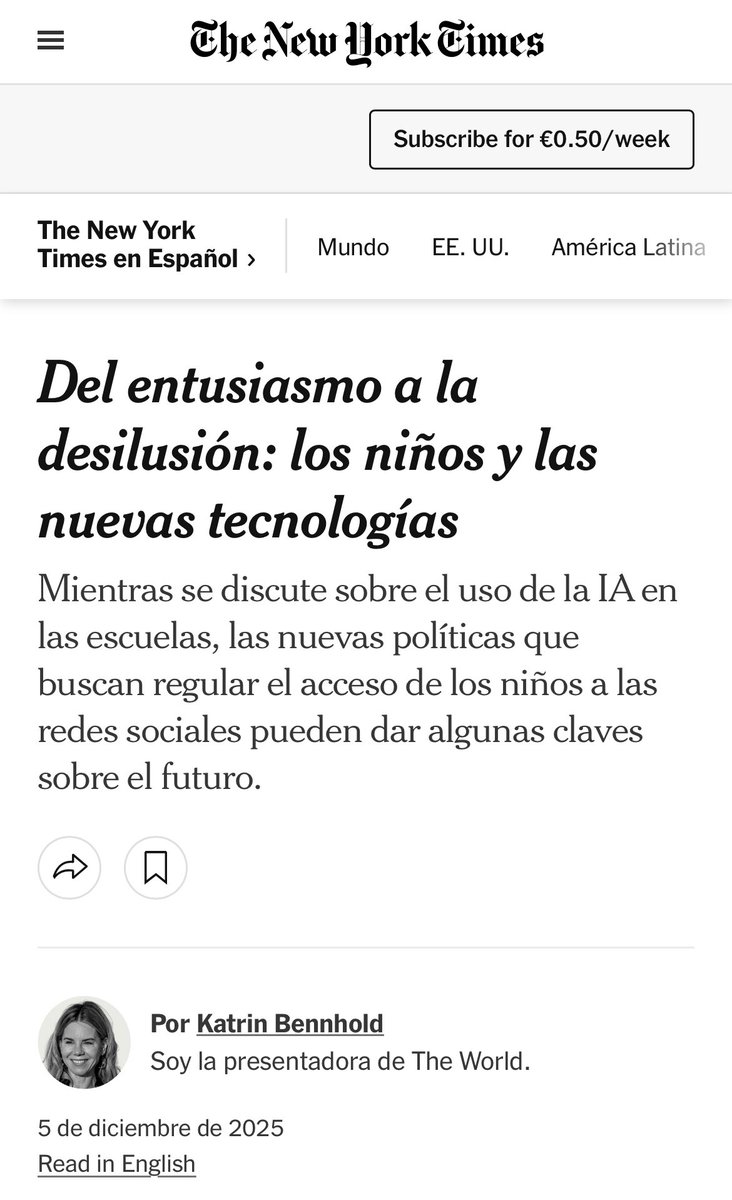
Del entusiasmo a la desilusión. Primero fueron los móviles y las redes sociales, hoy es la IA. La experiencia con los adolescentes muestra que ni evangelizar ni demonizar la tecnología funciona: las políticas educativas necesitan más evidencia y menos ciclos de euforia.
Mientras algunos países restringen redes sociales para proteger a los menores, otros exploran la IA en las aulas. La lección reciente es clara: antes de celebrar la próxima innovación educativa, conviene preguntarse por sus efectos reales en el aprendizaje y el bienestar.
https://t.co/BGTGSP1z0g
https://t.co/LL6N24RhUL
Querido Cristiano…
Gracias por haberme hecho vivir esta pasión mucho más fuerte de lo que algún día imaginé. Sin duda alguna, no me podría imaginar la vida del fútbol sin ti y todo lo que representas para millones de personas.
Que todos los que te queremos disfrutemos de tu ultimo baile en copas del mundo.
Que la pelotita ruede a tu favor, mi gran ídolo.
Te quiero con la putisima vida, @Cristiano.
@kikegames97@Capcom_Es@PLAION_ES Recomiendas haber jugado y terminado la historia del primero? O puedes jugar el 2 tranquilamente sin conocimiento previo del 1?
Tom Bombadil is the most mysterious character in The Lord of the Rings.
He's the oldest being in Middle-earth and completely immune to the Ring's power — but why?
Bombadil is the key to the underlying ethics of the entire story, and to resisting evil yourself...
Tom Bombadil is an enigmatic, merry hermit of the countryside, known as "oldest and fatherless" by the Elves. He is truly ancient, and claims he was "here before the river and the trees." He's so confounding that Peter Jackson left him out of the films entirely.
This is understandable, since he's unimportant to the development of the plot. Tolkien, however, saw fit to include him anyway, because Tom reveals a lot about the underlying ethics of Middle-earth, and how to shield yourself from evil.
The hobbits meet Bombadil early on in their quest, before they reach Bree and the Prancing Pony Inn. He rescues Merry and Pippin from Old Man Willow, and invites the hobbits to stay at his house in the Old Forest.
There, the hobbits realize something strange about him: the Ring has no power over Bombadil whatsoever.
When he wears it, he remains visible. He treats it as a plaything, making it disappear with a magic trick. Indeed, at the Council of Elrond, Gandalf rejects the idea of giving the Ring to Tom, for he would likely misplace it or forget about it entirely.
So just who is he, exactly?
When Frodo asks this very question to Tom's wife Goldberry, she simply responds "He is." It's a cryptic answer that echoes God's famous answer to Moses in the Book of Exodus: "I am who I am."
Thus, many theorize that Bombadil is God, some kind of angelic being, or even the spirit of the Music of the Ainur (due to the fact that he is constantly singing). But Tolkien's letters reveal something considerably more interesting…
In April 1954, Tolkien wrote:
"The story is cast in terms of a good side, and a bad side, beauty against ruthless ugliness, tyranny against kingship… but both sides in some degree, conservative or destructive, want a measure of control.But if you have, as it were, taken a 'vow of poverty', renounced control, and take your delight in things for themselves without reference to yourself… then the questions of the rights and wrongs of power and control might become utterly meaningless to you, and the means of power quite valueless…"
So, Bombadil is a representation of what it means to take pure delight in the world around you — to experience people and things simply as they are, without any thought for what they could be or how you could use them. And this is why the Ring has no power over him.
To Bombadil, the One Ring is simply a ring, and the possibilities of what can be achieved through its power are of no importance. He is able to resist its evil precisely because he is entirely content with the world around him.
At the end of the story, having accomplished what he set out to do in Middle-earth, Gandalf pays Tom a visit before returning to the Undying Lands:
"I am going to have a long talk with Bombadil: such a talk as I have not had in all my time."
If Bombadil is the epitome of simply enjoying life and being, Gandalf is the epitome of doing. He guides the hobbits, fights the Balrog, and runs up and down Middle-earth to help destroy the One Ring.
But now that he's finally liberated from doing, he immediately heads to Bombadil's. He does so with a sense of relief, as if he's at last able to access a purer and higher mode of being — a sort of innocence that cannot be fully experienced by those consumed by doing.
Of course, by this Tolkien doesn't disparage the value of action. The entirety of LOTR displays the importance of rising up against evil, even in the face of all odds. But with the inclusion of Bombadil, he does remind readers that fighting isn't all there is.
Bombadil reminds us that while it's important to strive and *do*, it is just as important to occasionally step back and *be*. Indeed, your ability to do so plays a crucial role in helping you resist the allure of evil…
Read the full piece here:
https://t.co/aqK2daehIL
The unsung hero of The Lord of the Rings...