The progeny of E-V13 lived in the Northern Levant. Dominating the Early Bronze Age, they spread throughout Europe in three waves - 1800 BC, 800 BC, and 50 AD.
@AbdAshtart4 These probably entered via Mesopotamia, if they even were a significant portion of the civilization.
We need samples older than 1000 BC, because I suspect the demographics changed a lot with the desertification & domestication of camels. Many founder effects and extinctions.
@AbdAshtart4 The thing is, the lack of (probable) source population samples makes small differences like this difficult to analyze.
East Arabia itself is also very interesting because we have Semitic names attested there since 1800 BC! Kings Yagli-El and Rimum.
@wasd_1444 For what it's worth, I think there is some considerations to be made for Stanislav Grigoriev's theory about the Origins of the Thracians. Because E-V13 in the Balkans is clearly related to the Thracians, and his theory fills in a lot of the gaps we have.
@wasd_1444 Because even if we have 2 samples, E-V13 was very clearly a dominant haplogroup early on since at least the Middle Bronze Age, that's when we need to find it.
We need to find it at the time it as just getting started, before it had spread all over.
@wasd_1444 Study is from 2022. Not outdated at all.
By the Reich lab & Lazaridis too.
Their point still stands. 2 samples from 1300 BC don't change that. Any theory about the origin of E-V13 that does not account for this is not a serious theory.
@wasd_1444 Also this is ONLY the case for E-V13. Other haplogroups have dozens of samples within the first few centuries of expansion.
Very early (first 200 years) is difficult, since the clan would not be very big yet, but after 500, 1000 years, they will cover a large swathe of land.
@wasd_1444 Yes. But what is of note, and what the study emphasizes, is that despite decent sampling it still has not been found in Bronze Age Europe.
The first time frame when E-V13 expands is ~2500 BC to about 1200 BC. Where it exactly was then is still a very big mystery.
@wasd_1444 I think there are two samples from the Akbari dataset dated to 1300 BC, so technically we do now, right at the very end of the Bronze Age.
Still absent for the very large period of time between 3000 BC and 1300 BC. Which is when E-V13 had it's most important growth.
@oghurian More likely entered the Steppe via Thracian contacts or even through the Caucuses in my opinion. The Central Asian and Chinese V13 that we do know of all have older TMRCAs with the Balkans, nothing >2500 years.
Once we have more samples I suspect we will find various hotspots of E-V13 in the Levant and Mesopotamia that are very old. Aleppo, Cilicia, Assyria, and Armenia are all possible candidates.
Sample I19956 from the Akbari dataset. A very interesting sample.
E-V13 > CTS5856 > BY3880 > Y19509 > BY158385
Very Levantine, closet pops are Lebanese.
Dated to 79 AD, very specific, which makes me think could be related to Pompeii and the Eruption of Mt. Vesuvius.
The Levant and Mesopotamia are not densely tested for aDNA. Nothing like Europe, plenty slipping in between the gaps.
It didn't take much for us to find the Neo-Assyrian V13 Levantine outlier, and now we find more in Pompeii.
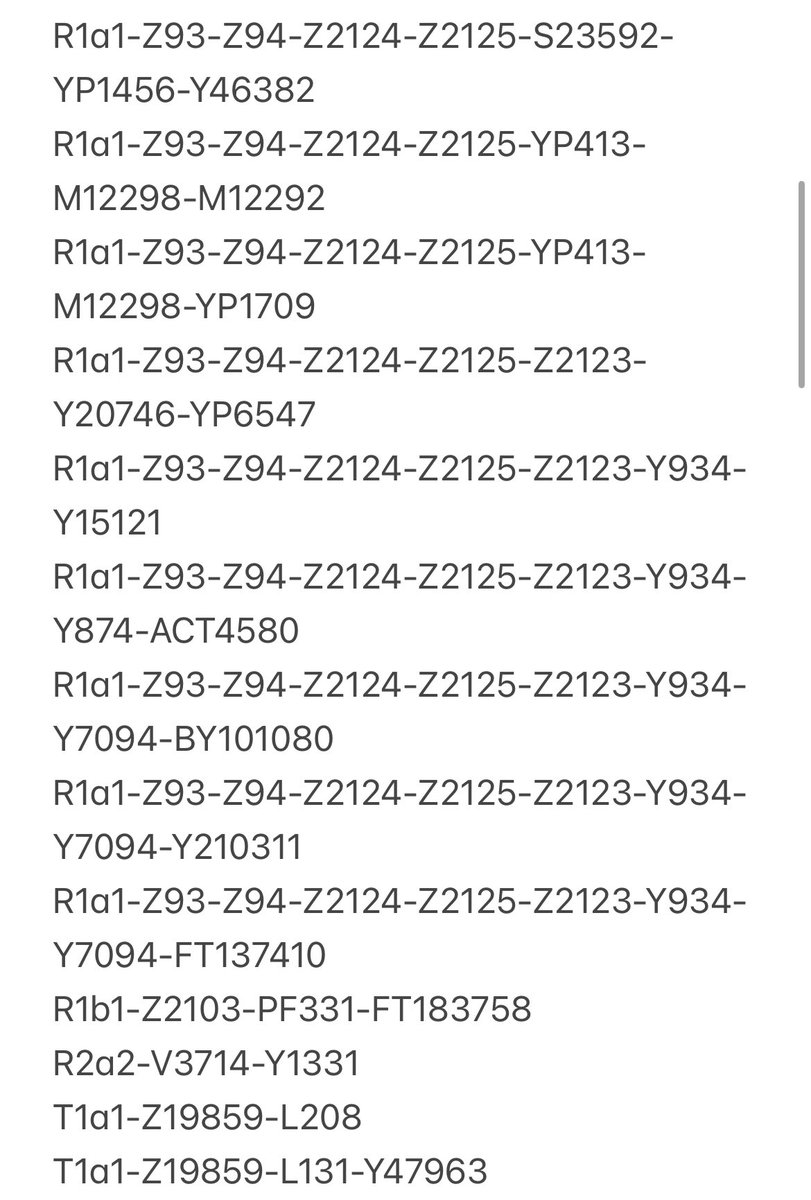
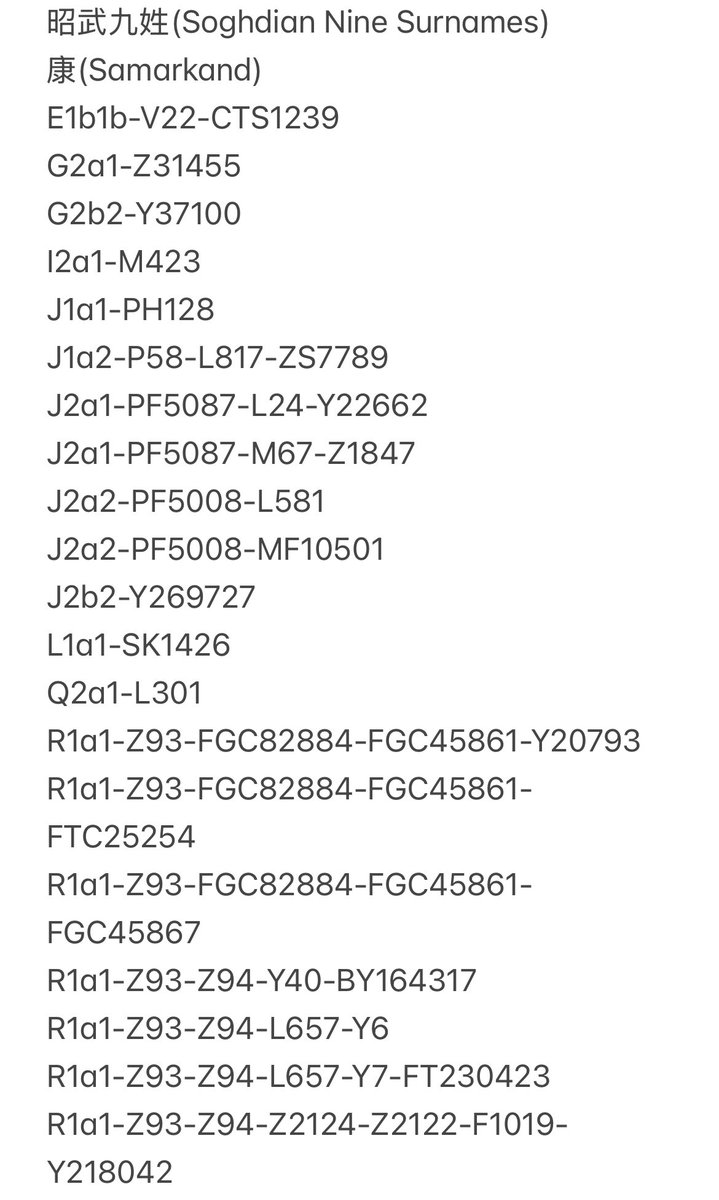
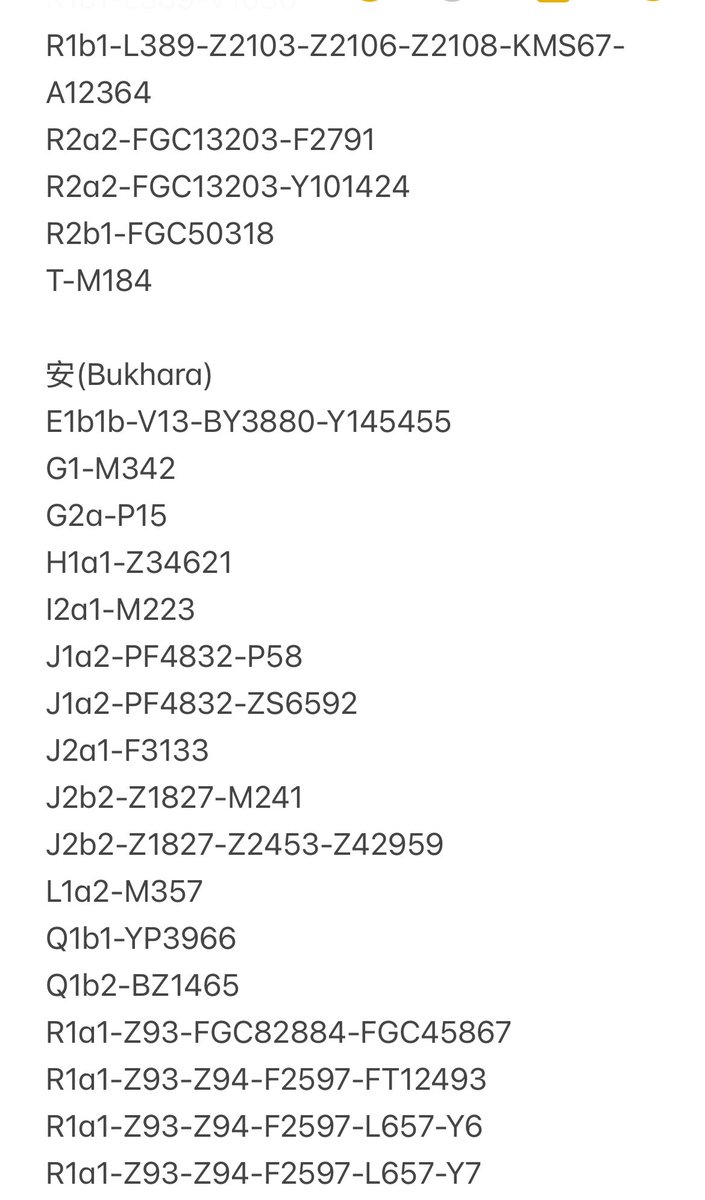
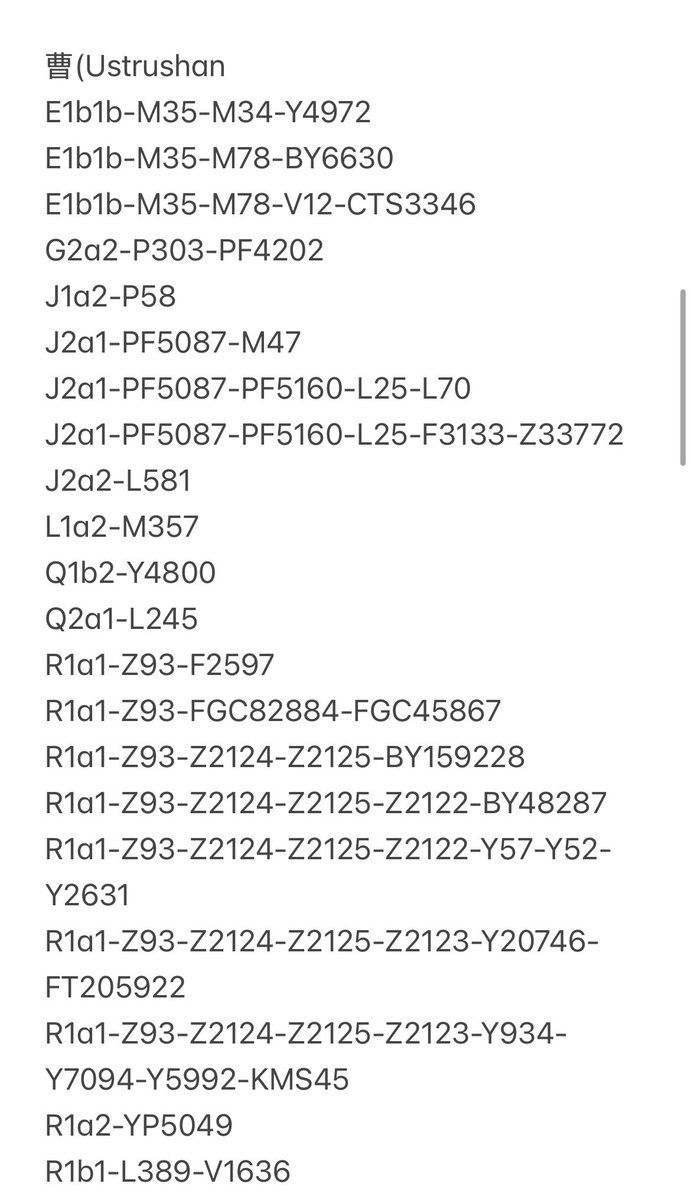
Çindeki soğd soyismine sahip kişilerin haplogrup listesi:
Çinde 7 adet soyisimden oluşan tang hanedanlığına göç etmiş kişilerin y-dna haplogrup sonuçları.Her bir soyisim ayrı bir soğd şehrini temsil ediyor.
Çoğu dal bazal olsa da işe yarar pek çok şey mevcut.
+
https://t.co/4rbSLczCda
I thought posted this but I haven't. 8/157 Kurdish samples from Sulaymaniyah, Iraq are E-V13.
Frequency of 5.1%
Similar to the study in Iranian Kurdestan
@AbdAshtart4 There were actually Neolithic samples tested way back in I believe the United Arab Emirates or Qatar, but it's been very long so I assume they did not yield anything
@AbdAshtart4 I've started considering that possibility that the majority of modern Arab DNA comes from a Natufian-like Arabian HG and an Iranian-like East Arabian HG.
Either way I think they'll have much less 'Levantine' DNA once we get older aDNA from Arabia