Google sold some $85B in stock to raise capital for its AI buildout. Equity capital is the most expensive wat to raise capital… or is it?
Could Alphabet have sold at the top of a bubble?
$GOOG
https://t.co/ZshUCHjl5d
@Bubblebathgirl@GavinNewsom Statistically untrue, which is consistent with all uneducated, uninformed, right-leaning, radicals. Kentucky, a red state bastion, holds the distinction of having the worst debt-to-GNP percentage. California is more middle-ground.
https://t.co/pBE09XmYu7
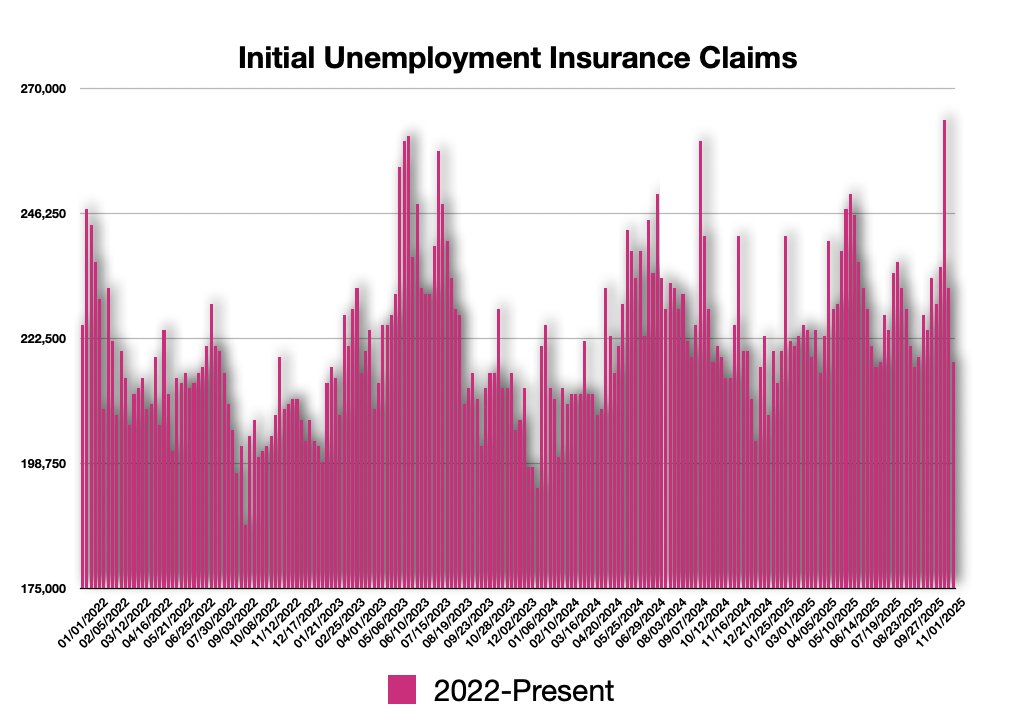
Employment situation continues to move sideways with initial claims and continuing claims despite tariffs weighing on economic output.
However, unemployment numbers are likely to rise with Federal furloughs showing up shortly.
The M2 Money Supply growth declined for the month of August, and this portends economic contraction in the economy. Money supply is driven by business growth and consumer expenditures via fractional banking. If supply declines, growth follows.
#economy#StockMarket
The next major economic release will be is Tuesday with M2 Money Supply. If the pace of money growth slows, this shows continued decrease in economic activity from the tariffs. This is more of a leading indicator, and one of the key economic data points.
#Economy $SPY $TLT
@zerohedge Honestly, the model no longer works. Those programs were losing money on lower ratings because of diversification of content platforms, and lower ad revenue because of it.
In the meantime, I support free speech and will protest with the rest of them.
@ML3democrats I don't think she even saw how grave it would become. I think she low-balled how bad things will be. 25 years from now, the damage will still be reverberating and unrepairable. The US has just peaked, and it is downhill from here.
The mood at the Federal Reserve is shifting toward a potential interest rate cut. The US 10-year Treasury yield has fallen as investors prepare for a potential shift in interest rates.
On the one hand, the 10-year has dropped a full 15 basis points from last week’s high of 4.495% down to 4.350%. On the other hand, the yield still remains relatively within a tight range since April’s big moves after the so-called Liberation Day selloff.
Interest rates are stuck between two overwhelming concerns:
Short-term interest rates are likely to move lower on concerns of a slowing economy; and,
Long-term interest rates are likely to move higher on concerns of a wall of debt hitting the markets.
Private sector employment is slowing, as shown in last month’s payrolls data. Overall employment growth was boosted by government job creation. However, that may be at risk now that the US Supreme Court has given Trump the okay to fire government workers at will.
With a slowing economy, there will be less tax take for the Treasury, which will add to the deficit.
So, while the 10-year is moving lower today on the heels of statements from Federal Reserve board members, there may be limitations.
#economy #StockMarket #Investing
Trump is imposing a 50% tariff on Brazilian goods as a punishment for the trial of Bolsonaro. Coffee futures had been much higher earlier on fears of a poor harvest. So, while the price of coffee did move higher on the latest news, it is inconsequential in the overall picture.
#Economy #StockMarket #Investing
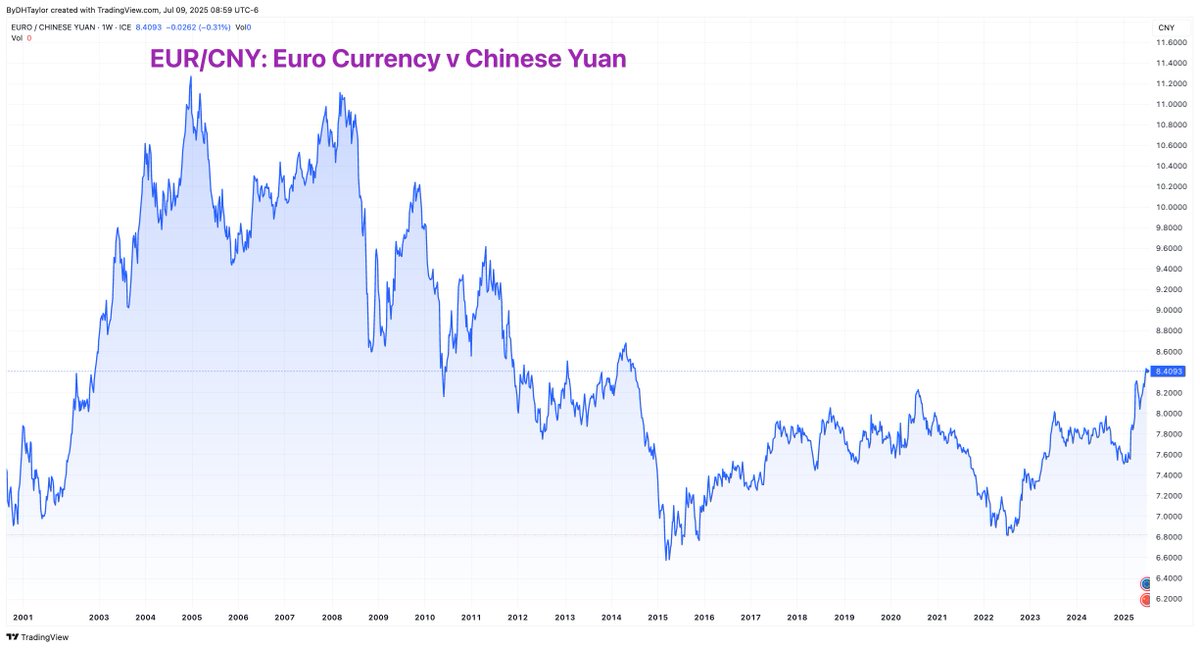
The Euro currency is heading higher versus the Chinese Yuan. The overall value of the EUR has climbed significantly over the past six months. The US dollar has been overvalued, and with new policy shifts, the dollar is falling—UER/USD has climbed significantly since the beginning of the year.
From that, the ripple effects are shifting global finances. EUR is becoming overvalued versus CNY. The ECB may take note, but is likely not to make any changes yet. Eventually, however, the European Central Bank may have to step in and make shifts.
With the value of the EUR climbing, European terms of trade will improve. Europeans will be able to enjoy goods manufactured from abroad at less expensive prices. Raw goods, such as oil and metals, will be less expensive on a relative basis.
However, the flip side will also occur as European-made goods will be more expensive for other countries.
#Economy #Investing #StockMarket
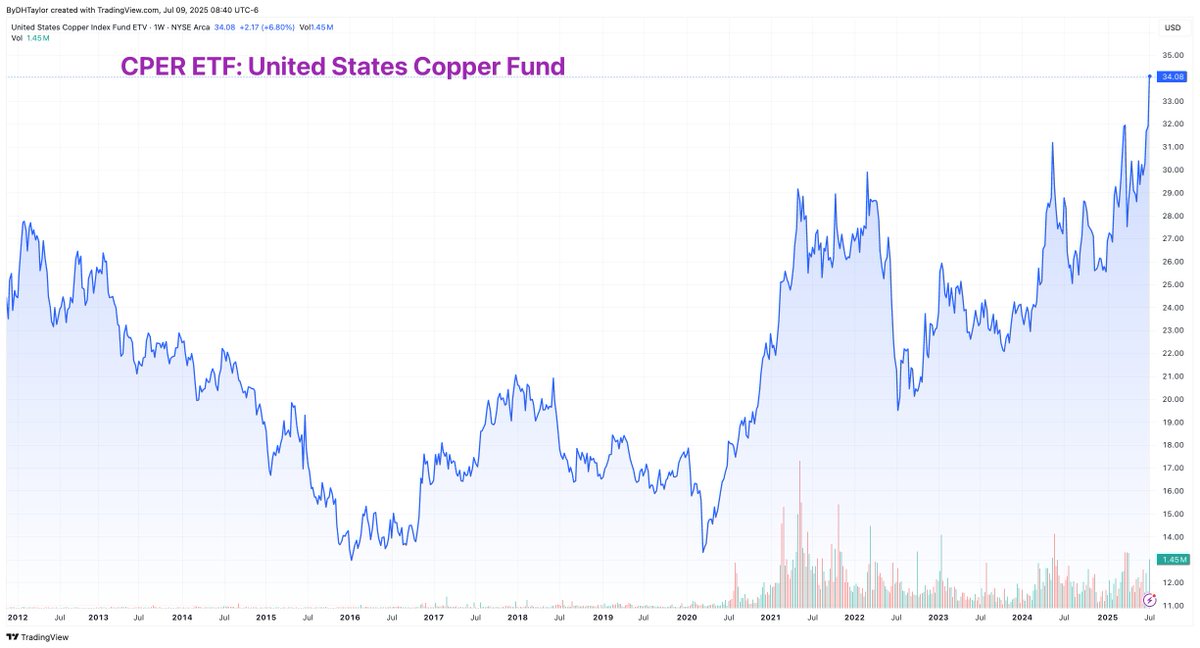
Copper prices - $CPER - soared to a new all-time high. Tariff threats have driven the price of the industrial metal higher on fears of shortages and overall tax increases.
During regular times, price growth in copper typically follows economic expansion. However, tariffs are an anomaly, and the price of copper is artificially inflated as a result.
#Economy #StockMarket #Investing
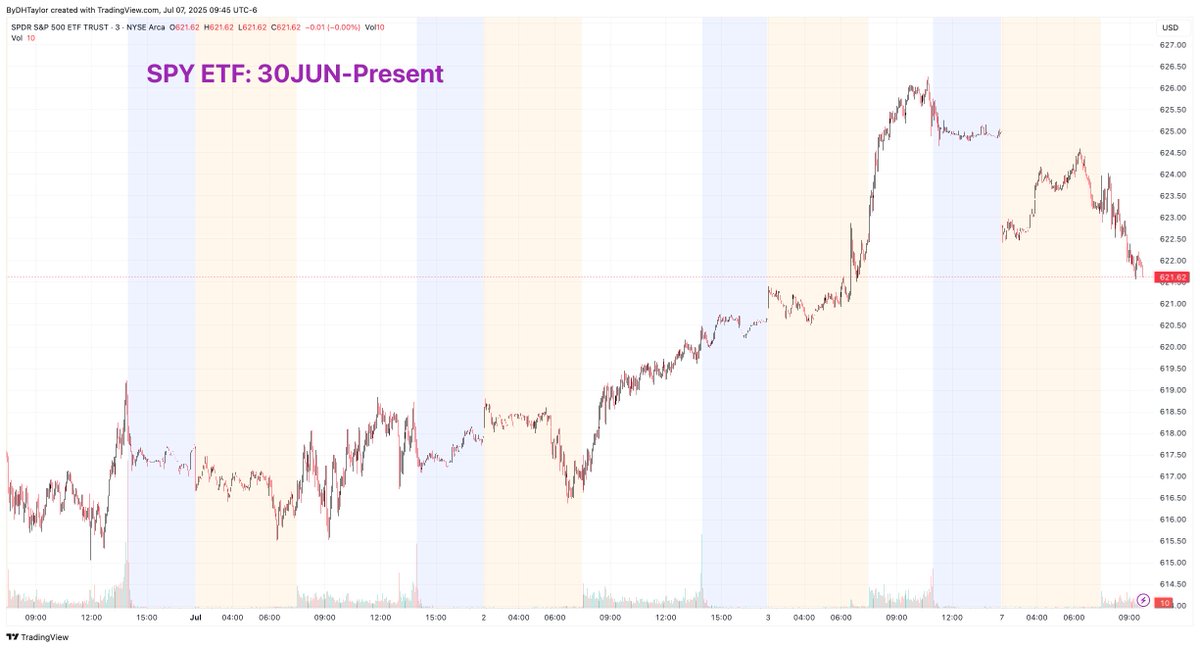
The stock market - $SPY - was bought on Thursday on light volume after non-farm payrolls showed continued strong numbers. On the one hand, the payrolls data was a bit misleading as government jobs were the main driver. On the other hand, jobs are jobs.
In the meantime, tariffs are back in consideration with a slew of activity likely to occur this week as the deadline looms. Also, the Big Beautiful Bill is going to be a ginormous debt bomb, and the bond market has taken notice.
#Economy #StockMarket #investing
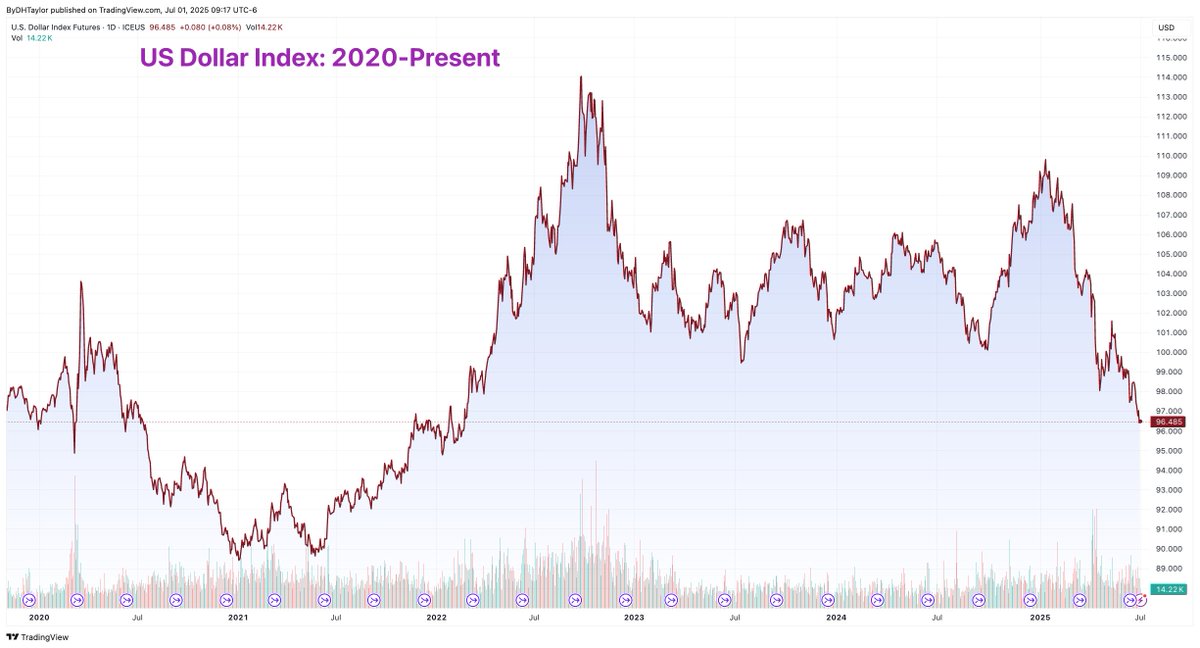
The US dollar index continues to test lows in this cycle. In the chart here, the dollar was at a low with interest rates near zero. Then, when inflation hit and the Federal Reserve pushed interest rates higher, investors flocked to the United States as an investment haven.
Now, that cycle is reversing. We are seeing other countries have their respective interest rates move higher (Japan), and investors are fleeing the US dollar because of this.
It is important to note that the US dollar was considered very strong on a relative basis. Now, it is moderating back to a more normalized level. But, with that surge in investor interest came a surge in economic growth. As investors leave the US as an investment destination, the funds that leave translate into a declining economic opportunity.
#Economy #StockMarket #Investing
Industrial stocks to watch:
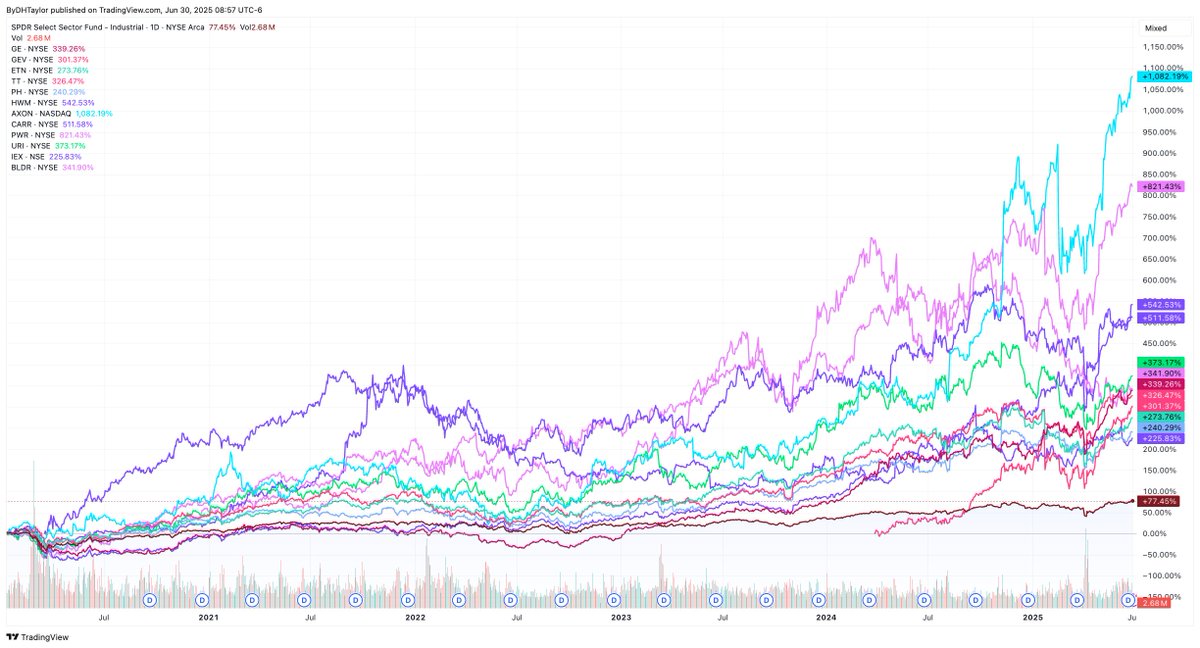
The chart here is $XLI ETF, the Industrial sector of the S&P 500 via $SPY ETF. Last week, I wrote that the stock market cleared its previous all-time highs after April’s selloff. Of all sectors, however, Industrials led the charge–not your typical leader in our economy.
The Industrial sector itself is up 77.5% in that five-year period. Here is a breakdown of the 12 stocks that are really leading within the Industrial sector. These 12 have at least +225% return since January 2020, right before the beginning of COVID.
Note: There were a few other stocks that were close to the +225 level, of course.
The top four stocks have performances that are more similar to tech stocks versus traditionally thought of industrials— $AXON with +1,078% in five years!
I am going to take a deeper dive into these individual stocks and the sector itself in a longer post, as well, I will break down the other sectors in the S&P 500.
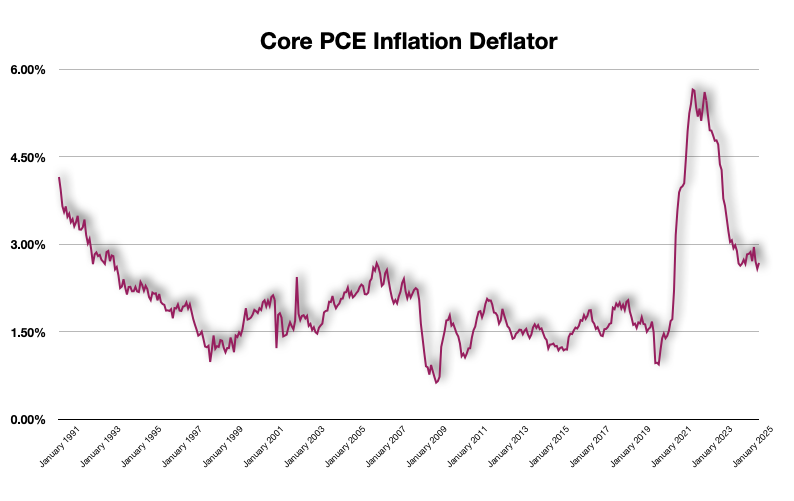
Inflation is starting to trend upward, at least for the latest period. Core PCE came in at 2.678% year-over-year versus 2.577% the month prior. While this is not necessarily a huge factor, the most important thing to note is tariffs are coming, which will push prices upward. At the same time, those tariffs will erode economic activity and push unemployment higher.
Expect this to play out over several months instead of a wall of price pressures; most companies pre-ordered an enormous amount of supplies prior to the tariffs. Nonetheless, tariffs are a tax and they will erode consumption capabilities of consumers within a consumer-driven economy.
The end result will be higher price pressures and increasing unemployment. While the Federal Reserve will move to lower interest rates in order to balance employment and prices, the economic toll from tariffs will outweigh the boost from lower interest rates.
#Economy #StockMarket #Investing