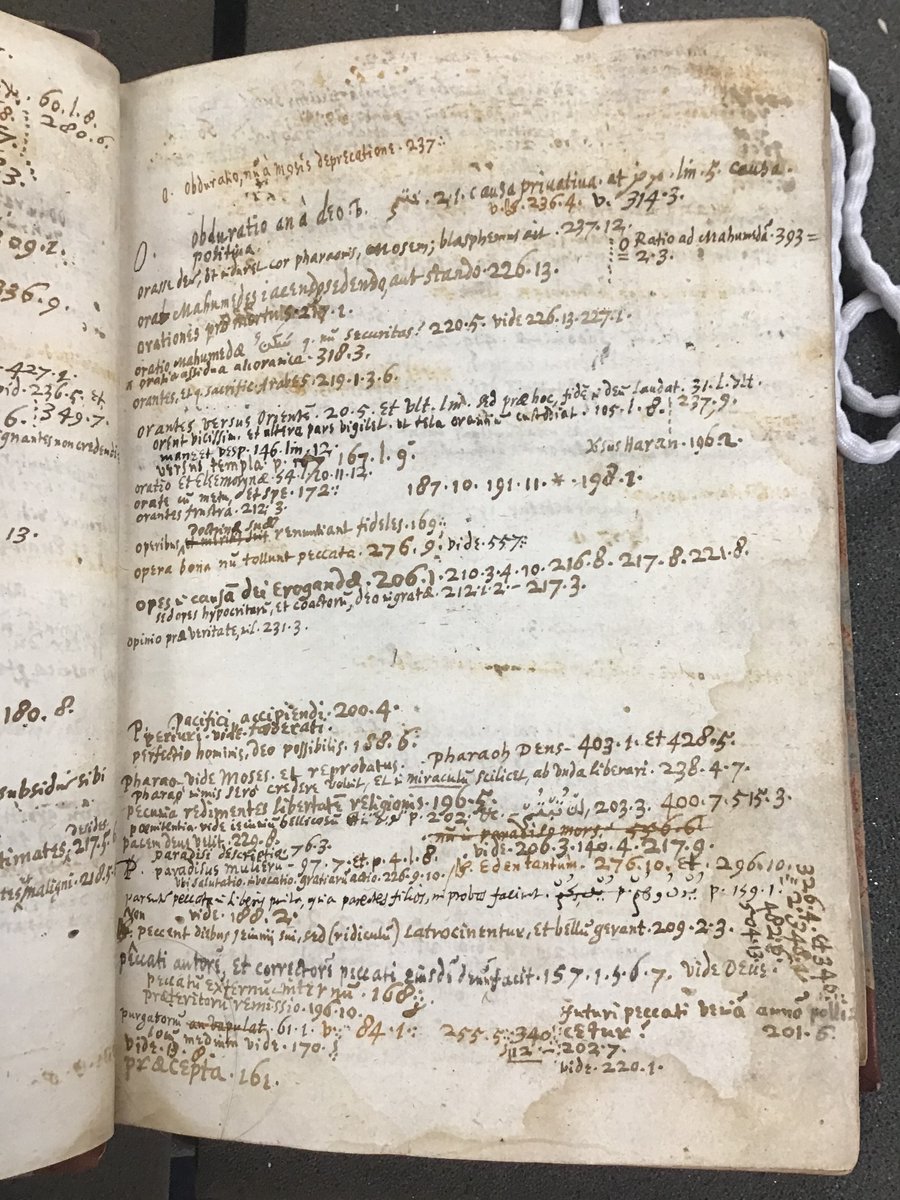
“God’s will is my will”: an entry in Arabic, Syriac, and Danish by a traveler from Denmark, Lauge Christensen, in the friendship album of the English Arabist William Bedwell (c. 1563-1632). Leiden, ms BPL 2753
Islamic manuscript bags are rarely studied—but they hold key evidence for how books were used, valued, and preserved. From embroidered silk to handwoven wool, these enclosures reveal a hidden layer of manuscript culture. Read more https://t.co/cD5tUQ71Fo
#LibraryTreasures for April:
Using an envelope to mark a place in a book is a time-honoured tradition. This example was found in a copy of Studia Sinaitica Vol XI (1902), and is an envelope addressed to Mrs Agnes Lewis (1843-1926) – the author of the volume!
PJ 3081 .H6
Lovely session with our Syriac and Coptic language schools - thank you to @GeorgeKiraz and @AlinSuciu1! - looking at some of the manuscripts in the College archives given to Westminster by Mrs Lewis and Mrs Gibson, the #SistersOfSinai.
A new study of a fragmented Sumerian tablet reveals a heretofore unknown myth from early Sumerian mythology. Read on to learn the history of this artifact, and the story it preserves 🧵 1/11
My new article describing 14 'Qur'an manuscripts from Southeast Asia in German collections', published in the SEALG Newsletter (2024), is now on Academia https://t.co/zoRRJX3oGz
Dutch scholar and printer Thomas van Erpe — Erpenius — collected Islamic and Asian #manuscripts. His widow sold his collection to George Villiers, Duke of Buckingham. In 1632 his widow gave them to @theUL. Where they are now on show. https://t.co/t9kGwSPJPR
Image 2: Portrait of Thomas Van Erpe in Illustrium Hollandiae et Westfrisiae ordinum Alma Academia Leidensis (1614) (Cambridge University Library LE.5.26)
Endless Stories, opens on 28 Sep at Cambridge University Library. It showcases the extraordinary manuscripts collected by 17th-century visionary, Thomas Van Erpe. The exhibition includes works in Arabic, Hebrew, Persian, and Malay.
Book your free ticket: https://t.co/W1aZic0y8W
Qur’an annotated by Cambridge’s first Professor of Arabic, Abraham Wheelock (1593-1653), who studied the text alongside several Latin translations and two Islamic commentaries, in Persian (the "Cambridge Tafsīr") and Arabic (al-Bayḍāwī). Cambridge University Library, ms Ll.5.27
In fact, we have some information that can help identify it: on a flyleaf of his own copy of the Qur’an (today in Oxford), Thomas Erpenius described decoration on the opening pages of Scaliger’s Qur’an. Bodleian, ms Marsh 358
Historic interleaving 📚
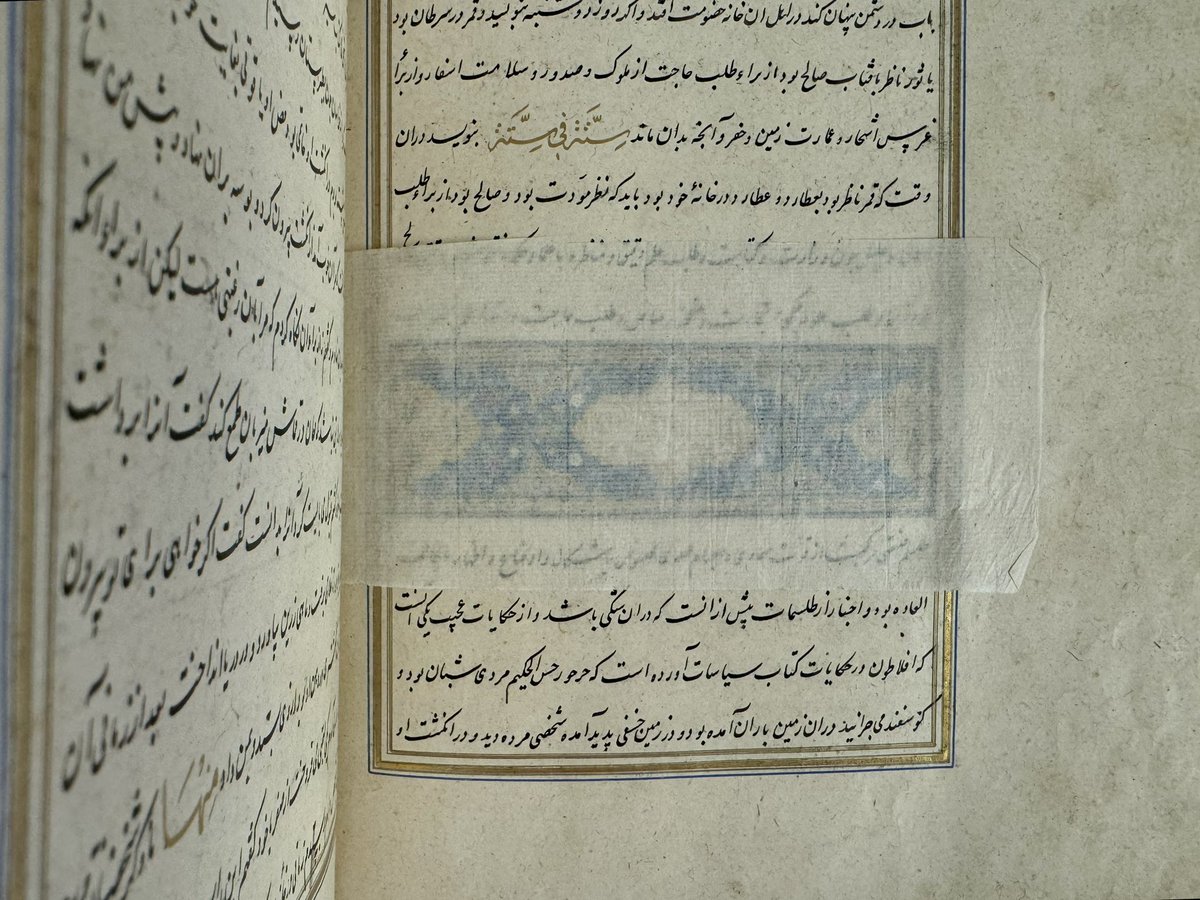
Laid European paper cut to size and inserted to protect the illustrations. I wonder what the original handmade paper looked like…
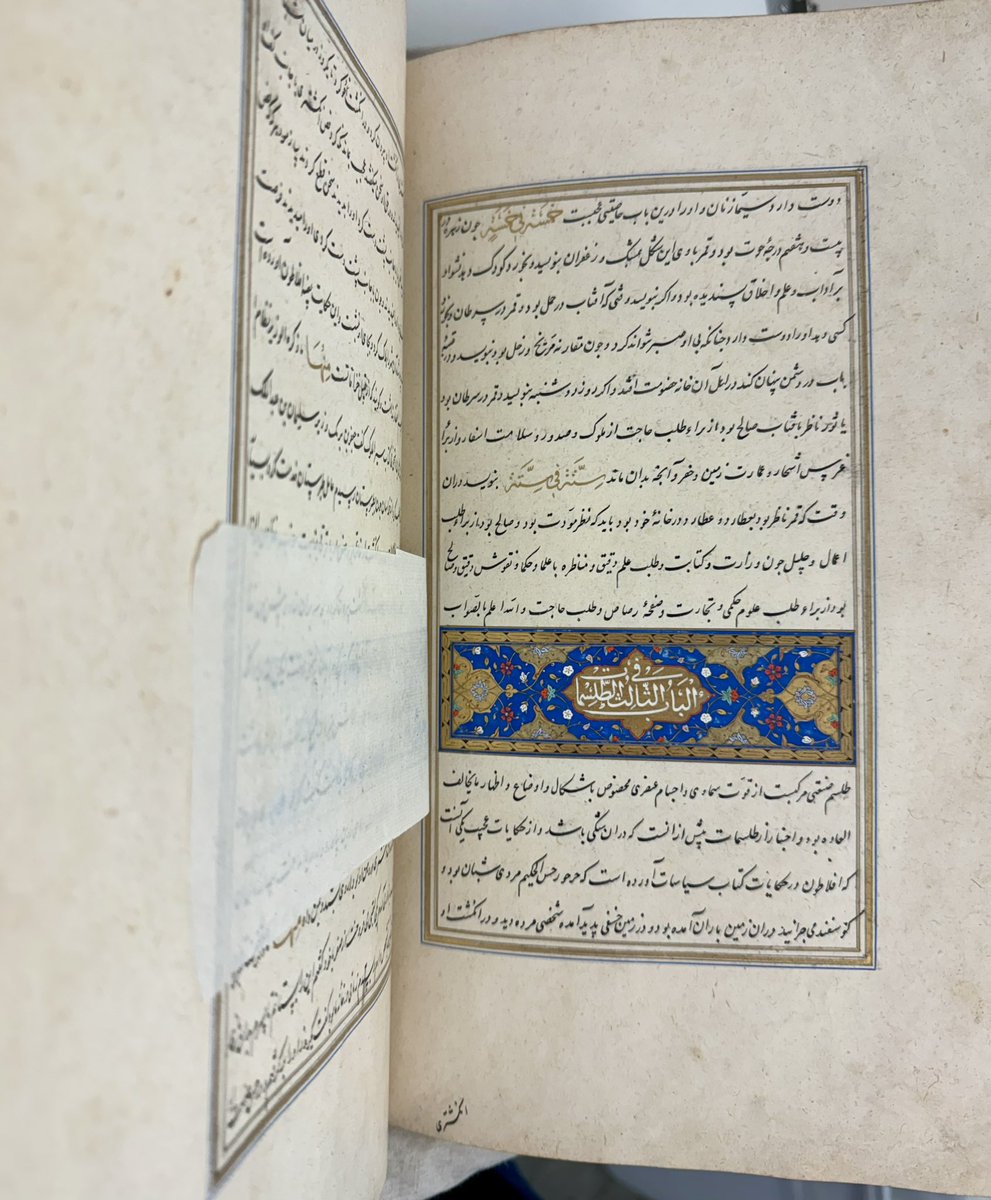
@theUL MS Nn.3.74, ʻAjāʼib al-makhlūqāt,’ dated 974H/ 1566AD
#CULconservation#ManuscriptMonday
Unpublished notes for Thomas Erpenius's edition & translation of part of the universal history of al-Makīn (d. 1273). Erpenius died before he could finish, & the edition was published posthumously (without notes) in 1625 by Erpenius’s student, Jacob Golius. Bodleian, ms Marsh 160
Current exhibition in the beautiful Parker Library is on women connected with @CorpusCambridge. Treasures include a C10th manuscript, a medieval will, & some of our papers: those of Agnes Smith Lewis & husband Samuel Savage Lewis, Parker Librarian! @ParkerLibCCCC#SistersOfSinai
@JillWhitelock@RPShistgroup In 1897 Agnes Lewis had a Frena camera which she regretted leaving behind at the hotel and so had no photograph of her visit to the Cairo Genizah…