Let's take a quick trip to a tiny piece of town with a massive amount of history, and gargle! It never fails to give the wannabe spy in me a little thrill. You're strolling down a crowded Dame Street and see the beautiful, discrete stag mosaic on the pavement.
You duck left into the tiny gap that oncoming pedestrians can't see. Suddenly you're in a narrow lane that's part Jack-The-Rippers London part Harry Potter's Nocturn Alley. This little umbilical connects the hectic world of Dame Steet with the relatively chilled, boozy atmosphere of Dame Lane and Dame Court. The sense of escape and joy is palpable, particularly if you're heading into the warm bosom of the Dame Tavern or the Victorian charm of the Stags Head.
Likely a byproduct of the Wide Streets Commission, this little alley originated from a time when Dame Court continued straight down to Dame Street. The tiny route appears on an 1848 map. Sometime between then and the 1907 map, the buildings on either size expanded causing the Court to taper to the overhung little lane we see today.
Within the laneway you'll experience a cosy claustrophobia, offset with the occasional unsavoury whiff of urine. The first part is fully enclosed, then in the roofless end there's a popular barbers and bookies, before you emerge in to the court and glorious sight of pubs to the front, left and right!
So what's the origin of Dame?
17th-century maps show a "Damas" Street and "Damas" Gate. The "Dame" in question is actually a medieval church called Saint Mary del Dam. This place of worship was nearby the ancient East Gate of Dublin and the "dam" of the now subterranean river Poddle. Hence dam/Dame.
Saint Mary's was demolished in the late 1600s. The rough route of Dame Lane today follows the layout made by the Wide Streets Commission between 1785 and 1790. That extensive project moulded the structure of most of what we see around here from Parliament Street down.
When Parliament was held in what is now the old Bank of Ireland at College Green, Dame Street was casually referred to as the Royal Mile because it lay between Dublin Castle and Parliament.
The Dublin Castle end of Dame Lane was actually where the Castle Markets used to be, before they were demolished in 1782.
The hectic chaos and commerce of that site are difficult to imagine. It ran from 1707 on the site of another long-demolished church's graveyard (St Andrew's). For hundreds of years, this square mile surrounding Dame Lane was a crazy warren of medieval streets, a vibrant tangle of all walks of Dublin life. Think cobblestones and mud, sections of wooden boardwalk and straw mats..and more mud! Dark boltholes between rickety overhanging wooden buildings.
Full of cutthroats competing for victims amid piles of human waste pours by the bucketful from windows after a half-hearted warning howl. Tumbledown shops with creaking painted signs, shadowy shacks and lamp lit laneways. Butchers, cobblers, tailors, grocers, poulterers, barber-surgeons.
Hawkers and vendors are busy corralling business and chatting and scrapping with their fellow shopkeepers. Runaway animals (starving dogs, massive pigs and raucous chickens) rampaging and scavenging their way through the crowd.
Topless prostitutes hanging precariously from second-storey windows, shamelessly catcalling. Soliciting business, advertising services and prices, competing for punters with their fellow floosies across the narrow cobblestones.
A mucky, frantic, noisy pandemonium. Humanity, hungry and horny howling day and night!
Of course, it wasnt all taverns and trades. There was a sizable residential element to this quarter, right up to the 19th century. In 1818 Trinity Place off Dame Lane was home to hundreds squashed in to 20 odd gaffs. There were even squalid high density tenements in Dame Lane as late as 1862 --finishes in comments>>
A GoFundMe has been set up to cover the funeral costs for 16-year-old Mia Lily, who was tragically struck by a car while walking her beloved dog, Bowie, on the Slane Road in Navan on Saturday night.
GoFundMe link 👇
https://t.co/hqLQSd3OlM
Coincidence or shared human fears? 🇮🇪🇯🇵
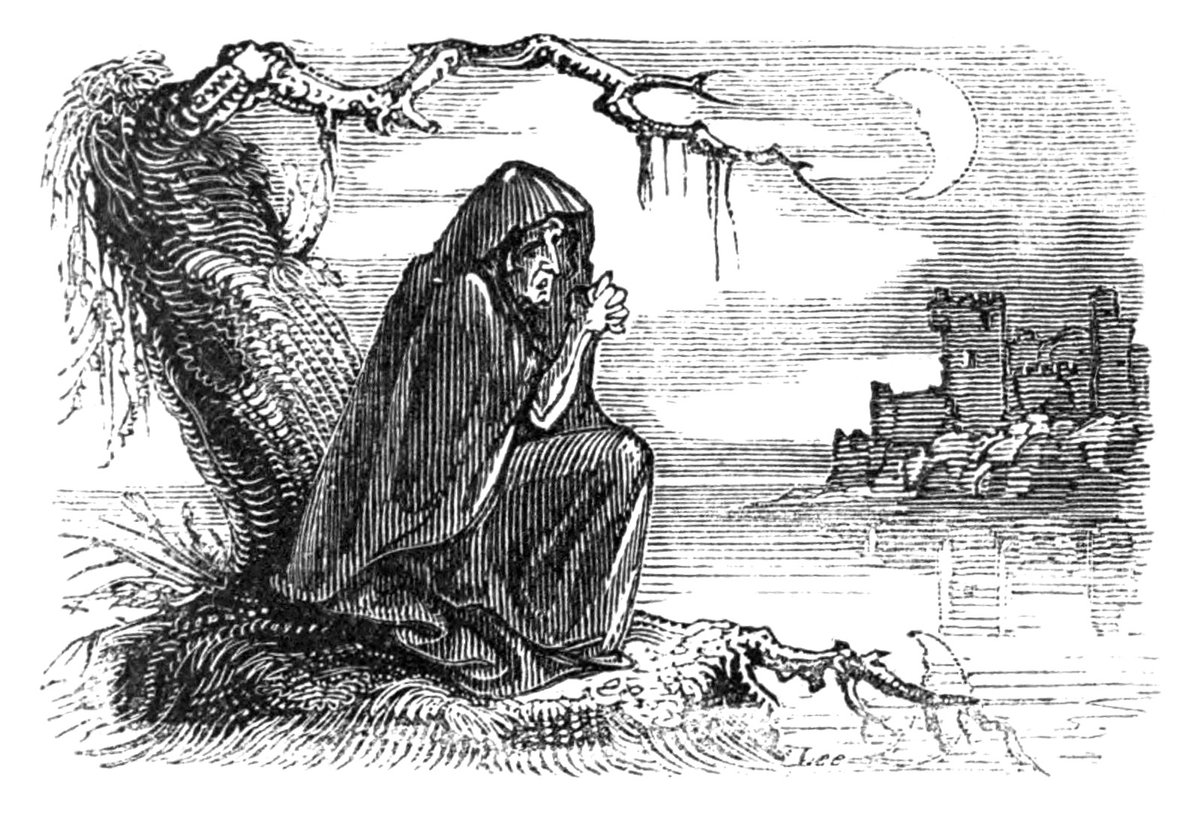
Ireland’s Bean Sídhe (Banshee) and Japan’s Yonaki babā (“night-crying old woman”) both haunt the night with feminine wails tied to grief and misfortune.
In Irish lore, the banshee’s cry foretells death within certain old Gaelic families, a bridge between this world and the Otherworld. In Japan, the Yonaki babā appears as a weeping old woman whose nighttime cries bring dread or bad luck.
Though born in distant worlds, both spirits echo a timeless idea: that grief can arrive before death itself, carried on a woman’s cry in the night.
The fall of Silken Thomas was truly the end of an era. Thomas FitzGerald, heir to the mighty Earldom of Kildare got his nickname for the silk fringes his gallowglass warriors wore on their helmets.
Thomas was born in London in 1513, his power stretched across Ireland, ruling the country in the name of the Tudor English Crown. In February 1534, his Da was summoned to London by Henry VIII. The King left Geralds 21 year old son Thomas as deputy governor of Ireland.
A few months later, word reached Thomas that his Da had been imprisoned in the Tower of London. Some rumours said he had been executed, with the same fate awaiting Thomas and his uncles.
On the 11th of June 1534, Thomas summoned his council to St Mary’s Abbey in Dublin. Riding with 140 armoured retainers, silk-fringed helmets glinting, he strode into the chamber. The Chancellor, Archbishop John Alen, pleaded with him to think carefully before committing treason.
But his Irish harper, sensing hesitation, began to recite a poem celebrating the great deeds of FitzGerald ancestors. And like some rap battle hypeman this egged him on. Silken Thomas threw down the sword of state and publicly renounced his allegiance to his cousin King Henry VIII. The Kildare Rebellion had begun with the medieval equivalent of a mic drop.
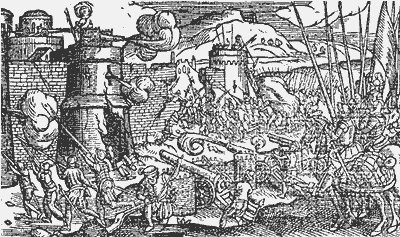
As Vice-Deputy, Thomas commanded most of the Pale’s fortresses and held vast stores of arms. He called the lords of the Pale to lay siege to Dublin Castle. The Castle was the powerbase and ultimate symbol of English rule.
Those who refused him were seized and sent to Maynooth Castle. Thomas offered his cousin, Lord Butler the son of the Earl of Ormond, half the kingdom if he would join the cause. Butler refused.
The siege of Dublin Castle spectacularly failed, and in July his forces were routed. Archbishop Alen, who had attempted to mediate, was mistakenly killed at Artane. The story goes that Thomas’s order as Gaeilge “Beir uaim an bodach,” meaning “take this fellow away” was misheard as an order to kill. The clergy turned against him, and excommunication followed.
By the time his Da actually died in the Tower of London, Thomas had technically succeeded as the 10th Earl of Kildare, but the Crown never confirmed the title. Retreating to Maynooth Castle, he awaited foreign aid, expecting the Catholic Emperor Charles V to intervene but they were still in a huff over Archbishop Alen.
In March 1535, while Thomas was away raising troops, Maynooth fell to betrayal. A guard was bribed to open the gates to Sir William Skeffington’s forces. The garrison was executed in what became sarcastically known as the “Maynooth Pardon.” By summer the rebellion was collapsing.
In July, Lord Leonard Grey arrived as Lord Deputy of Ireland and he knew he was banjaxed so Silken Thomas sought terms of surrender. Grey promised him personal safety if he surrendered unconditionally. Legend says that the night beforehe played the lute beneath the great yew tree at Donadea known as the Silken Thomas Yew, the oldest planted tree in Ireland. I can think of better ways of spending me last night of freedom that also involve a flute.
Shock horrro, the English Lord Deputy of Ireland promise was bullshit. Silken Thomas was sent to the Tower of London in October 1535, were he languished for over a year before meeting his fate on the 3rd of February 1537. He was executed at Tyburn alongside five of his uncles, none of whom had taken part in the rebellion. He was spared the full horror of drawing and quartering, being hanged and beheaded instead. He was twenty-four years old.
The consequences were immediate and brutal. Parliament passed the Attainder of the Earl of Kildare Act (1536), stripping the family of lands and titles. The FitzGerald dynasty, which had ruled Ireland in all but name for generations, was shattered. In 1541, Henry VIII, declared himself King of Ireland, replacing the medieval Lordship with direct Tudor rule. The old Gaelic-Norman order was extinct.
Poaching in Ireland during the British occupation wasnt just about illegal hunting or fishing. It was about using hunger as a tool of colonial power. Now long before the Great Famine, the Irish countryside was already a contested landscape.
Our rivers were teeming with salmon, and our luscious forrests and hedgerows were alive with hares and birds. But the poorest inhabitants, disenfranchised from their ancestral lands were legally barred from touching any of it.
Under British rule, Ireland’s land was dominated by the Anglo-Irish landlord class, whose property rights extended far beyond soil. They "owned" the rivers and lakes and land on their estates and all the livestock, game and fish contained their.
Freshwater fishing rights for salmon, trout, and eels were strictly private. Game laws reserved hares, pheasants, grouse, and deer for landlord sport. What had once been shared resources, governed by custom and necessity, were now enclosed by statute even amid the cycles of famines.
The Night Poaching Act of 1828 was particularly feared. It made it a serious offence to hunt or fish after dark, precisely the time when the poor could act unseen. To be caught at night, armed, or in the company of three others transformed hunger into a criminal conspiracy. Punishments ranged from imprisonment with hard labour to transportation for seven years. A rabbit taken to feed a family could end with exile to Australia.
Informers were despised, yet they were often forced in to it to save their own skins after being caught by the feared gamekeepers. Magistrates were heartless and distrusted. The civil law was really just an extension of landlord power, designed to protect sport for aristcrats rather than starvation.
An Gorta Mór, the Great Famine of 1845 to 1849 shattered whatever fragile balance had existed between breaking poaching laws and desperation. When the potato failed, the grain, cattle, butter, and bacon continued to leave Irish ports in vast quantities, bound for Britain.
When gobshites ask why people didnt "just fish" when the rivers still ran thick with salmon and the lakes teemed with trout and eels. Well fishing meant trespass on landlord property. Being caught meant being shot, prison or transportation or eviction.
During the Famine eviction was effectively a death sentence for whole family. And dont forget that man jailed for stealing food could miss a relief distribution. A family evicted for poaching could be dead within weeks.
So wild game like rabbits or hares or birds, anything that could be trapped or shot became food. The ecological impact of famine poaching was real. The desperate hunting of birds and animals during these years is believed to have contributed to the decline of native species such as the Irish Grey Partridge.
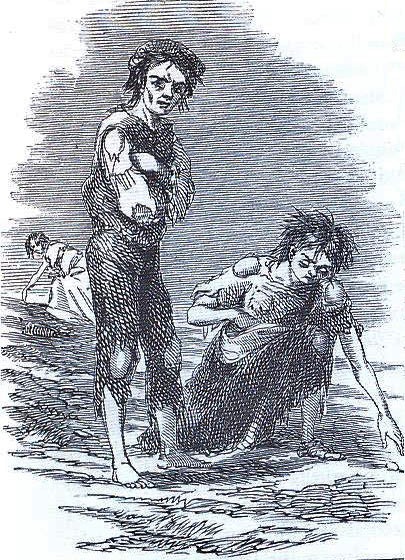
Nature itself became another casualty of starvation and law. Contemporary accounts are full of people eating hedgehogs, crows, and rats. Even frying worms for protein. Turnip stealing from fields became widespread, another small crime punished harshly under the law.
Please support the Dublin Time Machine Book https://t.co/U7jtCrOTtb
link to my romance books
Hawthorn Hall - The Baronscourt Legacy
Sisters In The Shadows Of War - Love & Loss On The Homefront
amazon kindle, apple audio books, B&N etc.,
https://t.co/iZHojpTvnA