I had to find a way to deliver more value between sessions — and to a wider group of people who wanted to coach with me but couldn't, for all kinds of reasons.
So I built something that aims to do that: make me available when I'm not, in a safe, protected environment, so you can still learn how to trade TBD the way I do.
We're about to start beta testing — to make sure the final service is everything it needs to be.
While we do, the waitlist is open for people who are interested.
Follow @Cajun_Coach to stay up to date.
Landing page → link in bio.
Education only. Not financial advice. Not trade signals.
Do you know where you get out before you know where you get in?
A client asked why his entries felt fine and his exits felt like panic. His plan had an entry and nothing after it. In TBD the exit lives in the plan before the click: invalidation, target, and what happens if neither shows up. Writing it later means writing it while the position is talking to you.
If the exit isn't on paper first, the candle writes it for you.
The exit comes first because it's the only part you can decide calmly. Once you're in, every candle talks to you. Invalidation, target and the 'neither happened' plan all belong on paper before the click.
@cfjcrypto Decide when the day ends before it starts. A trade count or a number, written down.
Green days rarely get lost to the plan. They get lost to the trades nobody planned. After a good morning, the best trade is often the pass.
@AtifHussainOG Usually none of the four. It's that nobody writes down why they took the trade, so the same mistake looks new every week.
Plan per trade, a pass when it doesn't fit, one journal line after. Overtrading and discipline get a lot smaller once the misses are on paper.
No trigger candle printed, so what exactly are you trading?
A client brought a setup that looked perfect. Level marked, story clear. No trigger candle. That is not a trade yet. That is a hope, assumption and expectation rolled into one. No trigger means one of two things in the plan: stay out, or go conservative and wait for the next one.
The setup is not the entry. The candle is.
A setup tells you where to look. The trigger tells you when the market agrees. Without the trigger, you're entering on your own opinion, and that's where expectation sneaks in.
@Elikrypt The line I'd underline is know when not to trade.
A logged pass is a decision too. Traders who journal their passes often find the worst losses were trades they already had doubts about.
Patience you can write down beats patience you have to feel.
@sfxfundedcom C.
Revenge trading is usually oversizing with a story attached.
Fix the size before the session starts and the other three get a lot smaller.
@WealthGroup Add one: what you write down before the trade.
Preparation you can't read back the next morning is just a mood. Plan, size, take or pass, one journal line on why.
The response gets easier when it was decided in advance.
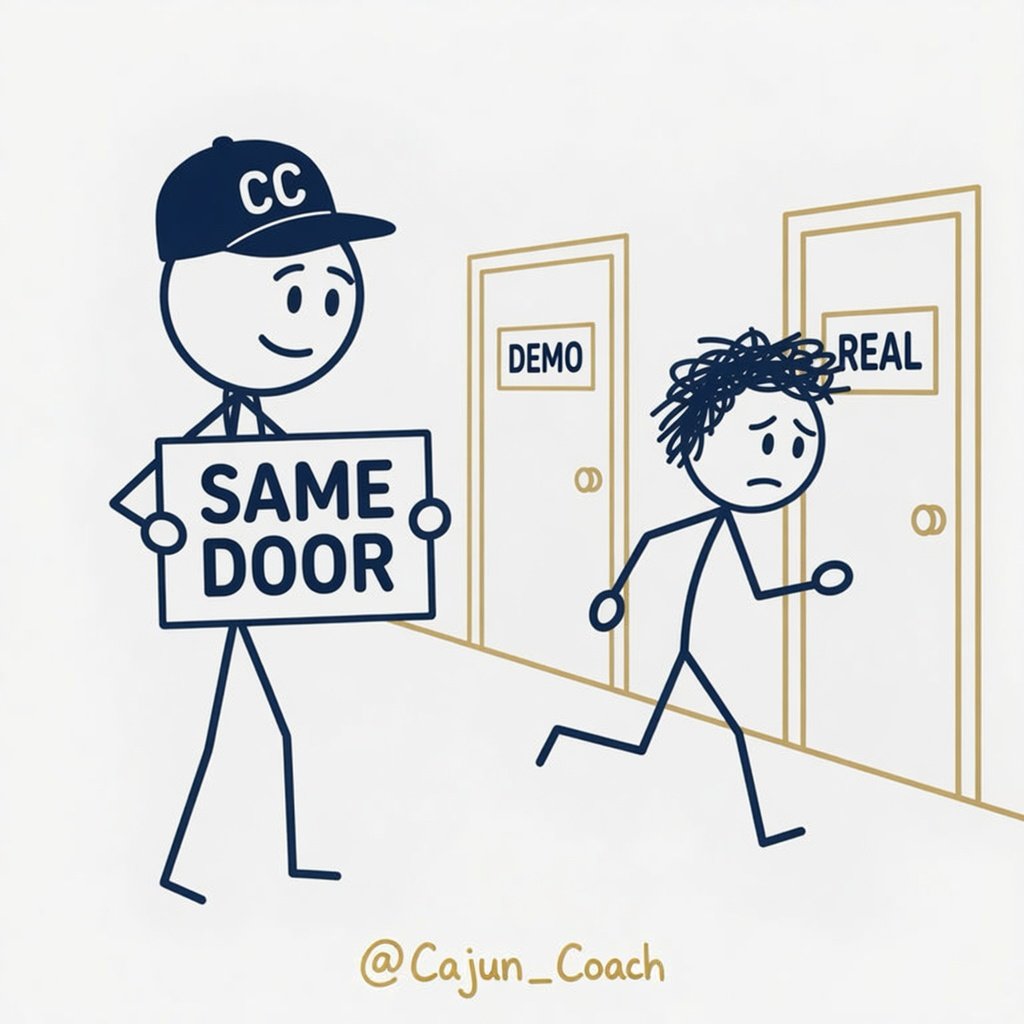
If the same idea showed up on a demo and on the real account, would you take it the same way?
Two doors. One said demo. One said real. He charged one and crept past the other. The chart did not change between the doors. The courage did. A demo is for practice, not for a braver version of you that disappears on the live account.
Same door. Same invalidation. Or it was never a plan.
Education only. Not financial advice. Not trade signals.
Demo and live should be the same trade with different consequences. If the plan only gets followed when the money isn't real, the gap isn't in the method. It's in how you handle risk.
You looked again. Did anything in the read actually change?
Same chart. He pulled the shade down and up like the picture would become a different trade. It did not. Another look is useful when the structure changed. Another look that only exists so the same candles will agree with you is the same chart.
If the second look is there to feel better, you have not done a new read.
Education only. Not financial advice. Not trade signals.
A second look earns its place when something new printed: a level broke, a session opened, a trigger closed. If nothing changed, the second look is just looking for permission.
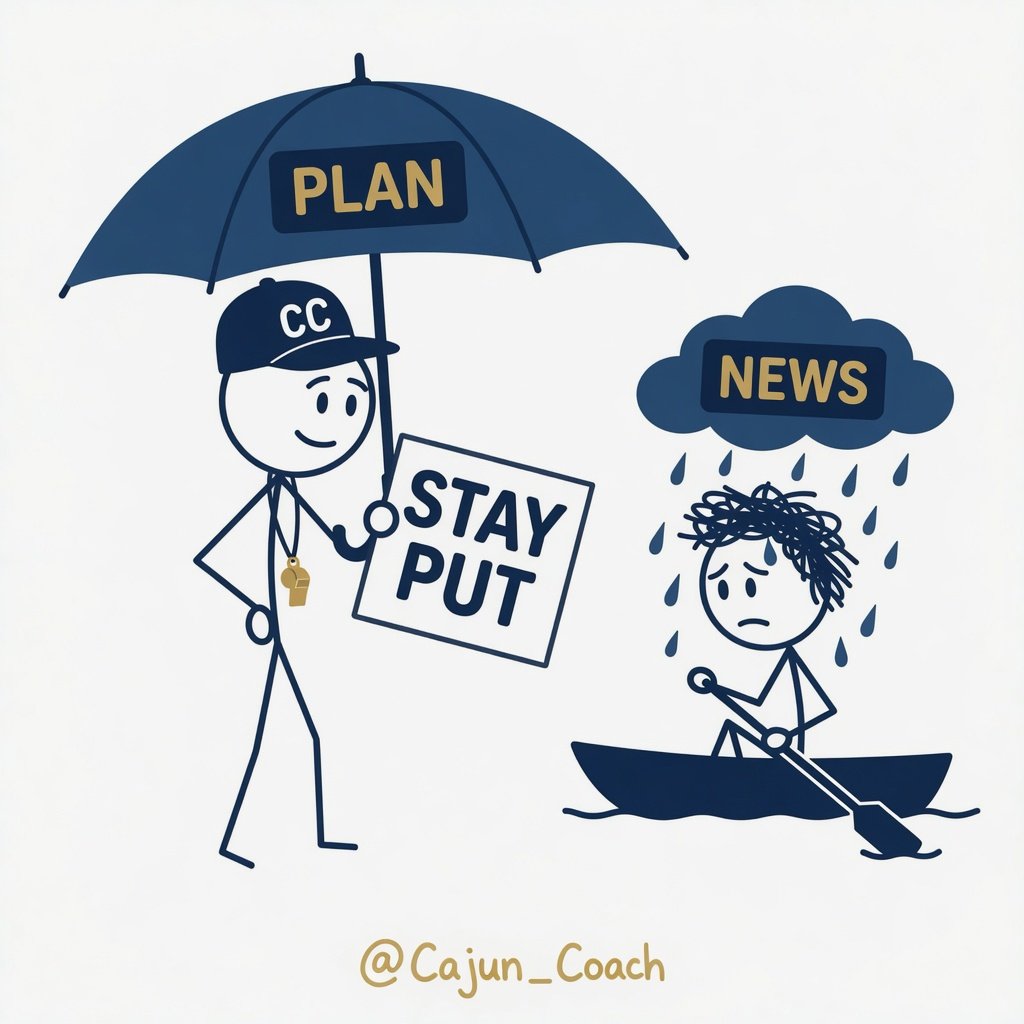
When the headline gets loud, are you under the plan or out in the weather?
News is weather. It can soak a session. It does not replace the plan already written: the level, the invalidation, the session that owns the idea. One trader went out into the cloud. The other stayed under the umbrella that was already there.
If the plan only changes because a headline arrived, the headline is running the account.
Education only. Not financial advice. Not trade signals.
A headline can change the weather. It doesn't move your level or your invalidation. If the news really changes the structure, the chart will show it, and the plan already says what to do when that happens.