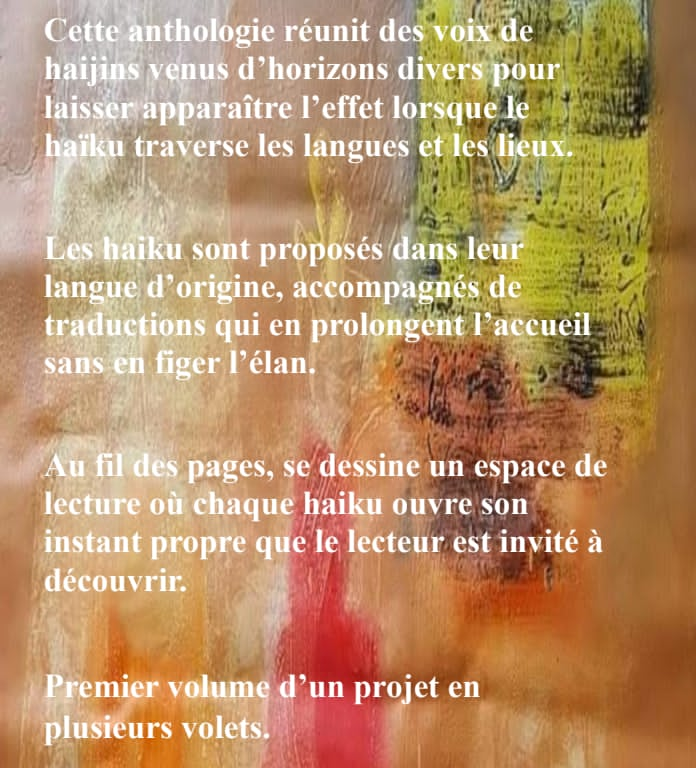
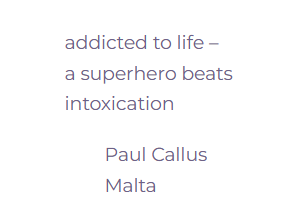
Congratulations to Benfares Mohammed for compiling this anthology that features haikuists from different parts of the world. Thank you for including mine.
Haiku Page
https://t.co/mVSuD0RhRn
3 senryu
not acquainted
with sirens
a sudden chill
sewing winter coat
needle stops in her hand
thinking of the past
wind blows
across the border
empty helmet plumes
https://t.co/ARScWTnGlw
Cattails, April 2026 issue is out now!
One of my favorite haiku journal ✨️
Congratulations to all the poets!
I have a haiku and a senryu in this issue.
Thanks to the editors :
Haiku : Geethanjali Rajan
Senryu : David J Kelly
Link
cattails261.pdf https://t.co/JiPUtcp5vf
#vss365#primitive#essay#atificialinteligence
The Architecture of Imperfection: Human Creativity in the Shadow of the Algorithmic Absolute
In the grand, unfolding history of human expression, we have long chased the ghost of perfection. From the symmetrical precision of the Parthenon to the relentless refinement of the musical fugue, our species has labored under the belief that if we could only sharpen our tools, steady our hands, and clarify our vision, we might finally achieve a form of flawless creation. Yet, as we stand on the precipice of an era defined by artificial intelligence—a force capable of simulating, synthesizing, and, in many ways, achieving that elusive technical perfection—we are forced to confront a startling truth: perfection is not the summit of creativity. It is, perhaps, its sterile horizon.
To understand the beauty of human creativity, one must look closely at the artist’s hand—not for the precision of the stroke, but for its tremor. Consider the late works of Rembrandt, where the paint is applied with an almost reckless urgency, or the jagged, frantic lines of a Van Gogh landscape. These are not failures of technique; they are the physical manifestations of a psyche navigating the turbulent waters of existence.
The musician, too, finds their power in the "wrong" note that feels right—the slight hesitation in a jazz performance that suggests a soul searching for its next thought, or the breathy, fragile vulnerability of a singer hitting a note just barely out of reach. These are not merely mistakes; they are portals. They invite the listener into the intimate, shared geography of being human. We do not love this art in spite of its imperfections; we love it because those imperfections map the boundaries of our own fragility.
Writing serves as perhaps the most visceral example of this tension. An AI can generate a thousand sonnets in a heartbeat, each grammatically flawless, each structurally impeccable. It can mimic the melancholic cadence of a Sylvia Plath or the sprawling, rhythmic complexity of a James Joyce. Yet, the machine cannot know the weight of the grief that necessitated the poem, nor the obsession that drove the prose.
Human literature is often defined by the "wound"—the specific, often unhealable point of origin from which a writer speaks. It is the history of failed loves, the specific texture of a childhood memory, or the existential dread that keeps a creator awake at night. These are not data points; they are the raw, unrefined matter of living. When a human writer puts ink to paper, they are not just arranging words; they are attempting to bridge the impossible distance between two isolated consciousnesses. The beauty lies in the struggle—in the ellipses, the subtext, and the silences where words fail to capture the enormity of the experience.
We must be candid about what is coming. AI will, indeed, achieve a version of perfection that we have historically envied. It will compose symphonies that adhere to the most complex mathematical harmonies without a single errant frequency. It will create visuals with a level of detail and color depth that pushes the limits of human perception. In this, the machine acts as the ultimate mirror—it gathers the sum total of our aesthetic history and returns it to us, polished and pristine.
However, perfection is a closed loop. It is a state of completion that leaves no room for the audience to enter. When we consume art that is entirely perfected, we are often left as observers of a spectacle. When we consume art that is born of human limitation, we become participants in a shared struggle.
The fundamental difference between the two is intent forged through vulnerability.
AI creates from correlation: It synthesizes the "how" of creativity with terrifying efficiency.
Humans create from necessity: We create because we are temporal, because we are decaying, and because we are desperate or happy. Because we are imperfect.
@LR_Publisher
Thrilled to be the Touchstone Awards Nominee for FAN by the Shadow Pond Journal Issue VII.
Many thanks to Katherine E Winnick.
~~~~~~~
Shadow Pond Journal Issue VII
Touchstone Awards Nominee
Katherine E Winnick
Jun 04, 2026
https://t.co/5FnCao6hFX
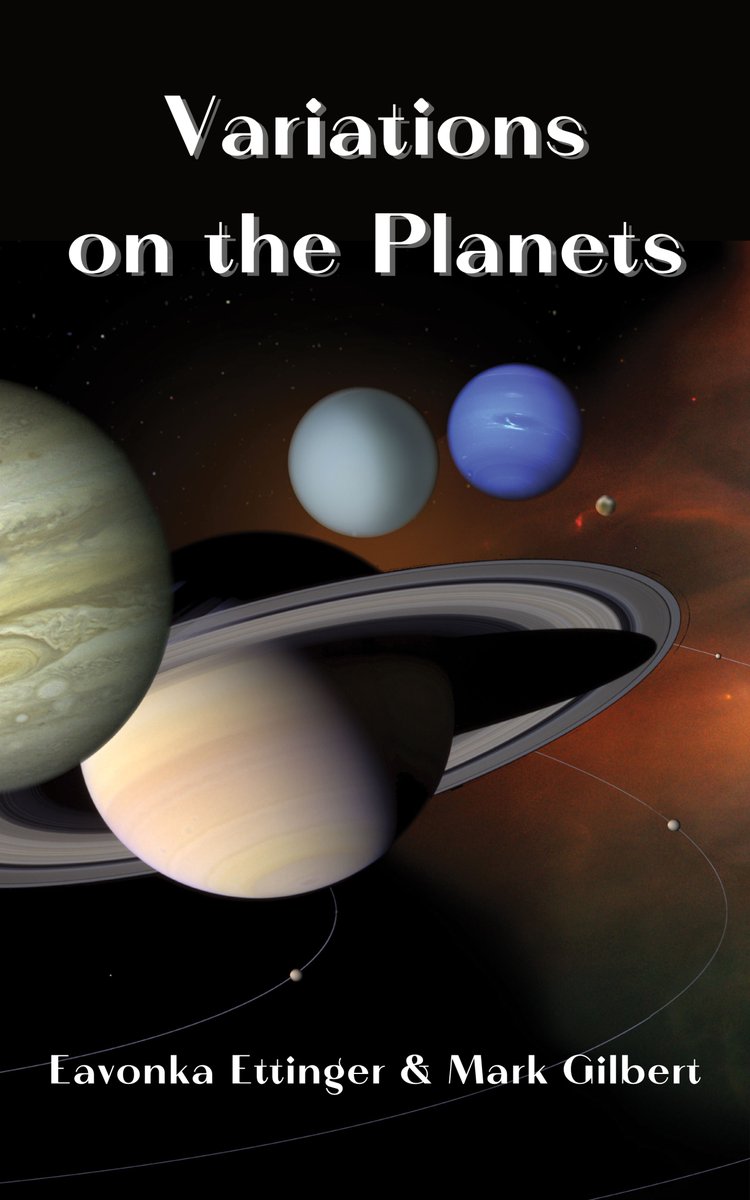
Variations on the Planets, a short chapbook by Mark Gilbert and Eavonka Ettinger, is available in paperback at minimum price via Amazon. It combines science & sci-fi in 37 individual #haiku within 8 poems. See https://t.co/JNtY9CUuGH or your own country's equivalent site.