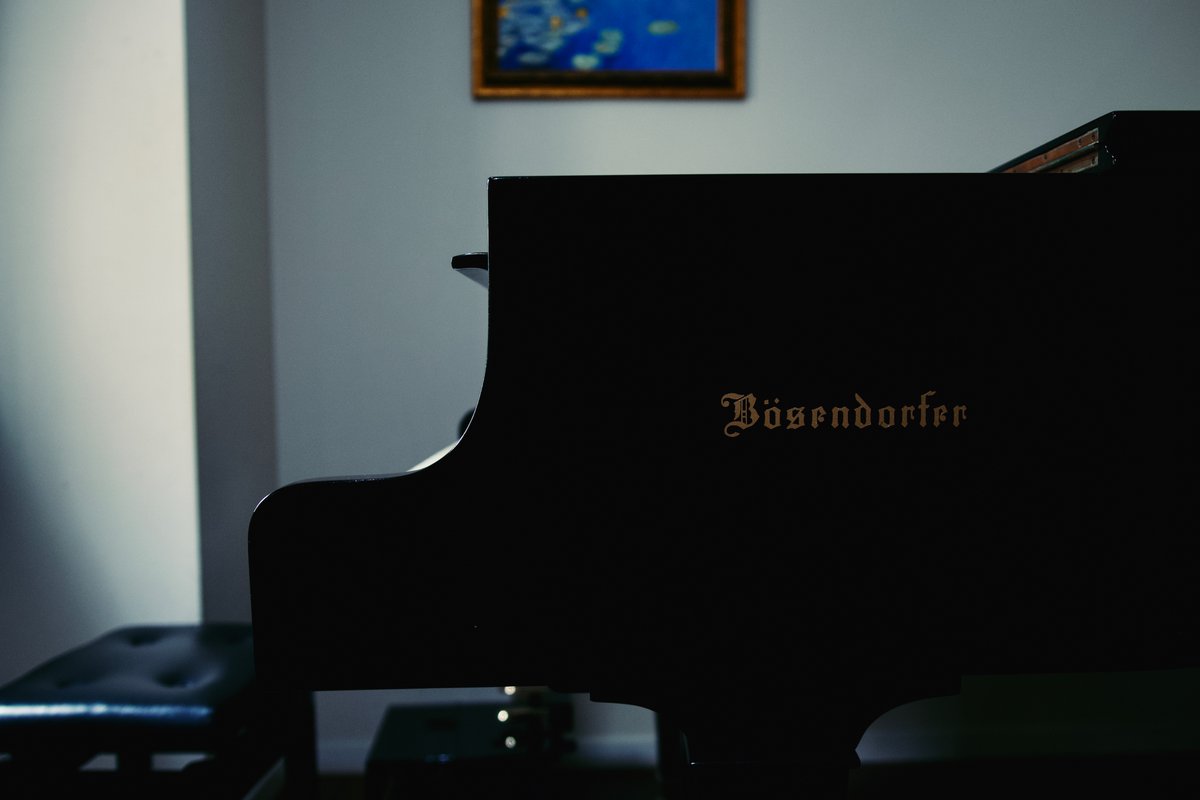
There is a part of me that had hoped I would love another piano more but playing it is like being in the presence of gods and now there is no way back.
How is your PhD going? What are you working on? Who are you working with?
It's this and that. I think I'm fine. I say I'm fine. I've been recording music for the past month.
A month ago I decided that I need new music to listen to while working. So I composed, recorded, and kind of edited it (still learning). Now I have a playlist. If I continue this way, my PhD will have a soundtrack 🫠
@hvxxing Japanese speaker here. I’ll try to break the line down: 部屋で(heya de: “in a room”)氷を(kōri o: “ice")吐き出す(hakidasu: “spitting [out]”)たった一人の(tatta hitori no: “the only one“)悪い子だ(warui ko da: lit. “bad child,” with a connotation of a woman).
@kittyvessel Sorry to barge in!
I just wanted to say that you're reading it correctly. The use of 子 not only hides the "baddie" in it but also carries connotations of a familiar woman, as well as a lover. It's definitely bad baddie.
I might be putting my account back on private in a few hours, but before I do, I will say: I have met some nasty people in my life, but they have not met me.
https://t.co/w4W4fBdLhq
@petrich0rdream The following line has a parallel expression “ii ko” いい子 (lit. “good child”), which is also non-gender specific, but context implies that everything being said is about the "lover" (koibito 恋人) of line six in this stanza.
@petrich0rdream The lyrics here are a direct translation of what we already had on Apple Music, but since the Japanese expression “warui ko” 悪い子 (lit. "bad child"=”bad baddie”) is not specific of gender and Japanese is a high-context language, most automated translators lose it there.