Bu özgeçmiş (CV), birçok kişinin Google, Microsoft, Amazon ve daha pek çok şirketten iş teklifi almasına yardımcı oldu.
Yapay zekayla nasıl aynısından yapabileceğinizi gösterdim:👇🏻
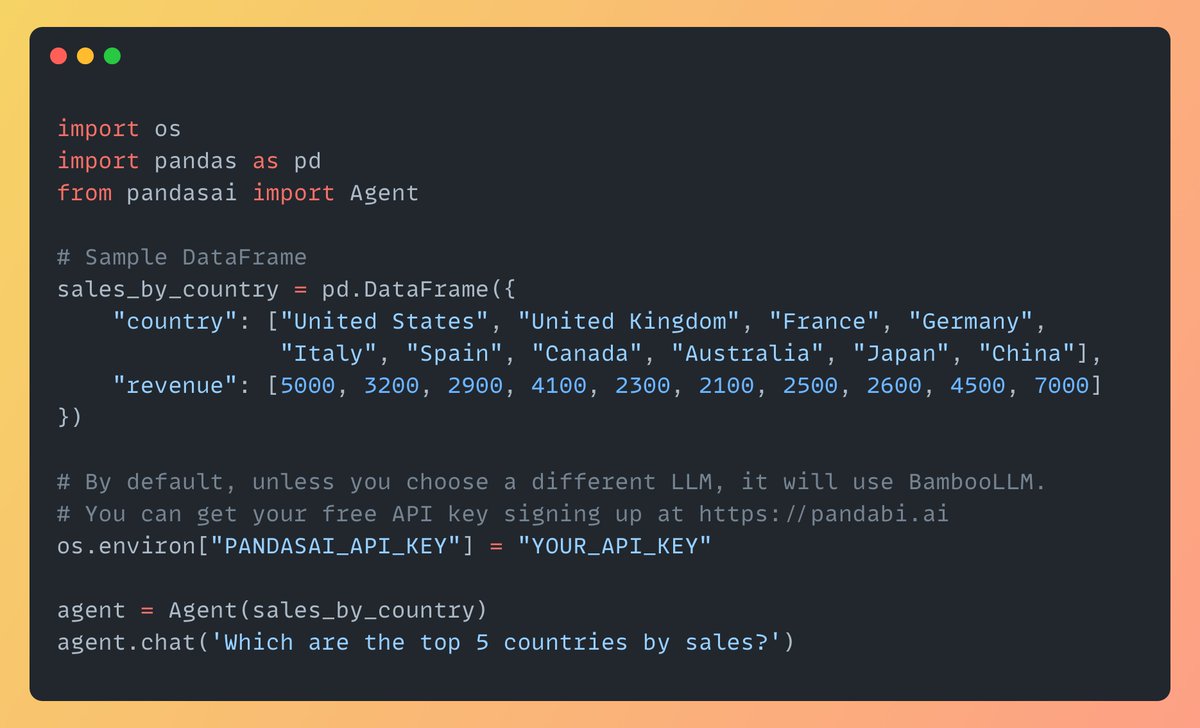
Python library that adds Generative AI capabilities to Pandas!
Introducing PandasAI: Analyze complex data frames and plot visualizations just by using natural language:
100% Open Source
Pretty excited about this new RAG technique I cooked up 🧑🍳
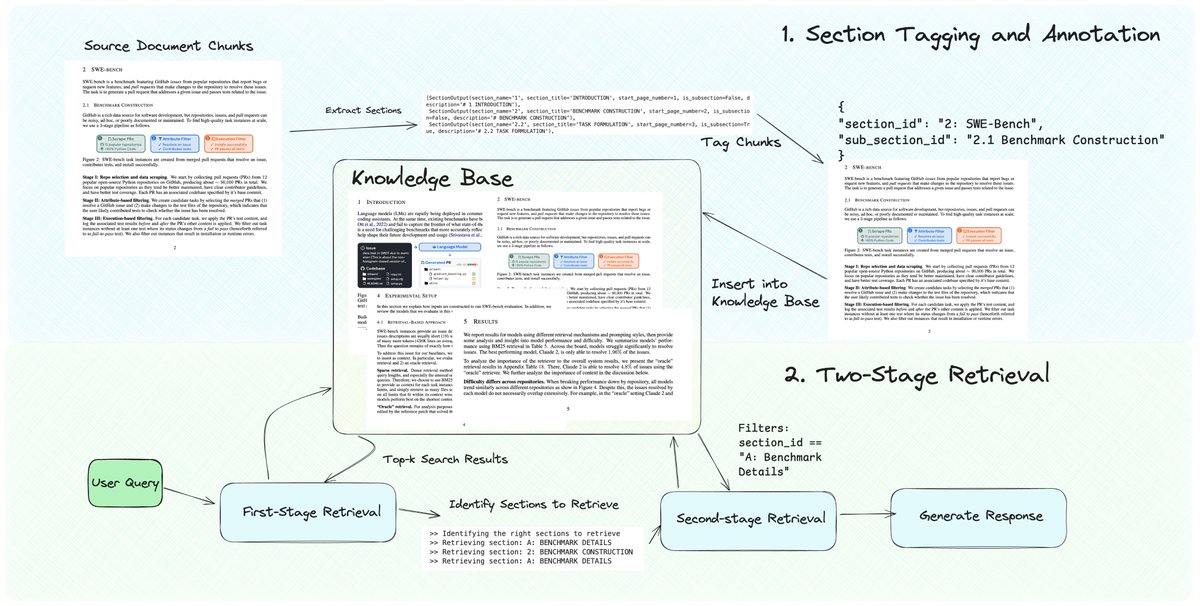
A top issue with RAG chunking is it splits the document into fragmented pieces, causing top-k retrieval to return partial context. Also most documents have multiple hierarchies of sections: top-level sections, sub-sections, etc.
This is also why lots of people are interested in exploring the idea of knowledge graphs - pulling in "links" to related pages to expand retrieved context.
This notebook lets you retrieve contiguous chunks without having to spend a lot of time tuning the chunking algorithm, thanks to GraphRAG-esque metadata tagging + retrieval. Tag chunks with sections, and use the section ID to expand the retrieved set.
Check it out
https://t.co/mIolxuMT12
Large language models (LLMs) are typically optimized to answer peoples’ questions. But there is a trend toward models also being optimized to fit into agentic workflows. This will give a huge boost to agentic performance!
Following ChatGPT’s breakaway success at answering questions, a lot of LLM development focused on providing a good consumer experience. So LLMs were tuned to answer questions (“Why did Shakespeare write Macbeth?”) or follow human-provided instructions (“Explain why Shakespeare wrote Macbeth”). A large fraction of the datasets for instruction tuning guide models to provide more helpful responses to human-written questions and instructions of the sort one might ask a consumer-facing LLM like those offered by the web interfaces of ChatGPT, Claude, or Gemini.
But agentic workloads call on different behaviors. Rather than directly generating responses for consumers, AI software may use a model in part of an iterative workflow to reflect on its own output, use tools, write plans, and collaborate in a multi-agent setting. Major model makers are increasingly optimizing models to be used in AI agents as well.
Take tool use (or function calling). If an LLM is asked about the current weather, it won’t be able to derive the information needed from its training data. Instead, it might generate a request for an API call to get that information. Even before GPT-4 natively supported function calls, application developers were already using LLMs to generate function calls, but by writing more complex prompts (such as variations of ReAct prompts) that tell the LLM what functions are available and then have the LLM generate a string that a separate software routine parses (perhaps with regular expressions) to figure out if it wants to call a function.
Generating such calls became much more reliable after GPT-4 and then many other models natively supported function calling. Today, LLMs can decide to call functions to search for information for retrieval augmented generation (RAG), execute code, send emails, place orders online, and much more.
Recently, Anthropic released a version of its model that is capable of computer use, using mouse-clicks and keystrokes to operate a computer (usually a virtual machine). I’ve enjoyed playing with the demo. While other teams have been prompting LLMs to use computers to build a new generation of RPA (robotic process automation) applications, native support for computer use by a major LLM provider is a great step forward. This will help many developers!
As agentic workflows mature, here is what I am seeing:
- First, many developers are prompting LLMs to carry out the agentic behaviors they want. This allows for quick, rich exploration!
- In a much smaller number of cases, developers who are working on very valuable applications will fine-tune LLMs to carry out particular agentic functions more reliably. For example, even though many LLMs support function calling natively, they do so by taking as input a description of the functions available and then (hopefully) generating output tokens to request the right function call. For mission-critical applications where generating the right function call is important, fine-tuning a model for your application’s specific function calls significantly increases reliability. (But please avoid premature optimization! Today I still see too many teams fine-tuning when they should probably spend more time on prompting before they resort to this.)
- Finally, when a capability such as tool use or computer use appears valuable to many developers, major LLM providers are building these capabilities directly into their models. Even though OpenAI o1-preview’s advanced reasoning helps consumers, I expect that it will be even more useful for agentic reasoning and planning.
Most LLMs have been optimized for answering questions primarily to deliver a good consumer experience, and we’ve been able to “graft” them into complex agentic workflows to build valuable applications. The trend of LLMs built to support particular operations in agents natively will create a lot of lift for agentic performance. I’m confident that large agentic performance gains in this direction will be realized in the next few years.
[Original text: https://t.co/gginTyOgwe ]
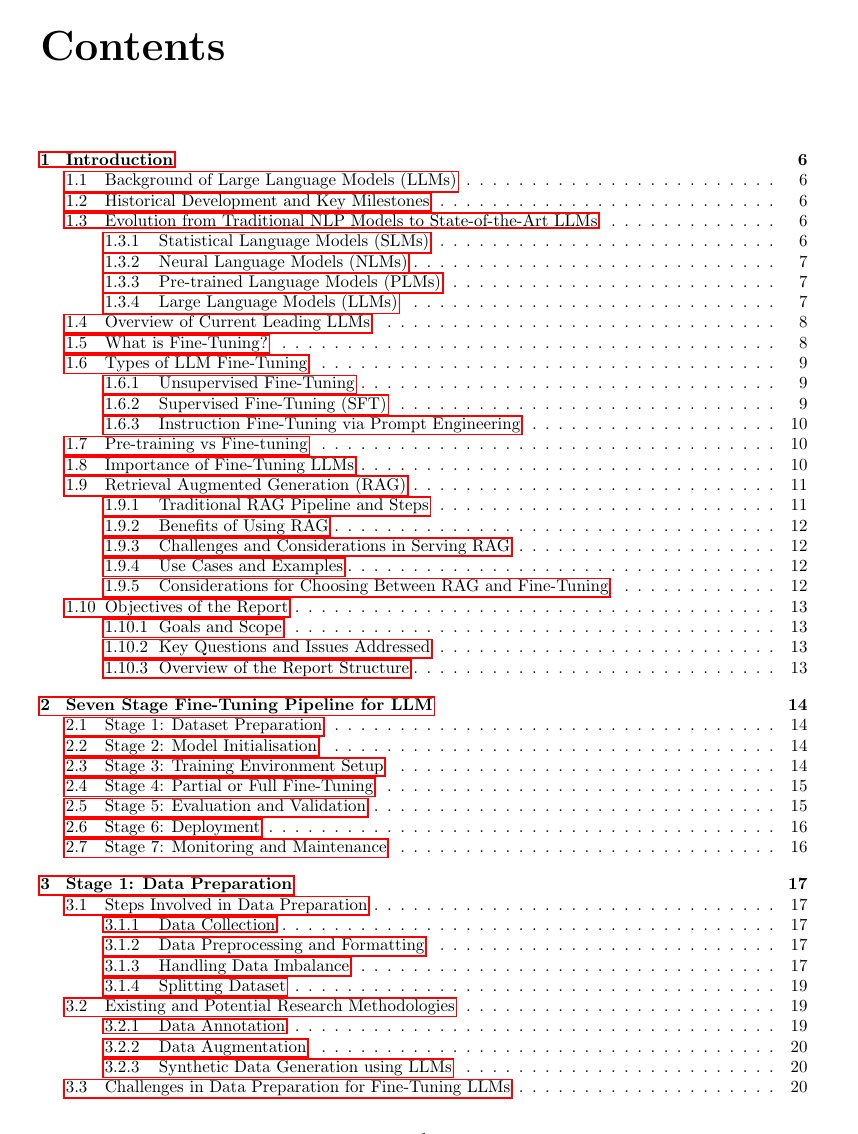
Nice paper for a long read across 114 pages.
"Ultimate Guide to Fine-Tuning LLMs"
Some of the things they cover
📊 Fine-tuning Pipeline
Outlines a seven-stage process for fine-tuning LLMs, from data preparation to deployment and maintenance.
🧠 Advanced Fine-tuning Methods
Covers techniques like Proximal Policy Optimization (PPO) and Direct Preference Optimization (DPO) for aligning LLMs with human preferences.
🛠️ Parameter-Efficient Fine-Tuning (PEFT) Techniques
Discusses methods like LoRA, QLoRA, and adapters that enable efficient fine-tuning by updating only a subset of model parameters.
🔬 Evaluation metrics and benchmarks for assessing fine-tuned LLMs
Includes perplexity, accuracy, and task-specific measures. Benchmarks like GLUE, SuperGLUE, TruthfulQA, and MMLU assess various aspects of LLM performance. Safety evaluations using frameworks like DecodingTrust are also crucial for ensuring responsible AI deployment.
💻 Explores various deployment approaches and optimization techniques to enhance LLM performance and efficiency in real-world applications.
🌐 Examines the extension of fine-tuning techniques to multimodal models and domain-specific applications in fields like medicine and finance.
🚀Announcing LangGraph Studio: The first agent IDE
LangGraph Studio offers a new way to develop LLM applications by providing a specialized agent IDE that enables visualization, interaction, and debugging of complex agentic applications
With visual graphs and the ability to edit state, you can better understand agent workflows and iterate faster. LangGraph Studio integrates with LangSmith so you can collaborate with teammates to debug failure modes
LangGraph Studio is available for free to all LangSmith users on any plan tier during its early development.
Read more about it here: https://t.co/VKnJkOpusv
Watch a YouTube walkthrough: https://t.co/1qruVoJXe9
Try out LangGraph Studio for free here: https://t.co/3pwnQLkDTd
Sign up for a LangSmith account: https://t.co/NZbDhzp8xX
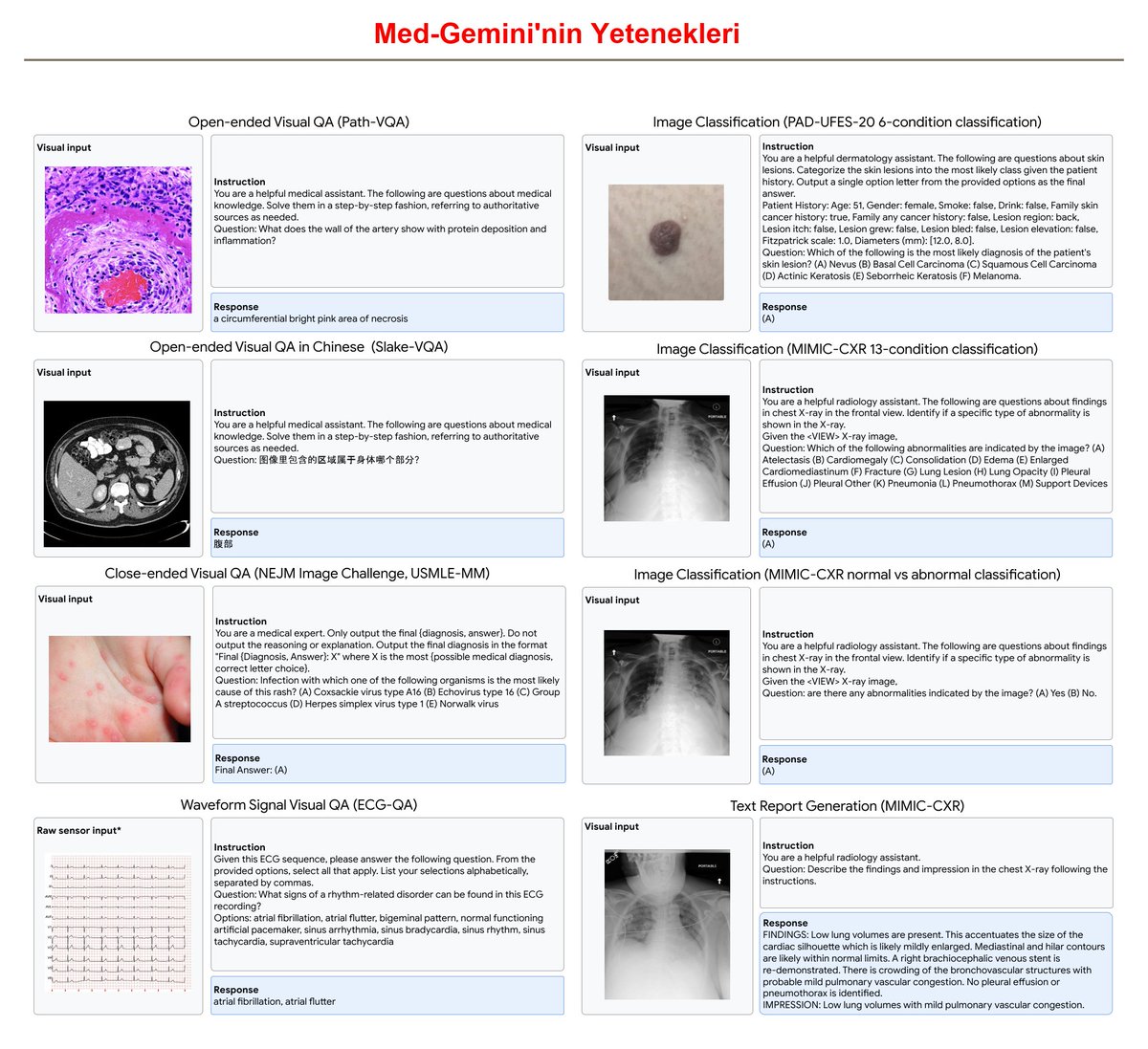
Google'ın tıbbi kullanım için geliştirdiği Med-Gemini GPT-4'ü geride bırakarak doğru teşhiste %91.1 doğruluk oranına ulaştı. Med-Gemini röntgen ve EKG yorumluyor, derideki lezyonları ve mikroskobik hücresel değişimleri tanıyor, cerrahi prosedürleri açıklıyor ve semptomlara göre hastalıkların teşhisini koyuyor.
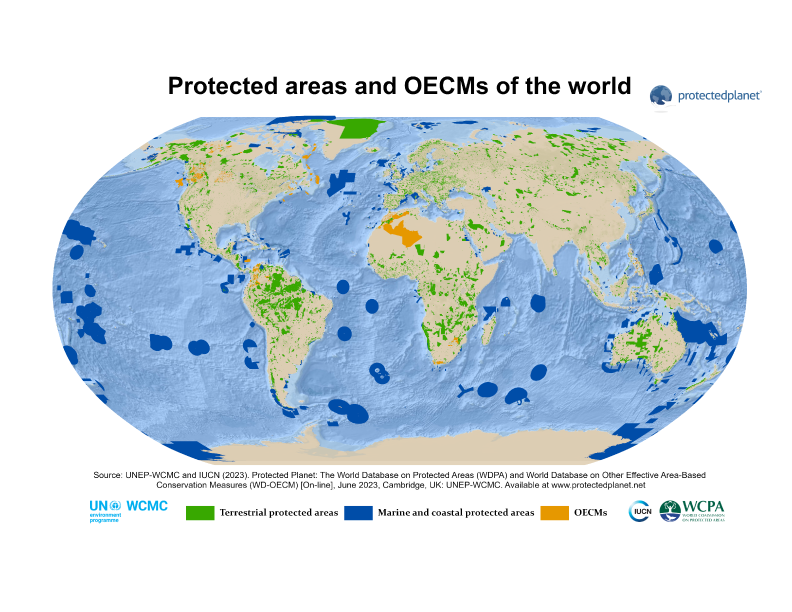
The total number of protected areas is 293,696, explore them through the World Database on Protected Areas, the most comprehensive global database on terrestrial and marine protected areas.
➡️ https://t.co/R1SWxlBm32
@protectedplanet
Eigenvalues & Eigenvectors clearly explained!
The concept of eigenvalues & eigenvectors is widely known yet poorly understood!
Today, I'll clearly explain their meaning & significance.
Let's go! 🚀
🇹🇷 Türkler YAPTI
🇨🇳 Çinli bir şirket ÇALDI
🇺🇸 Dünya devi @Apple da SATIYOR
🏳 Kanıtlar görsellerde
Bence Türkiye, yerli & milli küresel eğitim markası #Voscreen’e sahip çıkar
🇹🇷En az 1 milyon vatansever, 1 milyon RT yaparak tüm dünyaya ilgili mesajı verir
#AppleVoscreenCase
İnsanlar can derdinde iken 15 Şubat 2023 tarihli ve 32105 sayılı Resmi Gazetede, Orman Kanunun 17.maddesinin 3.fıkrasının uygulanması hakkındaki yönetmelikle;
1) Biyolojik çeşitliliğin en yüksek olduğu alanlar yapılaşmayla birlikte güneş enerjisi santrallerine tahsis edilecek.
Büyük bir tehlike bizi bekliyor! Araştırma alanım doğa ve ekoloji olduğu için aktarmam gerekiyor. Yaşanan büyük deprem sonucu devasa bir enkaz ve moloz ortaya çıktı. Bu hafriyatlar uygun bertaraf edilmezse yaşadığımız binlerce kayıptan fazlasını verebiliriz. Nasıl mı? +
I'm tired of the hegemony of the IUCN Red List of Threatened Species.
At this point, I think it's actually hampering biodiversity conservation and research.
Yes, it helped tremendously in the past. But not anymore. Here's why: