@AustralianOpen Out of this world!! As tennis fans we couldn't have asked for more. Each one of them gave their all and fought to the end. Absolutely amazing! 👏👏👏
@Yolitatennis Absolutely. Just amazing. I think a few haters will recognise that but maybe not admit it. He respects and likes Sinner and Sinner he and that will still be the case. Two great players who gave us a tremendous match. Novak is a fighter and we love him for that! 👏👏
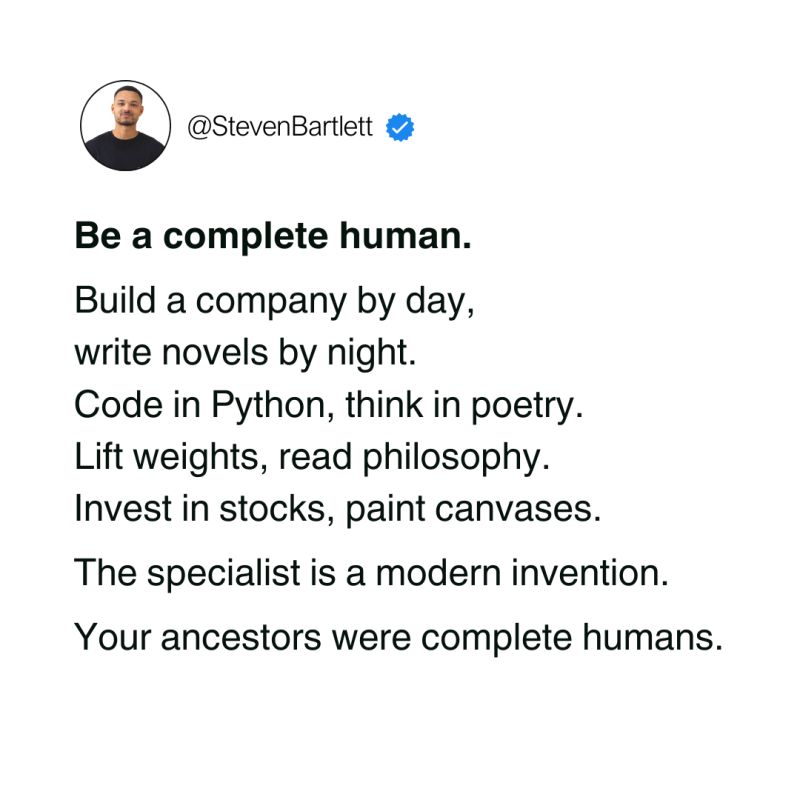
if you want to survive AI, now is the time to fight as hard as you possibly can to be a COMPLETE human... the specialist won't survive 👇🏾
Your grandfather could probably build a house, fix an engine, grow food, play piano, speak french, and tell you which way was north without checking a phone.
He had skills across the spectrum of survival and craft.
Slowly we told everyone to pick one thing and get really good at it.
At 16 I was told to pick a career for the rest of my life...
But in a world of AI, and incoming super-intelligence, this has never, ever, been worse advice.
The specialist programmer? ChatGPT codes faster. The specialist writer? Claude writes cleaner. The specialist designer? Midjourney does it faster.
The inconvenient truth is that the specialist won't survive.
The people I am now hiring into my companies and what I want my future kids to be, are COMPLETE HUMANS.
The complete human is the one who builds AND creates AND thinks AND feels across disciplines - that's the person that becomes more interesting, more rare and more valuable, as machines become more specialised.
It's hard for machines to automate the weird intersection of human experiences that makes someone decide to explain a marketing campaign through jazz metaphors, design a product inspired by stoic philosophy.
Your ancestors weren't specialists because they couldn't afford to be.
We can't afford to be specialists because the machines are going to win that game.
Fight as hard as you can, to remain a complete human!
Fight the voice in your head that says successful people don't waste time painting, or dancing, or learning languages they'll never monetise.
That voice is lying. The most interesting founders I know are part-time sommeliers, weekend pilots, terrible poets, decent drummers.
They bring their whole weird, complete humanity to everything they touch. And that's exactly what makes them irreplaceably human 👊🏾❤️
Interested to hear about some of the weird things my community on here does to remain a complete human!
Anyone wanna share?
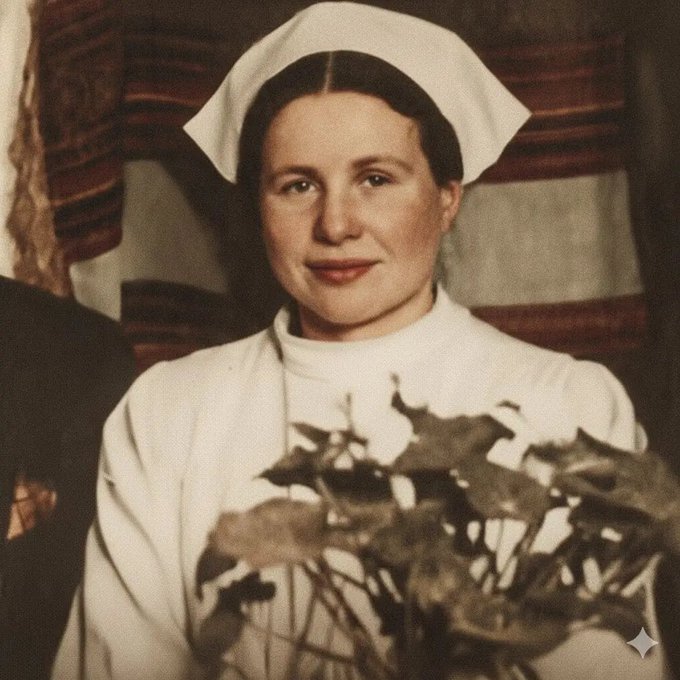
In the autumn of 1942, a slight, 32-year-old Polish social worker named Irena Sendler passed through the gates of the Warsaw Ghetto with a carpenter’s toolbox in her arms. Beneath the hammers and nails lay a drugged six-month-old infant, breathing softly, utterly silent. One cry would have meant instant death for both of them. Irena smiled at the guards; they waved her through. They never suspected that this quiet woman would repeat the journey 2,499 more times.
The ghetto was a slow-motion extermination. Starvation, disease, and random murder stalked every street. Jewish parents faced a choice no human being should ever have to make: keep their child and watch them waste away, or hand them to a stranger who promised a chance—however thin—at life.
Irena came officially to inspect for typhus. In reality, she came to steal children from death.
Babies left in toolboxes or ambulances under false bottoms. Toddlers sedated and tucked into potato sacks. Older children led by the hand through the stinking, lightless sewers while German boots marched overhead. “Not a sound,” she whispered as rats scurried past their feet.
She knew that the rescued children would be given new names, new religions, new families. Their pasts would vanish unless someone remembered. So, on fragile scraps of tissue paper, Irena wrote each child’s real name, their parents’ names, and their new hiding place. She rolled the papers tight, slipped them into glass jars, and buried them beneath an apple tree in a neighbor’s garden. If she were caught and killed, the truth might still survive.
She was caught.
On October 20, 1943, the Gestapo kicked in her door. They took her to Pawiak Prison and demanded the list. When she refused, they smashed both her legs with iron bars. Then her feet. Then her arms. For weeks the beatings continued. She never spoke. They scheduled her execution. On the appointed morning, guards dragged the broken woman from her cell.
Instead of a firing squad, she found herself outside the prison walls—alive. The Polish underground council Żegota had bribed a guard to mark her file “shot while trying to escape.” Officially dead, Irena Sendler limped back into the shadows to keep working.When the war finally ended, the first thing she did was dig up the jars under the apple tree. She spent years trying to return the children—now scattered across convents, farms, and foster homes—to whatever family might remain.
Almost no parents had survived. But the children had. Because of her, 2,500 Jewish boys and girls lived to grow up, to marry, to have children and grandchildren of their own—an entire secret branch of the human family tree that the Nazis never managed to cut down.For decades her story stayed buried deeper than the jars themselves. Then, in 1999, four high-school girls in rural Kansas stumbled across a brief mention of her name. They found the old woman still living quietly in Warsaw and brought her courage back into the light.
Journalists called her the greatest rescuer of the Holocaust. Irena only shook her head.“I could have saved more,” she said. “That regret follows me to the grave.”Irena Sendler—armed with nothing but a ghetto work permit, a toolbox, and a refusal to look away—proved that even in the heart of the worst evil humanity has ever devised, one determined person can still keep the darkness from winning completely.