Transform market volatility into opportunity. Evidence-based, dynamic ETFs designed to act decisively when risk is realized. Built for investing greatness.
In our opinion, financial advisors should stop apologizing for buying stocks at their highs. The math, and William O’Neil’s work, is firmly on the side of paying up for leadership and then selling much higher, instead of forever hunting “cheap” names that rarely lead to anything but client disappointment.
https://t.co/YP2iDgd6MQ
In our opinion, financial advisors should stop apologizing for buying stocks at their highs. The math, and William O’Neil’s work, is firmly on the side of paying up for leadership and then selling much higher, instead of forever hunting “cheap” names that rarely lead to anything but client disappointment.
https://t.co/YP2iDgd6MQ
If financial advisors want clients to own real leaders instead of permanent “bargains,” they may need to teach why great winners are usually bought near new highs, not after ugly declines.
https://t.co/NGHAIetNLF
Implementing CAN SLIM through ETFs means our “edge” lives in how you select, combine, and manage ETFs that systematically capture O’Neil-style leadership, while our investing philosophy framework governs the risk, discipline, and communication around those choices.
https://t.co/qqRHj1H2e8
Every advisor has sat across from a client holding a fund fact sheet, trying to explain why the portfolio costs 1.20% a year. The client asks a fair question. What am I paying for?
https://t.co/bPm3C2bSEh
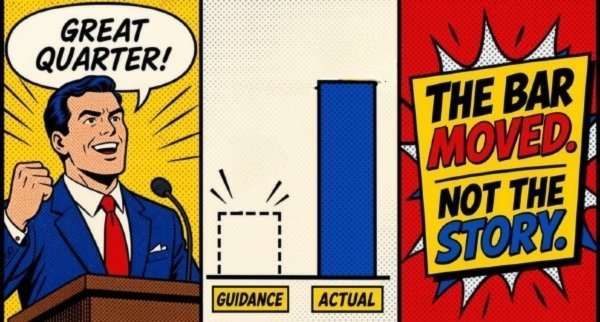
According to Forbes on 27August2026, during the Q2 2026 earnings season, 86% of S&P 500 companies beat consensus earnings estimates.
Management guides the street low. Wall Street publishes the lowered target. The company clears the exact bar it helped build, and the press release claims victory.
When eight out of ten companies beat estimates, the beat itself carries zero informational value. It only matters if your selection model relies on consensus forecasts and conference-call optimism.
The rules-based process behind CapForce IBD® Breakout Opportunities ETF ($BOUT) and CapForce IBD® 50 ETF ($FFTY) bypasses the guidance cycle entirely. The index screens for price action, volume confirmation, and 10-week moving average breakouts. The math measures actual buying pressure across the tape, regardless of what management told analysts on Thursday afternoon.
To see current holdings or download a prospectus go to https://t.co/K29q3MKiwt & https://t.co/zRAL4lZrI1.
Any references to securities is not a recommendation/offer to buy or sell.
#BOUT #FFTY #ETFs #RIA #INVESTING
A client holds three distinct ETFs: an S&P 500 core fund, a large-cap growth fund, and a tech sector ETF. On paper, that portfolio has three separate sleeves.
Look under the hood and the top 5 mega-caps account for nearly 40% of the combined allocation. When Microsoft, Apple, Nvidia, Alphabet, and Amazon move, all three funds move in lockstep. The account statement shows multiple tickers, while the underlying risk is concentrated in the same five balance sheets.
Rules-based strategies offer a direct alternative. Instead of weighting by market cap, funds like CapForce IBD® Breakout Opportunities ETF ($BOUT) and CapForce IBD® 50 ETF ($FFTY) screen for relative strength, earnings growth, and technical health. When a holding closes below its 10-week moving average or fails its fundamental screen, it is removed during the next rebalance.
The result is actual differentiation that steps outside market-cap concentration.
To see current holdings or download a prospectus go to https://t.co/K29q3MKiwt &
https://t.co/zRAL4lZrI1.
Any references to securities is not a recommendation/offer to buy or sell.
#BOUT #FFTY #ETFs #RIA #INVESTING
Financial advisors can use William O’Neil’s 7–8% sell rule to move clients away from the vague slogan “buy low, sell high” toward a clear, behavior-focused discipline.
https://t.co/FotEyYEklD
Walmart recently beat on revenue, beat on EPS, and raised full-year guidance. The stock dropped nearly 10%.
The headline says "beat estimates." But when 86% of companies are beating estimates this quarter, the beat is already priced in. The market grades the margin now, and Walmart's margin wasn't enough.
Comparable sales grew 2.6%, slightly below expectations. The earnings beat was real, but the magnitude couldn't justify the valuation the stock was already carrying. So the stock sold off on a "good" quarter.
This is the filter most earnings headlines miss. "Beat estimates" tells you almost nothing when nearly everyone beats. The question that matters is how much, how consistently, and whether the price action confirms the fundamentals.
That's what the IBD® Composite Rating measures. It scores earnings quality, relative price strength, and momentum together. A stock that technically beats but underwhelms on magnitude won't score well, and won't make it into the index.
The CapForce IBD 50 ETF ($FFTY) rebuilds every Friday and the CapForce IBD® Breakout Opportunities ETF ($BOUT) rebuilds every Wednesday using those screens. The names that qualify earn their place through the quality of the move, not the headline.
To see current holdings or download a prospectus go to https://t.co/K29q3MKiwt & https://t.co/zRAL4lZrI1.
Any references to other securities is not an offer to buy or sell.
When it comes to ETFs, liquidity is about much more than the trading volume you see next to the ticker symbol.
Liquidity starts with the basket, not the ticker.
Access the one-page quick read: https://t.co/aoKf8YYNR4
Core fund. Growth fund. Sector fund. Three labels, one pile of the same mega caps. Nobody opened the boxes before stacking them.
Shelf looks full. Exposure says otherwise.
CapForce IBD® Breakout Opportunities ETF ($BOUT) screens for stocks earning their place through fundamentals and technicals, rebuilt every Wednesday. The names that qualify are rarely the ones passive flows are pushing into your core.
To see current holdings or download a prospectus go to https://t.co/M1RFwbvzmr.
“The market rallied on optimism."
That's a narrative.
The mechanism doesn't care about optimism. It cares about price, volume, and relative strength.
Process over narrative. Every time.
The CapForce IBD® Breakout Opportunities ETF ($BOUT) process screens for stocks earning their place through fundamentals and technicals, rebuilt every Wednesday. The names that qualify are rarely the ones passive flows are pushing into your core.
To see current holdings or download a prospectus go to https://t.co/M1RFwbvzmr.
A "diversified" portfolio full of holdings. That all move together when it matters. Different fund names. Same handful of mega-cap stocks hiding underneath.
The label says broad. The behavior says concentrated.
CapForce IBD® Breakout Opportunities ETF ($BOUT) screens for stocks earning their place through fundamentals and technicals, rebuilt every Wednesday. The names that qualify are rarely the ones passive flows are pushing into your core.
To see current holdings or download a prospectus go to https://t.co/M1RFwbvzmr.
Reddit joined the S&P 500 on August 18th. The stock was already up significantly when the announcement was made.
That move had almost nothing to do with Reddit's business. Earlier, JPMorgan estimated passive funds need to buy roughly 16.7 million shares just to match the new benchmark weight. Index inclusion creates a wave of mandatory buying from funds that have no opinion on the company, no price target, and no thesis. They buy because the rules say buy.
This is the mechanical side of cap-weighted indexing that rarely makes the headline. Every new addition to the S&P 500 generates forced demand from trillions in passive assets, pushing more weight into names that are already large enough to qualify. The index that's supposed to represent the broad market ends up concentrating further into the same gravity well.
Advisors building around the S&P 500 are absorbing that mechanical weight whether they chose it or not. A chunk of your allocation is now being shaped by index committee decisions and passive fund flows rather than by any investment view you actually hold.
CapForce IBD® Breakout Opportunities ETF ($BOUT) screens for stocks earning their place through fundamentals and technicals, rebuilt every Wednesday. The names that qualify are rarely the ones passive flows are pushing into your core.
To see current holdings or download a prospectus go to https://t.co/M1RFwbvzmr.
Any references to other securities is not an offer to buy or sell.
This trading playbook lays out a clear, practical framework you can use to execute ETF trades with confidence. It treats ETF liquidity as a function of the underlying holdings, not just fund size or screen volume.
https://t.co/bR9KXvvPG0
BOUT fund disclosures: https://t.co/ssvc7f6maG
FFTY fund disclosures: https://t.co/sXuMT4V5vx
JPMorgan just raised its S&P 500 year-end target to 8000.
That number sounds like a broad market call. It isn't. The S&P 500 is so top-heavy right now that a year-end target is really a bet on whether the same handful of mega-caps keep compounding. If those names stall, the index stalls, regardless of what the other 490 stocks do.
This is the part that gets glossed over in the headline. A price target on a cap-weighted index is a concentration bet dressed up as a market forecast.
For advisors building portfolios around that forecast, it's worth asking: does your allocation actually reflect a view on the broad market, or are you just adding more exposure to names you already own four times over?
CapForce IBD® Breakout Opportunities ETF ($BOUT) was built for exactly this question. It targets stocks earning their way into the index through IBD's technical and fundamental screens, rebuilt every Wednesday. The names that make it in are rarely the ones sitting at the top of your core allocation.
To see current holdings or download a prospectus go to https://t.co/M1RFwbvzmr.
Any references to other securities is not an offer to buy or sell.
JPMorgan just raised its S&P 500 year-end target to 8,000.
That number sounds like a broad market call. It isn't.
The S&P 500 is so top-heavy right now that a year-end target is really a bet on whether the same handful of mega-caps keep compounding. If those names stall, the index stalls, regardless of what the other 490 stocks do.
This is the part that gets glossed over in the headline. A price target on a cap-weighted index is a concentration bet dressed up as a market forecast.
For advisors building portfolios around that forecast, it's worth asking: does your allocation actually reflect a view on the broad market, or are you just adding more exposure to names you already own four times over?
CapForce IBD® Breakout Opportunities ETF ($BOUT) was built for exactly this question. It targets stocks earning their way into the index through IBD's technical and fundamental screens, rebuilt every Wednesday. The names that make it in are rarely the ones sitting at the top of your core allocation.
To see current holdings or download a prospectus go to https://t.co/M1RFwbvzmr.
Any references to other securities is not an offer to buy or sell.
The IBD Composite Rating is a single, data-driven score designed to help investors quickly identify leading growth stocks by combining multiple fundamental and technical measures into one number.
For advisors, understanding what sits underneath that number—and how to incorporate it into a disciplined process—is critical if you want to use it as more than just a “stock tip” signal.
https://t.co/LfcdnN2868
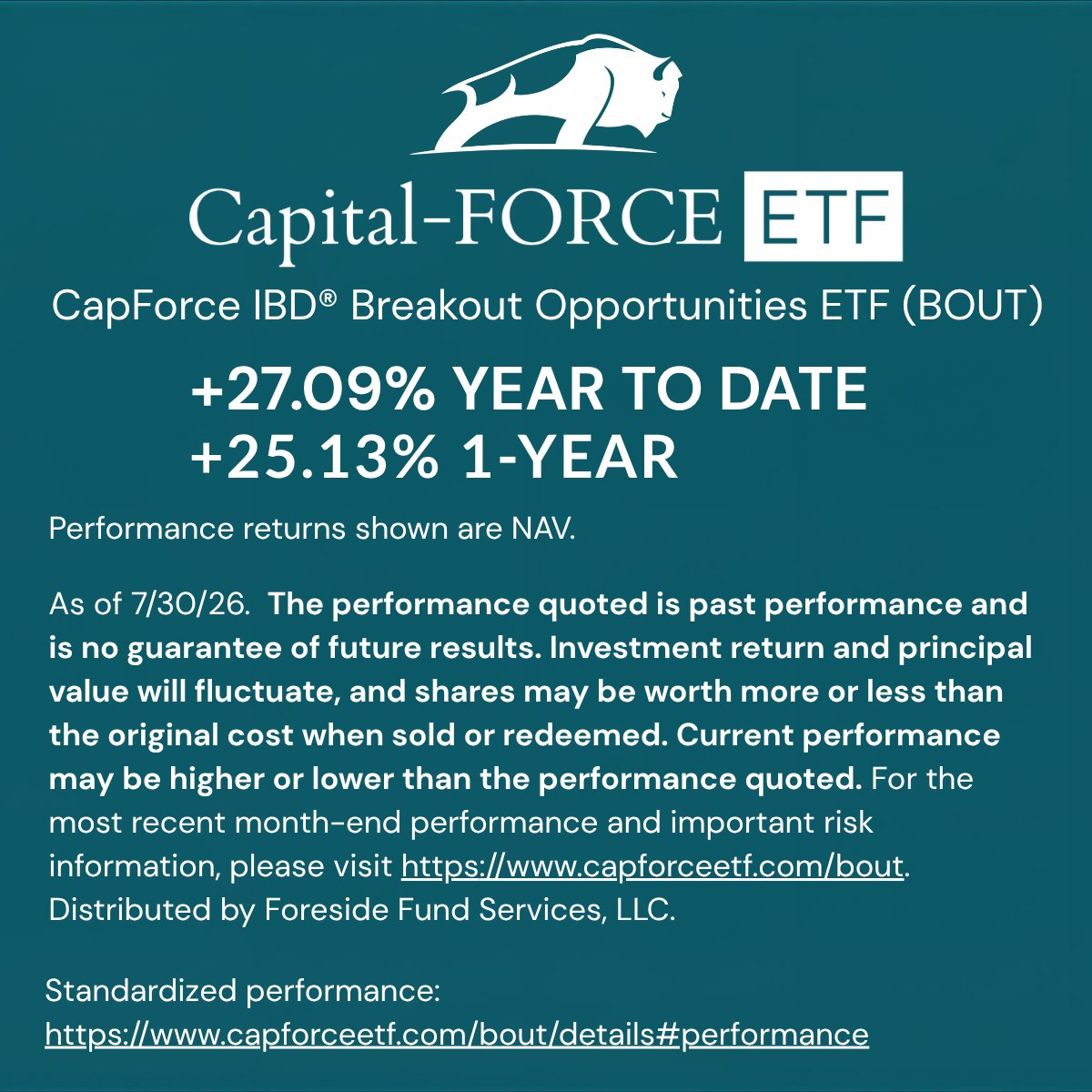
$BOUT rebuilds its entire portfolio every week.
Every holding in $BOUT earned its spot through IBD®'s breakout screens. Close below your 10-week moving average and you're gone. That kind of turnover sounds aggressive until you see what it produces.