as part of @RBAInfo @DigiFinanceCRC Project Acacia, here's a primer on pubilc versus permissioned DLTs (distributed ledger technology), and on the back of the @RedbellyNetwork Insights podcast on right now (see https://t.co/CDMZdNz54w), here's some explainers
First up Public vs Private DLT
Private Permissioned DLT:
- Only selected, known participants (such as specific banks or financial institutions) are allowed to join and validate transactions.
- Access is tightly controlled and not open to the general public; every participant is vetted and given explicit permission to participate.
- Used when confidentiality and control are top priorities, often for sensitive financial transactions.
Public Permissioned DLT (think more eligibility criteria which depends on market as @RedbellyAlan mentions in the show):
- The underlying platform is open and potentially accessible to anyone for certain functions (like reading the blockchain or using apps), but only approved participants can validate transactions or issue assets.
- A wider group can interact with the platform, but core functions (like settling tokenised assets or issuing CBDC) are restricted to those given explicit permission.
- Balances transparency and openness with the need for regulatory control and permissioned access.
In summary:
So in summary
- Private permissioned = access and participation are tightly restricted to a closed group.
- Public permissioned = the network is broadly accessible, but only whitelisted participants can perform critical functions.
@steipete This guy definitely knows his stuff and from his days here in Sydney I got to have some great conversations with him for @ausblockai . Well done @vincent_koc and @steipete
https://t.co/wnLlNMC3Qv
If either of you are back in Sydney come join us for a podcast
3/ you can see that with HTML you can bring over rich formatting and interactivity options to an offline format that you can read on any device (if you've designed it as such)
1/ something I shared on LI but HTML needs to be the way more things are shared as outputs from AI tools, apps, etc. Export to HTML as a default rather than .DOCX .MD .YAML etc - richer for agents to analyse and better for humans too
2/ sure it has it's drawbacks for editing etc but it's a pretty good uplift if understanding and quick analysis is your goal - here's an app we're testing in-house at @MadisonMarcusAU - has an export to HTML button
A reminder to read and understand the plans of your AI coding assistant before executing (which is easier if you have it ask permissions as it goes along)... lest you have it mistakenly try to overwrite things outside of what you asked for.
If you don't read it, you can't understand if it's heading in the wrong direction and you can't do that if you don't at least have some understanding of the system you're building.
This is where EXPERTS in the loop makes a difference vs just theprototypical HUMANS in the loop etc
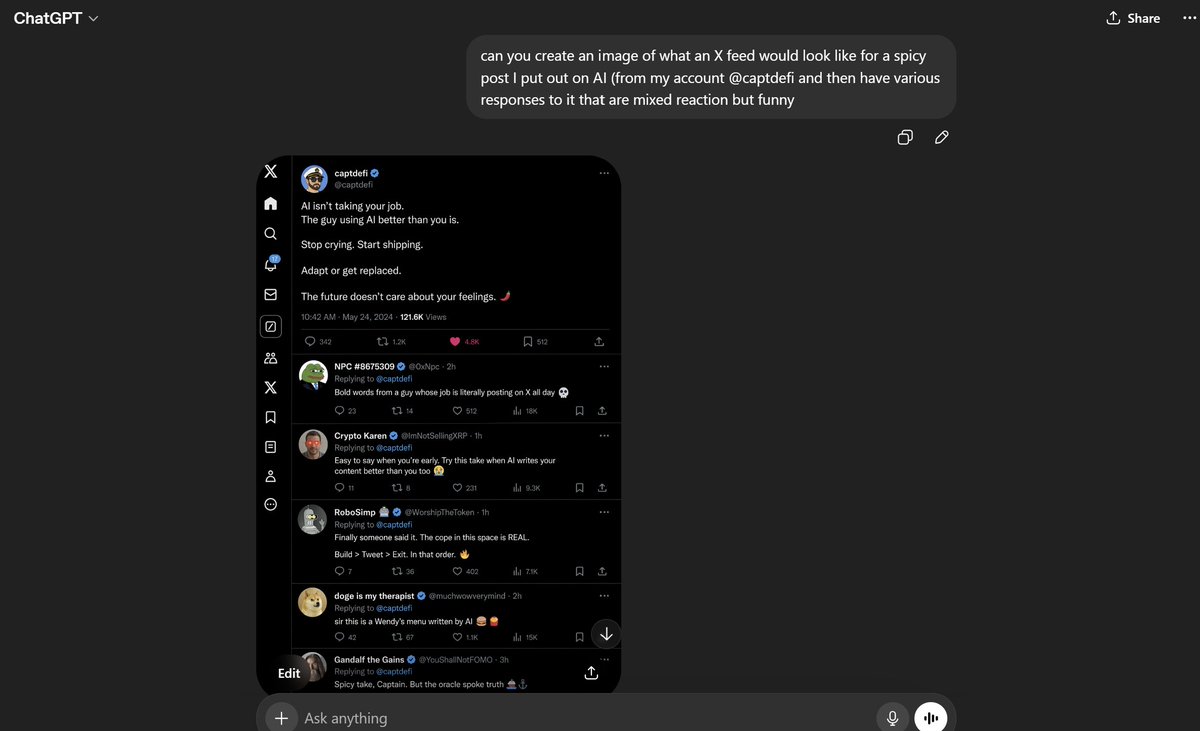
the fact that there are very few telltale AI artefacts in the image generation of the new @OpenAI image model is both exciting and scary...
Anyway, well done ChatGPT but catch me tonight at the @AnthropicAI Claude Community Australia event at 8pm - link: https://t.co/dTEqTEqQtg
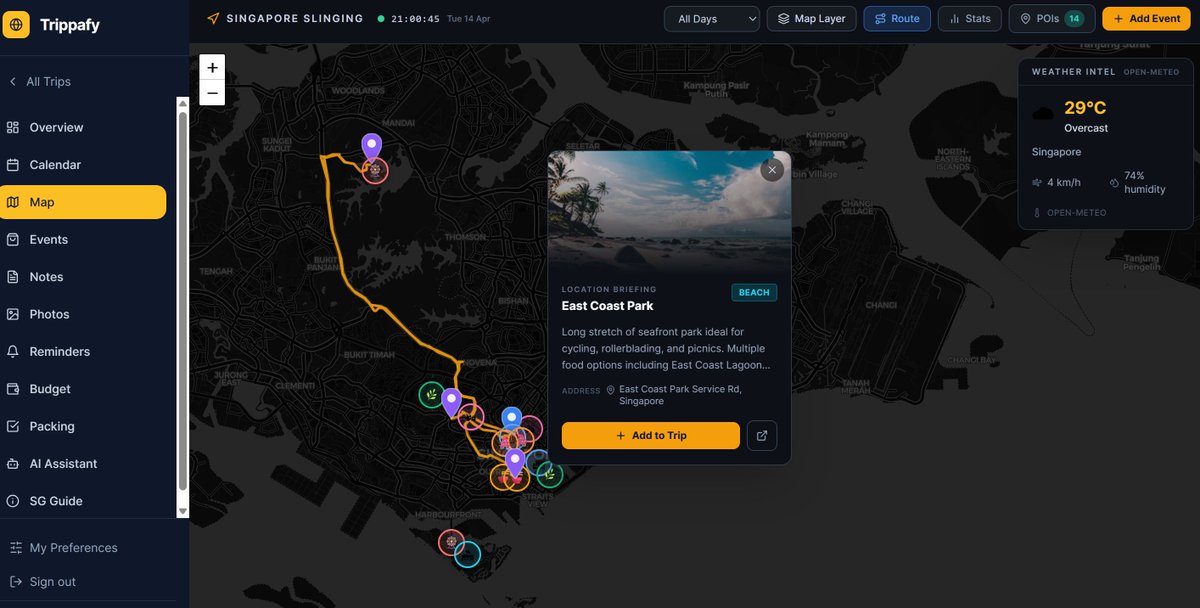
@AICostLedger@andrewjiang Haha truth. But all th learnings from the dozens of apps built hopefully get you to that one smarter in house or client tool you end up building later. All part of the process 😝
@andrewjiang HAHA I love it - I was calling them "Bloomberg for X" type tools but "Palantir for X" is great! Keep publishing pls... I've done stuff for fintech/legal areas for work but inspired now to make one for a trip with my partner in a few weeks!