$QCOM Qualcomm is "already in production" with Amazon, revenue starting the Dec quarter, per CFO at Goldman today. The deal isn't incremental to the $5B FY27 / $15B FY29 data center targets, but the company calls it core to hitting them. More here: https://t.co/cVotuRLfrz
@KellyCNBC maybe consider letting me help you figure out how to set up what you want with using AI agents, I need to figure it out completely myself but am lacking necessary motivation, I am smart (M.S. in Eletrical and Computer engineering) and can learn quickly, I know you as well anyone could from tv and your social media. Honestly it is very unfortunate I quit being an electrical engineer a year before ChatGPT became a thing. I also have a indepth knowledge of philosohpy, history, data science, and how orchestration/coordination works on strategic, operational, tacitcal and logistical levels. My tweet history isnt representative of what I think if it is not addressing someone to CNBC if you look
Why pay $12.9B for a largely free, open AI platform? Control of the developer ecosystem. Google, Amazon and OpenAI are building custom chips. Owning Hugging Face puts $NVDA beside the developers who decide which hardware wins. The logic behind the deal:
https://t.co/QOmMT7yzfd
@KristinaParts You said it your it is up to whether silicon valley trusts them to uphold neutrality, the FTC exists so that things like these arent down to trust only
@DivesTech@CNBCClosingBell@TheJudgeCNBC@CNBC@CNBCtech Beware the people of Texas they have the most energy to be used but the most number of people with contempt towards datacenters no matter how much you explain to them
@KellyCNBC Roulette is key to my finacial picture, I just go up and keep betting on red over and over, if I win easy money, if I lose I double the bet and keep betting on red until it eventually hit and I make a profit then repeat. Flawless strategy
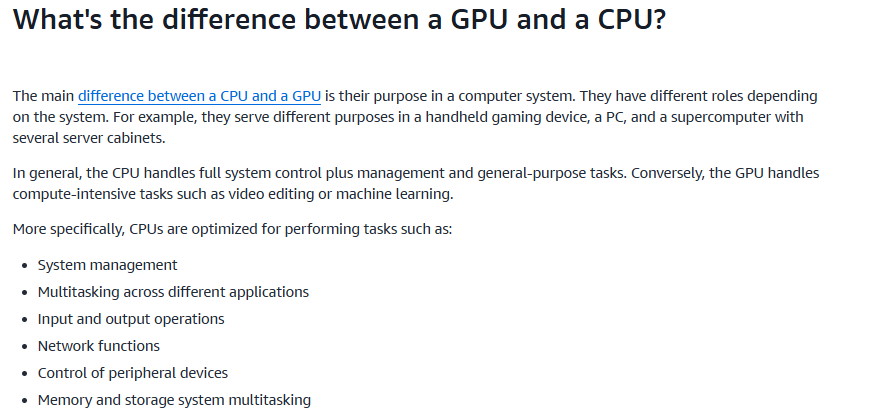
@KatieTarasov@xisabelobrienx@Equinix@nvidia@VladGalabov Generally CPUs are known as the unit of general purpose compute, GPUs is a matter of parallel processing vs CPU using serial processing is better way to put it where Agentic Systems requires more serial computing
But given all that still won’t grow out of it, maybe inflate our way out of it. Proper tax and spending policy must be implemented to avoid financial repression
When you say grow out way out of it, I suppose you mean our GDP growth? But what matters is our actual revenue into the Goverment growth, right? And the important part about that is to stop the deficit from growing. So it helps to lower fed funds to do that, but we can only do that if we make sure inflation is dead and if that takes too long by holding it at 3.5% our deficit will widen more and more to the point the math is impossible to grow your way out, if we hike it will widen more immediately but at least then we can lower it later on @KellyCNBC
@KristinaParts That's a beat on the top and bottom line for Broadcom.
$3.32 adjusted, that's adjusted, eight cents higher than the $3.24 the street anticipated, on revenues of $29.59 billion.
The street was looking for $29.43 billion, so a beat there too, and that is up 86% year over year.
In regards to AI semiconductor revenue, the number everybody was watching tonight, $16.7 billion against the $16 billion they guided, up 221% year over year and 54% quarter over quarter.
That's now more than half of total revenue.
Infrastructure software, that's VMware, $8.75 billion, just a touch under the roughly $8.9 billion guide, up 29%.
Non-GAAP gross margins, which we keep worrying about with the custom silicon mix, 75%, down from 77.1% last quarter but above the 74% they guided.
Now the guide, and the guide is what's driving these names.
Q4 revenue of about $34.8 billion, up 93% year over year, [versus the street bar CNBC prints].
Q4 AI semiconductor revenue of $21.7 billion; the $56 billion full-year target implied roughly $20.8 billion, so that clears it.
A quote from CEO Hock Tan in the release, saying, in Q4 the momentum continues, and we expect AI semiconductor revenue to accelerate to $21.7 billion, up 236% year over year.
One thing not in this release: no new number on the fiscal 2027 AI target, the $100 billion he held in June, so that question moves to the call.
Keep in mind, the stock came into this print down about 13% over the last three weeks, so some of the reset was already in.
A helpful thing to do which isnt too hard to swallow, is if a democrat becomes president they talk about raising capital gains like biden did so people with huge unrealized gain sell out of anticipation but in the end have no actual tax rise, 2nd is getting rid of step-up basis for equities when inherited.
@KellyCNBC Does this sound like something you could ahve wrote:
Well, it happened. Not the 5% 10-year, not yet, but breaking of the 4.75% level on Tuesday, the highest since January 2025, the Treasury Secretary bessent told twenty finance ministers that "the world is awash in debt" and America intends to grow its way out. The 30-year had already hit a 19-year high in mid-August. Japan and the U.K. sit at yields unseen in decades.
The mechanism is more mundane than the summit theater, and more decisive. Three forces are pulling. First, an oil shock from the Iran standoff has the Fed's preferred inflation gauge at 3.7%, with 54% of tracked items rising 3% or more, Chair Warsh's own figure, versus 32% before the pandemic. Second, Warsh said at Jackson Hole that softer summer prints "do not tell me that underlying trends have meaningfully improved," three of his twelve voters dissented for a hike in July, and CME futures put a September 15-16 hike near 60%. Third, the plumbing: on Aug. 19 Treasury said it would at least double long-bond buybacks, from $2 billion to $4 billion, from Sept. 9 through November.
One arm of the government prepares to raise short rates against inflation while the other buys long bonds to hold yields down. The market gave it one day: yields fell on the announcement and were back above the prior level the next afternoon, at 4.7%.
The vigilantes have the tape. Deutsche Bank expects 50 basis points of hikes this year, in September and December. ING's Padhraic Garvey calls 5% on the 10-year "the concern zone." The doves have the labor data. Miller Tabak's Matt Maley sees "no empirical basis for the rate hike" after July's payrolls fell by 23,000. J.P. Morgan's David Kelly called 60% hike odds "premature."
Robin Brooks told us on Aug. 18 that Japan needs higher yields to stabilize the yen and cannot afford them without a debt crisis. Bessent's claim that Treasuries have outperformed other developed-market bonds is true but no comfort. The best house on a burning street is a relative claim.
And so, the 30-year setting 19-year highs before any hike was priced suggests the market wants confidence restored in both fiscal and monetary management. The clean read is real yields against breakevens, TIPS against expected inflation. If real yields are doing the work, the debt is the story, not oil.
In 1983 Volcker had already won; the 10-year sat near 11% because vigilantes wanted proof the win would hold, with federal debt about a third of GDP. Today the chair is about to hike with inflation at 3.7% and $40 trillion of debt, roughly 125% of GDP. That justifies clarity on a plan before the U.S. has its Liz Truss moment. The disanalogy is the reserve currency, Michael Pettis's "exorbitant burden."
Does it spread? First, the widening deficit loop: half a point on $40 trillion is real money when interest was already about half the deficit, and the only cure for high yields, a recession, worsens the deficit that caused them. Second, the private credit chain still holds risk; these long rates reprice every private mark that assumed a refinancing, and the insurers and endowments holding them.
The Fed meets Sept. 15. If the 30-year sets a new high after buybacks start, the buyer strike is real and "grow our way out" is being priced as "inflate our way out." If the 10-year retreats under 4.5% on soft jobs and softer oil, the doves were right. If Warsh hikes, watch the long end: falling yields there mean the market believes the Fed can still win alone, and the 1983 rhyme holds. I would happily be wrong that way.
See You at 1 p.m.!
Kelly
I recognize the last two paragraphs dont align what you said today on TV. Aside to that the idea of growing our weigh out of debt has been something been said since the early 1990s (Based on going back through NYTimes and congressional record) when interest outlays werent over a trillion dollar, so that alone is not a solution.