For 20 years, a $6 knob that takes one hour to 3D print has been grounding Black Hawk helicopters four times a month, and the contractor responsible won't sell us the part or the IP rights to fix it ourselves.
So instead, American taxpayers have been paying $40,000 every single time to replace the entire system, multiplied by four times a month, for two decades.
That is NOT a procurement problem, that is a shakedown, and it is exactly why right to repair has to be in this year's NDAA.
I genuinely feel like we are not meant to consume this much information about everythinggg so rapidly daily and it’s messing with people’s moods, personalities, health & general way of life.
Every cherry blossom in this photo is genetically identical to every other one. They’re all copies of a single tree.
Japan’s most popular cherry, the Somei-Yoshino, was created by gardeners in Tokyo around the 1720s. Every one planted since has been grown by snipping a branch off an existing tree and fusing it onto new roots. In 2019, Japanese scientists tested the DNA of 46 Yoshino trees across the country, including one in Washington DC that Japan gifted in 1912. All 46 traced back to the same parent.
That’s why they bloom at the exact same time. Same DNA, same internal clock. Each summer, the tree builds tiny pre-made flowers inside its buds, then the whole system shuts off for winter. To restart, two things have to happen in order. The tree needs about 61 days of cold (below 10 degrees Celsius) to unlock its dormancy, a biological off-switch that only winter can flip. Then it needs enough warm days in spring to push the flowers open. If either step gets skipped, the tree just sits there. No bloom.
This process has been tracked in Kyoto since 812 AD. Emperors, monks, and aristocrats wrote the bloom dates in their diaries for over 1,200 years, making it the longest continuous biological record anywhere on Earth. For the first thousand years, the dates barely moved, hovering around April 17. Then starting in the 1800s, they begin sliding earlier. By the 2020s the average had landed on April 5, almost two weeks ahead of where it sat for a millennium. In 2021, Kyoto hit March 26, the earliest bloom in the entire 1,200-year record. The old record was March 27, in 1409.
This is the Meguro River in Tokyo. 800 of these cloned trees line both sides of the water for about 4 kilometers. Last year’s cherry blossom season brought in $9 billion to Japan’s economy, up 22% from the year before, with over a quarter of viewers coming from overseas for the first time ever. That’s ten times the economic impact of Shohei Ohtani’s entire 2024 baseball season.
Warming springs pull the bloom date earlier, but warming winters might eventually stop the bloom completely. Without enough cold days, the off-switch never resets. A Kyushu University study from 2024 found the trees are already waking up 2.3 days later per decade since 1990 because winters aren’t cold enough to properly reset them. In the warm winter of 2023-24, cherry trees at Japan’s southern tip bloomed on the same date as trees 860 kilometers to the north because the southern trees barely got enough cold to function. Japan’s weather agency now predicts the Somei-Yoshino could stop blooming entirely in three southern regions by 2100. One tree, cloned before the American Revolution, now powers a $9 billion economy and holds the longest biological climate record on Earth in its petals.
As a King's College London-trained War Studies PhD, I want to point out that in the field of organized human conflict, one can often be saved by one's opponent being even more stupid than oneself. Often, having a terrible plan is offset by an opponent having a more terrible plan.
This 'relative stupidity index' is much under-served in the strategic studies literature, which often focuses on highlights in strategic acumen (see "Makers of Modern Strategy " (Ed. Paret)), as opposed to the more common phenomenon of competing nadirs of strategic incompetence.
We should more often ask ourselves: which one-legged man would win in an arse-kicking contest?
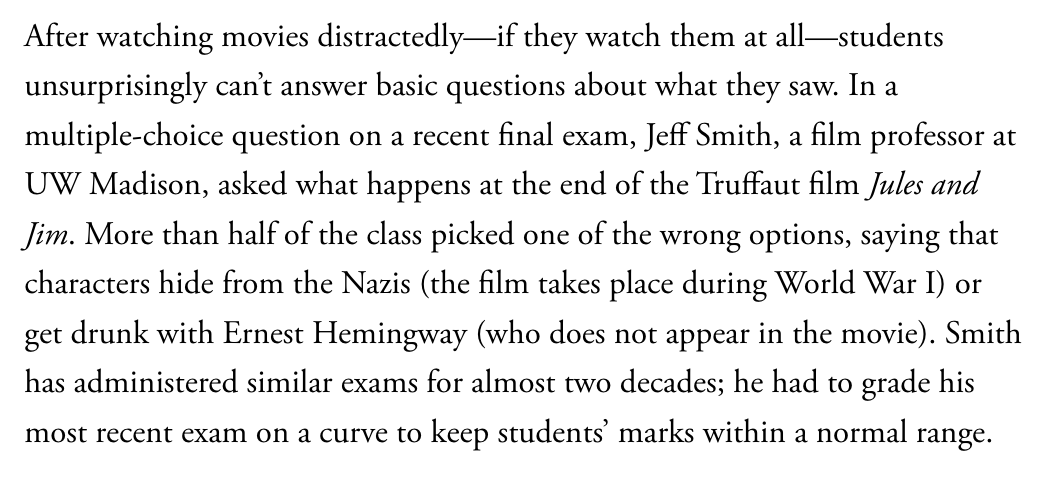
The attention crisis is so dire at schools right now that film professors can't even get their students to finish movies, and the kids don't even look up the plots of the movies they skip, so students fail basic in-class quizzes like "what happened at the end of the movie?"
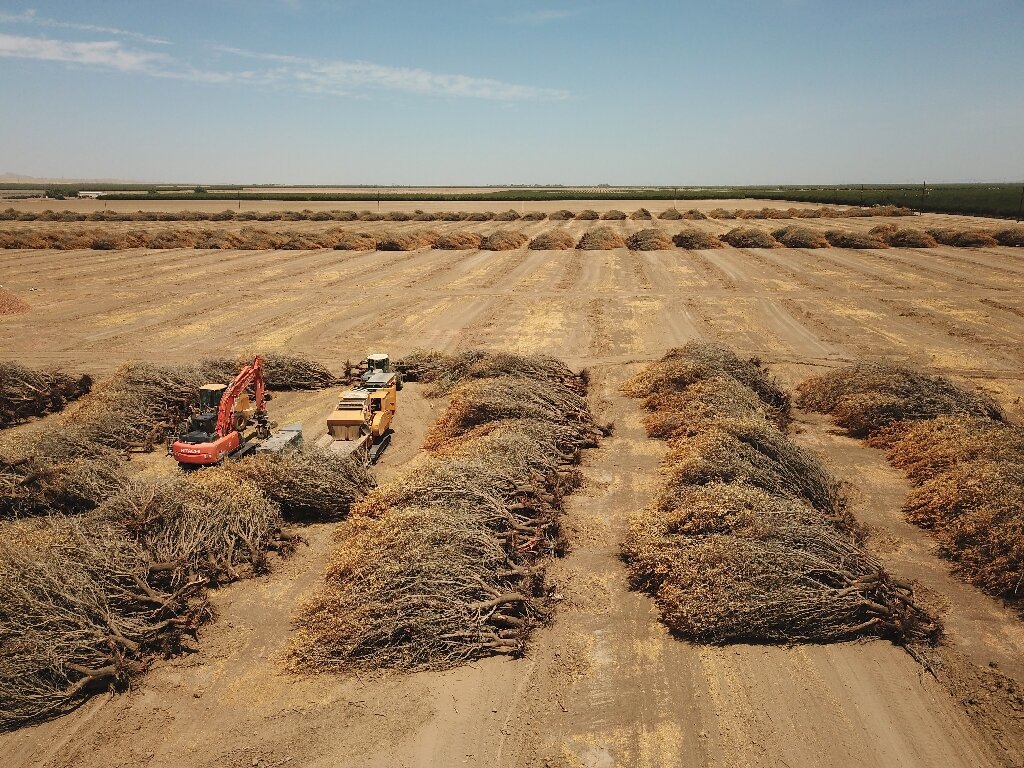
California's Central Valley produces 80% of the world's almonds. Each almond requires 3.2 gallons of actual irrigation water to grow. Not rainfall. Actual tap water pumped from aquifers.
One gallon of almond milk requires 162 gallons of irrigation water. Compare that to dairy milk at 8 gallons of tap water per gallon, with the rest being rainfall that falls on pasture anyway.
But here's where it gets properly grim. Almonds bloom for exactly three weeks in February. During those three weeks, California needs every pollinating bee in North America transported to the Central Valley or the crop fails entirely.
Commercial beekeepers truck in 31 billion honeybees. That's two-thirds of America's entire managed bee population, all concentrated in one valley for three weeks. The bees are packed into trucks, driven across the country, dumped into almond groves drenched in pesticides, worked to exhaustion, then packed up and shipped to the next crop.
The mortality rate is catastrophic. Beekeepers report losing 30 to 50% of their hives annually. That's billions of bees dead. Not from natural causes. From being used as disposable pollination machines for your almond milk.
The pesticides don't help. Almond groves are sprayed with neonicotinoids which scramble bee navigation systems, fungicides which weaken their immune systems, and herbicides which eliminate the wildflowers they'd normally forage on between almond blooms.
Meanwhile the aquifer depletion is permanent. The Central Valley has sunk 28 feet in some areas from groundwater extraction. That water took 10,000 years to accumulate. It's being drained in decades for almond milk.
Your vegan latte killed more bees and used more water than a year's worth of dairy milk. But it's got "plant-based" on the label so you're definitely saving the planet.
Your brain treats million, billion, and trillion like cousins. In reality, they live in different universes.
• 1 million seconds ago → Jan 9, 2026
• 1 billion seconds ago → May 14, 1994
• 1 trillion seconds ago → ~29,700 BC
Random late-night trivia:
As late as 1970, a majority of residents in the Lafayette, Louisiana metro claimed French as their mother tongue. Overall numbers were:
52.1% French
42.4% English
5.5% Other/Not Reported